
Outdoor plant
Sacred Lotus
Nelumbo nucifera
Also known as Indian lotus, East Indian lotus
How to grow sacred lotus, Nelumbo nucifera, in a pond or tub. Planting the tuber, why leaves shed water perfectly, and overwintering it through frost.
At a glance
- Difficulty
- Moderate
- Water
- Permanently wet soil or standing water
- Light
- Full sun
- Temperature
- Needs a warm summer to flower; hardy rhizome once dormant
- Hardiness
- USDA 4-11, RHS H4, hardy to -15 C
- Type
- Deciduous aquatic perennial
- Height
- Leaves and flowers stand 60-180 cm above the water
- Native to
- South and Southeast Asia
The rhizome survives winter cold down to about USDA zone 4 once it is buried deep enough in mud or a pond that does not freeze to the bottom, but flowering depends on a long, hot summer with water temperatures well into the twenties Celsius for weeks at a time. A cool or short summer produces leaves with few or no flowers, which is the most common disappointment gardeners report with this plant outside its native climate band.
Hardiness zones describe winter cold alone. Summer heat, humidity, rainfall and the length of the growing season decide as much, so treat the range as the outer limit rather than as a recommendation.
Not known to be toxic
- Safe to eat
- Seeds, rhizome and young leaves are all eaten as vegetables and ingredients across South and East Asian cuisine
Sacred lotus has no toxicity listing from the RHS or the ASPCA. It is a significant food crop across Asia, where the rhizome, seeds and even the young leaves are eaten, and no part of the plant is considered hazardous to pets or people in an ornamental pond setting.
Source: RHS
About
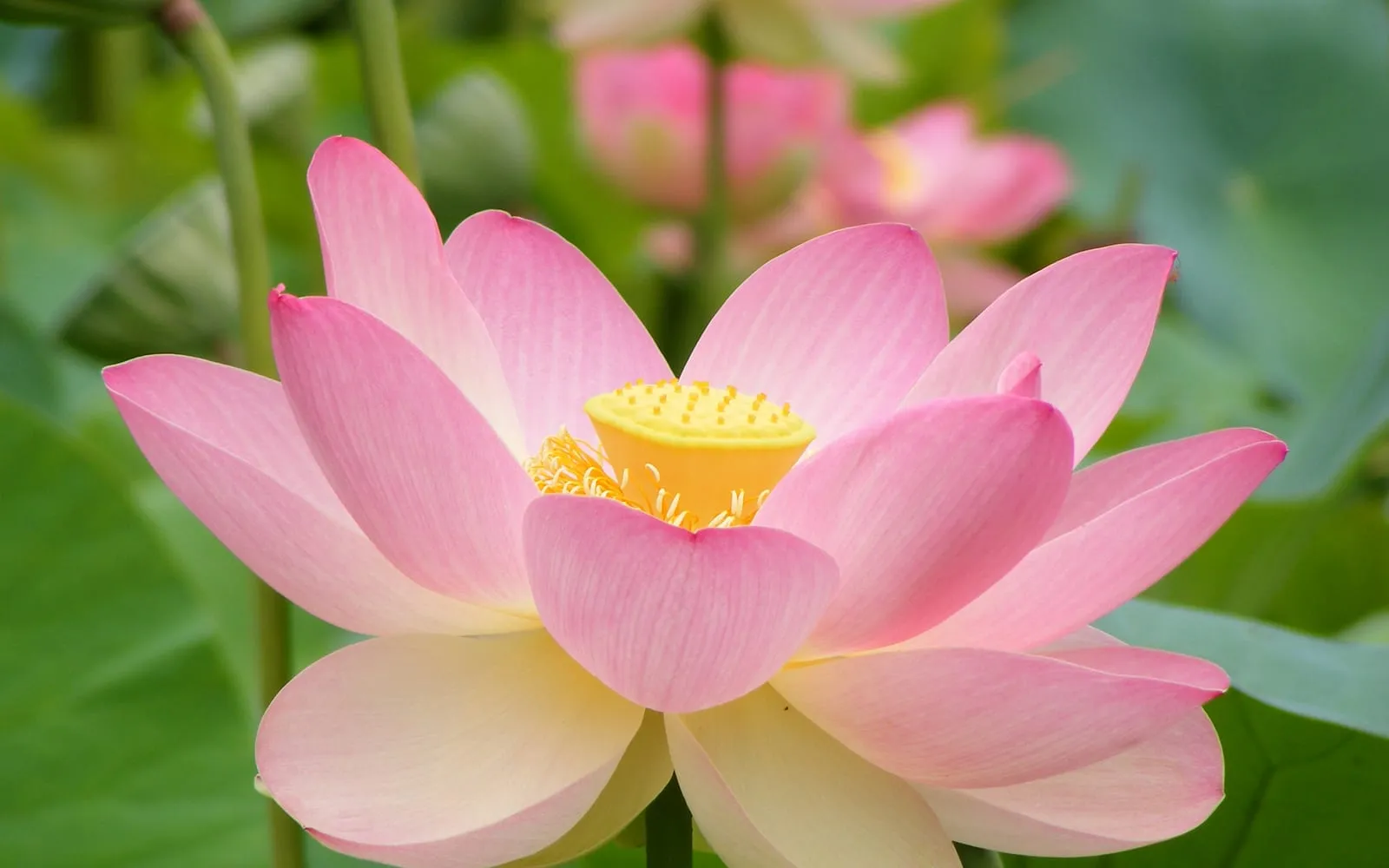
The sacred lotus is grown for two things few other plants combine: large flowers, up to 25 cm across in shades of pink or white, and enormous circular leaves so water-repellent that droplets bead into silver spheres and roll off the surface rather than wetting it at all. That water-shedding effect, since named the lotus effect by materials scientists, comes from a microscopic waxy texture on the leaf surface and has been studied as a model for self-cleaning coatings and fabrics.
It has deep religious and cultural significance across Buddhism and Hinduism, where it symbolises purity rising untouched from muddy water, and it has been cultivated for both its flowers and its edible rhizome and seeds for thousands of years across Asia.
Appearance and character
Leaves emerge rolled from the water as a small floating pad before unfurling into a large, flat or slightly cupped circular blade on a rigid stalk that lifts it well clear of the surface, often 30-60 cm across on a mature plant. The waxy, water-repellent surface is the plant’s most distinctive feature at close range, beading rainwater into perfect rolling droplets.
Flowers rise on their own tall stalks above the leaves, opening over two or three days with a strong, sweet fragrance, each one made of many broad petals around a distinctive flat-topped seed head that continues to develop after the petals fall, eventually drying into the woody, perforated pod often sold separately for dried flower arrangements.
Where it is from
Shallow lakes, ponds and slow rivers across South and Southeast Asia, naturalised or cultivated much further afield, including parts of the Middle East, Australia and North America, both as an ornamental and as a food crop grown at agricultural scale for its rhizome and seeds.
It needs a hot growing season to flower well, reflecting its origin in a climate with long, warm summers, and this single requirement explains most of the difficulty gardeners in cooler temperate regions have with it compared with the more forgiving hardy water-lily.
How it grows
A perennial growing from a thick, jointed, spreading rhizome that creeps horizontally through soft mud, sending up leaves and flower stalks at intervals along its length. Growth accelerates through a warm summer, building an increasingly dense stand of leaves, and the entire top growth dies back completely each autumn regardless of climate, leaving the rhizome dormant below the mud or water until the following spring.
Because the rhizome grows horizontally rather than as a compact clump, a lotus planted in open pond mud can travel a considerable distance from its original planting point over several seasons, which is why most gardeners outside large ornamental lakes grow it confined to a wide, shallow container.
Through the seasons
Spring the rhizome resumes growth once water temperature reliably exceeds about 15 deg C, with the first small floating leaves appearing before larger aerial ones follow as the water warms further.
Summer is the flowering season, generally from mid to late summer once water has been consistently warm for some weeks. Feed every three to four weeks through this period.
Autumn flowering ends and leaves begin dying back as temperatures drop. Stop feeding once growth clearly slows.
Winter the rhizome is dormant. In climates where the pond freezes deep enough to reach it, move the container to a frost-free space or sink it below the depth that freezes; in milder climates it can stay in place.
Care difficulty
Moderate. Routine care is simple, but flowering needs weeks of hot weather and warm water. Many temperate gardens cannot provide that reliably. In a marginal climate, a large, shallow, sun-trapping container often works better than an open pond because it heats up faster.
Watering
Permanently wet mud or standing water is essential, at a planting depth that starts shallow for a young rhizome, around 15 cm, and can increase toward 30 cm as the plant matures and its leaf stalks lengthen.
Plant the rhizome horizontally, just below the surface of heavy aquatic loam in a wide, shallow container, taking great care not to snap the brittle growing tip, which is where all new growth for the season comes from and does not regenerate if broken off.
Warning signs, diseases and pests
Aphids sometimes cluster on the undersides of leaves and on flower stalks, and are usually dislodged easily with a strong jet of water rather than needing chemical control. In warmer climates, caterpillars of the lotus leaf-roller moth fold and web leaves together to feed and shelter inside; unrolling and removing affected leaves by hand is generally enough to control light infestations.
Leaves that stay wet and dull instead of beading rainwater into rolling droplets often indicate stress, commonly from cold water or insufficient light, rather than a specific disease.
No flowers despite plenty of healthy leaves is the most frequently reported problem with this species outside a naturally hot climate, and is almost always down to insufficient summer heat rather than any fault in care.
Growing environment
Full, unobstructed sun is essential, and so is warmth: this plant needs water that heats up through summer rather than staying cool in the shade of overhanging trees or a large, deep pond that never fully warms. A dark-coloured container in full sun can noticeably raise water temperature compared with an open pond and often makes the difference between leaves only and a full flowering display.
Feeding
A fertiliser tablet formulated for lotus or water-lilies, pushed into the aquatic loam every three to four weeks through the growing season, supports strong leaf and flower production. Stop feeding as growth slows in autumn, since feeding a dormant or nearly dormant rhizome achieves nothing and can foul the water.
Troubleshooting
Plenty of leaves but no flowers. The most common issue with this species. It needs sustained summer heat to flower, so a cool or short summer often produces leaves only. A larger, sun-warmed container can help in a marginal climate.
Leaves are not shedding water properly. Often a sign of stress from cold water or too little light. Check both conditions and move the plant to a warmer, sunnier spot if possible.
The rhizome’s growing tip has snapped during planting. This is a serious setback, since new growth for the season comes from that tip. The rhizome may survive and send up a new growing point from a side bud, but growth will likely be delayed and reduced for that year.
Leaves are being rolled up and webbed together. Check for lotus leaf-roller caterpillars in warm climates, and unroll affected leaves to remove them by hand.