
Outdoor plant
Blue Trumpet Vine
Thunbergia grandiflora
Also known as Bengal clock vine
How to grow blue trumpet vine outdoors or in a conservatory. Its large sky-blue flowers, vigorous twining growth, and why it needs real warmth to bloom well.
At a glance
- Difficulty
- Moderate
- Water
- Regular watering through the growing season, reduced in winter
- Light
- Full sun
- Temperature
- Damaged by frost, killed by hard freezing
- Hardiness
- USDA 9-11, RHS H2, hardy to 0 C
- Type
- Evergreen to semi-evergreen twining climber
- Height
- 6-15 m in a warm climate, much less potted
- Native to
- India, Southeast Asia
Tender to real frost and grown outdoors year round only in a reliably warm, near frost-free climate; everywhere colder it is grown as a conservatory or container plant, cut back and brought under cover for winter. It needs sustained warmth to flower well, and a cool or short summer often produces vigorous foliage with disappointing flowering.
Hardiness zones describe winter cold alone. Summer heat, humidity, rainfall and the length of the growing season decide as much, so treat the range as the outer limit rather than as a recommendation.
Not known to be toxic
Blue trumpet vine has no toxicity listing from the RHS or the ASPCA and is considered safe around pets and children. There is no documented history of poisoning associated with this species.
Source: RHS
About
Blue trumpet vine is grown for its large, showy, sky-blue to lavender-blue trumpet-shaped flowers, produced in hanging clusters against a backdrop of vigorous, twining growth capable of covering a substantial pergola, fence or wall within a few strong growing seasons in a warm climate. It is one of the showier flowering climbers available for a warm garden, and its scale and vigour mean it needs real space and a sturdy structure to grow on.
In a temperate climate it is more realistically grown as a large container or conservatory plant, cut back hard each year and never reaching anything close to the size it achieves outdoors in the tropics and subtropics, but still capable of a worthwhile flowering display given a warm summer and a bright, sheltered spot.
Appearance and character
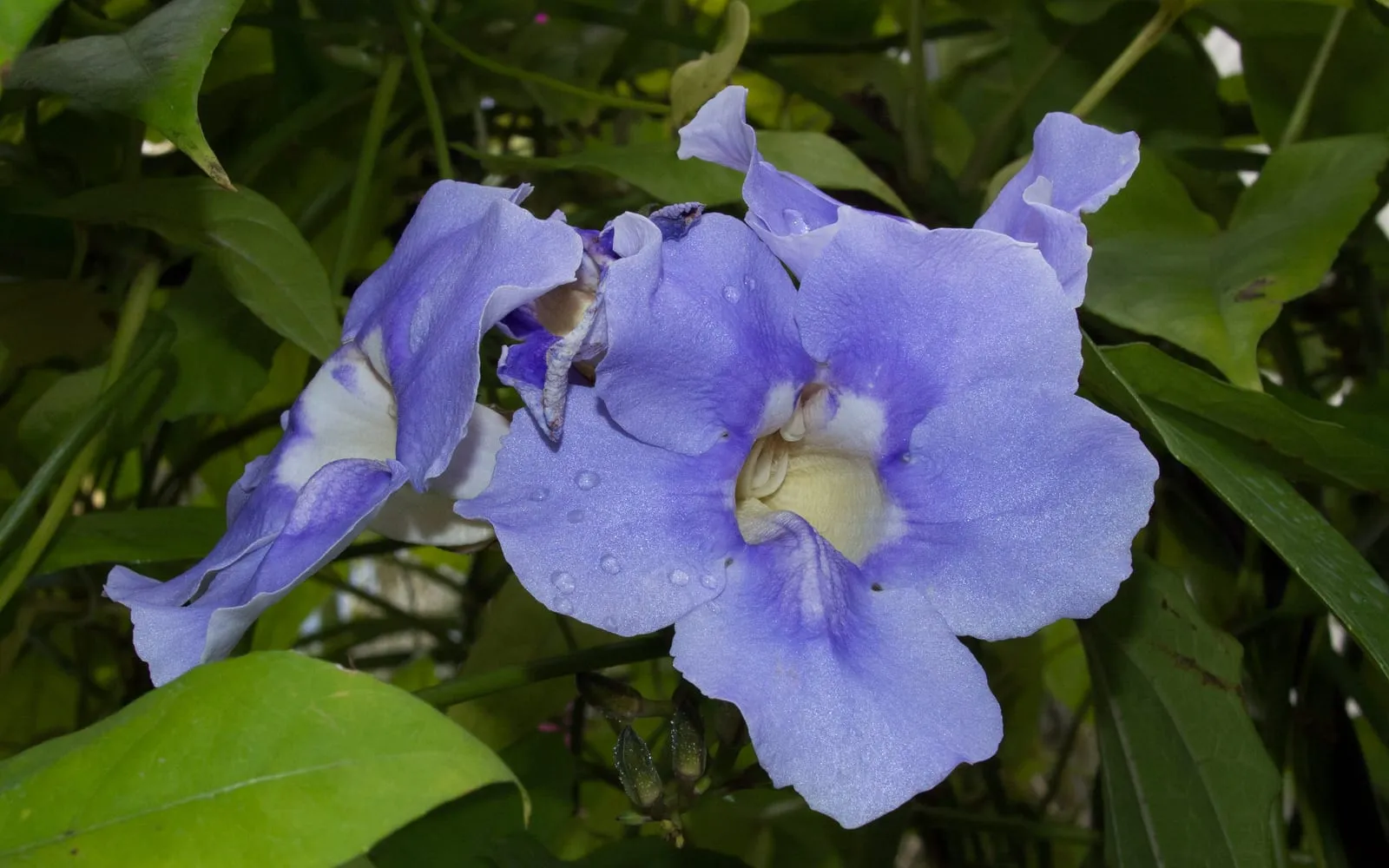
Vigorous, twining stems carry broad, heart-shaped to oval leaves and produce hanging clusters of large, trumpet-shaped flowers, typically a rich sky-blue to lavender with a pale yellow throat, each flower lasting only a day or two but replaced continuously by fresh buds through the main flowering season. The scale of both foliage and flower is much larger than many other twining climbers, giving the plant a lush, tropical presence wherever it is grown.
Left unpruned in a suitable climate, it forms a dense, heavy mass of twining growth that can become substantial enough to damage a weak support, which is worth allowing for when choosing what structure to grow it against.
Where it is from
Forest margins and open scrub across India and Southeast Asia, in a consistently warm, humid climate with a defined wet season, quite different from the more temperate conditions of much of the world where it is now grown ornamentally.
That tropical origin explains the plant’s need for real warmth to flower at its best, and it is why gardens with a shorter or cooler summer than the plant’s native climate often see strong vegetative growth without the heavy flowering display achieved in a hotter, more consistently warm setting.
How it grows
A vigorous, twining climber extending rapidly through the growing season given warmth and adequate moisture, wrapping its stems around any suitable support as it grows. In a warm climate where it persists outdoors year round, it can become a substantial, semi-permanent feature covering a large structure; in a cooler climate, grown as a container or conservatory plant, it is more often cut back hard each year and allowed to regrow from a more modest base.
Flowering generally follows a period of strong vegetative growth once temperatures are reliably warm, and a plant kept too cool or grown in insufficient light often produces foliage with little accompanying flower.
Through the seasons
Spring growth resumes strongly as temperatures rise; this is a good time to prune and train a container or conservatory specimen before the main growing season begins.
Summer is the main growing and flowering season, with the best display coming in a warm, sunny summer. Water and feed regularly through this period.
Autumn flowering tapers as temperatures drop; reduce watering and feeding accordingly.
Winter in a frost-free climate the plant persists with minimal change; everywhere colder, cut back hard and bring container-grown plants under cover before the first frost.
Care difficulty
Moderate. The plant grows vigorously given warmth and needs little beyond a sturdy support and regular watering, but achieving strong flowering in a marginal climate takes real summer heat that not every garden reliably provides.
Watering
Keep the soil consistently moist through the growing season, never letting it dry out completely, particularly for a container-grown plant with a more restricted root run than one in open, warm-climate ground. Reduce watering significantly over winter for a plant kept cool and largely dormant under cover.
Warning signs, diseases and pests
Aphids commonly colonise soft new growth and flower buds, and are dislodged easily with a jet of water or treated with insecticidal soap for heavier infestations. Spider mites and whitefly can both appear, particularly on a plant overwintered indoors in warm, dry air, and respond to increased humidity and, for persistent infestations, an appropriate treatment.
Vigorous foliage with little or no flowering most often reflects insufficient warmth or light through the growing season rather than any pest or disease, and is the most common disappointment reported with this species outside a reliably hot climate.
Growing environment
Full sun and real warmth are both essential for strong flowering; in cooler or shadier conditions the plant grows leafy stems with little accompanying bloom. Humus-rich, moisture-retentive but free-draining soil suits it well, and a sturdy, substantial support is necessary given how vigorous and heavy this climber’s growth can become.
Feeding
A balanced liquid feed, applied monthly through spring and summer, supports strong growth and flowering. Reduce or stop feeding through autumn and winter as growth slows or the plant is cut back for its dormant season under cover.
Troubleshooting
The plant grows vigorously but produces few flowers. Almost always insufficient warmth or light through summer. Move a container plant to the sunniest, warmest spot available, and accept that a cool or short summer will limit flowering regardless of other care.
Growth has become a heavy, tangled mass threatening to damage its support. Cut back hard, ideally in spring before the main growing season, and train the strongest stems onto a sturdier structure if the current one is struggling under the weight.
A container plant has struggled after being brought back outdoors in spring. Acclimatise it gradually to stronger light and any temperature change rather than moving it outdoors all at once, to avoid checking its growth just as the main season begins.
An outdoor plant in a marginal climate was damaged by early frost. Cut back hard and protect the base with a deep mulch; established plants often resprout from the roots the following spring even after losing all their top growth to cold.
You are deciding whether to grow this species in a container rather than open ground. A large, heavy container works well and makes overwintering under cover far more practical in anything but a reliably warm climate, though it will never reach the size or flowering scale of a plant established directly in open, warm-climate ground.