
Outdoor plant
Papyrus
Cyperus papyrus
Also known as Nile grass, Paper reed
How to grow papyrus, Cyperus papyrus, in a pond or large pot. Planting depth, overwintering it in cold climates, and the plant behind ancient paper.
At a glance
- Difficulty
- Easy
- Water
- Permanently wet soil or shallow standing water
- Light
- Full sun
- Temperature
- Above 10 deg C. Damaged below 5 deg C and killed by hard frost
- Hardiness
- USDA 9-11, RHS H2, hardy to 5 C
- Type
- Tender evergreen perennial sedge
- Height
- 1.5-4 m
- Native to
- Nile Valley, Sub-Saharan Africa
A tropical wetland plant with no frost tolerance at all. It grows outdoors year round only where winters stay reliably above about 5 deg C, and everywhere colder needs it lifted into a heated greenhouse or a bright indoor spot for winter, then returned to the pond once the risk of frost has passed. Warmth matters more to it than any particular soil type.
Hardiness zones describe winter cold alone. Summer heat, humidity, rainfall and the length of the growing season decide as much, so treat the range as the outer limit rather than as a recommendation.
Not known to be toxic
Papyrus has no toxicity listing from the RHS or the ASPCA and is considered safe around pets, children and pond wildlife. Its stems are fibrous and largely unpalatable rather than dangerous, which is one reason the ancient Egyptians could rely on undisturbed stands of it along the Nile for millennia without it being grazed away.
Source: RHS
About
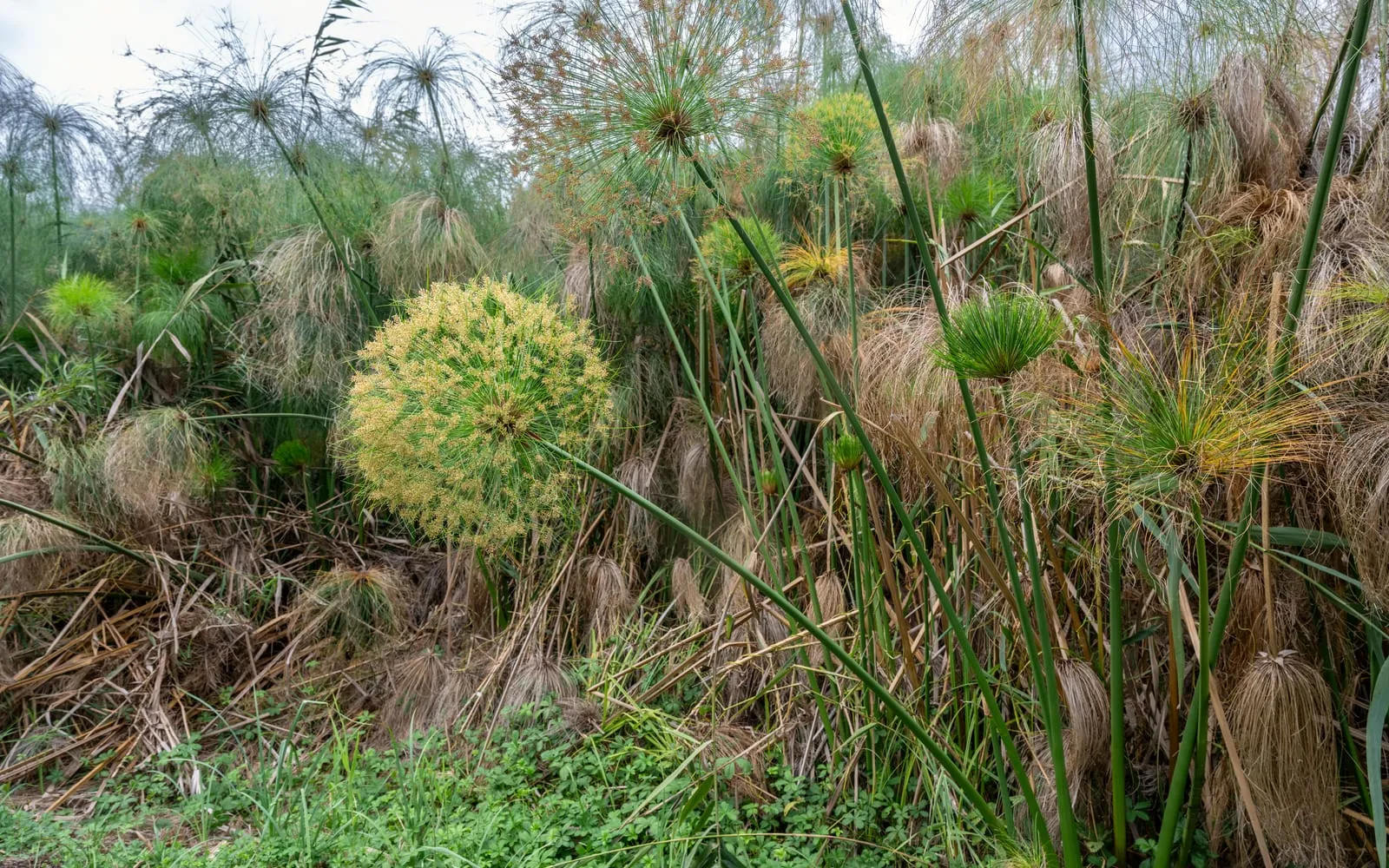
Papyrus is the tall Nile Valley sedge used to make the ancient world’s first true paper. The pith was cut into strips, pressed together and dried into sheets used across Egypt, Greece and Rome. In gardens it is grown for its tall bare stems, each topped with a burst of thin, drooping bracts like a green firework.
It is one of the more architectural plants available for a pond margin or large container, and it reads as tropical wherever it grows, which makes it a popular choice for gardeners trying to give a temperate pond an exotic feel through summer.
Appearance and character
Triangular, leafless stems rise straight from a clumping rootstock, each one topped with a dense, radiating cluster of very fine, thread-like bracts up to 30 cm long that arch outward and droop under their own weight, giving the plant its umbrella- or firework-shaped head. Small, inconspicuous brown-green flower spikelets appear among the bracts in summer but are easily overlooked next to the foliage effect.
A well-grown clump in a large pot or open pond margin sends up new stems continuously through the growing season, building into a dense stand that can reach well over two metres in a single summer in warm conditions.
Where it is from
The wetlands and slow-moving shallows of the Nile Valley and other rivers and marshes across sub-Saharan Africa, where it once formed vast, dense stands along riverbanks, a habitat and abundance now much reduced from its ancient extent by drainage and agriculture along much of the Nile itself.
That origin in permanently wet, warm, sunny wetlands explains everything about its garden needs: constant moisture, strong light, and protection from any cold that a temperate winter would otherwise deliver without hesitation.
How it grows
A clump-forming evergreen sedge that spreads slowly by short rhizomes, thickening into a wider stand over successive growing seasons rather than running aggressively the way some other pond plants do. Individual stems are relatively short-lived, dying back after flowering and being replaced continuously by new ones from the base, so the overall clump looks fresh even as older stems age and are cut away.
Growth is fast and vigorous whenever temperature and light are both high, and slows or stops almost entirely once either drops, which is why a container-grown plant brought indoors for winter often looks static rather than actively growing until it goes back outside in late spring.
Through the seasons
Spring growth resumes once temperatures reliably stay above about 10 deg C. Move an overwintered plant back outside gradually rather than all at once, to avoid checking it with a sudden change of light and humidity.
Summer is the main growing season, with vigorous new stems and full, architectural heads of bracts. Feed monthly and keep the roots constantly wet.
Autumn growth slows as temperatures drop. Bring container-grown plants under cover before the first frost is forecast, since even a light frost can badly damage or kill the foliage.
Winter in anything but a frost-free climate, the plant needs to spend this season indoors or under glass, in bright light and with roots kept damp rather than fully dry.
Care difficulty
Easy in a reliably warm climate where it can stay outdoors year round, and only moderately more demanding everywhere else, where the one real task is remembering to move it under cover before the first frost and back out again once the weather has warmed.
Watering
Constantly wet is the rule, whether that means a pot standing permanently in a saucer of water, a spot at the pond margin with a few centimetres of standing water over the roots, or compost kept so wet it is close to waterlogged. This plant does not tolerate compost drying out, even briefly, during the growing season.
A large plastic pot with no drainage holes, stood in a shallow tray of water and topped up regularly, works well for gardeners without a pond to plant it in directly.
Warning signs, diseases and pests
Aphids sometimes colonise the softer new growth near the base of the stems and are easily washed off with a jet of water. Spider mites can appear on plants overwintered in warm, dry indoor air, showing as fine speckling and pale, dry-looking bracts, and are far less likely to trouble a plant kept humid and well watered.
Brown, collapsing stems after a cold snap almost always mean frost or cold damage rather than disease. Cut the damaged stems right down to the base; new growth from the rootstock usually follows once temperatures recover, so long as the rootstock itself was not frozen solid.
Yellowing, weak growth in summer despite regular watering can indicate the roots have dried out between waterings rather than being kept consistently wet, which this plant tolerates far less well than most other pond and container plants.
Growing environment
Full sun and warmth are both essential for strong, upright growth; in shade or cool conditions the stems stay thin and flop over rather than standing upright. Shelter from strong wind helps too, since the tall, top-heavy stems can snap in a gale once the head of bracts is fully developed.
Feeding
A monthly feed through the growing season, either an aquatic plant tablet for a pond planting or a balanced liquid feed for a potted specimen, supports the vigorous stem production this plant is capable of given warmth and constant moisture. Reduce or stop feeding once the plant is brought indoors for winter and growth slows.
Troubleshooting
Stems are thin, floppy and pale. Usually too little light. Move the plant to the sunniest spot available; this species needs strong, direct sun to build sturdy stems and full heads.
Foliage has browned and collapsed after cold weather. Frost damage. Cut the affected stems back to the base and keep the rootstock protected from further cold; recovery is likely if the roots themselves were not frozen.
Fine pale speckling on bracts, especially on an indoor plant. Check for spider mites, which favour the warm, dry air common indoors in winter. Raising humidity around the plant helps prevent a recurrence.
The plant looks stalled with no new growth for weeks. If this is over winter indoors, it is likely dormancy from lower light and temperature rather than a problem, and normal vigorous growth should return once it goes back outside in late spring.