
Outdoor plant
Royal Fern
Osmunda regalis
Also known as Flowering fern, King fern
How to grow royal fern, Osmunda regalis, beside a pond or in a bog garden. Its unusual fertile fronds, and why it needs permanently wet soil.
At a glance
- Difficulty
- Moderate
- Water
- Constantly moist to wet soil, never allowed to dry
- Light
- Full sun to partial shade
- Hardiness
- USDA 3-9, RHS H7, hardy to -30 C
- Type
- Deciduous perennial fern
- Height
- 1-2 m
- Native to
- Europe, Africa, Asia, Americas
Fully hardy across almost the entire temperate world, tolerating hard frost on top growth that dies back each winter regardless. The crown itself is rarely damaged by cold; what limits this fern is dry soil rather than low temperature, and a planting that dries out in summer struggles even in an otherwise ideal climate.
Hardiness zones describe winter cold alone. Summer heat, humidity, rainfall and the length of the growing season decide as much, so treat the range as the outer limit rather than as a recommendation.
Not known to be toxic
Royal fern has no toxicity listing from the RHS or the ASPCA and is considered safe around pets and children. Like most ferns it is rarely grazed or chewed in the first place, since the fronds are tough and unpalatable rather than appealing to browse.
Source: RHS
About
The royal fern is one of the largest hardy ferns grown in temperate gardens, forming a substantial shuttlecock of fronds up to two metres tall in the wet ground it favours at a pond edge or in a bog garden. It takes its common name from its imposing size and its old species name regalis, and its alternative name flowering fern from the unusual, separate fertile fronds it produces, which look more like a cluster of small brown flowers than typical fern spore cases.
It has one of the widest natural distributions of any fern, occurring across Europe, Africa, Asia and the Americas, always in the same kind of consistently wet, often acidic ground.
Appearance and character
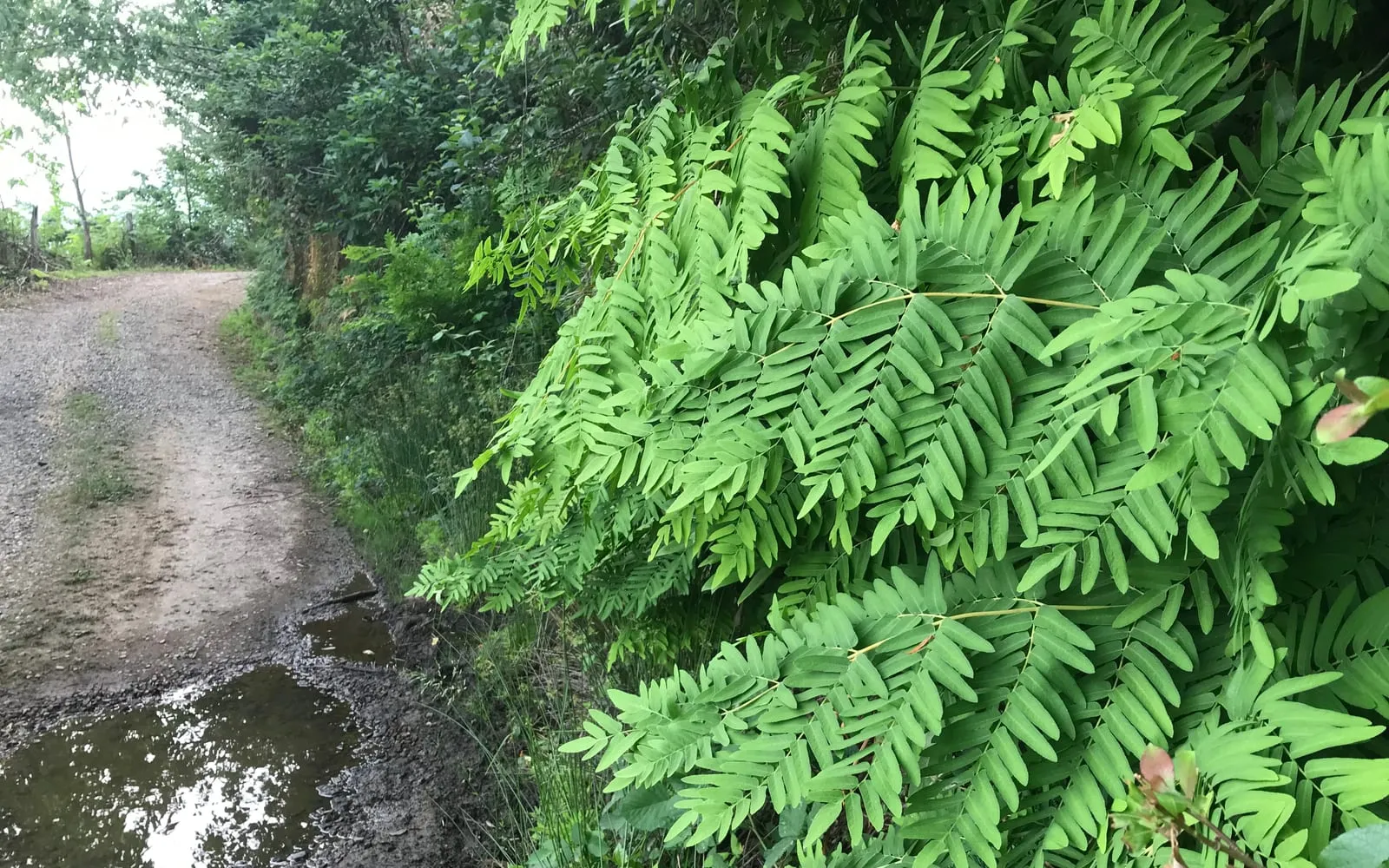
Broad, twice-divided fronds emerge coppery-pink in spring before maturing to a rich mid-green, arranged in a loose, upright shuttlecock from a stout, slow-growing crown. The overall texture is coarser and more open than many smaller garden ferns, with well-spaced leaflets rather than a dense, feathery frond.
Its most distinctive feature is the separate fertile frond, produced at the centre of the crown in summer, which bears no green leaf tissue at all; instead it has dense clusters of small brown spore cases that give the whole structure a flower-like appearance from a distance, unlike the spore patterns found on the underside of an ordinary fern frond.
Where it is from
Wet, often acidic ground across an unusually wide native range spanning Europe, Africa, Asia and the Americas: pond margins, streamsides, wet woodland and boggy meadows, generally where the roots sit in permanently damp to waterlogged soil.
That consistency across such a wide range points to a plant with fairly narrow but reliably met needs rather than one adapted to any particular regional climate. Wherever ground stays wet enough for long enough, this fern tends to be able to grow.
How it grows
A deciduous perennial that dies back completely each autumn and regrows from a persistent, slowly expanding crown each spring. Growth is unhurried: a young plant can take several years to reach anything close to its eventual mature size, and the crown thickens gradually rather than spreading by runners the way some other large ferns do.
Once established, a royal fern crown is remarkably long-lived, with old garden specimens known to persist and slowly enlarge for many decades in undisturbed, consistently wet ground.
Through the seasons
Spring: New coppery-pink fronds unfurl from the crown. These young fronds are known as croziers. Feed once new growth is well underway.
Summer fronds reach full size and colour, and the distinctive fertile frond appears at the centre of the crown, its brown spore clusters visible from midsummer.
Autumn fronds begin to yellow and collapse with the first hard frosts.
Winter: The crown is fully dormant and hardy, needing no protection in most temperate climates so long as the ground beneath it does not dry out even in winter.
Care difficulty
Moderate, and the difficulty is almost entirely about water rather than about any complicated routine. Given permanently moist to wet ground it grows with little further attention for years; allowed to dry out during a summer drought, it stalls and can suffer lasting damage to the crown.
Watering
Constantly wet to consistently moist soil is essential, whether at a natural pond or stream margin or in an artificially maintained bog garden. This is one of the least drought-tolerant garden ferns available, and even a short dry spell in summer can scorch fronds noticeably.
Mulching heavily with leaf mould or well-rotted organic matter around the crown each spring helps retain moisture through the growing season and mimics the leaf litter build-up it would experience in the wild.
Warning signs, diseases and pests
This fern is troubled by remarkably few pests or diseases. Slugs occasionally graze the soft, newly unfurling croziers in spring, leaving ragged notches, but rarely cause serious damage to an established plant.
Scorched, brown, crisp frond edges in summer are the most common problem reported, and almost always trace back to the soil drying out rather than to any pathogen. Increasing watering and mulch depth usually prevents a recurrence the following year.
A crown that fails to produce new croziers in spring after an apparently healthy previous season may have been damaged by a period of drought the year before, since stress can delay recovery by a full growing season rather than showing immediately.
Growing environment
Full sun suits it well provided the soil never dries out, and it also tolerates partial shade, which can be the more forgiving option in a garden where consistent moisture is harder to guarantee in full sun. Acidic to neutral soil is preferred, though it is more adaptable on pH than on moisture, which is the condition that matters most.
Feeding
A balanced liquid feed in spring, or a generous mulch of leaf mould or garden compost around the crown, supports strong frond growth through the season. This is not a heavy feeder, and consistent moisture does more for its growth than any amount of fertiliser, which is why a well-mulched plant beside a pond often outgrows a fed but drier one elsewhere in the garden.
Troubleshooting
Frond edges are scorched and brown in summer. Almost always dry soil. Water deeply and add a thick mulch to help retain moisture going forward.
No new fronds appear in spring. Check whether the previous summer included a dry spell, since drought stress can delay the crown’s recovery by a full season even after conditions improve.
Fronds are ragged with notches missing, especially early in the season. Check for slugs grazing the soft, newly unfurled croziers, and use barriers or hand removal around vulnerable young growth.
The brown, flower-like structure at the centre of the crown looks diseased. This is the plant’s normal fertile frond, bearing spore cases rather than showing any sign of illness, and is what gives the species its flowering fern nickname.