
Houseplant
Pinstripe Plant
Goeppertia ornata
Also known as Goeppertia ornata
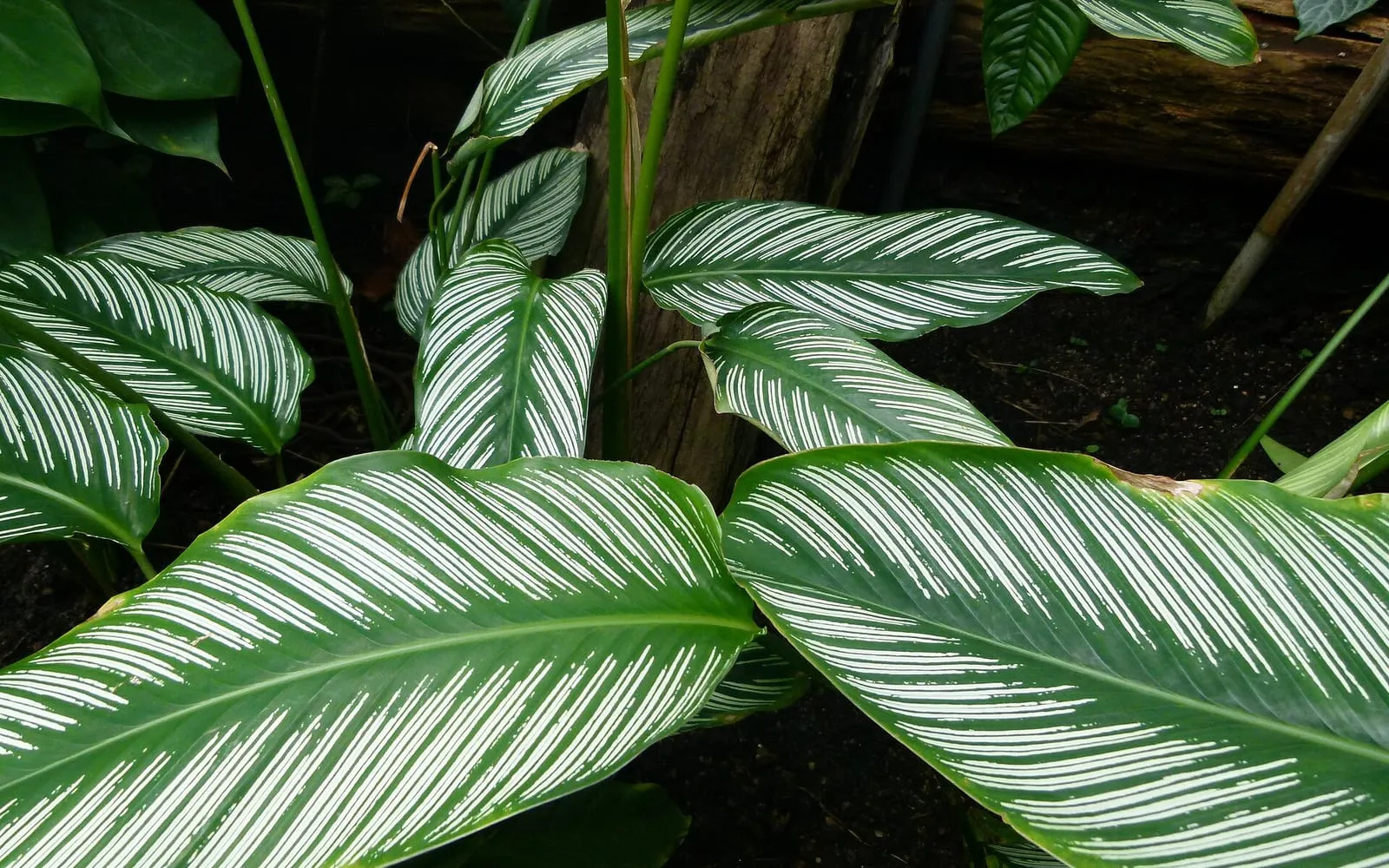
Growing Goeppertia ornata, the pinstripe plant, a South American prayer plant ruled with fine pink lines that pale to cream over a purple underside.
At a glance
- Difficulty
- Easy
- Water
- When the top few centimetres of mix have dried
- Light
- Bright indirect light to light shade
- Temperature
- Warm; keep above about 13 deg C
- Humidity
- Average to high
- Hardiness
- USDA 10-12, RHS H1b, hardy to 13 C
- Type
- Perennial
- Height
- 60-100 cm
- Native to
- Colombia, Venezuela
A tender tropical foliage plant from northwestern South America, growing in warm, humid, shaded to filtered light. It needs warmth, humidity and bright indirect light, and it cannot take frost or chill. It is safest above about 13 deg C, and cold, wet compost or dry air spoils it.
Hardiness zones describe winter cold alone. Summer heat, humidity, rainfall and the length of the growing season decide as much, so treat the range as the outer limit rather than as a recommendation.
Not known to be toxic
Goeppertia ornata, the pinstripe plant, is not recorded among the seriously toxic plants, and related plants in its group are not listed as toxic by the ASPCA or the RHS. A pet or child that chewed a leaf would be unlikely to come to serious harm beyond a possible mild stomach upset.
Sources: ASPCA toxic and non-toxic plants, RHS potentially harmful garden plants
Named for its stripes
The species name ornata means adorned, and the common name refers to the fine parallel stripes on the leaves. The lines run in pairs across a dark surface, much like the stripes on a suit. Like the other plants in this group, Goeppertia ornata spent generations filed under Calathea. The 2012 revision of the genus moved it across, so shops and books still sell it under both Calathea ornata and its current name. It stays compact enough for a table or shelf, which has kept it among the most popular patterned prayer plants for indoor growing.
Reading the leaf
The blade is a deep, glossy, almost blackish green, oval and firm, with slender lines that run in close pairs from the central midrib out to the leaf edge. On a freshly opened leaf those lines are clear rose-pink and can look painted on. As the leaf matures the pink fades to cream or a chalky white, so a healthy plant shows both young and older stripes at once. The underside is rich beetroot purple, and that colour shows at the margins whenever a leaf lifts or folds.
The prayer movement
Each evening the pinstripe plant raises its leaves and draws them together, tilting the striped faces up and inward until the purple backs show. By mid-morning the leaves flatten again. This daily movement is nyctinasty, and it is driven not by the stalk bending but by a plump hinge of cells, the pulvinus, at the base of each blade. The hinge moves water between its two sides to build or release pressure, folding the leaf up at dusk and lowering it at dawn. When a pinstripe plant stops folding, it is usually cold, thirsty or too dark, so the missing movement is a useful early warning.
Where it grows wild
Goeppertia ornata comes from the humid forests of northwestern South America, from south-eastern Colombia to south-western Venezuela, where it grows as ground cover in warm, shaded, moist conditions beneath a dense canopy. Rain falls freely, the air stays damp, and the temperature remains warm with no cold season and no drought. It has no tolerance for frost, scorching sun or a dried-out root run, and its indoor care reflects that sheltered forest floor.
Light and position
Bright but filtered light suits it best, of the sort found a little back from a window facing the morning sun, or shielded from a stronger aspect by a sheer blind. Direct beams bleach the stripes and burn the thin blade, while heavy shade dulls the colour and draws the plant thin and floppy. Balanced light on all sides keeps the little rosette even, so give the pot a quarter-turn each week if it starts reaching towards the brightest point.
Watering and water quality
Let the top two or three centimetres of the mix dry, then water until it flows from the drainage holes, tipping away whatever collects beneath so the roots sit damp instead of flooded. This is one of the thirstier prayer plants for its size, and it is sensitive to water chemistry. Fluoride, chlorine and lime from hard tap water accumulate in the leaf and scorch the margins to a dry brown, so rainwater, filtered water or water left standing overnight suits it far better. Reduce watering markedly through the low-light months, when growth halts and cold, wet compost quickly sours.
Warmth and humidity
A steady eighteen to twenty-six degrees C keeps it growing well, and it should never fall below about thirteen degrees C or sit in a draught, near a hot radiator, or against a chilly winter windowpane. Low humidity is the leading cause of brown, brittle edges on this species. Lift the moisture around the foliage by resting the pot on a wide tray of damp gravel, clustering it with other humidity-loving plants, or setting a small humidifier nearby. Misting gives only a few minutes of relief and can leave marks on the leaf, so a standing tray gives steadier humidity.
Feeding, potting and increase
From spring to early autumn, feed fortnightly with a balanced houseplant fertiliser at half strength, as the fine roots scorch under a full-rate dose. Withhold feed entirely across winter. Repot in spring only when roots have crowded the pot, moving up a single size into an open, peat-free mix loosened with bark, coir and perlite so it drains sharply. Propagate by division in spring: turn the plant out, separate the rhizome into clumps that each carry roots and a growing point, and pot these individually, keeping them warm and humid until they establish.
Common problems
Dry, browned leaf edges point to arid air or salts from hard water, so raise the humidity and change your water source. Leaves yellowing over wet, sour compost mean the roots are too wet, and the fix is a drier mix and freer drainage. Blades that stay rolled and never open through the day are usually thirsty or scorched. In warm, dry air spider mites may fleck the undersides with pale dots and thin webbing, while mealybugs settle as white cottony blobs in the leaf joints; rinse mites off and treat early, and lift mealybugs away with a cotton bud dipped in dilute alcohol.
Safe around pets and children
Goeppertia ornata carries no dangerous toxins, and its family is recorded as non-toxic to cats and dogs by the ASPCA, so a chewed leaf should cause no more than a brief stomach upset. That makes it a comfortable choice for homes with animals or small children. Still, place it where it is hard to reach, since a torn leaf loses its stripes and rough handling disrupts the plant’s nightly folding.
Quick answers
Why are the pink stripes turning white? That is normal ageing. Older leaves fade to cream while new leaves open a bright rose-pink.
Why are the leaf edges going brown and crisp? Dry air, hard water or both. Increase humidity and water with rainwater or filtered water.
How do I make more plants? Divide the rhizome clump in spring, keeping roots and a shoot on each section.
Why won’t it fold up at night? It is likely too cold, too dark or short of water. Correct the conditions and the movement returns.
Pinstripe Plant problem guides
Not sure what is wrong? See the common houseplant pests guide.