
Houseplant
Friendship Plant
Pilea involucrata
Also known as Pilea involucrata
How to grow Pilea involucrata, the friendship plant, a compact foliage plant with corrugated bronze leaves that strikes easily from cuttings to share.
At a glance
- Difficulty
- Easy
- Water
- When the top few centimetres of mix have dried
- Light
- Bright indirect light to light shade
- Temperature
- Warm; keep above about 13 deg C
- Humidity
- Average to high
- Hardiness
- USDA 10-12, RHS H1b, hardy to 13 C
- Type
- Perennial
- Height
- 15-30 cm
- Native to
- Central America, South America
A tender tropical foliage plant from Central America and South America, growing in warm, humid, shaded to filtered light. It needs warmth, humidity and bright indirect light, and it cannot take frost or chill. It is safest above about 13 deg C, and cold, wet compost or dry air spoils it.
Hardiness zones describe winter cold alone. Summer heat, humidity, rainfall and the length of the growing season decide as much, so treat the range as the outer limit rather than as a recommendation.
Not known to be toxic
The ASPCA lists the friendship plant, Pilea involucrata, as non-toxic to cats and dogs, and the RHS does not list it as harmful. A pet or child that chewed a leaf would be unlikely to have more than a mild stomach upset.
Sources: ASPCA toxic and non-toxic plants, RHS potentially harmful garden plants
About
Pilea involucrata, the friendship plant, is a compact foliage plant kept for its deeply textured leaves in bronze and green. The common name comes from how easily it roots from cuttings, which makes it simple to share. It is related to other pileas such as the artillery plant and the trailing creeping charlie, and shares their liking for warmth, shade and a moist atmosphere. Selections such as ‘Moon Valley’ and ‘Norfolk’ have stronger quilting and colour, but they need the same simple care.
The plant comes from the warm forests of Central and South America, where it grows low on the humid, shaded floor beneath the trees. That ground stays damp and warm all year, the light is broken by the leaves overhead, and the loose, leaf-strewn soil drains quickly after rain. Indoors it needs filtered brightness to hold the leaf colour, a crumbly compost kept barely damp, steady warmth, and humid air around it. A cold, sodden pot rots the roots, and dry air scorches the leaf edges and flattens the quilted surface.
Appearance and character
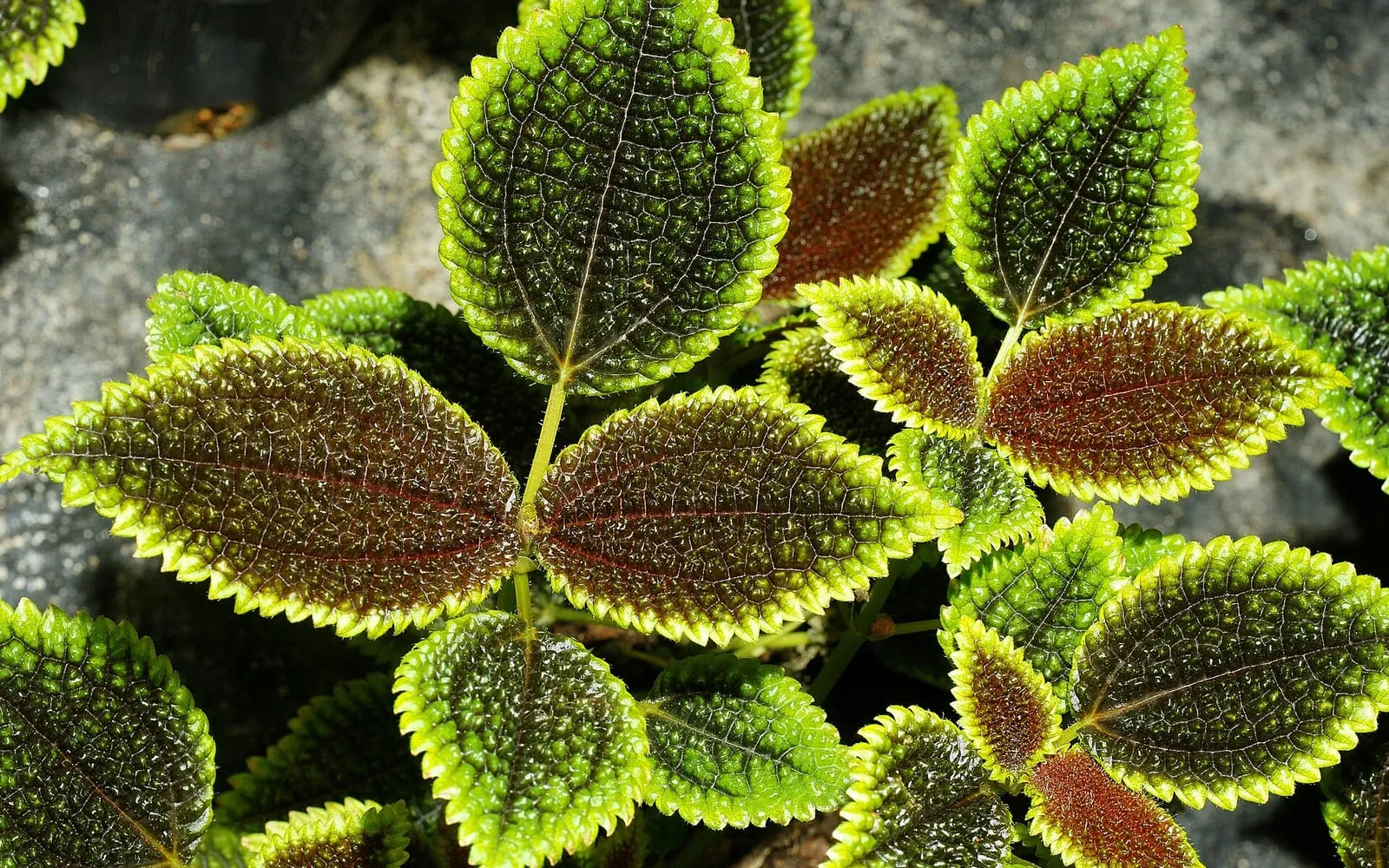
The leaves are the main feature: oval and deeply corrugated, with sunken veins that press the surface into ridges and hollows. They are bronze to olive above, darkened along each vein, and often turn coppery to deep purple beneath, with a fine down of hairs that catches the light. Held in pairs on short stems that rise then spread, they build a low, rounded mound that stays neat. Flowering produces only small, dull greenish blooms among the leaves, with little ornamental value beside the foliage.
Where it is from
The shaded floor of warm Central and South American forest is this plant’s natural habitat, where it creeps low among leaf litter below the canopy. Rain comes freely and soaks straight through the loose ground, leaving the roots damp instead of waterlogged, while the leaves above break the sun into soft, shifting light. Warmth stays steady through the year and the air stays moist. Indoors, give it bright but broken light, a crumbly compost held barely damp, steady warmth, and humid air around the quilted leaves.
How it grows
In warmth and decent light the plant forms a rounded, compact mound, the paired leaves stacking up on short stems that lean and spread as they lengthen. In poor light or with age it opens and grows leggy, so an occasional pinch keeps it full. Root it in a crumbly, open mix of composted bark, leaf mould and a little grit, in a shallow pot that suits the spreading roots. Propagation is easy. Snip a shoot tip, set it in warm, damp compost, and roots usually form within a fortnight.
Through the seasons
Spring restarts growth as light returns; take up regular watering again and begin a dilute monthly feed.
Summer is when the mound fills out and the colour deepens; keep it in bright, broken light, water each time the surface dries, and add humidity in a warm, dry room.
Autumn slows the growth; stretch out the feeds and let the compost dry a little more between waterings.
Winter is a slower period; hold it warm above 13 deg C, sheltered from draughts, and water sparingly.
Care difficulty
The friendship plant suits a beginner as long as you avoid cold wet roots and dry air. Give it bright, broken light, a crumbly compost held barely damp, steady warmth and humid air, and it keeps its colour and texture with little help. It grows leggy in a dim spot or with age, corrected by pinching and by raising fresh plants from cuttings. Overwatering in the cold rots the roots, and dry air scorches the leaf edges, but both are easy to prevent.
Watering
Water once the top layer of compost has dried, soaking the mix and letting the surplus run off instead of leaving the pot standing, and never letting the rootball go dust-dry. It likes steady, light moisture instead of either extreme, since drought crisps the leaves and constant wet decays the roots. Cut back through winter, when growth slows and cold, damp compost turns risky, giving just enough to keep the leaves firm. Let the feel of the compost, not a fixed calendar, decide the timing.
Warning signs, diseases and pests
Lower leaves yellowing and wilting, with soft stems at the base, mean the roots are rotting in cold, wet compost; take healthy cuttings, root them fresh and discard the sodden crown. Brown, crisping edges and a faded, flattened quilt mean the air is too dry; raise the humidity. A leggy, bare-stemmed plant is short of light or old, so pinch it back or start fresh plants. Watch for mealybugs among the stems and spider mites on the leaf backs, wiping mealybugs with dilute alcohol and rinsing mites away.
Growing environment
Place the plant in bright but filtered light, near an east or north window or set back from a brighter one, since good light deepens the bronze and purple while direct sun scorches it. Keep it warm and even, above 13 deg C and best across the high teens to low twenties Celsius, clear of cold windowsills and hot draughts. Its forest-floor roots need a crumbly, quick-draining compost that still holds a little moisture. Humid air keeps the quilted leaves plump and richly coloured, so a pebble tray, a bathroom shelf or a cluster of plants all help when the room dries.
Feeding
Feed once a month through spring and summer with a balanced liquid fertiliser at half strength, which keeps the mound dense and the colour strong. The roots are fine and scorch easily, so keep the feed weak and never apply it to dry compost. Stop feeding across autumn and winter while growth is slow. A plant recently moved into fresh mix can wait a month or two before its first feed.
Troubleshooting
Why has my friendship plant lost its colour and gone leggy? Too little light. Move it somewhere brighter but out of direct sun, pinch it back and raise fresh cuttings to keep a full plant.
How much light does it need? Bright, broken light to bring out the bronze and purple; direct sun scorches the leaves, while deep shade dulls them.
How often should I water it? Once the top layer of compost has dried, keeping it lightly moist, and less over winter.
How do I propagate Pilea involucrata? From shoot-tip cuttings, which root within a fortnight in warm, damp compost.
Is the friendship plant safe around pets? Yes. The ASPCA lists it as non-toxic to cats and dogs, so a chewed leaf is unlikely to cause more than a mild stomach upset.
Friendship Plant problem guides
Not sure what is wrong? See the common houseplant pests guide.