
Houseplant
Resurrection Plant
Selaginella lepidophylla
Also known as False rose of Jericho, Flower of stone, Dinosaur plant
How to grow resurrection plant, Selaginella lepidophylla. A desert spikemoss that curls into a dry ball and unfurls green again within hours of rewetting.
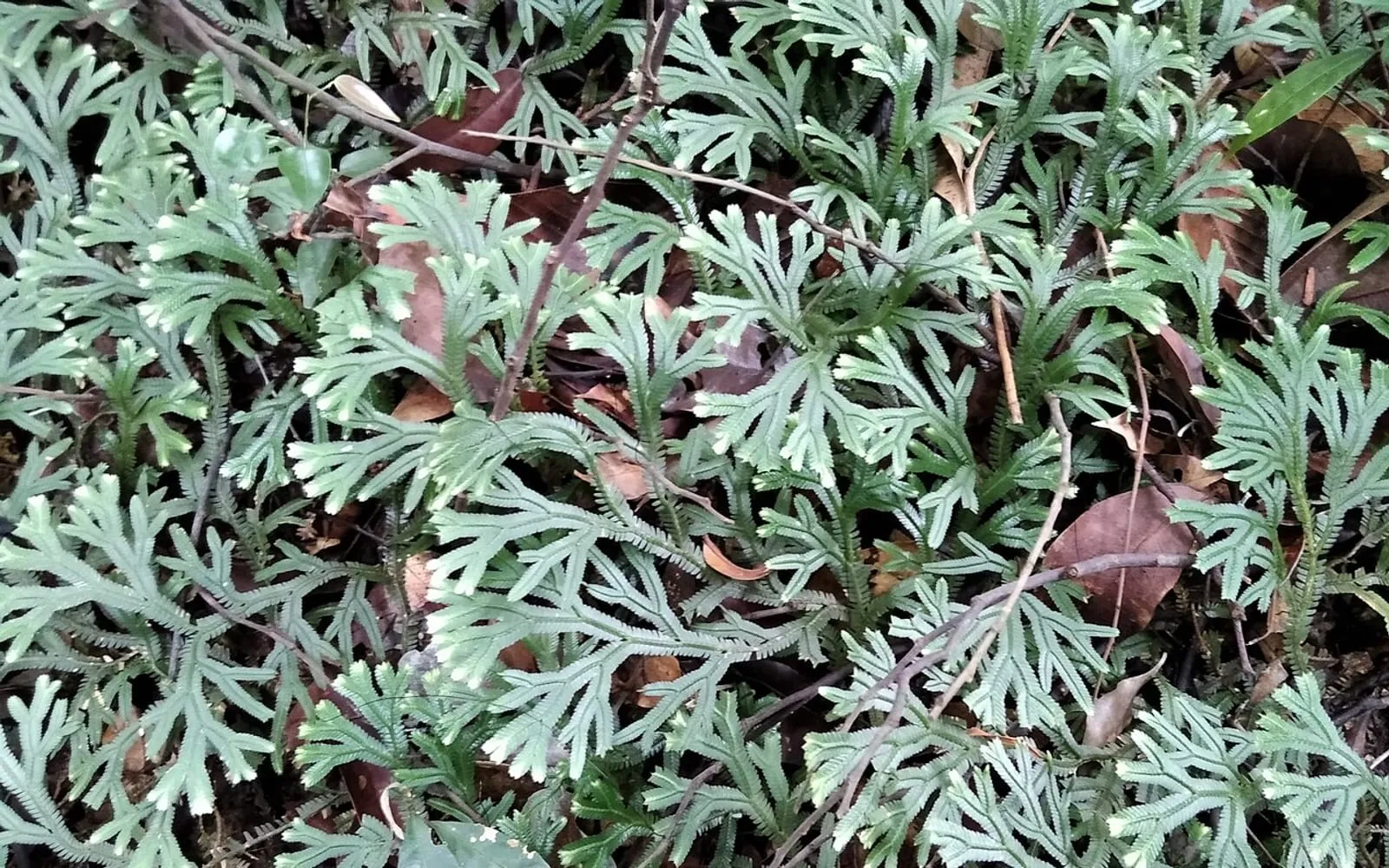
At a glance
- Difficulty
- Easy
- Water
- Alternate a thorough soak with a full dry-out. Do not keep it constantly wet
- Light
- Bright indirect light while actively growing. Tolerates darkness while dry and dormant
- Temperature
- 15-27 deg C for active growth. Tolerates a wide range while dormant
- Humidity
- Not required while dry. Prefers moderate humidity once revived and rooted
- Hardiness
- USDA 8-11, RHS H2, hardy to -5 C
- Type
- Desiccation-tolerant desert perennial lycophyte
- Height
- 5-10 cm across when open
- Native to
- Chihuahuan Desert of northern Mexico and the southwestern United States
Almost always grown as a houseplant curiosity instead of a garden subject, so the zone figure matters far less than it does for most entries in this collection. In its native desert it survives heat and occasional light frost by drying out and waiting, a strategy that has little to do with the cold tolerance a hardiness zone is built to measure.
Hardiness zones describe winter cold alone. Summer heat, humidity, rainfall and the length of the growing season decide as much, so treat the range as the outer limit rather than as a recommendation.
Not known to be toxic
Non-toxic. Selaginella lepidophylla does not appear on the RHS list of potentially harmful garden plants, and there is no ASPCA record of the genus as toxic to cats, dogs or horses. No irritant sap or documented toxin is associated with it. It is most often sold dry, without roots, as a novelty item instead of a rooted houseplant, which in practice puts it out of casual reach of a pet in any case.
Sources: RHS potentially harmful garden plants, ASPCA toxic and non-toxic plants
About
Dry, this plant looks like a tight knot of brown stems, curled into a tight brown ball small enough to sit in a closed hand. Set that ball in a shallow dish of water and within a few hours it begins to relax, uncurling over the following day or two into a flat, soft, bright green rosette. Dry it out again and it curls back into the same brown ball, ready to repeat the same cycle the next time it is wetted. Few commonly sold plants show this change so clearly, and fewer still can survive losing as much as 95 per cent of their water content and still recover fully once rehydrated.
That response has made it a common novelty item, sold dry in gift shops, market stalls and online, usually with no pot, no soil and no roots attached at all, just the curled ball itself. That works for a while. A specimen with its roots cut for easy shipping can still revive and green up several times, but each cycle draws on stored reserves it can no longer fully replenish, and most novelty specimens fade and stop reviving after a handful of cycles instead of continuing for years the way a rooted, actively growing plant can.
It shares its most common English name with an entirely different plant, Anastatica hierochuntica, the true Rose of Jericho of the Middle East. That species is an annual mustard relative that dies, dries, tumbles in the wind and opens up to scatter its already-formed seeds when it eventually lands in damp ground, a mechanical response in dead tissue instead of a living plant reviving. In this species, the cells stay alive through the drought, still capable of resuming photosynthesis once water returns, and resume activity within hours of rewetting.
Appearance and character
A low, mat-forming lycophyte, more closely related to the clubmosses and spikemosses than to true ferns, with flattened, frond-like branching stems covered in tiny, densely overlapping scale leaves.
Fully hydrated, the rosette opens flat, 5 to 10 cm across, bright fresh green on the upper surface with a paler, sometimes reddish underside visible once the fronds have unfurled completely.
Fully dry, the same rosette curls tightly inward from the edges, the fronds folding over each other until the whole plant forms a compact ball a few centimetres across, protecting the inner, most sensitive tissue at the centre from further water loss and from sun exposure.
The curling and uncurling response is driven by changes in water pressure within specialised cells at the base of each frond, moving mechanically as the tissue loses or regains water, instead of by any active growth process.
Reproduction is by spores, produced in small structures at the branch tips, though the plant is grown and sold almost entirely for its drought response instead of propagated in cultivation from spore.
Where it is from
The Chihuahuan Desert of northern Mexico and the adjoining borderlands of Texas and New Mexico, growing on limestone outcrops, dry rocky slopes and thin desert soils that receive rain only intermittently, often months apart.
That habitat explains the plant’s drought strategy. It does not store water like a succulent or send roots deep enough to reach a permanent supply. Instead it tolerates the complete loss of water from its cells and waits, sometimes for months or years, until rain returns.
Most plants sold commercially are wild-collected from that same desert range instead of nursery-propagated, a sourcing pattern shared with a number of other novelty desert plants and one worth being aware of when buying, since sustainable, cultivated stock is not always clearly labelled as such.
The genus Selaginella is large, with several hundred species worldwide, the great majority of them, unlike this one, growing in permanently damp shaded habitats and having no comparable ability to survive drying out completely.
How it grows
As sold, dry and rootless, place the curled ball in a shallow dish and add enough water to partly submerge it, or mist it heavily and keep the surrounding air humid.
Expect the fronds to begin relaxing within a few hours and to fully unfurl into a flat green rosette over one to three days.
To keep it purely as a revive-and-dry novelty, let it dry out completely between wettings, storing it dry between demonstrations instead of trying to keep it permanently green.
To grow it as a longer-lived, rooted houseplant, pot the revived, unfurled plant into a gritty, very free-draining mineral compost, similar to a cactus mix, and keep it lightly and evenly moist instead of cycling through complete drying, allowing new roots to establish from the base of the rosette.
Give it bright indirect light once it is actively growing and green, though a dry, dormant curled specimen tolerates being kept anywhere, including full darkness, without harm.
Avoid keeping a rooted, actively growing specimen constantly wet, since this species has no more tolerance for permanent waterlogging than most other plants do, despite its unusual relationship with drought.
Through the seasons
Spring is a reasonable time to pot up a revived specimen if you intend to grow it rooted long term, giving it a full season to establish before winter.
Summer brings the most active growth for a rooted plant, needing regular but not constant moisture.
Autumn is a natural point to ease off watering if the plant is being kept as a dry, dormant novelty instead of grown on.
Winter a dry, curled specimen is entirely unaffected by season and can be stored as it is indefinitely; a rooted, actively growing plant needs slightly less frequent watering while light levels are lower.
Care difficulty
Easy as a dry novelty, since a curled ball left completely alone for months is unharmed and needs no attention until the next time it is wetted.
Slightly more involved as a permanently rooted houseplant, since it then needs steady care like any small tropical plant: gritty free-draining compost, moderate light and consistent but not excessive moisture.
The most common disappointment is a novelty specimen that revives fewer and fewer times before failing to green up at all. This usually reflects a rootless specimen running down its stored reserves over repeated cycles instead of any mistake in how it was rewetted.
Overwatering a rooted specimen is a greater risk than underwatering it, since a plant this well adapted to drying out has no particular defence against being kept permanently sodden instead.
Watering
As a dry novelty, submerge or thoroughly wet the curled ball to revive it, then allow it to dry out completely before the next cycle, instead of trying to keep it permanently green.
As a rooted houseplant, water when the top of the compost has dried, soaking thoroughly and allowing excess to drain away, then let the surface dry again before the next watering instead of keeping it constantly damp.
Avoid letting a rooted specimen sit in standing water, since waterlogging kills the roots regardless of how well the top growth tolerates drying out.
Tap water is generally fine for occasional revival cycles, though rainwater or filtered water is gentler on a specimen being grown long term and watered regularly.
Warning signs, diseases and pests
A specimen that no longer greens up after being wetted, following several apparently successful cycles before, has most likely exhausted its stored reserves, particularly if it was sold without roots. There is usually no way to reverse this once it happens.
Grey mould or a musty smell on a specimen kept wet in a closed container means poor air circulation combined with excess moisture. Ventilate the container and let the plant dry out more between waterings.
Soft, blackened tissue at the base of a rooted specimen indicates rot from overwatering. Reduce watering frequency and check that the compost drains freely.
A specimen that stays curled despite thorough soaking may need more time, since full unfurling can take a couple of days, or may indicate the tissue has already died, in which case it will not open at all no matter how long it soaks.
No significant pest is documented for this species, in keeping with its usual sale as a dry, rootless item instead of a growing houseplant most of the time.
Growing environment
Bright indirect light while actively growing and green. A dry, dormant specimen is unaffected by light levels and can be stored anywhere, including a drawer or cupboard, without harm.
Warm room temperatures, 15 to 27 deg C, suit active growth best, though a dry, curled specimen tolerates a much wider range without apparent harm.
Gritty, mineral, very free-draining compost for a rooted specimen, similar to a cactus or succulent mix.
Moderate humidity benefits an actively growing, rooted plant, though this matters far less to a specimen being kept and displayed dry.
It suits a terrarium, a shallow decorative dish for revival demonstrations, or a small pot alongside other easy succulents and cacti if grown rooted long term.
Feeding
Feeding is not usually necessary for a specimen kept as a dry, occasional novelty, since it spends most of its time dormant and drawing on stored reserves instead of actively growing.
A very weak liquid feed, applied occasionally through the growing season, is reasonable for a specimen that has been potted and rooted for long-term growth.
Avoid feeding a dry, curled specimen at all, since there is no active growth to direct nutrients toward and no way for a dormant plant to take them up.
Overfeeding a rooted specimen shows as unusually soft, pale growth and is easier to avoid than to correct, so err toward underfeeding.
Troubleshooting
How long does it take to turn green again? Usually a few hours for the fronds to begin relaxing, with full unfurling into a flat green rosette over one to three days depending on how thoroughly it is wetted.
It has stopped reviving after several cycles. Most likely it has exhausted its stored reserves, particularly common in rootless specimens sold purely as a novelty. There is usually no way to reverse this.
Can I keep it permanently green instead of drying it out? Yes, if you pot the revived plant into free-draining compost and let it root, watering it like an ordinary small houseplant instead of cycling it through complete drying.
Is this the same as the biblical Rose of Jericho? No. That name properly belongs to Anastatica hierochuntica, an unrelated desert annual that opens as a dead, dried plant to scatter seed, a different mechanism from this species reviving living tissue.
How dry does it need to be before rewetting? Fully curled into a tight ball is the natural dormant state, and it can be left that way indefinitely before being revived again.
Can it die from being kept wet too long? Yes, if potted and rooted. A permanently waterlogged rooted specimen rots at the base like most other plants, despite its unusual tolerance for the opposite extreme.
Where does it grow in the wild? Dry limestone outcrops and rocky ground in the Chihuahuan Desert of northern Mexico and the adjoining parts of Texas and New Mexico, where most commercially sold specimens are still collected from the wild.
Resurrection Plant problem guides
Not sure what is wrong? See the common houseplant pests guide.