
Houseplant
Queensland Umbrella
Schefflera actinophylla
Also known as Schefflera actinophylla
How to grow Schefflera actinophylla, the queensland umbrella, a fast tropical tree from Australia whose leaflets radiate like umbrella spokes.
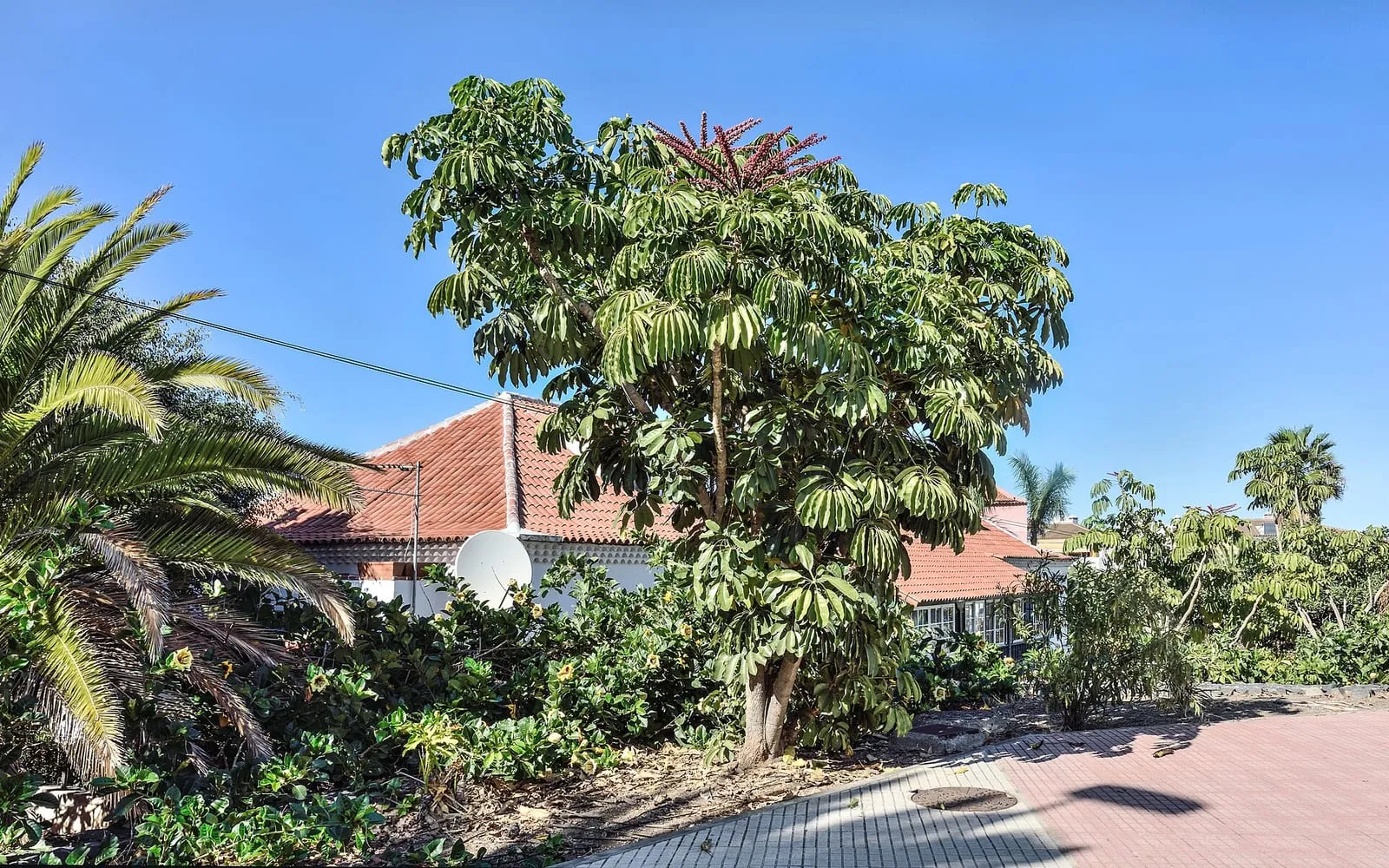
At a glance
- Difficulty
- Easy
- Water
- When the top few centimetres of mix have dried
- Light
- Bright indirect light to light shade
- Temperature
- Warm; keep above about 13 deg C
- Humidity
- Average to high
- Hardiness
- USDA 10-12, RHS H1b, hardy to 13 C
- Type
- Perennial
- Height
- Up to 12 m
- Native to
- eastern Australia, New Guinea
A tender tropical foliage plant from eastern Australia and New Guinea, growing in warm, humid, shaded to filtered light. It needs warmth, humidity and bright indirect light, and it cannot take frost or chill. It is safest above about 13 deg C, and cold, wet compost or dry air spoils it.
Hardiness zones describe winter cold alone. Summer heat, humidity, rainfall and the length of the growing season decide as much, so treat the range as the outer limit rather than as a recommendation.
Toxic if eaten
- Harm from
- Eating it
- Affects
- People, cats and dogs
Schefflera actinophylla, the queensland umbrella, is toxic to cats, dogs and people. The leaves and stems contain insoluble calcium oxalate crystals, and biting into them can cause intense burning of the mouth and lips, drooling, swelling and difficulty swallowing. Keep it well away from pets and children, and wear gloves when taking cuttings.
Sources: ASPCA toxic and non-toxic plants, RHS potentially harmful garden plants
About
Schefflera actinophylla is a fast-growing evergreen from the rainforests of eastern Australia and New Guinea, where it becomes a substantial tree. Indoors it is one of the easier large foliage plants, forming an upright, glossy specimen that fills a room quickly and tolerates a good deal of rough handling.
The name comes from the arrangement of the leaves. Each leaf is divided into leaflets that spread from the top of a long stalk like the ribs of an umbrella, and on a mature plant a single leaf can carry a dozen or more broad, shining leaflets in a full circle. Young plants start with just a few leaflets per leaf and add more as they grow, so the umbrella effect strengthens with age.
In its native forest the tree produces long red flower spikes that radiate from the crown like the arms of an octopus and provide nectar for birds, which is where its other common name comes from. A plant kept as an indoor foliage specimen almost never flowers, so it is grown for the structure of its leaves.
Appearance and character
The leaflets are large, oval and glossy, held out flat in their circular spray, and a well-grown plant has a clean, tropical look. The stems are stout and green when young, thickening and becoming woody at the base as the plant matures into a small indoor tree.
Growth is quick and strongly upward, so without pruning the plant tends to run to a tall, single stem topped with foliage. Cutting back the leading shoot forces side branches and builds a fuller, bushier plant, and the species tolerates hard pruning well.
Where it is from
The plant is native to tropical and subtropical rainforest in northern and eastern Australia and across New Guinea, growing in warm, humid, high-rainfall conditions in bright but often filtered light. It is vigorous to the point of being a weed in some warm regions where it has been introduced, which tells you how easily it grows once it is warm enough.
Its indoor needs follow from that. It needs warmth, decent light, and compost that is kept moist but drains freely, with humidity a bonus instead of a strict requirement. It cannot take frost or a cold, wet root run.
How it grows
Given warmth and light the plant grows fast, extending its stem and adding larger, fuller leaves through the season. Prune the top to keep the height in check and to encourage branching, and the plant responds by pushing new shoots from below the cut.
Propagation is from stem cuttings or by air layering a tall, bare stem to restart it lower down. Cuttings root in warmth and humidity during the growing season, and air layering lets you shorten a plant that has grown too tall and leggy without losing it altogether.
Through the seasons
Spring starts strong growth as light returns. Resume feeding, increase watering to match the new shoots, and carry out any pruning or repotting now so the plant recovers quickly through the growing season.
Summer is the peak of growth. Keep it in bright, indirect light, water when the top of the compost dries, and wipe the glossy leaves occasionally to keep them clean and free of dust.
Autumn slows growth with the shorter days. Reduce feeding and let the surface of the compost dry a little more between waterings as the plant’s needs ease.
Winter is a warm rest. Keep it above its minimum, away from cold glass and draughts, and water sparingly. Cold, wet compost in winter is the main cause of trouble, so err towards keeping it drier and warm.
Care difficulty
One of the easier large houseplants, forgiving of irregular care and quick to recover from a setback. Its speed and toughness make it a good choice for a big, bold plant that fills a corner without constant attention, and it tolerates a range of light from bright to lightly shaded.
The habits to manage are its vigour and its dislike of cold, wet roots. Prune it to keep the size and shape you want, water it with a little restraint, and keep it warm. Leaf drop is its main complaint, and it usually comes from cold, draughts or overwatering more often than from neglect.
Watering
Water when the top few centimetres of the compost have dried, giving enough to wet the whole root ball and letting the excess drain, then wait for the surface to dry before the next. The plant likes to stay lightly moist in growth but rots if it stands in cold, saturated compost.
Cut watering back in winter, when low light and cool conditions slow the plant and dry the pot far more slowly. Overwatering, especially a cool plant in a dark room, is the commonest way to bring on yellowing and dropped leaves, so let the compost dry more between drinks in the dormant months.
Warning signs, diseases and pests
A sudden drop of yellowing leaves usually points to cold, a draught or waterlogged roots. Move the plant somewhere warm and steady, check that the compost is not sodden, and adjust the watering.
Brown, crisp leaf edges suggest dry air or a dried-out root ball. Raise the humidity a little and keep the watering more even.
Warm, dry indoor air favours red spider mite and mealybug, the mites showing as fine speckling and webbing under the leaves and mealybugs as white waxy tufts along the stems and leaf joints. The large, glossy leaves make both easy to spot and to wipe off; treat early and improve the humidity.
Growing environment
Give it bright, indirect light for the fullest, most compact growth. It tolerates light shade but grows thin and leggy in gloom, and harsh direct sun through glass can scorch the leaves, so a bright spot out of the sun’s direct line suits it best.
Keep it warm and out of cold draughts, and pot it into a light, free-draining but moisture-retentive mix in a container with drainage holes. Repot a fast-growing young plant every year or two to keep it in scale with its pot.
Feeding
Feed with a dilute balanced liquid fertiliser through spring and summer while the plant is growing strongly in warmth and light.
Stop feeding in autumn and winter while growth is at rest. After repotting, hold off for a few weeks while the roots settle into the fresh compost, which already holds enough to support early growth.
Troubleshooting
Why is my plant dropping leaves? Cold, draughts or overwatering are the usual causes. Keep it warm and steady, check the compost is not waterlogged, and adjust the watering.
It has grown tall and bare with leaves only at the top. This is its natural vigour. Cut back the leading stem to force branching, or air layer the top to restart the plant lower down.
The leaf edges are browning. Dry air or a dry root ball. Raise the humidity and keep the watering even.
How do I propagate it? Take stem cuttings in the growing season and root them in warmth and humidity, or air layer a tall, leggy stem.
Is it safe around pets? See the toxicity note above. As a precaution, keep it out of reach of pets that chew, and clean up any dropped leaves.
Queensland Umbrella problem guides
Not sure what is wrong? See the common houseplant pests guide.