
Houseplant
Narrow-Leaf Palm-Lily
Cordyline stricta
Also known as Cordyline stricta
How to grow Cordyline stricta, the narrow-leaf palm-lily, a tough Australian species with stiff upright leaves, purple flowers and deep shade tolerance.
At a glance
- Difficulty
- Easy
- Water
- When the top few centimetres of mix have dried
- Light
- Bright indirect light to light shade
- Temperature
- Warm; keep above about 7 deg C
- Humidity
- Average to high
- Hardiness
- USDA 9b-11, RHS H2, hardy to 2 C
- Type
- Perennial
- Height
- 2-5 m
- Native to
- eastern Australia
A subtropical forest-understorey plant from eastern Australia, growing in warm, humid, shaded to filtered light. It needs warmth, humidity and bright indirect light, and it takes at most a brief, very light frost. It is safest above about 7 deg C, and cold, wet compost or dry air spoils it.
Hardiness zones describe winter cold alone. Summer heat, humidity, rainfall and the length of the growing season decide as much, so treat the range as the outer limit rather than as a recommendation.
Harmful to cats and dogs if eaten
- Harm from
- Eating it
- Affects
- Cats and dogs
Cordyline stricta, the narrow-leaf palm-lily, is toxic to cats and dogs. The leaves contain saponins, and chewing or swallowing them can cause vomiting, sometimes with blood, along with drooling, a loss of appetite and, in cats, dilated pupils. People are far less sensitive, but keep it away from pets and stop children chewing the foliage.
Sources: ASPCA toxic and non-toxic plants, RHS potentially harmful garden plants
About
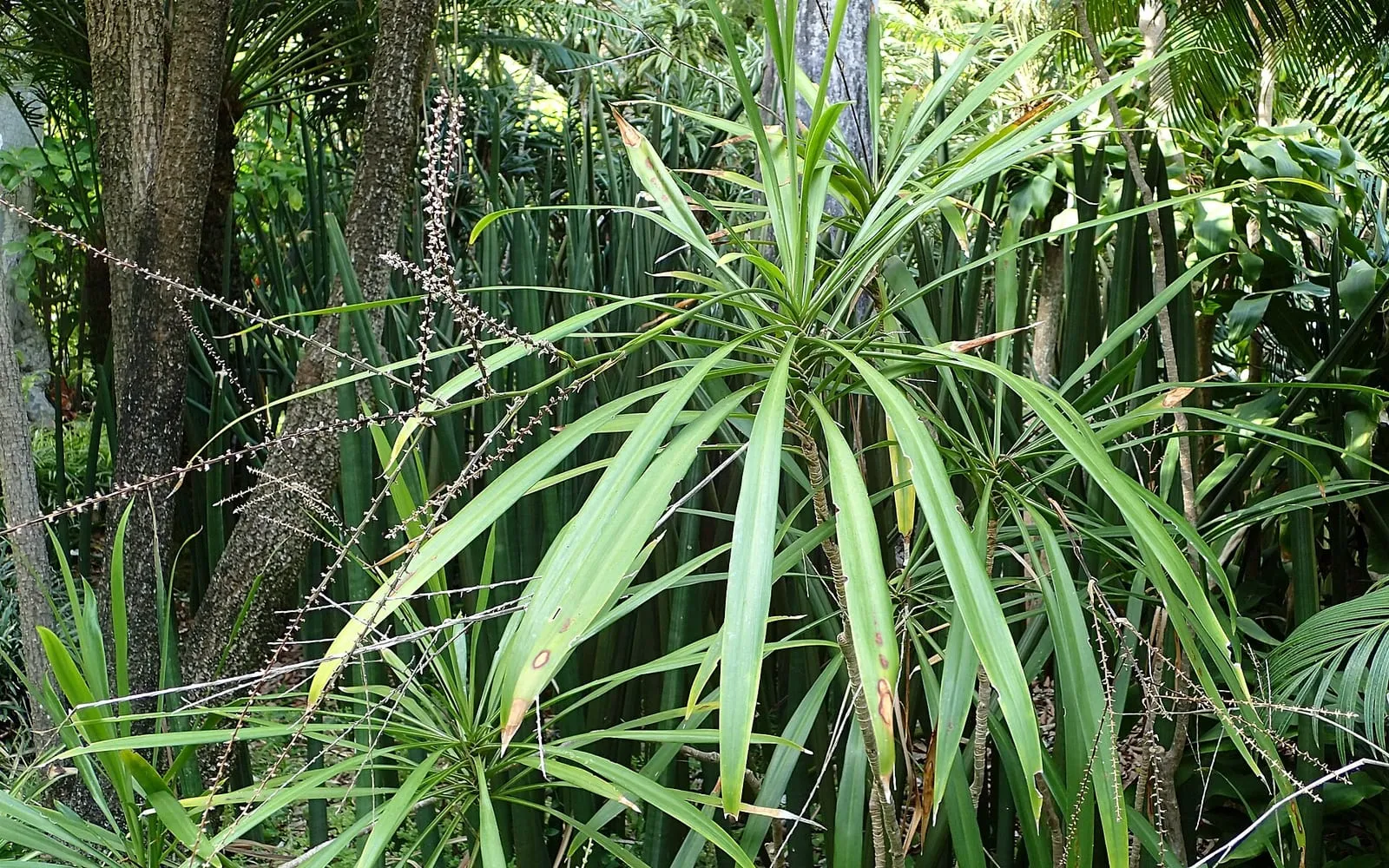
Cordyline stricta is one of the toughest and most upright palm lilies, a clump of slim canes carrying stiff, narrow leaves that stand out straight instead of arching over. The species name stricta means erect, and that rigid, vertical habit marks it apart from the broad, drooping-leaved members of the group. That upright shape is why it is often used as an indoor screen or a shaded courtyard specimen.
It shares the palm-lily label with its relatives, and the label is loose in the same way: this is neither a palm nor a lily but a monocot in the asparagus family, storing reserves in cane-like stems. Stricta differs from the others in its tolerance of low light and its scented purple flowers in summer.
Indoors it is tough within its warmth range, taking shade and irregular care while holding a neat, columnar shape.
Appearance and character
The leaves are long, narrow and firm, deep green and often flushed with purple on the newest growth, and they are held stiffly upright along the cane. They lack the obvious stalk of the broad-leaved palm lily, sitting close against the stem and giving the plant its tight, vertical silhouette.
The stems grow as slender canes that clump from the base, so an old plant becomes a dense stand of uprights. In summer it can throw airy sprays of small mauve-to-violet flowers, lightly fragrant, which give way to dark, near-black berries. It is one of the more free-flowering cabbage-tree relatives in cultivation.
Where it is from
Cordyline stricta comes from eastern Australia, along the coast and ranges of New South Wales and Queensland, where it grows in the shaded understorey of moist forests and rainforest margins. It is a plant of the dim lower storey, used to broken light and a cool, humus-rich root run.
That deep-shade upbringing is the reason it copes with positions too dark for most foliage plants. It needs warmth, steady moisture and shelter instead of strong sun, so a shaded room or a spot well back from a window can suit it. The purple tones in its leaves and flowers come out best with a little more light.
How it grows
The plant grows through the warm season and rests in winter, thickening its clump by pushing fresh canes from the base while each cane lengthens and adds narrow leaves at the top. Lower leaves fall away as the canes rise, lifting the leafy crowns clear of the base.
Grow it in a light, free-draining mix that holds some moisture, opening a peat-free compost with grit or bark. It accepts low light, but keep it warm and evenly moist in growth, and repot in spring when the clump crowds the pot. The stiff canes take well to being cut back to control height, resprouting from below the cut.
Propagation is easy. Divide the clump, root sections of cane in warm damp mix, or use the seed from ripe berries. Cut canes root readily, so this is one of the simpler palm lilies to increase.
Through the seasons
Spring wakes the plant into growth. Resume regular watering, start feeding, and divide or repot crowded clumps now.
Summer is the main growing spell and the flowering season. Keep it in filtered light, water once the surface dries, and expect the mauve flower sprays on established plants.
Autumn slows growth. Reduce feeding and let the compost dry a little more between waterings.
Winter is a quiet period. Keep it warm and above about 7 deg C, water lightly, and hold it clear of cold draughts and dry radiator heat.
Care difficulty
This is one of the most forgiving houseplants in the group. It tolerates shade, tolerates a missed watering, and recovers well from a hard cutback. It needs warmth and a root run that never dries out completely or stays cold and wet.
The problems are the same two that trouble its relatives. Dry, brown leaf edges mean arid air or an over-dry pot. A soft, dark cane base means cold, waterlogged roots. Improve the conditions and new growth should recover.
Watering
Water when the top few centimetres of mix have dried, wetting the rootball fully and letting the surplus drain. The narrow leaves lose water more slowly than broad ones, so this species tolerates a slightly drier regime than the broad-leaved palm lily and copes with the odd lapse.
Cut back in winter, letting the surface dry further between drinks, since the combination of cold and a sodden pot is what rots the canes. An occasional drink of rainwater helps if your tap water is hard enough to mark the leaf tips.
Warning signs, diseases and pests
Browning leaf tips and edges point to dry air or a pot allowed to dry out too far. Raise the humidity, move it away from heat, and keep the root run evenly moist.
A cane that goes soft and dark at the base has root rot from cold, waterlogged compost. Improve drainage, move it to warmth, and let the mix dry before watering again.
Dry indoor air brings spider mites, which mottle the leaves, and mealybugs, which cluster as white tufts in the leaf bases. Wipe the foliage clean, lift the humidity, and treat a stubborn infestation with an insecticidal soap.
Growing environment
Light shade to filtered light gives the neatest plant, and stricta will hold up in low light where other foliage plants thin out. A little more brightness deepens the purple in the newest leaves and encourages flowering, though direct midday sun can bleach the foliage.
Keep it warm and give the air some moisture. Keep it away from cold glass and hot dry draughts, and group it with other plants or stand it on a damp tray to keep the stiff, upright leaves in good order.
Feeding
Feed through spring and summer with a dilute balanced liquid fertiliser at about half strength, every few weeks during active growth. Steady, weak feeding keeps the canes firm and the leaf colour strong.
Stop feeding in autumn and give none in winter. A recently repotted plant can go several weeks before it needs any feed, living on what the fresh mix provides.
Troubleshooting
Why are the leaf tips browning? Dry air or a pot dried out too far. Raise the humidity and keep the mix evenly moist.
Can it really grow in a dark corner? It tolerates low light better than most, though the purple tones and flowering both improve with a little more brightness.
A cane has gone soft at the base. What happened? Cold, waterlogged compost has caused root rot. Improve drainage, warm it up, and water sparingly while it recovers.
How do I propagate it? Divide the clump, root cane cuttings in warm damp mix, or sow seed from ripe berries. Cane cuttings strike easily.
Is it safe around pets? No. The ASPCA lists Cordyline as toxic to cats and dogs, because the leaves contain saponins, so keep it away from pets that chew.
Narrow-Leaf Palm-Lily problem guides
Not sure what is wrong? See the common houseplant pests guide.