
Houseplant
Pointed Aneilema
Aneilema acuminatum
Also known as Aneilema acuminatum
How to grow Aneilema acuminatum, a rainforest spiderwort from New Guinea and eastern Australia with long-tapering leaf tips, and how to water, feed and place this foliage plant.
At a glance
- Difficulty
- Easy
- Water
- When the top few centimetres of mix have dried
- Light
- Bright indirect light to light shade
- Temperature
- Warm; keep above about 13 deg C
- Humidity
- Average to high
- Hardiness
- USDA 10-12, RHS H1b, hardy to 13 C
- Type
- Perennial
- Height
- 30-60 cm
- Native to
- Maluku, New Guinea, Solomon Islands, Eastern Australia
A tender tropical foliage plant from New Guinea and eastern Australia, growing in warm, humid, shaded to filtered light. It needs warmth, humidity and bright indirect light, and it cannot take frost or chill. It is safest above about 13 deg C, and cold, wet compost or dry air spoils it.
Hardiness zones describe winter cold alone. Summer heat, humidity, rainfall and the length of the growing season decide as much, so treat the range as the outer limit rather than as a recommendation.
Not known to be toxic
Aneilema acuminatum, the pointed aneilema, is not recorded among the seriously toxic plants, and related plants in its group are not listed as toxic by the ASPCA or the RHS. A pet or child that chewed a leaf would be unlikely to come to serious harm beyond a possible mild stomach upset.
Sources: ASPCA toxic and non-toxic plants, RHS potentially harmful garden plants
About
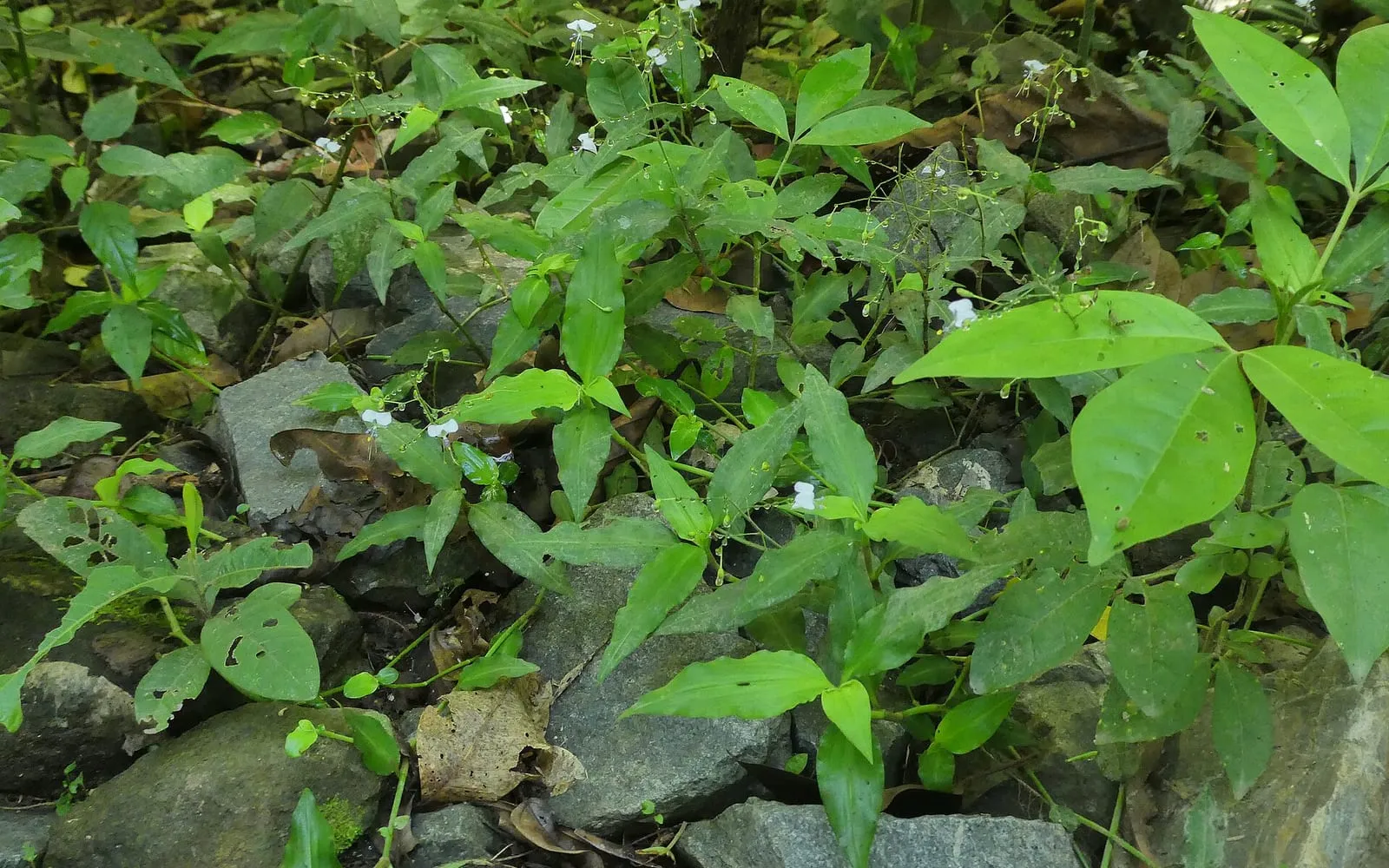
Aneilema acuminatum is named for its leaf tips, which taper to a long point, the meaning of the word acuminate in botany. It is one of the many spiderworts in the genus Aneilema, herbs of the tropical shade that rarely reach a garden centre and are grown mostly by those who take an interest in the family. It is grown for its neat, tapering leaves rather than for showy flowers.
The flowers are the small, three-petalled, single-morning blooms shared across the family, borne in an open branched head above the leaves. It comes from the warm, humid, dappled interior of rainforest in Maluku, New Guinea, the Solomon Islands and eastern Australia, so it needs heat, moist air and soft light beneath a light canopy. Cold, waterlogged roots and dry, heated indoor air are the two main risks, and both are simple enough to avoid.
Appearance and character
The tapering leaf is the main feature. Each blade is lance-shaped and drawn out at the tip into a fine point, soft in texture and clasping the stem where it joins, a plain green that suits the shaded light it grows in.
The stems are fleshy and jointed, upright when young and leaning as they lengthen, rising from a central crown into a loose, leafy clump. In good conditions the plant raises a slender, branching spray of tiny pale flowers above the foliage.
Where it is from
Aneilema acuminatum grows on the floor and margins of rainforest and along streams in Maluku, New Guinea, the Solomon Islands and eastern Australia, rooting in moist, humus-rich ground where the canopy filters the sun to a soft, shifting light. It is a plant of warm, damp shade, among leaf litter and the shelter of taller vegetation.
That forest interior explains its needs. It needs even light under a light canopy, warmth that stays well clear of frost, and air kept from drying out. An airy, leaf-mouldy compost that holds moisture yet drains freely is closest to the forest floor it roots in, keeping the crown from either baking or drowning.
How it grows
The clump builds through the warm months, sending up fresh pointed-leaved stems from the crown, then slows when the light and warmth fall. It is a moderate, tidy grower instead of a sprawling coloniser.
Grow it in a pot of open, moisture-holding compost, kept evenly damp while in growth and drier when cool, and set it in shade out of direct sun. It responds to steady care. Increase it by rooting a jointed stem cutting in a warm, humid propagator, or by dividing an established plant as it starts growing in spring.
Through the seasons
Spring brings the crown back into growth. Divide a crowded plant, refresh the compost, and resume watering and feeding.
Summer carries the main flush of pointed leaves. Keep the plant warm, shaded and humid, and hold the compost evenly damp.
Autumn slows it as the days shorten. Reduce feeding and let the compost dry a little more between waterings.
Winter is a rest. Water sparingly, keep the plant frost-free and away from cold glass, and wait for spring before expecting fresh leaves.
Care difficulty
Given its liking for shade and moisture, it is an undemanding plant to keep. It needs light without direct sun, warmth clear of frost, humid air and a compost that holds moisture while draining. Most failures come down to cold, waterlogged roots that rot the crown, or dry, heated air that browns the fine leaf tips. Direct sun on the soft foliage scorches it.
Watering
Keep the compost evenly moist while the plant is in growth, watering once the surface begins to dry and letting the excess drain. The soft-leaved forest habit means it dislikes a hard dry-out during the warm months.
Ease back through winter, when growth stalls and cold, wet compost is the main hazard. Let more of the pot dry between waterings then, keeping the roots barely moist instead of saturated through the resting spell.
Warning signs, diseases and pests
A soft, yellowing crown and collapsing stems mean cold, waterlogged roots. Cut back the watering, take healthy cuttings as a safeguard, and repot into fresher, more open compost.
Brown, shrivelled leaf tips usually mean dry air around this fine-pointed foliage. Raise humidity and move the plant off heat sources. Spider mites can bronze the soft leaves in dry rooms and mealybugs settle in the leaf joints; inspect the plant regularly and treat either early before it spreads.
Growing environment
Site it in even, filtered light with no direct sun, such as a shaded room or a spot behind a sheer curtain. It grows best in the soft light of a forest interior and burns in strong sun, while too little light draws the clump thin.
Keep the room warm and the air moist, grouping it with other plants or standing it over a humidity tray. Pot it in an airy, leaf-mould-rich compost that drains freely, in a container sized to the clump.
Feeding
Feed a weak, balanced liquid fertiliser every few weeks through spring and summer to keep the foliage fresh. Light, regular feeding suits its modest growth, where a strong dose only forces soft, weak stems.
Stop feeding over the winter rest. A newly potted or divided plant draws on the fresh compost for its first weeks and needs no feed until it is established.
Troubleshooting
Why are the leaf tips browning? Dry air on fine-pointed leaves. Raise the humidity and keep the plant clear of radiators.
Why has the crown gone soft? Cold, waterlogged compost. Reduce watering, take healthy cuttings, and repot into more open mix.
Why are the leaves scorched? Direct sun. Move the plant into shade or behind light fabric.
How do I propagate it? Root a jointed stem cutting in warmth, or divide an established plant in spring.
Is it safe around pets? No serious hazard is recorded for it or for its group, but it has not been tested, and spiderworts can irritate the skin or mouth, so keep a chewing pet from it.
Pointed Aneilema problem guides
Not sure what is wrong? See the common houseplant pests guide.