
Outdoor plant
Puncture Vine
Tribulus terrestris
Also known as Caltrop, Goathead, Gokshura
What puncture vine is, Tribulus terrestris, a sprawling warm-climate weed with vicious spiny burrs, and how to identify and control it.
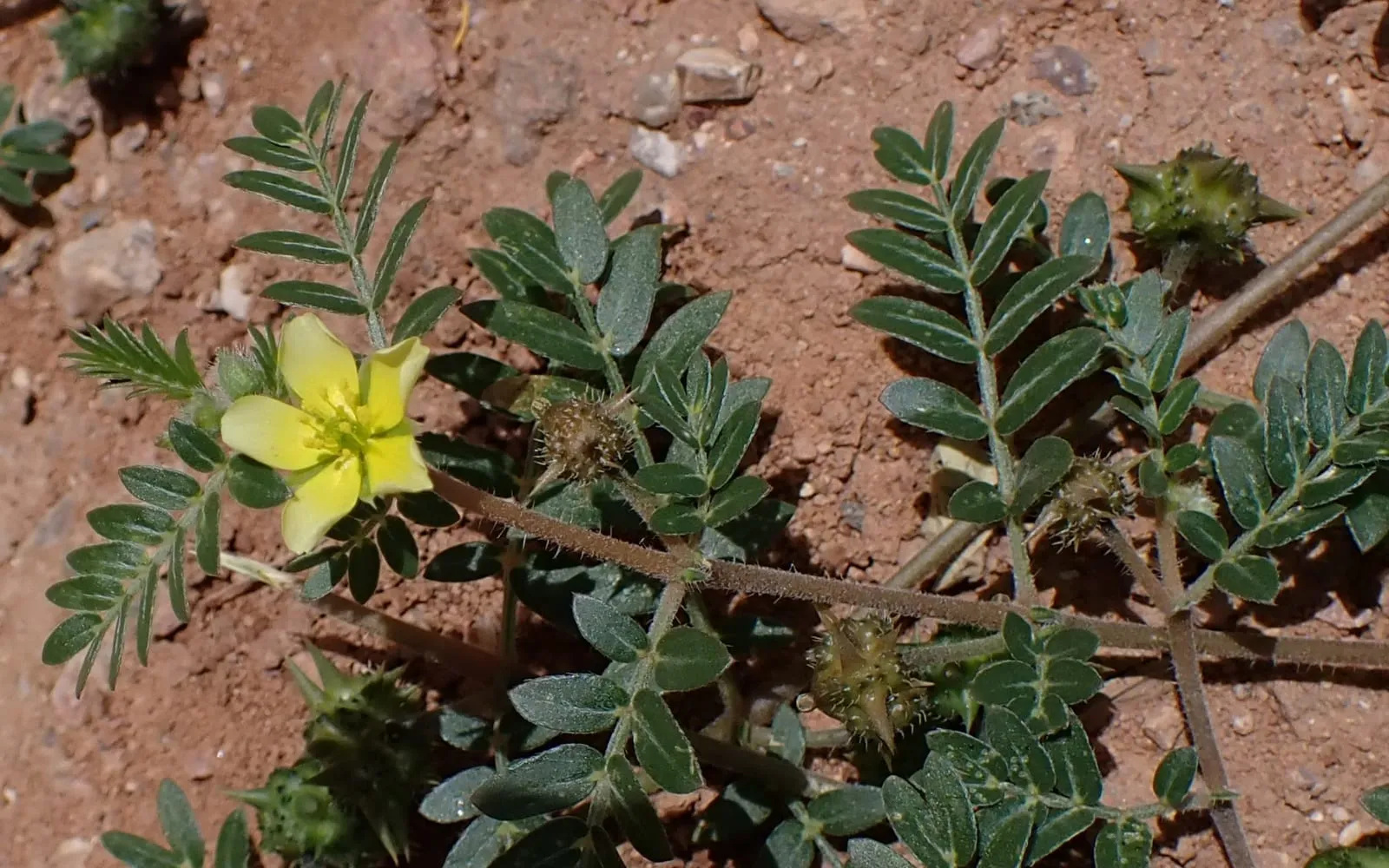
At a glance
- Difficulty
- Easy
- Water
- None; it is a drought-loving weed
- Light
- Full sun
- Temperature
- Frost-tender; a warm-season annual
- Hardiness
- USDA 8-11, RHS H2, hardy to 2 C
- Type
- Sprawling summer annual
- Height
- 10 to 20 cm high, spreading to a metre or more
- Native to
- Europe, Asia and Africa
A warm-season annual of hot, dry ground that grows fast in summer heat and dies at the first frost, carrying on through abundant, long-lived seed. It thrives on poor, dry, disturbed soils in strong sun and tolerates drought, so it colonises roadsides, tracks and waste ground in warm climates and has become a serious weed far beyond its native range.
Hardiness zones describe winter cold alone. Summer heat, humidity, rainfall and the length of the growing season decide as much, so treat the range as the outer limit rather than as a recommendation.
Toxic if eaten
- Do not eat
- The foliage, toxic to grazing livestock, and the sharply spined fruit
- Harm from
- Eating it and handling it
- Affects
- People and horses
Puncture vine causes harm in two ways. Its foliage, grazed in quantity by livestock, especially sheep, contains compounds that damage the liver and bring on a severe photosensitivity known as yellow bighead or geeldikkop. Lush growth can also carry toxic nitrate levels, so it is a recognised poisonous weed of rangeland. Its hard fruits are armed with sharp spines that pierce skin, bare feet, animals' paws and mouths and even bicycle tyres, causing painful injury and wounds that can become infected. The plant is also sold as the supplement gokshura, whose benefits are unproven and which should not be taken without advice. Treat it as a weed to remove instead of a plant to grow.
Sources: RHS potentially harmful garden plants, North Carolina Extension plant toxicity database
About
Puncture vine is a sprawling warm-climate weed, and this guide is here to help you recognise and control it instead of to grow it. It runs flat across hot, dry, open ground in a mat of ferny leaves and small yellow flowers, and it earns its name from the fruit, which breaks into hard, sharply spined segments that puncture whatever presses on them.
Those spiny burrs are the reason it is so disliked. They pierce bare feet, dogs’ paws, tyres and even thin shoe soles, and the names goathead and caltrop describe their shape and their habit of landing point up. In many warm regions it is a declared noxious weed.
It can also poison grazing animals. Grazed by sheep and other livestock it can poison them, causing a severe reaction to sunlight, so it is a problem on rangeland as well as on paths and drives. It is sometimes sold as a supplement called gokshura, though that is no reason to tolerate it where it grows.
Appearance and character
Stems trail flat along the ground from a central root, radiating out to a metre or more and forming a low, spreading mat that hugs the soil in open, sunny ground.
Leaves are pinnate, made of several pairs of small oval leaflets along a short stalk, soft green and slightly hairy, giving a ferny look to the sprawling stems.
Flowers are small, bright yellow, with five petals, opening singly along the stems through the warm season. They are modest and easily missed among the foliage.
Fruit is the dangerous part, a hard, woody structure that splits into several segments, each armed with two or more stout, sharp spines. These are the caltrops that puncture feet and tyres, and each holds seeds.
The whole plant is a low, ground-hugging summer annual, unremarkable to look at until the spiny fruit forms, which is when it becomes a genuine hazard.
Where it is from
Tribulus terrestris is native to the warmer parts of Europe, Asia and Africa, on dry, sandy, disturbed ground in strong sun. It has spread as a weed to warm regions worldwide, including much of the Americas and Australia.
Its liking for hot, dry, poor ground is why it thrives where little else will, on roadsides, tracks, car parks, waste ground and overgrazed land. Drought, poor soil and strong sun suit it. Frost and shade are the main things that hold it back.
How it grows
Seed germinates in warm soil and the plant grows fast, sprawling into a mat, flowering and setting its spiny fruit within weeks, then continuing to seed until the first frost kills it. A single plant can produce a great many burrs.
The seed is hard-coated and long-lived, surviving years in the soil and germinating over several seasons, and the spiny burrs spread it by catching in tyres, shoes, hooves and fur. That is how the weed travels and why it is so persistent.
You do not grow it. Control means pulling or hoeing plants while young, before the spiny fruit forms and seeds, and clearing burrs from the ground. Because the seed is long-lived, keeping on top of it over several seasons is usually needed.
Wear gloves and stout shoes when clearing it, dispose of the spiny fruit rather than leaving it underfoot, and avoid letting it seed near paths, drives, play areas and grazing.
Through the seasons
Late spring to early summer brings germination as the soil warms, the best time to hoe or pull plants before they flower and fruit.
Summer brings fast sprawling growth, flowering and the setting of the spiny fruit, the point at which the plant becomes a hazard. Remove plants before the burrs harden and drop.
Autumn is when the last seed ripens and scatters, and the first frost then kills the plant, leaving the durable burrs and seed behind.
Winter leaves nothing of the plant except its long-lived seed, which waits in the soil for the following warm season.
Care difficulty
There is no cultivation to rate, since this is a weed to control rather than a plant to grow. Control is made harder by long-lived seed and by the spiny burrs that spread it, so clearing it reliably takes vigilance over several seasons and care to remove plants before they seed.
Watering
None is required or wanted. This is a drought-loving weed that thrives on dry, poor ground and needs no watering from anyone. Managing it never involves keeping it alive.
Warning signs, diseases and pests
The spiny fruits are the main problem. They injure bare feet, dogs’ and other animals’ paws and mouths, and puncture tyres, and the wounds they cause can become infected, so the burrs are the main danger to people and pets.
Grazing livestock, especially sheep, can be poisoned by eating the foliage in quantity, developing a severe sensitivity to sunlight known as yellow bighead, so it is a serious weed on rangeland and should be kept out of grazing.
Take its control seriously and dispose of the spiny fruit carefully. It is also a declared noxious weed in many places, where there may be a duty to control it.
Growing environment
It grows in full sun on hot, dry, poor, disturbed ground, and that is exactly the setting to deny it. Shade and competition from dense planting or healthy turf discourage it, since it is a weed of bare, open, sunny ground.
It has no soil needs beyond dryness and sun, thriving on sand, gravel and compacted waste ground. Keeping ground covered, shaded or densely planted is one way to give it no room.
The practical aim is to keep it out of paths, drives, play areas and grazing, and to clear it from the bare, sunny, dry spots where it takes hold.
Feeding
Never feed it. Feeding would only help a harmful weed, and it thrives on poor ground in any case. There is no reason to encourage it and every reason to remove it.
Troubleshooting
Something sharp keeps puncturing my feet or tyres. Very likely puncture vine burrs. The hard, spiny fruit segments litter the ground where the plant has grown and pierce feet, paws and tyres. Clear the plants and the burrs, wearing gloves and stout shoes.
How do I get rid of it? Pull or hoe the plants while young, before the spiny fruit forms and seeds, and clear fallen burrs. Because the seed is long-lived, check repeatedly through the season and over several years.
Is it dangerous to my dog? The spiny burrs can lodge in and injure a dog’s paws and mouth, so keep dogs off ground where it has seeded and clear the burrs. The foliage is more a hazard to grazing livestock than to pets.
Can I grow it for gokshura? It is sold as the supplement gokshura, but its benefits are unproven, it is a noxious weed in many places, and its spiny fruit is a hazard, so it is not a plant to cultivate. Any use of the supplement should follow proper advice.
Why does it keep coming back? Its seed is hard-coated and long-lived, germinating over several years, and the burrs spread easily on tyres, shoes and animals. Persistent removal before it seeds, over several seasons, is what clears it.