
Pest
Moles
Talpa europaea and other Talpidae
Also called Mole, Molehills, Moleheaps
Heaps of fine soil across a lawn and a run of raised tunnels through a bed. Moles eat earthworms and grubs rather than roots, so the damage is mechanical, and the animal chewing your bulbs is almost always a vole using the tunnel.
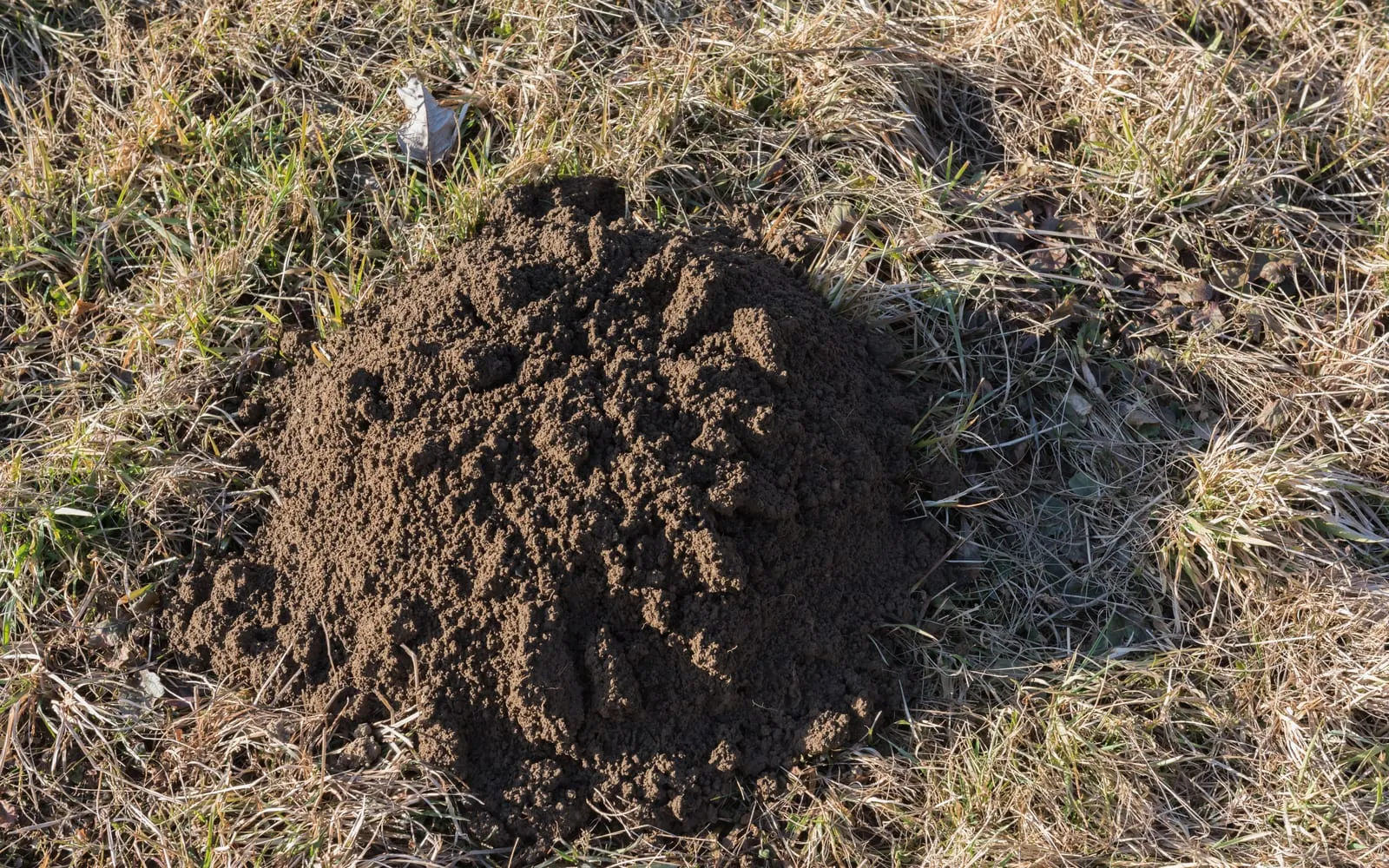
At a glance
- Type
- Pest
- Cause
- Mammal
- Severity
- Cosmetic
- Affects
- Garden plants, Herbs and edibles
- Active
- January to December
- Established in
- Europe, North America and Asia
What you are seeing
- Heaps of fine crumbly soil pushed up onto a lawn or bed, with no hole visible in them
- A run of raised, cracked turf where a shallow tunnel has been driven just under the surface
- Hills appearing overnight and most often in late winter and early spring
- Seedlings and small plants tilted, lifted or wilting where a tunnel has passed beneath them
- Turf sounding hollow and giving underfoot along a run
- Several hills in a line across the lawn, usually the work of one animal
- Plants dug up and eaten at the roots, which is a different animal using the same tunnels
Before you treat anything
Do not use gassing products, smoke bombs or poison in mole tunnels. Aluminium phosphide is restricted to trained professionals because it releases phosphine gas, which kills people as readily as it kills moles, and strychnine was withdrawn for mole control across Europe in 2006. Improvised remedies involving exhaust fumes, petrol or broken glass are dangerous, ineffective and in most jurisdictions an offence under animal welfare law.
What you are looking at
Conical heaps of fine loose soil pushed up onto the lawn overnight, with no visible hole in any of them. Between the heaps, a line of raised turf where a tunnel has been driven along just under the surface, cracked along the top and giving underfoot when you step on it.
In a bed the sign is different. A row of seedlings tilted over, or a small plant wilting for no reason, with the soil beneath it loose and hollow.
The heaps come in runs, often several in a line, and they usually appear in late winter or early spring. That is one animal working, not a colony. Moles are solitary and hold a territory against each other, so a lawn that looks overrun is generally the work of a single mole extending its tunnels.
It has not touched your plants
A mole eats earthworms, and after that leatherjackets, chafer grubs, beetle larvae and anything else that falls into its tunnels. The tunnel system is a trap rather than a route: worms drop into it, the mole patrols and collects them, and it stores surplus worms alive in a chamber with their heads bitten off so they cannot crawl away. It has the teeth of an insectivore and it cannot digest plant material.
So the damage moles do is mechanical. Heaps on a lawn spoil the surface and blunt the mower blades. A shallow run under a seed row heaves the plants and opens air pockets around their roots, which dries them out. Both are real and neither is the mole eating anything of yours.
There is an upside on the balance sheet. Molehill soil is subsoil brought up, worked over and left in a loose heap with no weed seed in it, and gardeners collected it for potting compost long before anyone sold potting compost. Take the heaps away with a shovel rather than raking them flat, since spreading them over the turf smothers the grass and gives you bare patches instead.
The animal that is eating your bulbs
Almost every account of moles destroying a crop turns out to be a vole.
Voles move into mole runs and use them as a ready-made tunnel network, and unlike the mole they are rodents with a rodent’s appetite. They eat bulbs, tubers, roots and the bark at the base of young trees, and they do it in quantity. The mole made the tunnel and the vole did the damage, and the mole gets trapped for it.
The tells are clear once you know to look. Voles leave neat round holes about 4 cm across opening at the surface, which moles do not, since a mole hardly ever breaks the surface deliberately. Damage shows as gnawing, with tooth marks on a bulb or a strip of bark cleanly removed near ground level. And voles leave small green-brown droppings in the runs.
If bulbs are going missing, deal with the vole. Trapping the mole will not stop it, and taking the mole out leaves the tunnel system to whatever moves in next.
What works, and what the law says
Exclusion is the only measure that reliably keeps a mole out of a piece of ground, and it has to be installed before the turf goes down. Mole mesh under a new lawn, or across the base of a raised bed, stops the heaps coming up while leaving the animal free below. Retrofitting it means lifting the lawn.
Trapping works and is a skilled job. In Great Britain a spring trap used for moles has to be one approved under the Spring Traps Approval Order, set properly in an active tunnel, and the Wild Mammals (Protection) Act 1996 makes causing unnecessary suffering an offence. Germany gives the mole full legal protection and killing one there is illegal. Rules elsewhere vary and are worth checking rather than assuming.
Gassing is for trained operators only. Aluminium phosphide releases phosphine, which is lethal to people, and the improvised versions involving exhaust pipes or petrol are dangerous, useless and in most places an offence.
Everything else on sale is folklore. Ultrasonic stakes, windmills, mothballs, buried bottles and chilli powder have no evidence behind them, and the best any of them manages is to move the animal to the other end of the garden.
What to do about it
Work out whether the mole is doing anything worse than making heaps.
Shovel the molehills up and keep the soil for potting rather than raking it into the lawn.
Tread or roll the raised runs back down and water afterwards to settle the roots.
Check for vole holes, gnawed bulbs and stripped bark before blaming the mole for eating anything.
Lay mole mesh under a new lawn or a raised bed at the time you build it.
Expect the activity to peak in late winter and to be one animal.
Leave trapping to someone competent, and check what your own law allows first.
Use no gas, no poison and none of the devices sold as deterrents.
What it gets mistaken for
Voles use mole tunnels and eat roots, bulbs and bark. Neat 4 cm holes at the surface and tooth marks on a bulb are the tells.
Birds and badgers digging for leatherjackets and chafer grubs tear the turf up and scatter it, and the grass comes away because the roots have been eaten.
Rabbits scrape shallow bare hollows, graze growth off at a clean angle and leave pellets.
Ants throw up fine soil around a nest in dry summer weather, in a low spreading mound rather than a conical heap, with ants in it.
Worm casts are small squiggles of soil on the surface in mild damp weather, a few centimetres across rather than a heap, and they are the work of the animal the mole is hunting.
What to do, in order
Start here
Prevention, and the changes that stop the problem returning. Most of these pages should end at this tier.
- Work out whether you have a problem or a molehill
- Moles eat earthworms, leatherjackets, chafer grubs and other soil animals, and they do not eat plants. On a lawn the damage is the heaps, which spoil the look of it and blunt a mower. In a border it is the tunnelling under seedlings. Neither is the plant being attacked, and a mole in the garden is a fair sign the soil holds a good worm population.
- Take the molehills as free loam
- The soil in a molehill has been brought up from below, sieved by the animal, and left in a heap with no weed seed in it. Gardeners used to collect it deliberately for seed compost and potting mixes, and it is still one of the better free ingredients in a garden. Collect it with a shovel rather than raking it into the turf, where it will smother the grass and bring bare patches.
- Firm the ground back down
- Where a shallow run has lifted turf or heaved a row of seedlings, tread the line down or roll it, and water afterwards to settle the soil back around the roots. Plants tilted by a tunnel usually recover if you do this within a few days.
- Expect it to be seasonal, and expect it to be one animal
- Activity peaks in late winter and early spring, when moles are extending territory and looking for mates, and again after autumn rain brings worms nearer the surface. Moles are solitary and territorial, so a lawn covered in hills is usually the work of a single animal rather than an infestation. When it leaves or dies, another may take the same tunnel system over, since the tunnels are the valuable thing.
- Ignore the folk remedies
- Mothballs, broken glass, chilli powder, buried bottles, windmills and ultrasonic stakes are all sold or recommended for moles, and none of them has evidence behind it. Several are cruel and a few are illegal. The animal is under your feet in a tunnel system it may share with the next three gardens, and a device in one lawn moves it along at best.
Then reach for a barrier
Netting, hand removal and water. Nothing here harms anything except the target.
- Lay mole mesh before you lay the turf
- A fine wire or plastic mesh set under a new lawn stops moles pushing heaps up through it while leaving them free to tunnel below. It is the one reliable exclusion available and it has to go in at construction, which is the catch. The same applies to a raised bed, where a sheet of mesh across the bottom keeps the whole thing clear.
- Protect individual plants with a buried basket
- Where the concern is a run of tunnels heaving a particular group of plants, a mesh basket or a mesh-lined planting hole holds the rootball steady. This is worth the trouble for a few specimens and not for a border.
- Bury a barrier with a lip where a boundary matters
- Wire mesh buried on edge to at least 30 cm with the top few centimetres turned outwards will turn a mole away from a small plot such as a vegetable garden or a bowling green. Over any distance the cost and the digging make it impractical.
- Trap only if you know what you are doing, and check the law first
- Trapping is the method that works and it is not a casual undertaking. In Great Britain any spring trap used for moles must be one approved under the Spring Traps Approval Order and set correctly in the tunnel, and the Wild Mammals (Protection) Act 1996 makes causing unnecessary suffering an offence. Germany protects the mole outright and killing one is illegal. Several other countries have their own rules. Check what applies where you are, and where you are not confident of setting a trap properly, employ someone who does it for a living or leave the animal alone.
Plants affected
Guides that name it among the problems to watch for. The list is the plants it is characteristic of rather than everything it will feed on.