
Houseplant
Porter's Pereskiopsis
Pereskiopsis porteri
Also known as Pereskiopsis porteri, Leaf Cactus, Grafting Cactus
How to grow Pereskiopsis porteri, a leaf-bearing cactus best known as grafting stock, with thin leafy stems and remarkable speed.
At a glance
- Difficulty
- Easy
- Water
- When the top of the mix is drying; keep steadily moist in warm growth
- Light
- Bright light with some direct sun
- Temperature
- Warm; keep above about 12 deg C
- Humidity
- Average to high
- Hardiness
- USDA 10-12, RHS H1c, hardy to 10 C
- Type
- Evergreen leaf-bearing cactus
- Height
- 1 m or more
- Native to
- Mexico
A leaf-bearing cactus from the warm, seasonally dry country of Mexico, more like a leafy shrub than a typical cactus. It needs warmth, bright light and, unusually for a cactus, plenty of water and feeding while in active growth. It has no frost tolerance, stalls and drops its leaves below about 12 deg C, and grows fastest kept warm, bright and well watered.
Hardiness zones describe winter cold alone. Summer heat, humidity, rainfall and the length of the growing season decide as much, so treat the range as the outer limit rather than as a recommendation.
Not known to be toxic
A safe plant to keep around pets and children in the chemical sense, since Pereskiopsis is not listed as toxic by the ASPCA or the RHS and holds no harmful compound. The main caution is physical: the areoles carry tufts of fine, barbed glochids that lodge painfully in skin and are hard to remove, along with longer spines, so handle the plant with care and keep it where a pet will not brush against it.
Sources: ASPCA toxic and non-toxic plants, RHS potentially harmful garden plants
About
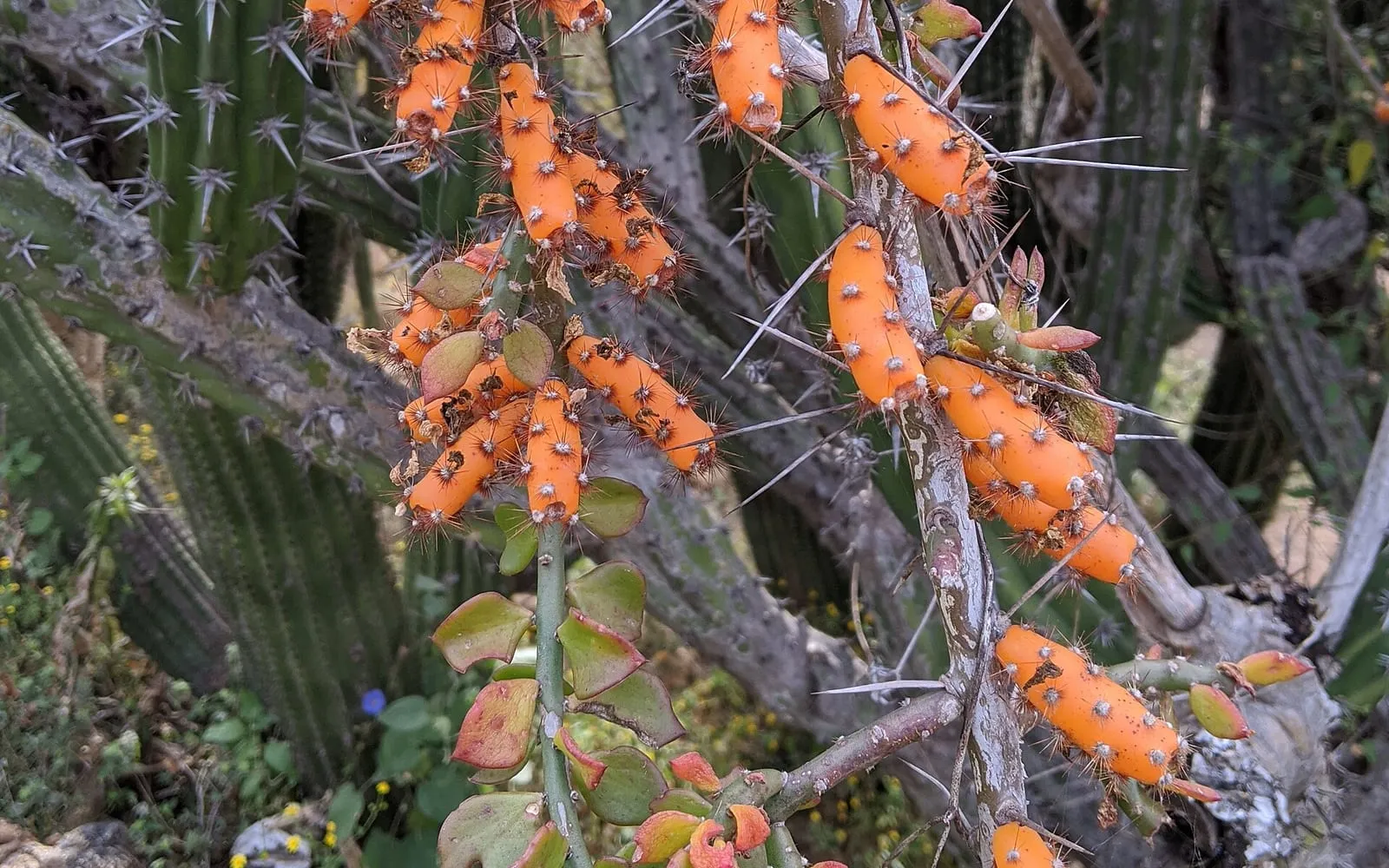
Porter’s leaf cactus barely looks like a cactus at all. It is a member of an odd, primitive group that still carries real, flat green leaves along thin, woody, brownish stems, so at a glance it passes for a scrambling leafy shrub. Only the tufts of spines and fine barbed glochids at each leaf base give away its cactus family.
Its main use is as grafting stock rather than as an ornamental. Because it grows very quickly, cactus growers join slow cactus seedlings onto its vigorous stems to bring them to maturity in a fraction of the usual time. Grown for itself, it is a fast, leafy, hungry plant that needs far more warmth, water and food than an ordinary cactus.
Native to warm, seasonally dry Mexico, it grows best when kept warm, bright and well watered, and drops its leaves when it is cold or dry. It is easy and rapid given those conditions, and its speed is the reason growers value it.
Appearance and character
The stems are thin, woody and brownish, upright at first and then sprawling, carrying flat, oval, fresh-green fleshy leaves along their length, so the plant looks far more like a leafy shrub than a cactus.
At each leaf base is an areole bearing longer spines and, more troublesome, tufts of fine, barbed glochids that detach and lodge in skin at a touch.
It grows with remarkable speed in warmth, so it is prized as grafting stock, putting on length and leaves far faster than a typical cactus.
Its flowers, seldom seen indoors, are yellowish and open on mature stems, but the plant is grown for its vigour instead of its bloom.
Where it is from
Pereskiopsis porteri comes from the warm, seasonally dry country of Mexico, growing as a leafy, scrambling cactus in scrub and thicket. It is used to warmth, bright light and a distinct wet season.
Give it warmth, bright light and, in its growing season, generous water and feeding. It drops its leaves and rests when cool or dry. It has no cold tolerance and grows fastest when kept warm, bright and moist.
How it grows
It grows very fast in warmth, with plenty of light, water and food, lengthening its leafy stems at a pace no ordinary cactus manages, and slows or drops its leaves when cool or dry. Warmth is the key: below about 12 deg C it stalls.
Grow it in a free-draining but moisture-retentive, fairly rich mix, and, unlike a desert cactus, keep it steadily moist and well fed while it is warm and growing. Let it dry a little more and water less when cooler.
Give it bright light with some direct sun and steady warmth above about 12 deg C. Handle it with care, or with tongs and gloves, because of the barbed glochids. As grafting stock it is grown fast and used young; as a plant in its own right it can be pruned to shape.
Propagation is very easy and quick: stem cuttings root readily in warmth, which is part of why it is so useful.
Through the seasons
Spring starts fast growth as warmth and light return. Resume generous watering and feeding, and take cuttings.
Summer is the season of rapid growth. Keep it warm, bright, steadily moist and well fed, and it lengthens quickly.
Autumn slows growth as light and warmth fade. Reduce watering and feeding.
Winter is a cooler rest above about 12 deg C. Water less, expect some leaf drop if cool, and keep it warm and bright to hold its leaves.
Care difficulty
Easy, and fast, given warmth. Unlike a desert cactus it needs generous water and feeding in warm growth, and its main problems come from keeping it too dry or too cold, which stalls it and makes it drop leaves. Kept warm, bright, moist and fed, it grows rapidly. The chief nuisance is the barbed glochids, which make it awkward to handle.
Watering
Water when the top of the mix is drying, keeping it steadily moist through warm, active growth, since this leafy cactus drinks far more than a desert one. Do not let it dry out hard while warm and growing, or it drops its leaves.
Water less when cooler, letting the mix dry further between drinks, and keep it drier over a cool winter rest, when wet, cold compost rots the roots. The combination of cold and wet, rather than water itself, harms it.
Warning signs, diseases and pests
Leaf drop is the commonest complaint and usually means the plant is too cold or too dry. Keep it warm above about 12 deg C and steadily moist in growth, and it should hold its leaves.
Root rot follows wet, cold compost, shown by softening, blackening stems at the base; keep it drier and warmer in winter. Mealybugs and scale settle on the stems and can be treated with dilute alcohol or oil.
The barbed glochids are normal; handle it with tongs or gloves, since the fine barbs lodge painfully in skin and are hard to remove.
Growing environment
Bright light with some direct sun gives strong, fast growth. In poor light it grows thin and weak. It needs a bright spot, though it tolerates a little less sun than a desert cactus.
Warmth is essential, above about 12 deg C, since it is a tender, tropical-climate cactus that stalls and drops its leaves when cool. Average to high humidity suits it, unlike a desert cactus.
Grow it in a free-draining but moisture-retentive, fairly rich mix in a pot in a warm, bright spot, and site it where its glochids will not catch passing skin.
Feeding
Feed fortnightly to monthly through warm growth with a balanced liquid feed, since this fast, leafy cactus needs more food than a desert species. Its speed depends on being well fed.
Ease off as growth slows in autumn, and stop over the cool winter rest. Fresh mix supports a newly potted or newly rooted plant for its first weeks.
Troubleshooting
It is dropping its leaves. Too cold or too dry. Keep it warm above about 12 deg C and steadily moist in growth, and it should hold its leaves.
The base has gone soft and black. Root rot from wet, cold compost. Keep it warmer and drier, especially in winter, and root a healthy stem cutting if the base is lost.
Why is it grown as grafting stock? Because it grows so fast. Cactus growers graft slow seedlings onto its vigorous stems to bring them to size in a fraction of the usual time.
I keep getting fine splinters handling it. Those are glochids, the barbed bristles at each areole. Handle the plant with tongs or gloves, since they lodge in skin and are hard to remove.
Is it safe around pets? Chemically yes, since it is not listed as toxic. The caution is physical, from the glochids and spines, so keep it where a pet will not brush against it.
Porter's Pereskiopsis problem guides
Not sure what is wrong? See the common houseplant pests guide.