
Houseplant
Pointed-Lobe Begonia
Begonia oxyloba
Also known as Begonia oxyloba
How to grow Begonia oxyloba, the pointed-lobe begonia, an African streamside begonia with sharp-lobed, hand-shaped leaves that suits a humid terrarium.
At a glance
- Difficulty
- Easy
- Water
- When the top few centimetres of mix have dried
- Light
- Bright indirect light to light shade
- Temperature
- Warm; keep above about 13 deg C
- Humidity
- Average to high
- Hardiness
- USDA 10-12, RHS H1b, hardy to 13 C
- Type
- Perennial
- Height
- 30-60 cm
- Native to
- tropical Africa, Madagascar
A tender tropical foliage plant from tropical Africa, growing in warm, humid, shaded to filtered light. It needs warmth, humidity and bright indirect light, and it cannot take frost or chill. It is safest above about 13 deg C, and cold, wet compost or dry air spoils it.
Hardiness zones describe winter cold alone. Summer heat, humidity, rainfall and the length of the growing season decide as much, so treat the range as the outer limit rather than as a recommendation.
Harmful if eaten
- Harm from
- Eating it and handling it
- Affects
- People, cats, dogs and horses
Begonia oxyloba, the pointed-lobe begonia, is toxic to cats, dogs and horses. The whole plant holds soluble calcium oxalates, most concentrated in the underground tuber, and chewing it can burn the mouth and cause drooling and vomiting. The RHS rates begonias as mildly harmful if eaten and a possible skin irritant. Keep it out of reach of pets and small children, and wash your hands after cutting stems.
Sources: ASPCA toxic and non-toxic plants, RHS potentially harmful garden plants
An introduction
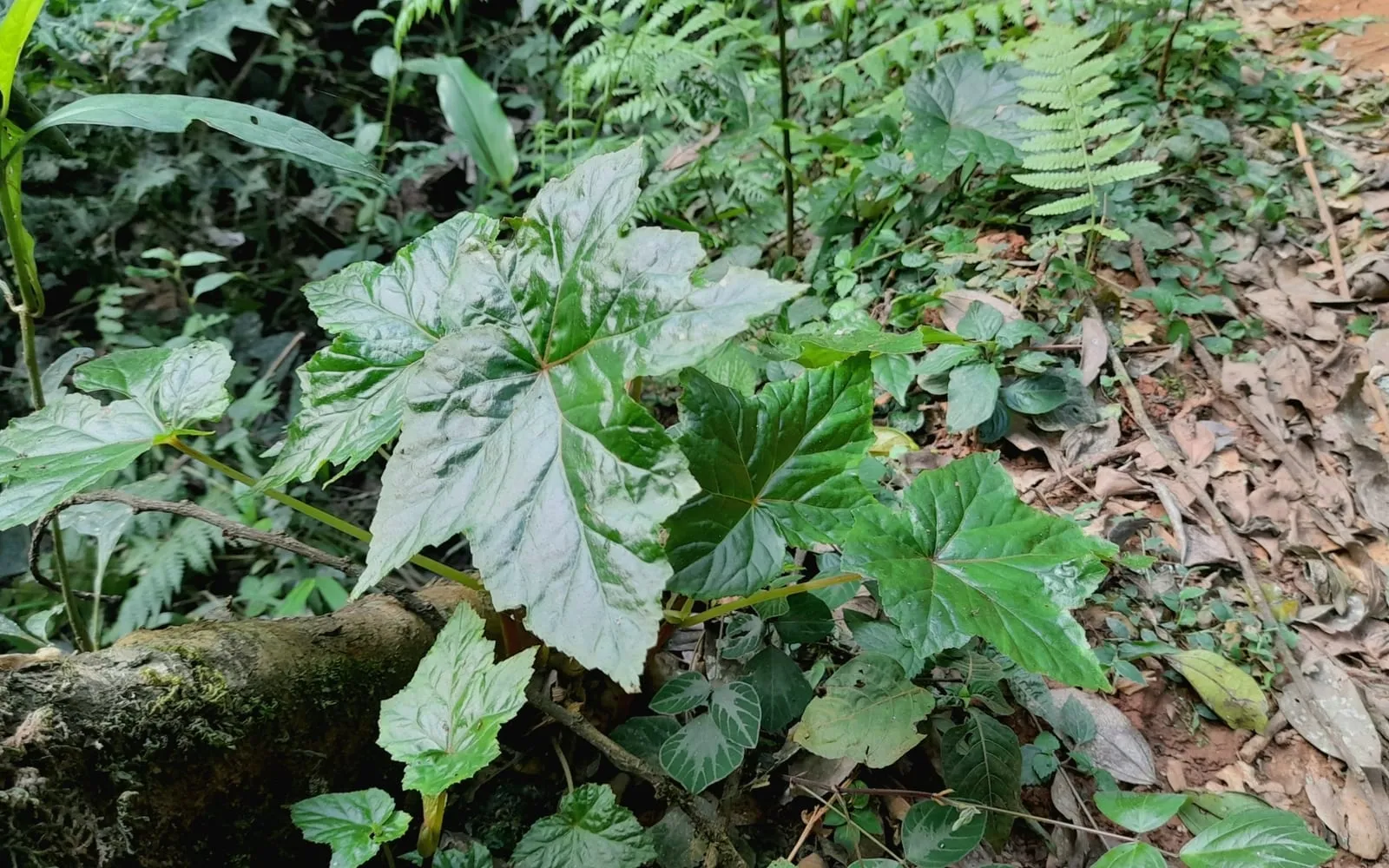
Begonia oxyloba is an African begonia named for its leaves, which are cut into several sharp, pointed lobes; oxyloba means sharp-lobed. It grows across tropical Africa along the banks of shaded forest streams and beside waterfalls, in constantly wet, humid air. That habitat makes it one of the more moisture-loving begonias, well suited to a terrarium or a bright, humid corner. It forms a spreading, leafy plant on fleshy stems, and its jagged, hand-shaped leaves look bolder than the smooth wing-leaf of common begonias.
Its leaves and flowers
The leaves are broad and palmately lobed, each blade cut into pointed, toothed segments radiating from the top of a fleshy stalk, mid to deep green and lopsided at the base as begonia leaves are. The stems are soft and succulent, spreading and rooting where they lean on damp ground. Sprays of small white flowers, sometimes tinged pink, open above the foliage over a long season. As across the genus the sexes are separate on the one plant. It is one of the African begonias of section Mezierea, which ripen a soft, fleshy fruit rather than the dry winged capsule of most begonias, a berry thought to be carried off by birds or ants.
Where it grows wild
In nature it grows on the wet margins of streams and falls in the shaded forests of tropical Africa, with roots in soil kept permanently moist by splashing water and leaves in humid air. Some of its kin cling to rocks in the current as rheophytes, plants built to withstand fast-flowing water, so this begonia is adapted to wet, shaded, warm places instead of dry ones. Give it warmth, high humidity and shade from direct sun. Few begonias spread so widely: it grows across tropical Africa from Guinea and Sierra Leone to Kenya and Tanzania, and on into Madagascar.
Light and where to grow it
Bright, indirect light suits the dappled shade of its forest streams. An east or north window, or a well-lit spot out of any direct beam, keeps the lobed leaves broad and well coloured. Direct summer sun through glass scorches them, and heavy shade thins the growth and stretches the stems. Because it loves humidity, it does especially well in a bright terrarium or a large glass case. Turn the pot now and then so the spreading plant grows evenly.
Watering
More than most begonias, this species needs to stay moist, in keeping with its streamside home. Water as soon as the surface begins to dry and never let the root ball dry out hard, since the lobed leaves wilt and brown quickly when parched. That said, the roots still need air, so use an open, free-draining mix and never leave the pot standing in cold water, which rots the fleshy stems from the base. Through winter, when growth slows, ease back a little, but keep it moister than you would a typical begonia.
Warmth and humidity
Keep it warm and above about 13 deg C, out of chilling draughts. This plant is fussiest about humidity, because it evolved beside running water, so a dry heated room browns and curls the leaf lobes fast. A large pebble tray, a plant grouping, a humid bathroom or an enclosed case keeps the moisture high. Let a little air move through so the constant damp does not turn stagnant and rot the soft stems.
Feeding
Feed every couple of weeks through the growing season with a balanced liquid fertiliser at half strength to keep the lobed leaves broad and green. Its soft tissues are easily scorched by strong feed, so keep the dose gentle and regular. Stop over winter, when growth slows, and resume as new leaves unfurl in spring.
Propagation
The soft, spreading stems root readily. Take stem cuttings in spring and summer, trimming below a joint and setting them in warm, damp, open compost under cover, where they strike within weeks. A stem pinned to damp compost will layer and root where it touches the surface, much as the plant spreads along a streambank. Divide a large clump at repotting, and sow fresh seed on the surface of moist compost kept humid and warm to raise a batch of young plants.
Health and troubles
Given the wet, shaded, warm conditions it needs, this begonia is easy enough, though it declines quickly in dry air. Brown, crisping leaf lobes usually mean the room is too dry; raise the humidity sharply. Spider mites appear when the air dries out, stippling the leaves, and higher humidity makes them less likely. Grey mould can spread on soft stems left cold and wet in stagnant air, so keep it gently ventilated. Soft, blackening stems at the base mean the roots have chilled and stayed too wet. Move the plant to a warmer spot and a more open mix.
The growing year
Spring starts fresh growth; take cuttings, divide crowded plants and resume feeding.
Summer is the main leaf and flower season; keep the compost moist, the air very humid and the light indirect.
Autumn slows the plant as light fades; ease back on water a little and let the feed tail off.
Winter is a warm rest; keep it above chilling cold and still fairly moist, and let the mix dry only a touch between drinks.
Common questions
Why are the leaf lobes going brown and crisp? The air is too dry for this streamside plant. Raise the humidity sharply, ideally in a terrarium or humid room.
How much light does it need? Bright, indirect light; direct sun scorches the lobed leaves and deep shade thins the growth.
How often should I water it? As soon as the surface starts to dry; it likes to stay moister than most begonias, though never cold and waterlogged.
How do I propagate it? Root a stem cutting in warm, damp compost, layer a stem into the compost surface, or sow fresh seed.
Is it safe around pets? No. Begonias carry soluble oxalates, which the ASPCA lists as toxic to cats, dogs and horses, so keep it away from pets that chew.
Pointed-Lobe Begonia problem guides
Not sure what is wrong? See the common houseplant pests guide.