
Outdoor plant
Pipsissewa
Chimaphila umbellata
Also known as Prince's Pine, Umbellate Wintergreen
What pipsissewa is, Chimaphila umbellata, an evergreen woodland plant with whorled glossy leaves and nodding pink flowers that is best left in the wild.
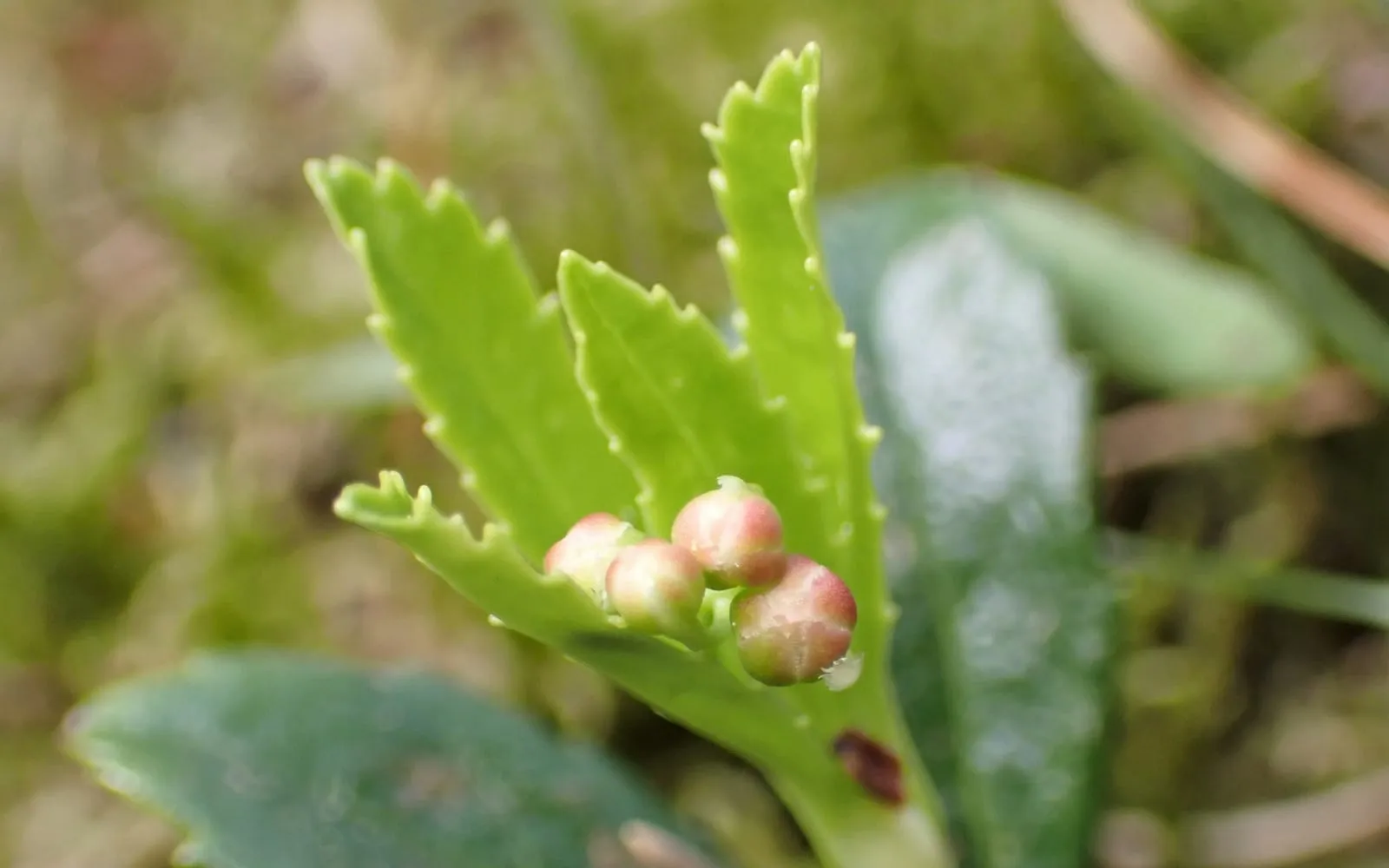
At a glance
- Difficulty
- Difficult
- Water
- Not applicable in cultivation
- Light
- Partial to full shade
- Temperature
- Very hardy, evergreen through cold winters
- Hardiness
- USDA 3-8, RHS H7, hardy to -35 C
- Type
- Evergreen perennial subshrub with a creeping woody rhizome
- Height
- 10 to 25 cm
- Native to
- The temperate Northern Hemisphere
Fully hardy and evergreen, at home in the cold coniferous and mixed forests of the northern hemisphere. Climate is not what limits it in cultivation; its dependence on the soil and its fungal partners is. It grows in cool, acidic, humus-rich woodland shade and cannot be moved to ordinary garden conditions, however suitable the temperature.
Hardiness zones describe winter cold alone. Summer heat, humidity, rainfall and the length of the growing season decide as much, so treat the range as the outer limit rather than as a recommendation.
Harmful if eaten
- Do not eat
- The leaves, in quantity
- Harm from
- Eating it
- Affects
- People
The evergreen leaves have a history of medicinal and flavouring use, once lending their taste to root beer and confectionery, and they contain arbutin and related compounds that break down to hydroquinone. Small culinary amounts were long treated as harmless, but hydroquinone is a concern in large or prolonged doses, so the leaves should not be eaten freely, and any medicinal use is a matter for a qualified practitioner. Handling the plant is harmless. In practice the more important point is conservation, since the plant should be left where it grows instead of picked or dug.
Sources: RHS potentially harmful garden plants, North Carolina Extension plant toxicity database
About
Pipsissewa is a low, evergreen woodland plant of cool northern forests. You should not dig it up to grow at home. It creeps through the litter of pine and mixed woods on a woody underground stem, holding whorls of dark, glossy, toothed leaves close to the ground.
In summer it raises short stalks of nodding, waxy, pink-flushed flowers arranged in a small nodding cluster, or umbel, which gives the species name umbellata. The flowers are fragrant and pretty at close range, but it is best left in the wild.
It has a long history of use as a flavouring and a medicine, once giving its taste to root beer, and it is well known to foragers and herbalists. What it almost never becomes is a garden plant, because it depends on its woodland soil and fungal partners in a way that ordinary cultivation cannot reproduce.
Appearance and character
Leaves are the most noticeable part: dark green, glossy and leathery, lance- shaped with sharp teeth, arranged in whorls of several around the low stems, and held through the year as an evergreen.
Stems creep along at or just below the surface as woody rhizomes, sending up short leafy shoots, so a colony spreads slowly into a low, patchy evergreen carpet a few centimetres tall.
Flowers appear in summer on short stalks that rise above the leaves and then nod over, each a small waxy cup of five pink-tinged petals, gathered in a loose umbel of a few blooms and lightly fragrant.
Fruit is a small, erect, rounded capsule that persists on the stiff stalk after the flowers, often standing through winter above the evergreen leaves.
The whole plant is low and slow, an evergreen creeper of the forest floor rather than anything upright or bold. It is valued for its neat foliage and small flowers where it grows.
Where it is from
Chimaphila umbellata grows right around the cool temperate northern hemisphere, in North America, Europe and Asia, in dry to moist coniferous and mixed woodland, on acidic, humus-rich soils in the shade of trees.
Its forest home is the reason it cannot be moved. It grows with mycorrhizal fungi in undisturbed woodland soil, drawing part of its living from that partnership, and it depends on the particular, long-settled conditions of the forest floor. A plant lifted from that setting loses what it depends on.
How it grows
In the wild it grows slowly from its creeping woody rhizome, spreading into low colonies over years in undisturbed, acidic woodland shade. It is long-lived and self-sufficient there.
In cultivation it almost always fails. It handles disturbance poorly, depends on woodland fungi that a garden cannot supply, and does not take to pots or borders, so attempts to transplant or raise it usually end in a slow decline and death. There is no reliable method for growing it as a garden plant.
Leave it in the wild. Digging up pipsissewa rarely succeeds and damages a slow-spreading woodland plant. Enjoy it where it grows and do not collect it.
Through the seasons
Spring starts with the evergreen leaves already in place, and the plant makes new growth as the woodland warms.
Summer brings short flowering stalks and their nodding, fragrant, pink flowers, the main season to notice the plant.
Autumn brings small upright seed capsules after the flowers, and the leaves stay glossy and green.
Winter leaves the evergreen leaves and dry capsules in place through the cold, making it one of the few green things on the forest floor.
Care difficulty
Difficult, to the point that it is fairest to call it uncultivable by ordinary means. Its reliance on woodland fungi and undisturbed acidic soil means it neither transplants nor grows in a garden with any reliability, whatever care is offered. This is not an ordinary garden plant to grow, and attempting to move it from the wild does harm without success.
Watering
Watering does not arise, because the plant is not one you grow in a pot or border. In the wild it uses the moisture of its woodland soil and needs nothing from a gardener. Any attempt to keep it in cultivation is likely to fail regardless of how it is watered.
Warning signs, diseases and pests
The overriding problem is that the plant will not settle in cultivation. A dug or transplanted pipsissewa typically fades over the following months as it loses the fungal partners and soil conditions it depends on, and there is no treatment for that beyond leaving the plant where it grows.
Wild colonies are slow to recover from disturbance, trampling or collection, so the main conservation point is to tread lightly and not to pick or dig it.
The leaves should not be eaten freely, but the plant is harmless to handle. The main practical risk is damage to wild colonies from picking or digging.
Growing environment
Partial to full shade in cool woodland is its setting, under conifers or mixed trees on the shaded forest floor. It has no place in an open, sunny garden.
The soil it needs is acidic, humus-rich, free-draining and, above all, undisturbed and full of its woodland fungi. That combination cannot be built to order in a border, which is why it resists cultivation.
The best place to enjoy it is in its own habitat. A woodland walk in early summer, where it is native, is the place to find its nodding pink flowers, instead of a garden bed.
Feeding
Feeding does not apply, since the plant is not grown in cultivation. In the wild it takes what it needs from woodland soil and its fungal partners, and no fertiliser is involved or useful.
Troubleshooting
Can I grow it in my garden? In practice, no. Pipsissewa depends on woodland fungi and undisturbed acidic forest soil and almost never survives transplanting or cultivation.
I dug one up and it is dying. That is the usual outcome. Removed from its woodland soil and fungal partners it declines and dies, and it cannot be saved. Do not dig it in the first place.
Is it safe to eat or use? The leaves once flavoured root beer and have a medicinal history, but they contain compounds that are a concern in quantity, so they should not be eaten freely, and any use is a matter for a qualified practitioner.
Why is it also called prince’s pine? That is an old common name for the same plant, from its low, evergreen, pine-like foliage on the forest floor. Prince’s pine and pipsissewa are the same species.
How can I help it? Leave it undisturbed where it grows, avoid trampling or picking it, and enjoy it in place. Wild colonies spread slowly and recover slowly, so the best help is to let them be.