
Houseplant
Callosum Slipper Orchid
Paphiopedilum callosum
Also known as Callosum paphiopedilum
How to grow the callosum slipper orchid as a houseplant. Its mottled leaves, pouch-shaped flowers, and why it never wants to dry out completely.
At a glance
- Difficulty
- Difficult
- Water
- Frequent watering, compost never allowed to dry out fully
- Light
- Low to moderate indirect light, no direct sun
- Temperature
- 16-28 deg C, avoid below 13 deg C
- Humidity
- High, 60 percent or more
- Hardiness
- USDA 11-12, RHS H1b, hardy to 13 C
- Type
- Evergreen terrestrial perennial orchid
- Height
- 25-40 cm in flower
- Native to
- Thailand, Cambodia, Vietnam
A tropical forest-floor species with no cold tolerance, grown as a houseplant across almost the entire temperate world. Unlike many orchids, it has no distinct dry rest period at all, and consistently moist compost year round matters more to its wellbeing than any seasonal contrast.
Hardiness zones describe winter cold alone. Summer heat, humidity, rainfall and the length of the growing season decide as much, so treat the range as the outer limit rather than as a recommendation.
Not known to be toxic
Callosum slipper orchid has no toxicity listing from the RHS or the ASPCA and is considered safe around pets and children. There is no documented history of poisoning associated with this species.
Source: RHS
About
The callosum slipper orchid is a terrestrial forest-floor species prized for its handsomely mottled foliage as much as for its striking, pouch-shaped flowers, a combination that keeps the plant visually interesting even outside its flowering period. Unlike the epiphytic orchids most houseplant growers are familiar with, it grows rooted in leaf litter and humus on the forest floor, low in light and never fully dry, which shapes almost every aspect of how it is grown well indoors.
Its flowers carry the distinctive pouch-shaped lip shared across the whole slipper orchid group, thought to function as a trap that guides visiting insects past the flower’s reproductive structures on their way back out, a mechanism unusual enough among orchids to have made this group a long-standing favourite among specialist collectors.
Appearance and character
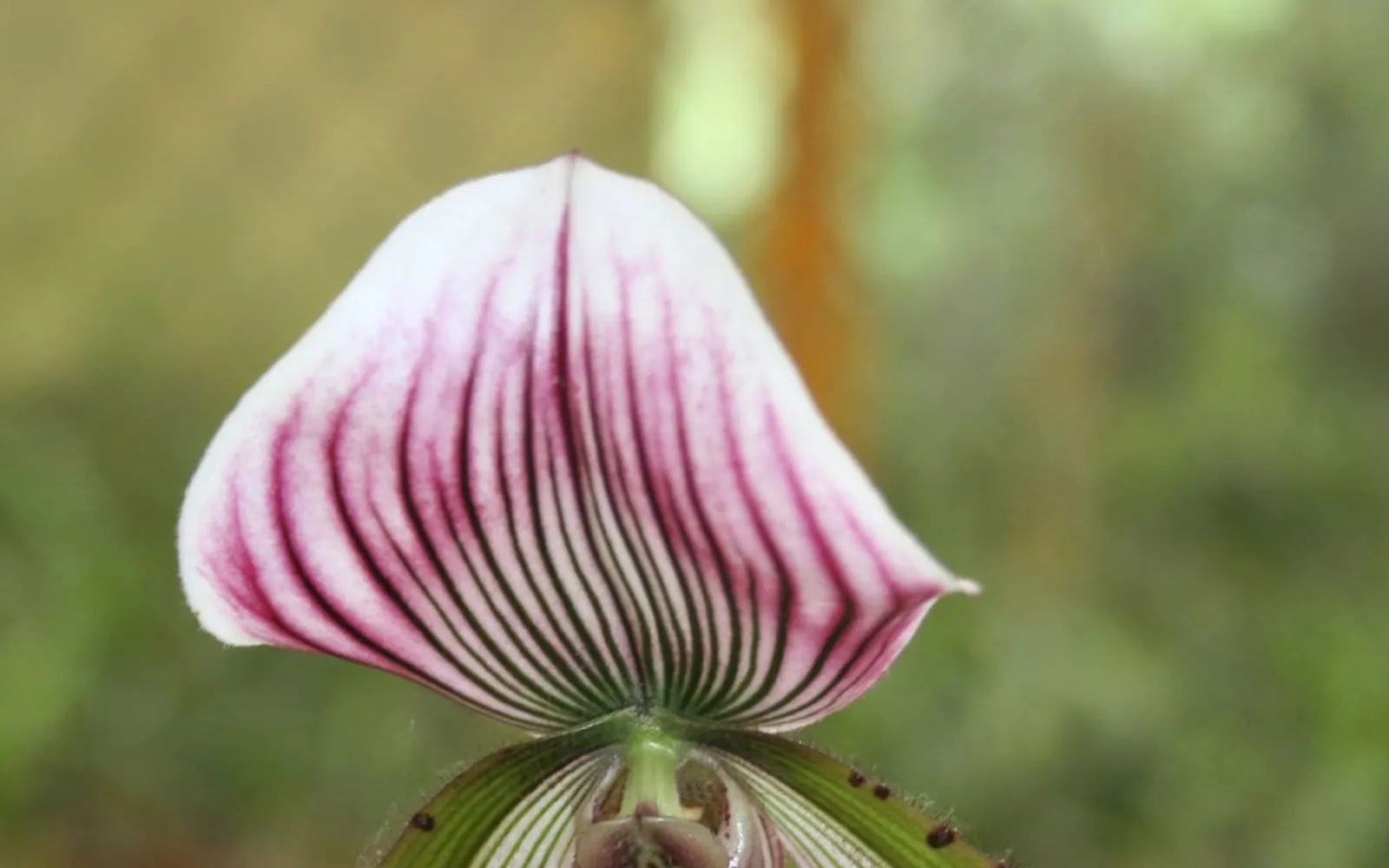
Broad, strap-shaped leaves, handsomely mottled in darker and lighter green, form a low, spreading fan close to the compost surface. A single tall, slightly hairy flower stem rises from the centre of a mature fan, holding one striking flower with a pouch-shaped lip, typically in combinations of green, maroon and white, and twisted, often elongated petals extending outward from the sides.
Unlike many orchids that produce multiple flowers per spike, this species typically opens just one flower per stem, though that single bloom is often long-lasting, remaining attractive for several weeks before fading.
Where it is from
The floor of tropical forests across Thailand, Cambodia and Vietnam, growing rooted in leaf litter and humus in low, filtered light beneath a dense canopy, in consistently warm, humid conditions with no pronounced dry season.
That forest-floor origin, low in light and never dry, sets this species apart from the epiphytic orchids that dominate typical houseplant collections, and treating it like a Phalaenopsis, with a bright windowsill and a drying-out cycle between waterings, tends to weaken it over time rather than help it thrive.
How it grows
New growths develop from the base of the existing fan, each one eventually maturing enough to produce its own flower stem, so a healthy, well-grown plant gradually builds into a small cluster of fans over several years rather than staying as a single rosette indefinitely.
Because it has no pseudobulbs to store water, unlike many other orchids, this species has no real reserve to draw on during a dry spell, which is the underlying reason it needs consistently moist, though never waterlogged, compost rather than the more typical soak-and-dry cycle common to epiphytic orchid care.
Through the seasons
Spring new growths typically begin developing from the base of mature fans.
Summer is the main growing season, with new leaves and, on mature fans, flower stems developing. Water frequently and feed with most waterings.
Autumn growth continues at a similar pace given consistent indoor warmth, since this species has no strong seasonal dormancy.
Winter reduce feeding slightly and keep the plant away from cold draughts, while maintaining the same consistently moist compost as the rest of the year.
Care difficulty
Difficult, largely because its needs run counter to the more familiar soak-and-dry rhythm most houseplant orchid care assumes. Consistently moist compost, low to moderate rather than bright light, and steady warmth without a seasonal dry rest are all a departure from typical orchid advice, and applying that advice unmodified is a common way this species declines.
Watering
Water lightly but frequently, keeping the compost evenly moist at all times rather than allowing it to dry out between waterings the way many other orchids prefer. At the same time, avoid constantly saturated, waterlogged compost, since good drainage still matters even though dryness does not suit this species at all.
Warning signs, diseases and pests
Scale insects and mealybug can colonise the leaves, particularly along the midrib and in leaf axils, and are treated with careful manual removal or a horticultural soap for persistent infestations. Spider mites occasionally appear in warm, dry indoor air, showing as fine speckling on the leaves.
Soft, collapsing leaves despite what seems like adequate watering can indicate the compost has been allowed to dry out at some point between waterings, since this species has no pseudobulb reserve to fall back on during even a brief dry spell. Yellowing leaves with a mushy base, conversely, suggest waterlogged, poorly drained compost rather than underwatering, and both causes need to be told apart carefully since their remedies are opposite.
Growing environment
Low to moderate indirect light suits it well, reflecting its forest-floor origin; direct sun scorches the mottled leaves quickly. High humidity supports healthy growth, and consistently warm conditions without a seasonal cool spell suit this species better than the more variable temperatures some other orchids tolerate or even need.
Feeding
A balanced orchid fertiliser at quarter strength, applied with most waterings during active growth, supports steady new growth. Ease off slightly in winter, though this species does not need the complete feeding pause many other orchids get during a distinct winter rest, since it has no true dormant period.
Troubleshooting
Leaves have gone soft and collapsed. Check whether the compost was allowed to dry out at any point, since this species has no water-storing pseudobulb to buffer against even a brief dry spell. Resume consistent, even moisture promptly.
Leaves are yellowing with a mushy base. Suspect waterlogged, poorly drained compost rather than underwatering. Improve drainage and avoid letting the pot sit in standing water.
The plant has not flowered despite healthy new growth. A fan needs to reach full maturity before it flowers, so a young or recently divided plant may need another season or two of growth before it blooms.
Leaf mottling looks fainter than when the plant was purchased. Check light levels first, since this pattern can become less pronounced in lower light than the plant is used to, though this species should never be moved into direct sun to compensate.
You are choosing a pot for this species. A relatively small, shallow pot suits it better than a large one, since the roots prefer a snug fit and excess unused compost around the roots tends to stay wet for longer than is healthy for this species between waterings.
Callosum Slipper Orchid problem guides
Not sure what is wrong? See the common houseplant pests guide.