
Houseplant
Broad-Leaved Cabbage Tree
Cordyline indivisa
Also known as Cordyline indivisa
How to grow Cordyline indivisa, the broad-leaved cabbage tree, a cool-forest New Zealand plant with the widest leaves of its group.
At a glance
- Difficulty
- Easy
- Water
- When the top few centimetres of mix have dried
- Light
- Bright indirect light to light shade
- Temperature
- Cool; takes light frost, dislikes heat
- Humidity
- Average to high
- Hardiness
- USDA 9-10, RHS H3, hardy to -5 C
- Type
- Perennial
- Height
- Up to 8 m
- Native to
- New Zealand
A cool-climate plant from the misty montane and subalpine forests of New Zealand, with high rainfall and mild summers. It takes light frost once established, but it suffers in hot, dry air and in summers with warm nights, and cold, wet compost rots the roots.
Hardiness zones describe winter cold alone. Summer heat, humidity, rainfall and the length of the growing season decide as much, so treat the range as the outer limit rather than as a recommendation.
Harmful to cats and dogs if eaten
- Harm from
- Eating it
- Affects
- Cats and dogs
Cordyline indivisa, the broad-leaved cabbage tree, is toxic to cats and dogs. The leaves contain saponins, and chewing or swallowing them can cause vomiting, sometimes with blood, along with drooling, a loss of appetite and, in cats, dilated pupils. People are far less sensitive, but keep it away from pets and stop children chewing the foliage.
Sources: ASPCA toxic and non-toxic plants, RHS potentially harmful garden plants
About
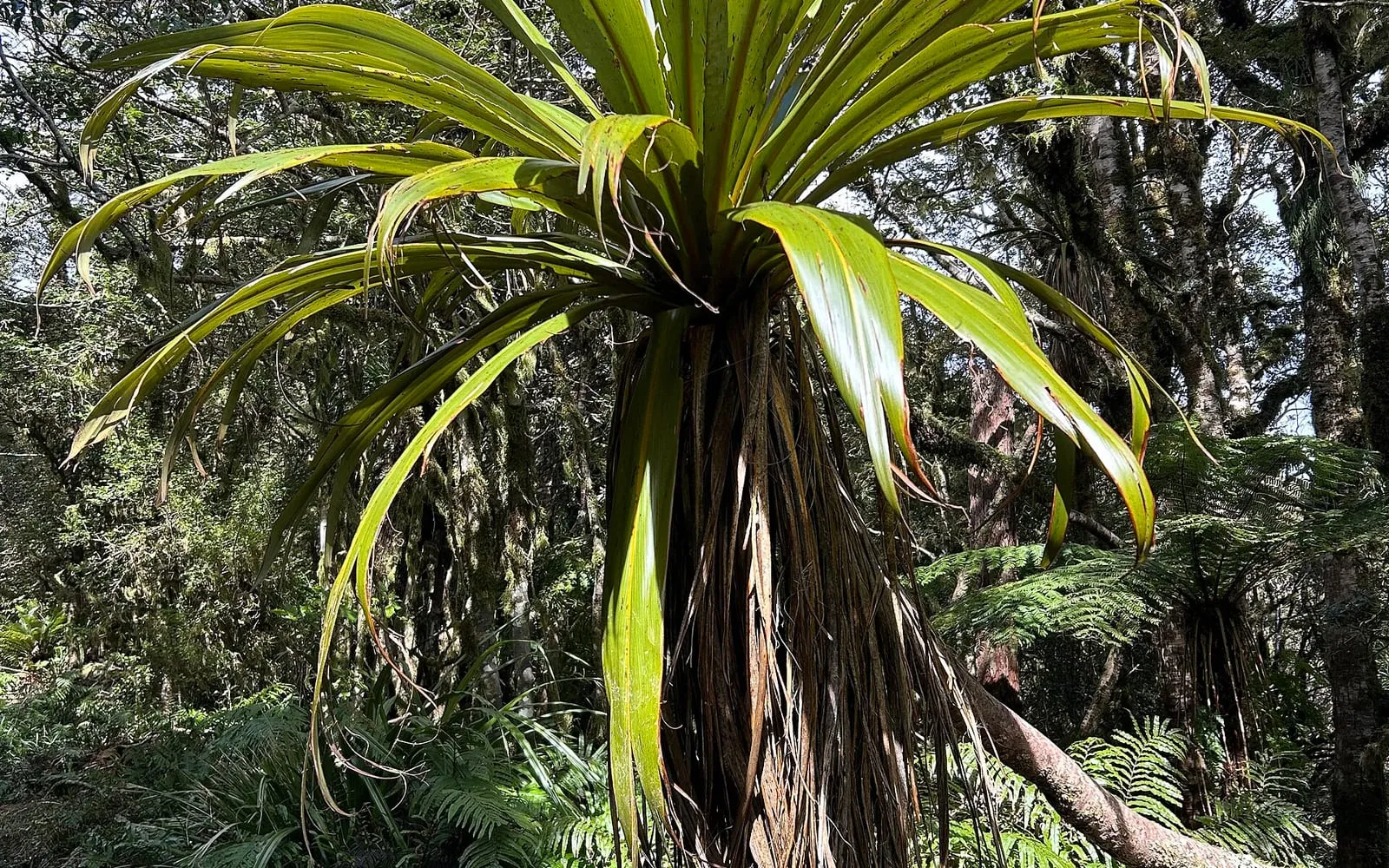
Cordyline indivisa has the broadest leaves of any cabbage tree, and that feature is the main reason growers seek it out. The strap-shaped blades reach well over a metre and can be a hand’s width across, far wider than the thin arching foliage of the more familiar New Zealand species, and a bold orange to red midrib runs the length of each one. The specific name indivisa, meaning undivided, points at the other habit that sets it apart: it holds to a single unbranched stem where its relatives split into several heads.
Despite the common name, this is neither a palm nor a lily. It is a monocot in the asparagus family, and the trunk that looks woody is a soft, fibrous stem packed with stored starch. Growers value it for the large rosette rather than for flowers, though a mature plant can produce a large drooping panicle of tiny cream blooms followed by bluish berries.
The plant can be awkward because it comes from cool, wet forest. A warm dry living room stresses it more than it stresses the tougher cabbage trees.
Appearance and character
The rosette provides most of the display. Wide, slightly leathery leaves arch out from a central growing point, each one keeled down the middle where the coloured midrib runs, and the undersides often have a faint bluish bloom. New leaves emerge upright and firm before they spread and relax into the crown.
A young specimen sits low and dense, almost stemless, and the trunk lengthens slowly as the oldest leaves brown and shed from the base. Kept in a pot indoors it stays compact for years, so most growers meet it as a broad, fountain-shaped foliage plant instead of as the small tree it eventually becomes.
Where it is from
Cordyline indivisa grows only in New Zealand, in the cool montane and subalpine forests of both main islands, often in cloud-wrapped country where rain falls through much of the year. That is high, damp, mild ground instead of anything tropical, and the air around it seldom turns dry or hot.
The habitat explains its care. A plant adapted to permanently moist, humid, shaded conditions struggles beside a dry radiator or on a baking windowsill, so it browns where its hardier cousins tolerate neglect. Give it steady coolness, moisture and shelter from harsh sun, and it grows more reliably.
How it grows
Growth is slow. The plant adds a flush of new leaves through the warmer months, rests through winter, and builds width before it builds height. Each leaf is meant to last a long time, so the plant puts its energy into a few large blades instead of a constant turnover of small ones.
Pot it into a light, open mix that stays damp without turning to mud, loosening a peat-free houseplant compost with grit or fine bark. Stand it somewhere bright but out of direct midday sun, and keep the air around it from drying. Repot in spring only when roots crowd the container, since it dislikes frequent disturbance.
Fresh plants come from seed, which germinates readily but grows slowly. It does not normally sucker, and cuttings of the single stem are less reliable than they are on the branching cabbage trees.
Through the seasons
Spring starts crown growth. Resume regular watering, begin a light feed, and repot now if the plant is pot-bound.
Summer is the main growing spell, and also the season of most risk from heat. Keep it shaded from strong sun, keep the mix moist, and mist or group it with other plants if the room runs dry.
Autumn slows the plant down. Ease back on feeding and let watering fall away gradually as the light weakens.
Winter is a quiet rest. Hold it cool but frost-free, keep the mix barely damp, and keep it well clear of hot dry air from heaters.
Care difficulty
Judged against ordinary houseplants this species is demanding, because it needs cool, humid, evenly moist conditions that a heated home does not naturally provide. Judged against its own needs it is straightforward: match the damp forest it came from and it grows without fuss.
The failures are predictable. Browned, crisping leaf tips mean the air is too dry or too hot. A soft, collapsing base means the roots have sat cold and wet. Fix the growing conditions and the plant can recover.
Watering
Water when the top few centimetres of the mix have begun to dry, wetting the whole rootball and letting the surplus drain. This plant likes to stay evenly moist and does badly if it dries out fully, more so than the drought-tolerant cabbage trees, so it is easy to underwater in a warm room.
Cut back in winter, letting the surface dry a little further between drinks, since cold combined with a sodden pot rots the roots faster than anything else. Use soft water where you can, as hard water over time adds to the leaf-tip browning that dryness already causes.
Warning signs, diseases and pests
Brown, papery tips and margins are the most common complaint, and they point to dry or overheated air instead of a watering fault. Raise the humidity, move it away from heat sources, and trim the worst tips for looks.
A limp crown over a soft, discoloured base is root rot from cold, waterlogged compost. Improve drainage, move it somewhere warmer, and water sparingly until it firms up.
In dry indoor air, spider mites stipple the leaves and mealybugs hide as white tufts in the leaf bases. Sponge the foliage, lift the humidity, and treat a stubborn colony with an insecticidal soap.
Growing environment
Bright light suits it, filtered instead of fierce, so an east-facing spot or a position back from a bright window works well. Deep shade thins the crown and dulls the leaf colour.
Coolness and moisture in the air matter more here than for most houseplants. Keep it clear of radiators and hot draughts, group it with other plants or use a damp gravel tray to raise local humidity, and it holds its broad leaves in good order.
Feeding
Feed with a dilute balanced liquid fertiliser through spring and summer, at roughly half the label strength, every few weeks while the crown is in active growth. Steady, weak feeding suits it better than occasional strong doses.
Stop feeding in autumn and give none over winter. A plant freshly moved into new compost can wait several weeks before it needs any feed, since the mix supplies enough to start with.
Troubleshooting
Why do the leaf tips keep browning? Dry or overheated air is the usual cause. Move it off the heat and raise the humidity around the leaves.
The whole plant has gone soft and floppy. What happened? Cold, waterlogged compost has rotted the roots. Improve drainage, warm it up, and water much less until it recovers.
Why is it growing so slowly? This is a naturally slow, long-leaved plant, and cool conditions slow it further. Steady growth of a few big leaves a year is normal.
How do I propagate it? Sow fresh seed. It does not normally sucker, and single-stem cuttings strike poorly.
Is it safe around pets? No. The ASPCA lists Cordyline as toxic to cats and dogs because of its saponins, so keep it away from pets that chew.
Broad-Leaved Cabbage Tree problem guides
Not sure what is wrong? See the common houseplant pests guide.