
Outdoor plant
Coyote Gourd
Cucurbita palmata
Also known as Coyote Melon, Palmleaf Gourd
What coyote gourd is, Cucurbita palmata, a desert vine with hand-shaped leaves and small bitter gourds spread by animals.
At a glance
- Difficulty
- Easy
- Water
- None once established
- Light
- Full sun
- Temperature
- Heat-loving and frost-tender in top growth
- Hardiness
- USDA 8-10, RHS H3, hardy to -7 C
- Type
- Herbaceous perennial from a deep root
- Height
- Vines to 4 m long, sprawling
- Native to
- The southwestern United States, Mexico
Native to the Mojave, Colorado and Sonoran deserts, where it endures great heat and drought and regrows each year from a deep perennial root. It needs a hot, dry, sunny climate and free-draining ground, and it is tender to hard frost and intolerant of cold, wet soil, so it thrives only in warm arid regions.
Hardiness zones describe winter cold alone. Summer heat, humidity, rainfall and the length of the growing season decide as much, so treat the range as the outer limit rather than as a recommendation.
Toxic if eaten
- Do not eat
- The gourd flesh and foliage, intensely bitter
- Harm from
- Eating it
- Affects
- People, cats and dogs
Coyote gourd contains the bitter cucurbitacins common to the wild squashes, concentrated in the flesh and leaves, and eating them causes nausea and stomach upset. The bitterness is strong enough to deter most people and animals from eating much, so serious poisoning is uncommon, but the gourds are not food. Desert animals disperse the hard seeds, and the plant relies on that instead of on being palatable. Coyote melon is also a name for the buffalo gourd, Cucurbita foetidissima, which has bitter cucurbitacins in the same way, so neither should be eaten. Cucurbitacin poisoning from bitter gourds can be severe if a large amount is swallowed. The cleaned seeds were used historically as a food once freed of the bitter pulp.
Sources: RHS potentially harmful garden plants, North Carolina Extension plant toxicity database
About
Coyote gourd has broad, hand-shaped leaves, palmate with five stiff triangular lobes spreading from the leaf stalk like fingers on an open hand. That shape, wider and shallower than the deeply cut leaves of fingerleaf gourd, gives the species its name palmata and is the easiest way to identify it. It is a wild vine of the western American deserts, not a garden plant or a crop.
Its common name refers to the animals that spread it. Coyotes and other desert animals eat the hard little gourds and pass the seeds, which is how the plant spreads across open country, and its melon-like fruits led to the second name coyote melon.
Like the other desert gourds it grows from a deep, water-storing perennial root and produces small, bitter, inedible fruits. It persists where ranges overlap alongside fingerleaf gourd, and the two occasionally hybridise where they meet.
Appearance and character
Leaves are palmate, divided into five broad, pointed lobes that radiate from the stalk, grey-green and rough, giving a hand-like outline quite unlike the narrow segments of fingerleaf gourd or the large triangular leaves of Missouri gourd.
Vines trail and sprawl across the ground from the root, spreading several metres and scrambling over low plants and rocks instead of climbing upright.
Flowers are yellow and funnel-shaped, opening for part of the day, with separate male and female flowers on the same plant as in the squashes generally.
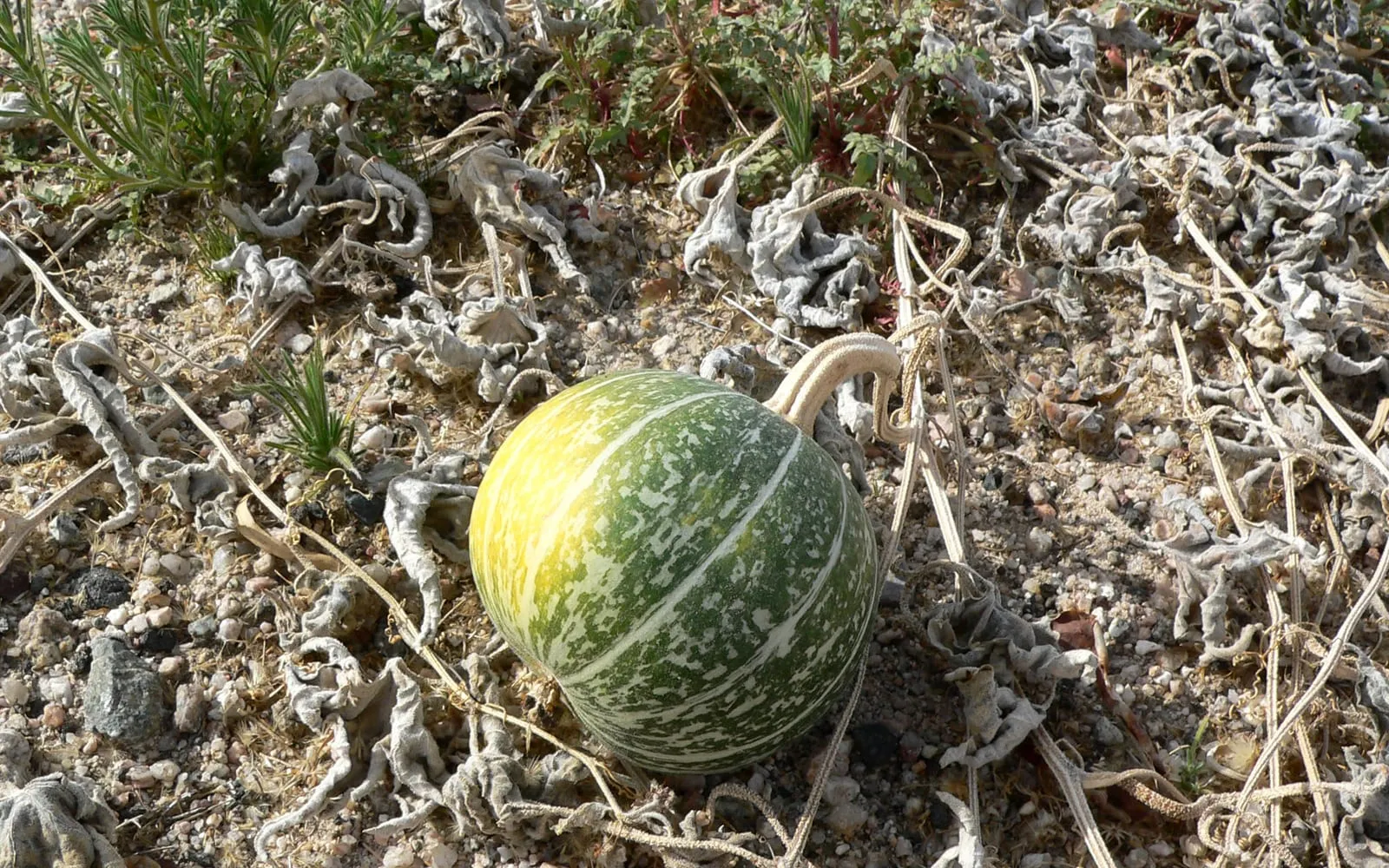
Gourds are small and round, some six to eight centimetres across, green with pale stripes and ripening yellow, hard and dry with many flat seeds inside. They dry to light, hollow-sounding shells.
The root is deep and swollen, stores water, and allows the vine to reappear each year in bone-dry desert ground.
Where it is from
Cucurbita palmata is native to the Mojave, Colorado and western Sonoran deserts of California, Arizona and Baja California, growing in sandy flats, washes and disturbed roadside ground in hot, arid country.
Its habitat explains its growth. It is a plant of severe heat, sparse rainfall and free-draining desert soils, and it depends on desert animals to move its seed. It is tender to hard frost and unsuited to cold, wet climates, so it lives only in warm, dry regions.
How it grows
The vines grow out from the perennial root when the desert warms and any moisture arrives, trailing quickly over the ground and flowering and fruiting through the hot season. The plant spreads sideways instead of climbing.
Once heat gives way to cold, or the dry season deepens, the top growth dies back to the root, resprouting when conditions allow. The root, and the patch, grow larger over the years.
It is not a cultivated plant. In its native range it grows without help, and its deep root and animal-sown seed make it a persistent part of the desert flora instead of something planted or tended.
Through the seasons
Spring starts the vines from the root as warmth returns, the hand-shaped leaves unfolding along the spreading stems.
Summer is the main season of growth, flowering and fruiting, the small striped gourds developing across the trailing vines in the heat.
Autumn turns the gourds into dry yellow shells that animals then carry off, and cooling weather ends the growth.
Winter is the dormant period, with the plant surviving in its root and the dry gourds scattered and rattling with seed on the desert floor.
Care difficulty
It needs nothing where the climate suits it, thriving on heat, drought and poor soil with no attention at all. The only real constraint is climate: it will not survive a cold, wet winter, so the difficulty lies entirely in whether the region is hot and dry enough.
Watering
None is needed once it is established. The deep storage root carries it through the long desert dry season, so natural rainfall is enough. Added water does no good and, in heavy or wet soil, will rot the root.
Warning signs, diseases and pests
The gourds and foliage are bitter and upset the stomach if eaten, so keep children and pets from chewing them, although the strong bitterness and hard dry shells mean few take in enough to be seriously harmed. They are not a food.
Pests trouble it little. Bitter and chemically defended, it is avoided by most grazing animals even in ground short of other greenery.
Its sprawling vines can smother small plants nearby, which is the main problem where it grows close to cultivated ground.
Growing environment
Full sun and desert heat are essential, and it has no tolerance for shade or for a cool, damp position. The hotter and brighter the site, the better it grows.
The soil must be dry, sandy and free-draining. Rich, moist or heavy ground is wrong for it, and a wet winter in such soil rots the root and kills the plant.
It sprawls widely and needs open ground instead of a support to climb. Hot, dry, sunny flat is its natural setting, and it will only persist in a climate close to that.
Feeding
Do not feed it. As a desert plant of poor soils it needs no fertiliser and gains nothing from it. Extra fertility only produces soft growth at odds with the plant’s drought-hardy growth.
Troubleshooting
How do I tell it from fingerleaf gourd? By the leaf shape. Coyote gourd has broad, hand-shaped leaves with five wide lobes, while fingerleaf gourd has leaves cut into narrow, finger-like segments. Where their ranges overlap the two sometimes hybridise, which can blur the distinction.
Can I eat the gourds? No. The flesh is bitter and causes stomach upset. Only the cleaned seeds were eaten historically, after the bitter pulp was removed.
What eats the gourds if they are bitter? Coyotes and other desert animals take the hard fruits and disperse the seeds, which is where the name comes from. That seed dispersal does not make the gourds safe or pleasant for people to eat.
Will it grow outside a desert climate? Not reliably. It is frost-tender in its top growth and cannot survive cold, wet winters, so it belongs to hot, arid regions and will not persist in a cool, damp one.
Is it a type of melon? No, despite the name coyote melon. It is a wild gourd, a bitter and inedible relative of the squashes, not a true melon.
Coyote Gourd problem guides
Not sure what is wrong? See the common vegetable pests guide.