
Houseplant
Artillery Plant
Pilea microphylla
Also known as Pilea microphylla
How to grow Pilea microphylla, the artillery plant, a tropical American foliage plant whose tiny flowers fling out puffs of pollen.
At a glance
- Difficulty
- Easy
- Water
- When the top few centimetres of mix have dried
- Light
- Bright indirect light to light shade
- Temperature
- Warm; keep above about 13 deg C
- Humidity
- Average to high
- Hardiness
- USDA 10-12, RHS H1b, hardy to 13 C
- Type
- Perennial
- Height
- 15-30 cm
- Native to
- tropical America
A tender tropical foliage plant from tropical America, growing in warm, humid, shaded to filtered light. It needs warmth, humidity and bright indirect light, and it cannot take frost or chill. It is safest above about 13 deg C, and cold, wet compost or dry air spoils it.
Hardiness zones describe winter cold alone. Summer heat, humidity, rainfall and the length of the growing season decide as much, so treat the range as the outer limit rather than as a recommendation.
Not known to be toxic
The ASPCA lists pileas (Pilea species) as non-toxic to cats and dogs, and the RHS does not list the genus as harmful to people. A pet or child that chewed a leaf would be unlikely to come to serious harm beyond a possible mild stomach upset.
Sources: ASPCA toxic and non-toxic plants, RHS potentially harmful garden plants
About
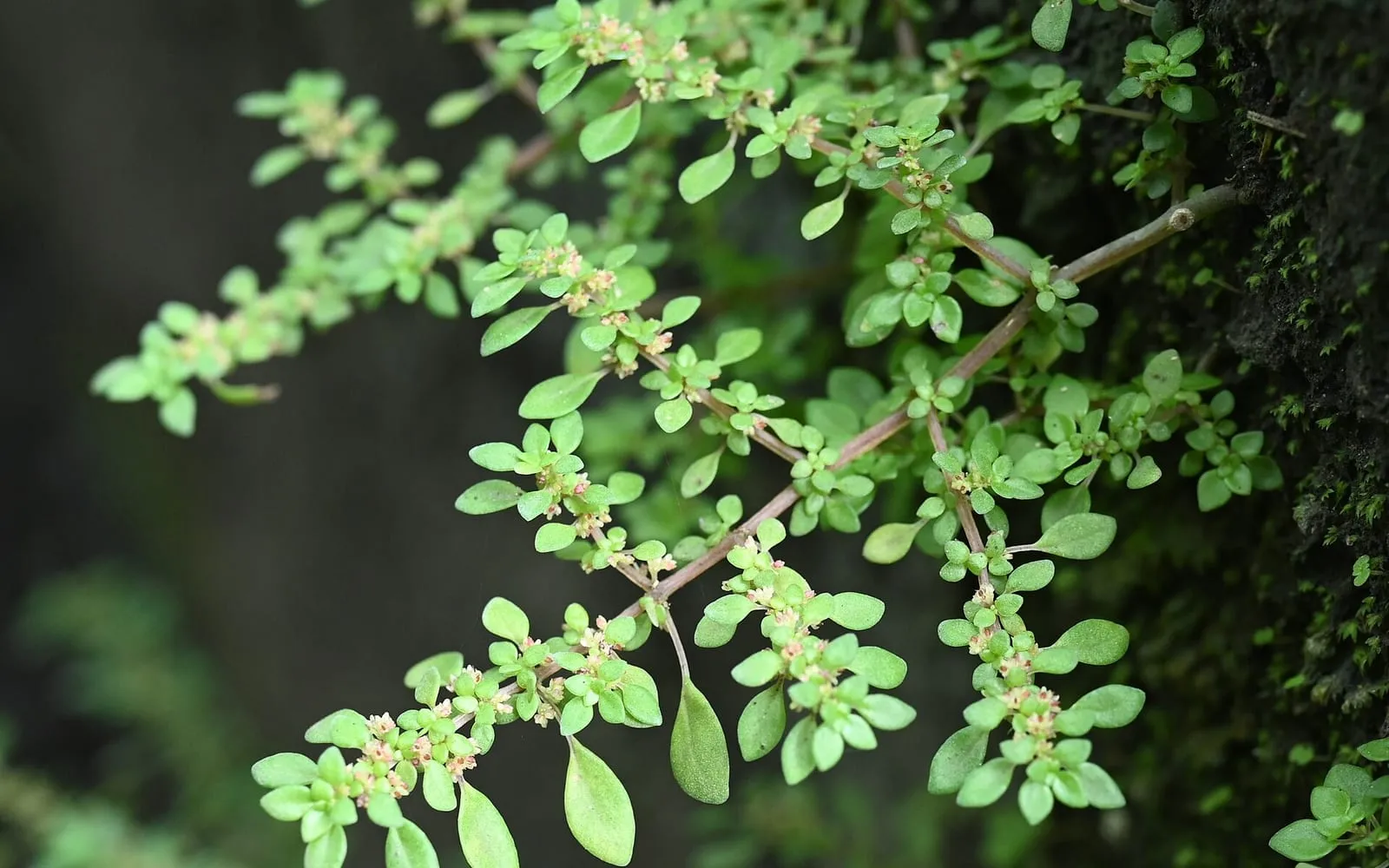
Pilea microphylla, the artillery plant, is a small, fine-textured foliage plant whose mass of tiny leaves looks more like a fern or a clump of moss than a flowering plant. The odd common name comes from its flowering. As the minute male flowers ripen, they snap open and release visible puffs of pollen when touched or stirred by air. Fast-growing and easy, it fills a pot into a soft green cushion quickly.
The species is native to tropical America, where it grows as a quick-spreading plant of damp, shaded ground, walls and paving cracks, so freely that it behaves as a weed in many warm regions. That growth habit explains its care. It needs warmth, humidity and light shade, roots in almost any open, moist compost, and grows readily from the smallest cutting. Cold, wet compost is the main condition that kills it, rotting the fine stems, while dry air browns and thins the delicate foliage.
Appearance and character
The leaves are minute, oval and bright fresh green, crowded in overlapping pairs along much-branched, fleshy, slightly translucent stems, so the whole plant looks like a dense feathery mound. That fine, mossy texture sets it apart from the bold foliage of most houseplants. The flowers are tiny and greenish, easy to miss until they release their small clouds of pollen, which is where the common name comes from. Left to grow, it forms a soft, rounded cushion that can grow leggy and open with age, so it is often renewed from cuttings.
Where it is from
Damp, shaded ground across tropical America is this plant’s origin, where it colonises the forest floor, shaded banks, old walls and the cracks between paving quickly. The setting is warm and humid, the light broken and soft, and the ground it roots in stays moist yet drains freely after rain. Its readiness to seed and spread has carried it far beyond its native range into warm regions worldwide. Indoors, give it light shade instead of glare, an open compost held lightly moist, steady warmth and humid air.
How it grows
Given warmth and moisture the plant grows fast, its branching stems forming a full green cushion within a season, faster than almost any peperomia. That speed comes with a habit of growing leggy and bare at the base as it ages, so many growers treat it as short-lived and restart it from cuttings every year or two. Grow it in a light, moisture-holding blend of coir, fine bark and perlite in a shallow pot that suits its spreading roots. Propagation is easy, since stem cuttings root in days in warm, damp mix, and even a dropped fragment often takes.
Through the seasons
Spring brings faster growth as the light returns; resume regular watering and begin a dilute monthly feed.
Summer brings fast feathery growth and the small flowers that release pollen; keep it in light shade, water once the surface has dried, and raise the humidity in a warm room.
Autumn slows the spread; feed less often and let the compost dry a little more between waterings.
Winter is a quiet phase; keep the plant above 13 deg C, out of draughts, and water sparingly.
Care difficulty
An easy, fast-growing plant, the artillery plant suits a beginner and tolerates most mistakes except a cold, waterlogged pot. Give it light shade, an open compost kept lightly moist, warmth and humid air, and it fills out quickly with little help. Its main weakness is a tendency to grow leggy and thin with age, best answered by pinching it back and raising fresh plants from cuttings. Overwatering in the cold rots the fine stems, and dry air browns the tiny leaves.
Watering
Water whenever the surface of the compost dries, keeping the rootball evenly and lightly moist, since the fine roots and slender stems dislike drying right out. Wet the mix through and let the surplus drain, never leaving the pot standing in water where the stems can rot. Ease off through winter, when growth slows and cold, damp compost turns risky, giving only enough to keep the cushion from wilting. Because the plant grows fast and transpires freely, check it more often than you would a fleshy-leaved peperomia.
Warning signs, diseases and pests
Stems going soft, brown and collapsing at the base point to rot in cold, wet compost; take fresh cuttings from healthy growth and start again instead of trying to nurse a rotted crown. A thin, leggy, bare-based plant is showing its age and is improved by pinching and by raising new plants from cuttings. Shrivelled, browning foliage signals dry air, helped by better humidity. Watch for mealybugs among the crowded stems and for spider mites in warm, dry spells, dabbing mealybugs with dilute alcohol and rinsing mites away.
Growing environment
Site the plant in light shade to bright, filtered light, near a north or east window or back from a stronger one, keeping direct sun off the fine foliage. Keep it warm and even, above 13 deg C and happiest in the high teens to low twenties Celsius, clear of cold draughts and chilly glass. The compost should stay lightly damp and the air humid, so a pebble tray, a bathroom shelf or a grouped display all suit it. Because it grows fast, be ready to pinch it and to renew it from cuttings before it turns leggy.
Feeding
Feed monthly through spring and summer with a balanced liquid fertiliser at half the label strength, which keeps the growth dense and the colour fresh. The plant grows quickly and benefits from a regular light feed, though a strong dose can scorch the fine roots. Do not feed dry compost. Stop feeding through autumn and winter while growth rests. A freshly potted plant can wait a month or so before its first feed, using the nutrients in the new mix.
Troubleshooting
Why has my artillery plant gone leggy and bare at the bottom? Age and low light. Pinch it back to encourage branching, move it somewhere brighter, and raise fresh plants from cuttings.
How much light does it need? Light shade to bright, indirect light; direct sun scorches the tiny leaves, while deep shade thins and stretches the stems.
How often should I water it? Whenever the surface dries, keeping it evenly moist, since it grows fast and dislikes drying out; water less in winter.
How do I propagate Pilea microphylla? From stem cuttings, which root in days in warm, damp mix; even small fragments often take.
Is the artillery plant safe around pets? Yes. The ASPCA lists pileas as non-toxic to cats and dogs, though a chewed leaf can still cause a mild stomach upset.
Artillery Plant problem guides
Not sure what is wrong? See the common houseplant pests guide.