
Houseplant
Mandevilla
Mandevilla sanderi
Also known as Brazilian jasmine, Rocktrumpet
How to grow mandevilla as a patio or conservatory climber. Its glossy leaves and large trumpet flowers, and why the milky sap needs careful handling.
At a glance
- Difficulty
- Moderate
- Water
- Regular watering through the growing season, reduced in winter
- Light
- Bright light, several hours of direct sun
- Temperature
- 15-30 deg C, avoid below 10 deg C
- Humidity
- Moderate to high
- Hardiness
- USDA 10-11, RHS H2, hardy to 10 C
- Type
- Evergreen twining climber
- Height
- 2-4 m given support
- Native to
- Brazil
Frost-tender and grown as a container or conservatory plant across almost the entire temperate world. It is often grown outdoors on a sunny patio through summer and brought under cover before the first autumn frost, flowering most strongly given real summer warmth and strong light throughout the growing season.
Hardiness zones describe winter cold alone. Summer heat, humidity, rainfall and the length of the growing season decide as much, so treat the range as the outer limit rather than as a recommendation.
Harmful if eaten
- Do not eat
- The sap, throughout the plant
- Harm from
- Eating it and handling it
- Affects
- People, cats and dogs
Mandevilla exudes a milky white sap when cut or damaged, typical of plants in the dogbane family, which can irritate skin and cause mouth and stomach upset if eaten. The ASPCA lists mandevilla as toxic to cats and dogs on this basis. Serious poisoning is uncommon since the sap is unpleasant enough to discourage most animals from eating more than a small amount, but wearing gloves when pruning or taking cuttings is a sensible precaution given the sap's irritant nature.
Source: ASPCA
About
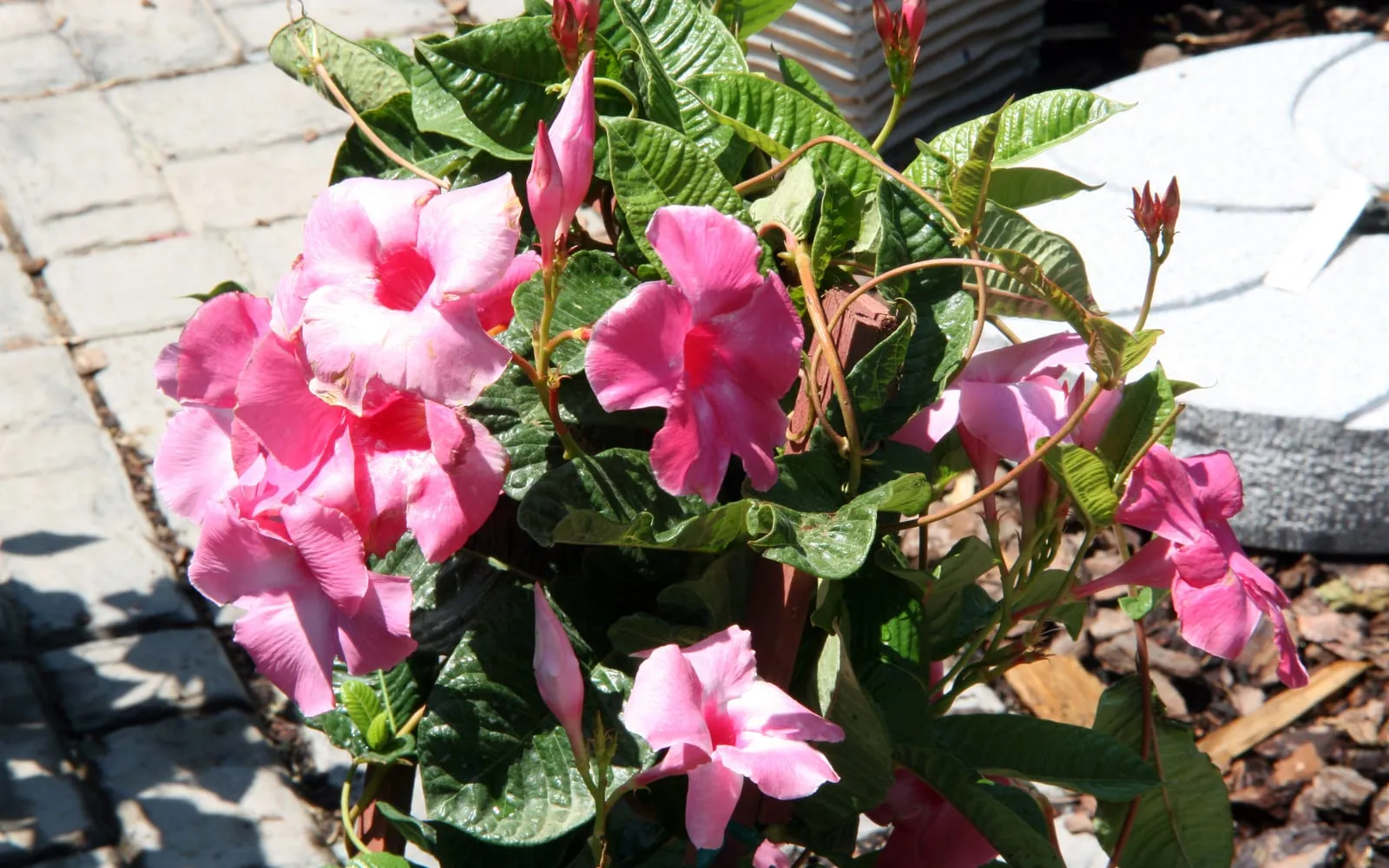
Mandevilla is one of the most popular flowering climbers for a sunny patio or conservatory, grown for its glossy, dark green leaves and its large, trumpet-shaped flowers, most often a rich pink or red, produced over a long season given real warmth and strong light. Its relatively compact, manageable size compared with some other twining climbers has made it a favourite for a large container by a door or on a sunny terrace, trained up a simple frame rather than needing the substantial permanent structure a more vigorous climber would demand.
Like several other members of the dogbane family, it exudes a milky white sap when cut, a useful identifying feature and a reminder that gloves are worth wearing when pruning or taking cuttings, since the sap can irritate skin on contact.
Appearance and character
Glossy, dark green, oval leaves clothe twining stems that wind around any suitable support, and large, funnel-shaped flowers, typically a rich pink through to red depending on the variety, open in succession over an extended flowering season given consistent warmth. Individual flowers last several days each, and a well-grown plant produces a steady supply of new buds rather than one single flush.
Compared with some more rampant twining climbers, this species keeps a more restrained, manageable size, making it well suited to a large pot trained up a simple obelisk or trellis rather than needing to cover an entire wall or pergola.
Where it is from
Warm, humid forest margins in Brazil, in a climate with consistent warmth and reasonably high humidity year round, quite different from the cooler, more variable conditions of most of the temperate world where it is now grown.
That warm, humid origin explains the plant’s preference for strong light, real warmth and moderate to high humidity in cultivation, and its inability to tolerate anything approaching frost, which confines it to container or conservatory growing across almost the entire temperate world.
How it grows
Twining stems extend from the growing tips, winding around any suitable support as they lengthen, and flower buds develop along new growth through the main growing season. Growth is steady given warmth and strong light, slowing much in cooler or lower-light conditions, including through a typical indoor winter.
Because flowers form on new growth, a light trim in spring, removing any straggly or damaged stems, encourages fresh flowering growth for the coming season rather than relying on older, less productive stems to carry the display.
Through the seasons
Spring growth resumes as light and temperature increase; this is a good time for a light prune to shape the plant before the main growing season.
Summer is the main flowering season, with a steady succession of large trumpet flowers given real warmth and strong light. Water and feed regularly through this period.
Autumn flowering tapers as temperatures drop; bring a plant that has spent summer outdoors under cover before the first frost.
Winter reduce watering and feeding sharply, keeping the plant in the brightest available spot at a moderate indoor temperature.
Care difficulty
Moderate. The plant survives fairly casual care, but flowering well over a long season depends on strong light and real warmth, conditions not every home reliably offers through a full summer, and it also needs a sturdy small support to train its twining growth onto.
Watering
Keep the compost evenly moist through the growing season without letting it become waterlogged, reducing watering much over winter as growth slows. A plant that has dried out completely can drop leaves and flower buds, so consistent moisture through the growing season matters more for this species than for some more drought-tolerant climbers.
Warning signs, diseases and pests
Aphids commonly colonise soft new growth and flower buds, and are dislodged easily with a jet of water. Mealybug can settle in leaf axils and along the stems, and spider mites occasionally appear in warm, dry indoor air, both treated with careful manual removal or a horticultural soap for persistent infestations.
Bud drop, where developing flower buds fall before opening, often reflects a sudden change in conditions, such as a cold draught, a dry spell or a big swing in temperature, rather than a specific pest or disease, and keeping conditions as stable as possible through the flowering season helps prevent it.
Growing environment
Bright light with several hours of direct sun supports the strongest flowering; in shade the plant grows leggy with few flowers. Moderate to high humidity suits it well, and free-draining, humus-rich potting mix gives the best results, alongside a sturdy small support for its twining growth.
Feeding
A high-potassium liquid feed formulated for flowering plants, applied every second watering through spring and summer, supports strong, continuous flowering. Reduce or stop feeding through autumn and winter as growth slows.
Troubleshooting
Flower buds are dropping before they open. Check for a sudden change in conditions, such as a cold draught, a dry spell or significant temperature swings, and try to keep conditions as stable as possible through the flowering season.
Growth is leggy with few flowers. Usually insufficient light. Move the plant to the sunniest position available; this species needs strong light to flower well.
Skin irritation occurred after pruning or taking cuttings. The milky sap is an irritant. Wash the affected skin promptly and wear gloves for any future pruning or propagation work.
A plant that spent summer outdoors is struggling since being brought back indoors. Acclimatise it gradually to lower indoor light and reduce watering to match its slower winter growth rather than continuing the same summer routine, which can lead to waterlogged compost and root problems.
You want to train the plant onto a small, freestanding support. A simple wire hoop or obelisk pushed into the pot at planting time gives the twining stems something to wind around from the outset, and guiding new growth onto it by hand every few days in the early stages produces a neater result than leaving the stems to find their own way.
Mandevilla problem guides
Not sure what is wrong? See the common houseplant pests guide.