
Houseplant
Fishtail Palm
Caryota mitis
Also known as Clustered fishtail palm, Burmese fishtail palm
How to grow fishtail palm, Caryota mitis, as a houseplant. Its ragged, fish-tail-shaped leaflets, clumping habit, and why each stem flowers only once.
At a glance
- Difficulty
- Moderate
- Water
- Water when the top few centimetres of compost have dried
- Light
- Bright indirect light
- Temperature
- 16-27 deg C, avoid below 10 deg C
- Humidity
- Above-average humidity preferred
- Hardiness
- USDA 10-12, RHS H2, hardy to 10 C
- Type
- Evergreen perennial palm
- Height
- 2-4 m indoors
- Native to
- Southeast Asia
Frost-tender and grown as a houseplant or conservatory specimen across almost the entire temperate world, since it is damaged even by a light chill well above actual freezing. It grows best with warmth and reasonably high humidity year round, and struggles noticeably in the dry air common in centrally heated homes over winter.
Hardiness zones describe winter cold alone. Summer heat, humidity, rainfall and the length of the growing season decide as much, so treat the range as the outer limit rather than as a recommendation.
Toxic if eaten
- Do not eat
- All parts, especially the fruit and sap
- Harm from
- Eating it and handling it
- Affects
- People, cats and dogs
Fishtail palm fruit and sap contain needle-like calcium oxalate crystals that cause intense burning and irritation on contact with skin or the mouth, a reaction well documented in people who have handled the ripe fruit without gloves. The ASPCA lists the genus as toxic to cats and dogs for the same reason. It is grown as a houseplant with the fruiting stage rarely reached indoors, which limits the practical risk, but the sap in stems and leaf bases can still cause irritation during pruning or repotting.
Source: ASPCA
About
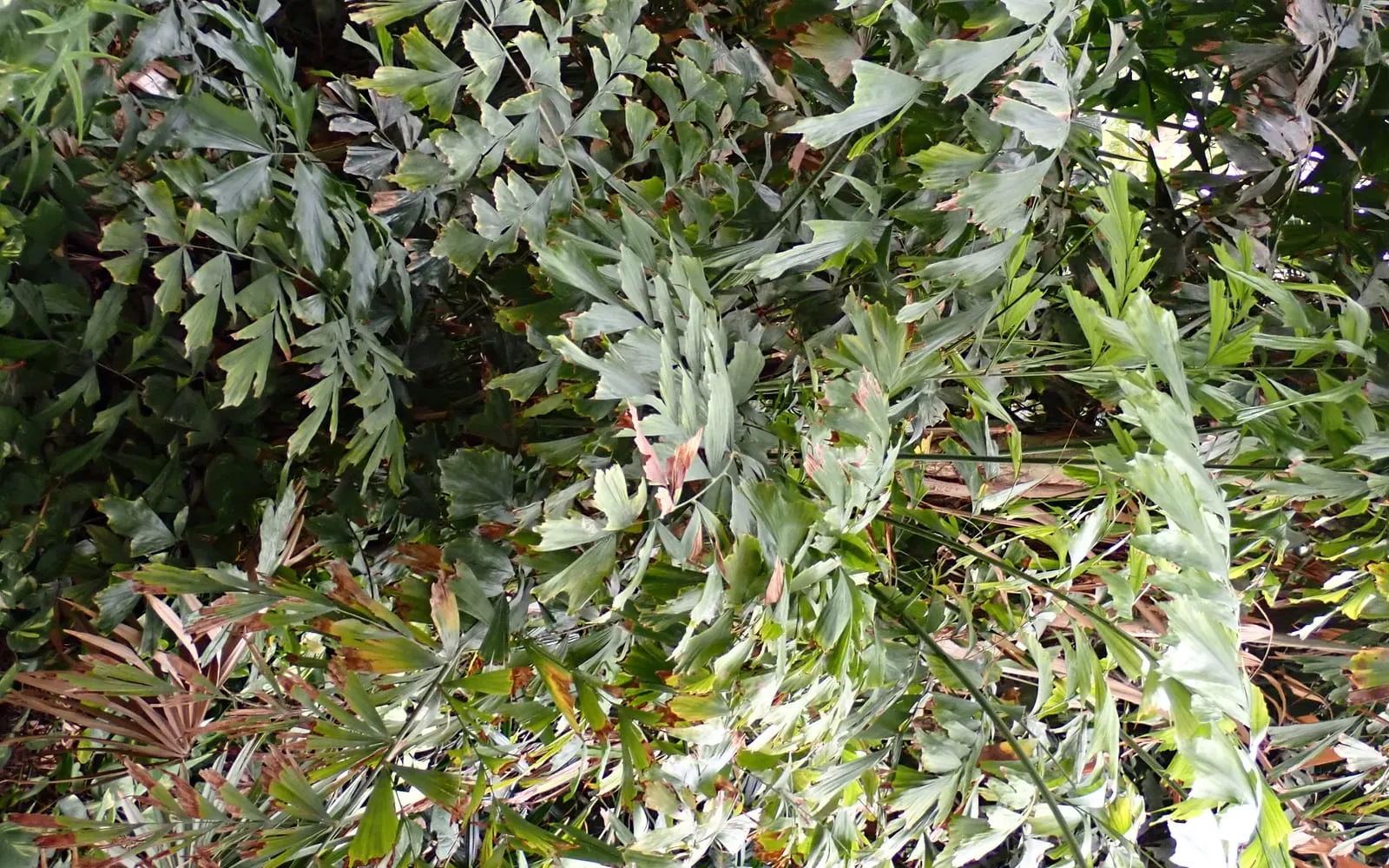
The fishtail palm takes its name from the distinctive, raggedly triangular leaflets that make up its fronds, each one notched and torn along its outer edge in a shape that closely resembles a fish’s tail fin, quite unlike the neat fan or feather shapes of most other palms. It is grown as a houseplant and conservatory specimen for this unusual foliage and for its naturally clumping, multi-stemmed habit, which gives it a fuller, bushier presence than most single-trunked indoor palms.
Its life cycle is unusual among palms: each individual stem flowers only once, starting from the top of the stem and working progressively down to the base over several years, after which that particular stem dies, while the clump as a whole survives and continues growing through the new stems it has produced from its base in the meantime.
Appearance and character
Clumping, cane-like stems bear large, twice-divided fronds made up of numerous small, wedge-shaped leaflets, each one ragged and irregularly toothed along its outer edge, giving the whole frond a distinctive, tattered, fish-tail texture that sets this genus apart from every other commonly grown palm.
Small cream or yellowish flowers appear in long, hanging clusters on a mature stem, starting near the top and continuing down the stem over successive seasons, followed by round red fruit whose sap is a known skin irritant and should be handled with gloves if encountered.
Where it is from
The understorey of tropical forests across Southeast Asia, in warm, humid, often quite shaded conditions beneath a taller forest canopy.
That understorey origin explains its preference for bright but indirect light rather than harsh direct sun, and its need for reasonably high humidity, both conditions more easily met in a bathroom or a humid conservatory than in an average dry, brightly lit living room.
How it grows
An evergreen, clumping palm that spreads by producing new stems from the base, gradually building a dense, multi-stemmed clump over years. Individual stems grow steadily until they reach flowering size, at which point they begin the long process of flowering from top to bottom, dying once this process completes, while younger stems in the same clump continue growing normally.
Because the clump as a whole is not dependent on any single stem, losing one flowered and spent stem does not threaten the plant’s overall survival, and cutting the dead stem out at the base once it has finished flowering is a normal part of managing an established specimen.
Through the seasons
Spring growth picks up as light levels increase, with new stems and fronds emerging from the base. Resume regular feeding.
Summer is the main growing period, with steady new growth given warmth and adequate humidity.
Autumn growth slows as light levels and temperatures drop; reduce feeding accordingly.
Winter growth is minimal. Keep the plant away from cold draughts and reduce watering slightly, while maintaining humidity as best as possible in dry, heated indoor air.
Care difficulty
Moderate. This palm needs warmth and reliably higher humidity than many other houseplants to look its best, which takes more active management in a typical centrally heated home than a more forgiving species would, though it is not otherwise a demanding plant given the right conditions.
Watering
Water thoroughly when the top few centimetres of compost have dried, allowing excess water to drain away completely. This species is less tolerant of both prolonged drought and waterlogged compost than some tougher houseplant palms, and consistent, moderate watering suits it best.
Warning signs, diseases and pests
Spider mites are a common problem in the dry indoor air this species is prone to encountering over winter, showing as fine speckling and sometimes webbing on the fronds; raising humidity around the plant and wiping down fronds periodically helps prevent a build-up. Scale insects and mealybug also colonise stems and frond undersides on occasion, and respond to careful manual removal or a horticultural soap treatment for persistent infestations.
Brown, crisp frond edges usually indicate humidity that is too low or, less often, a build-up of mineral salts from tap water, and are addressed by improving humidity and periodically flushing the compost with water to clear excess salts.
A stem that flowers and then dies back is a normal part of this species’ life cycle rather than a sign of disease. Cut the spent stem away at its base once flowering has finished and it has clearly died, leaving the rest of the clump undisturbed.
Growing environment
Bright indirect light suits it best, with protection from harsh direct sun, which can scorch the delicate leaflets. Above-average humidity supports noticeably better growth than the dry air typical of many centrally heated homes, and grouping this plant with other houseplants, or placing it in a naturally humid room, helps a lot.
Feeding
A balanced liquid feed at half strength, applied monthly through spring and summer, supports steady growth. Reduce or stop feeding through autumn and winter as growth slows in response to lower light and cooler indoor conditions.
Troubleshooting
Frond edges are brown and crisp. Usually low humidity, sometimes combined with mineral salt build-up from tap water. Raise humidity and flush the compost with water occasionally.
Fine speckling or webbing appears on fronds. Check for spider mites, particularly during winter when indoor air tends to be driest, and increase humidity to discourage them.
A stem has flowered and is now dying back. This is the normal end of that stem’s life cycle rather than a disease. Cut it away at the base once it has clearly died, and expect the rest of the clump to continue growing unaffected.
Skin irritation occurred after handling fruit or sap. The sap contains irritant calcium oxalate crystals. Wash the affected skin promptly and wear gloves when pruning or handling fruiting stems in future.
The clump has grown too large for its current spot. Individual stems can be removed at the base to thin a congested clump, ideally in spring, without harming the remaining stems, since each one grows independently from its own point at the base rather than depending on the others.
New leaves are emerging smaller than previous growth. This can indicate the plant has become pot-bound or is short of nutrients. Check the roots and repot into a larger container with fresh compost if they have filled the current pot, and resume regular feeding once new growth resumes.
Fishtail Palm problem guides
Not sure what is wrong? See the common houseplant pests guide.