
Houseplant
Maguey Alto
Agave inaequidens
Also known as Agave inaequidens
How to grow Agave inaequidens, the maguey alto, a large green rosette of the Mexican volcanic highlands with a long history in pulque and mezcal.
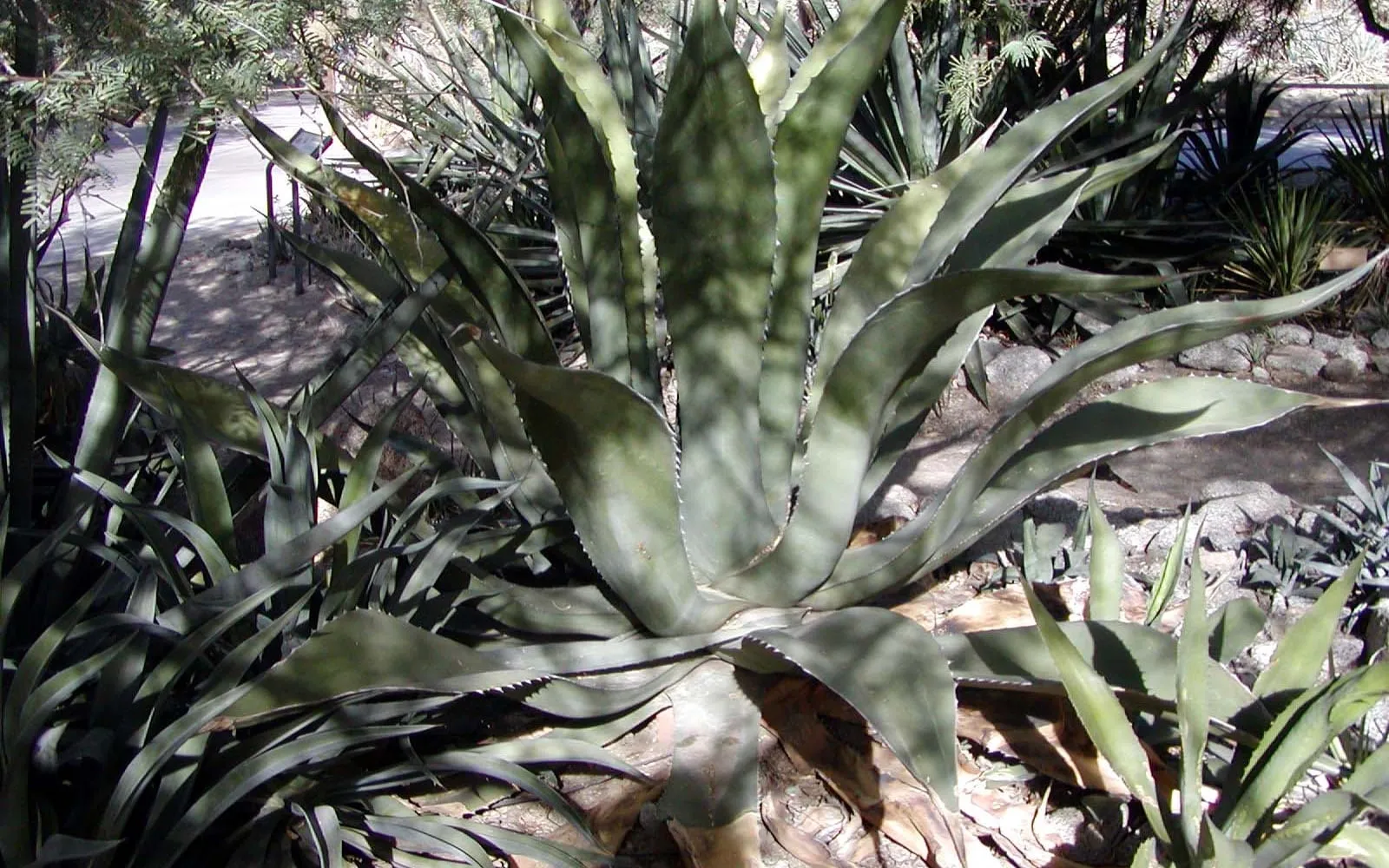
At a glance
- Difficulty
- Easy
- Water
- When the mix has dried right through
- Light
- Full sun
- Temperature
- Takes light frost to about -5 deg C if kept dry; wet cold is the danger
- Humidity
- Low to average
- Hardiness
- USDA 9-11, RHS H3, hardy to -5 C
- Type
- Perennial
- Height
- Up to 2 m
- Native to
- Mexico
An agave of the volcanic highlands of west-central Mexico, where summers are warm and wet and winters cool and dry. A dry plant tolerates a few degrees of frost, whereas water standing in the crown rots it at temperatures it would otherwise survive, so sharp drainage and dry winters matter more than warmth. It needs full sun and room for a rosette up to 2 m across.
Hardiness zones describe winter cold alone. Summer heat, humidity, rainfall and the length of the growing season decide as much, so treat the range as the outer limit rather than as a recommendation.
Toxic if eaten
- Do not eat
- The sap in every leaf, and the spines
- Harm from
- Eating it, handling it and sap in the eyes
- Affects
- People, cats and dogs
The sap of Agave inaequidens contains calcium oxalate needles and saponins, as in other agaves. On skin it can cause a burning, sometimes blistering dermatitis, and in the eye it causes severe pain that needs prompt rinsing with water and medical advice. The ASPCA lists Agave americana as toxic to cats and dogs, with vomiting, drooling and diarrhoea after ingestion, and the RHS lists agaves as skin and eye irritants. No separate assessment of this species exists, so the genus record applies. Wear gloves and eye protection when handling or repotting, and keep pets off it.
Sources: ASPCA toxic and non-toxic plants, RHS potentially harmful garden plants
About
The common name translates as the tall maguey, and Agave inaequidens is a large plant. It forms a strong rosette of long green leaves, much taller than many squat desert agaves. Its home is the volcanic highlands of west-central Mexico, where growers have long tapped its sap for pulque and roasted its hearts for mezcal.
The species epithet points to the leaf edge. Inaequidens means unequal-toothed, and refers to the ragged margin of teeth in mixed sizes along each blade. That feature sets it apart from the even, regularly spaced teeth of many related agaves. Overall the plant looks greener and less desert-grey than the arid northern species.
In cultivation it is vigorous. It stores water in its long leaves, offsets into a broad clump, and needs good light, sharp drainage and warmth. A cold, waterlogged root run is the main risk, so water carefully in cool weather.
Appearance and character
The leaves are long, broad at the base and tapering, a fresh green sometimes tinged grey, and they arch outward on a plant that grows large with age. The margins bear teeth of markedly uneven size, and each blade ends in a stout, dark terminal spine.
Offsets rise around the base as the rosette matures, so a single plant can become a spreading clump over the years. That habit lets growers in the highland fields harvest a heart and leave the pups to replace it.
Flowering ends a rosette’s life. In time it produces a tall, branched inflorescence, sets seed and dies back while its offsets carry on. Pulque makers cut the emerging stalk out early to force sugar into the swelling heart. A container plant almost never reaches the flowering stage.
Where it is from
The volcanic uplands of Michoacan, Jalisco and their neighbours in west-central Mexico are its home, on rocky slopes and terraces from middle to high elevation. Summers there run warm and wet, winters turn cool and dry, and the porous volcanic earth drains at speed.
This upland setting explains the care. It does best in strong light and a mix that lets surplus water drain away. It will drink a little more freely in active growth than a true desert agave, but it cannot handle a chilled pot that holds water. Keep it warm, bright and quick to drain.
How it grows
The long blades extend and fresh offsets rise around the base through the warm season, and then growth slows as the light retreats. Under full sun the leaves stay long and firmly arching. In too little light they soften and lose colour.
Since it makes a big plant, set it in a coarse, open mix in a generous pot and water once the top has dried. The long leaves store enough water to outlast a dry patch, while roots left wet can rot.
Warmth keeps it growing, and it can take a few degrees of frost to about -5 deg C if it is dry at the time. Levering off a rooted offset is the simplest way to raise another.
Through the seasons
Spring starts the clump into growth as light climbs. Bring the watering back up and pot on any surplus offsets.
Summer brings the year’s best growth. Water once the top has dried, and keep the rosette in strong light.
Autumn slows growth. Cut the feed and leave the mix dry a little longer as daylight fades.
Winter is a dry pause. Water only occasionally, and keep the clump out of cold, wet compost.
Care difficulty
Easy and vigorous wherever light and drainage suit it, though it needs space. It offsets, stores water and needs little feed. The main danger is a cold, saturated pot rotting the crown, so keep it lean and dry through the cold months. The uneven teeth and terminal spine also need space away from passing hands.
Watering
Wait for the surface to dry, then flush the pot through until water clears the base and let it drain right out. The long leaves carry a reserve, so a dry interval suits the plant. Roots sitting in wet compost can rot.
Pull the watering back sharply over winter, when a chilled wet root run is most dangerous. Judge each drink by the state of the mix, since a soaking harms this agave far more than a dry spell.
Warning signs, diseases and pests
A cold, wet root run first shows as a soft patch on the base or a rosette loose in its pot. Sort out the drainage, scale the watering right back, above all over winter, and keep the plant dry and bright.
Mealybugs work into the leaf bases and offsets, and spider mites turn up when the air dries. Look through the crevices of the big crown and clear any early outbreak with a wipe and a suitable spray.
Brown, scorched patches on the long leaves point to sun scorch on a plant moved suddenly from shade, or to drops of water left on the blades in strong sun. Acclimatise it over a week or two and water the mix rather than the rosette.
Growing environment
Give it strong, unbroken light. In strong light the leaves keep their length, firmness and green colour. In shade they slump and fade.
It tolerates light frost to about -5 deg C when dry, but not cold, wet compost. A sunny corner or a bright glasshouse suits it in winter, and a summer outdoors in full sun suits it where there is room.
Grow it in a light, sharp, gritty mix in a large pot that empties freely, and allow the clump plenty of room. Move it by the pot to keep the spined leaves clear of your hands.
Feeding
A weak, balanced feed across the growing season supports its vigour. Too much feed produces soft, overlong leaves, so keep the strength moderate.
Feed nothing over winter. A fresh potting into gritty mix supplies a young plant for a while, so leave the feed until the warmth is back.
Troubleshooting
Why is my maguey alto soft at the base? A cold, wet root run is the usual reason. Sort the drainage, water much less, and keep it dry through winter.
How much light does it need? As much direct light as you can give. In shade the long leaves slacken and the green fades.
How often should I water it? Once the top has dried, and only sparingly through winter, judged by the mix.
How do I propagate it? Lever a rooted offset off the parent and grow it on.
Is it safe around pets? No. The sap irritates skin and eyes, and the ASPCA lists Agave as toxic to cats and dogs, so keep chewing pets away from it and mind the uneven teeth and spine.
Maguey Alto problem guides
Not sure what is wrong? See the common houseplant pests guide.