
Houseplant
Palm Leaf Begonia
Begonia luxurians
Also known as Begonia luxurians
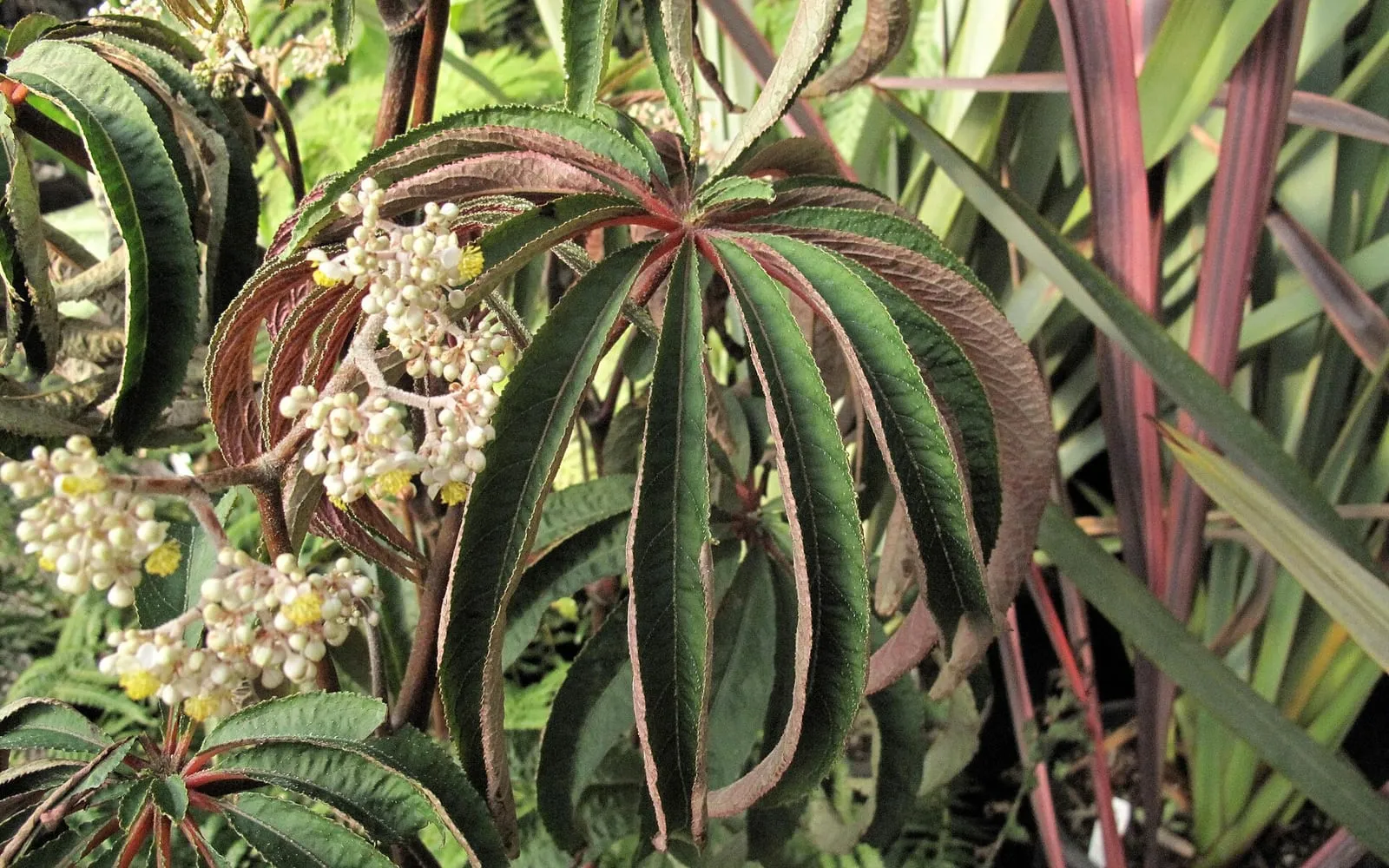
How to grow Begonia luxurians, the palm leaf begonia, with tall bamboo-like canes and leaves split into many narrow leaflets like a palm.
At a glance
- Difficulty
- Easy
- Water
- When the top few centimetres of mix have dried
- Light
- Bright indirect light to light shade
- Temperature
- Warm; keep above about 13 deg C
- Humidity
- Average to high
- Hardiness
- USDA 10-12, RHS H1b, hardy to 13 C
- Type
- Perennial
- Height
- 1-2 m
- Native to
- Brazil
A tender tropical foliage plant from Brazil, growing in warm, humid, shaded to filtered light. It needs warmth, humidity and bright indirect light, and it cannot take frost or chill. It is safest above about 13 deg C, and cold, wet compost or dry air spoils it.
Hardiness zones describe winter cold alone. Summer heat, humidity, rainfall and the length of the growing season decide as much, so treat the range as the outer limit rather than as a recommendation.
Harmful if eaten
- Do not eat
- All parts, the underground parts most of all
- Harm from
- Eating it and handling it
- Affects
- People, cats, dogs and horses
Begonia luxurians, the palm leaf begonia, is toxic to cats, dogs and horses. The ASPCA lists begonias for the soluble calcium oxalates they carry, most concentrated in the underground parts, and chewing the plant can burn the mouth and cause drooling and vomiting. The RHS rates begonias as mildly harmful if eaten and a possible skin irritant. Keep it out of reach of pets and small children, and wash your hands after cutting stems.
Sources: ASPCA toxic and non-toxic plants, RHS potentially harmful garden plants
A striking begonia
Begonia luxurians is the most palm-like of all begonias. Its species name means luxuriant, and the plant earns it with tall, upright, bamboo-like canes and huge leaves split into many narrow, radiating leaflets. Each leaf spreads like the hand of a palm or the frond of a small fan palm. It comes from Brazil and grows fast and tall, easily reaching well over head height in a large pot. For a bright, warm room with space, it makes a bold foliage plant quite unlike the wing-leaved begonias most people know.
The leaves and canes
Each leaf is deeply divided into a whorl of slender, pointed, toothed leaflets that spread out from the top of a long red-tinged stalk, giving a green starburst repeated up the plant. The canes are round, jointed and self-supporting when young, flushed red at the nodes, and they branch as they age into a tall, leafy framework. In the warmer months clusters of small creamy-white flowers, faintly scented, gather among the upper leaves. As in every begonia the male and female flowers are separate, the female sitting on a small winged capsule.
Where it comes from
In the wild it grows in the warm, humid forests of Brazil, reaching up through the understorey towards the light on its tall canes while its roots stay in cool, damp, leaf-rich soil. Give it warmth without cold snaps, plenty of humidity around the divided leaves, steady moisture at the root, and bright filtered light. It also needs height and headroom. The species is endemic to the Atlantic forest of southeastern Brazil, recorded in the states of Rio de Janeiro, Sao Paulo, Minas Gerais and Espirito Santo, and it climbs to around 1,100 metres in the Serra dos Orgaos behind Rio de Janeiro. It carries the Royal Horticultural Society’s Award of Garden Merit, an unusual honour for a begonia grown chiefly for its foliage.
Light and space
Give it the brightest position you can without direct summer sun on the leaves, such as a spot near an east window or drawn back a little from a brighter one. This species takes more light than shade-loving begonias and grows tall and well-clothed in a bright room, though hot direct rays through glass still scorch the fine leaflets. In too little light the canes bolt upwards, leggy and bare between widely spaced leaves. Allow room around and above it, since a happy plant grows quickly and carries wide leaves.
Watering a tall plant
Water when the top few centimetres of the compost have dried, soaking the whole root ball and letting the excess drain freely. A large, fast-growing plant in full leaf drinks heavily through the warm months and should not be allowed to wilt. In winter, as growth slows, water much less and let more of the pot dry between drinks. Cold, waterlogged compost rots the base of the canes.
Warmth and humidity
Keep it warm and above about 13 deg C, out of cold draughts that chill the canes. The finely divided leaves lose moisture fast, so dry heated air browns and crisps the leaflets; a large pebble tray, a grouping of plants, or a humid room keeps them in good order. Its tall, open habit lets air move through it naturally, which helps ward off fungal trouble on the crowded upper growth.
Feeding
A vigorous, leafy plant of this size feeds well. Give a balanced liquid fertiliser at half strength every couple of weeks from spring to early autumn to support the tall canes and the large divided leaves. As it fills a big pot, top-dress with fresh compost in spring between repottings. Stop feeding over winter and resume as new growth pushes up in spring.
Pruning and propagation
To keep an old plant from growing bare and top-heavy, cut the tallest canes back hard in spring; the plant breaks freely from lower down and the prunings make cuttings. Root a section of cane, trimmed below a node and with its largest leaves removed to cut water loss, in warm, damp, open compost under cover, where it strikes in a few weeks. Fresh seed germinates readily on damp compost in warmth and is how nurseries raise it in quantity, since the species comes true from seed. Divide a large multi-caned plant at repotting.
Health and pests
Warm, humid and airy, this is a tough plant. Dry air brings spider mites, which stipple the leaflets and web the shoot tips, and a raised humidity with a rinse under a tepid shower knocks them back. Mealybugs may hide in the leaf joints and are wiped away with dilute alcohol. Grey mould can spot growth left cold and wet in still air. Sudden collapse of a cane points to rot at its waterlogged, chilled base, and the cure is drier, warmer, freer-draining conditions.
The year in outline
Spring brings fast new canes and leaves; prune old growth hard, take cuttings and start feeding.
Summer is vigorous growth; water generously, feed and keep the humidity up as it grows tall.
Autumn slows the plant as light fades; reduce water and let the feed tail off.
Winter is a warm rest; keep it above chilling cold, water sparingly and let the pot dry more between drinks.
Common questions
Why is my plant tall and bare at the bottom? Too little light, or an old plant that needs pruning. Move it brighter, out of direct sun, and cut the canes back hard in spring.
Does it need direct sun? No, though it needs more light than most begonias. Bright, filtered light is ideal; strong sun scorches the fine leaflets.
How much water does it want? When the top few centimetres have dried, watering freely in summer and sparingly in winter, never leaving it cold and wet.
How do I propagate it? Root a cane cutting in warm, damp compost, or sow the fresh seed, which comes true.
Is it harmful to pets? Mildly. Begonias contain soluble calcium oxalates that irritate the mouth and stomach, so keep it out of reach of pets that chew.
Palm Leaf Begonia problem guides
Not sure what is wrong? See the common houseplant pests guide.