
Houseplant
Blue-Ginger
Dichorisandra thyrsiflora
Also known as Dichorisandra thyrsiflora
How to grow Dichorisandra thyrsiflora, the cane-stemmed blue ginger, a Brazilian spiderwort relative kept for tall spikes of deep cobalt autumn flowers.
At a glance
- Difficulty
- Easy
- Water
- When the top few centimetres of mix have dried
- Light
- Bright indirect light to light shade
- Temperature
- Warm; keep above about 13 deg C
- Humidity
- Average to high
- Hardiness
- USDA 10-12, RHS H1b, hardy to 13 C
- Type
- Perennial
- Height
- 1-2 m
- Native to
- Brazil
A tender tropical foliage plant from Brazil, growing in warm, humid, shaded to filtered light. It needs warmth, humidity and bright indirect light, and it cannot take frost or chill. It is safest above about 13 deg C, and cold, wet compost or dry air spoils it.
Hardiness zones describe winter cold alone. Summer heat, humidity, rainfall and the length of the growing season decide as much, so treat the range as the outer limit rather than as a recommendation.
Not known to be toxic
Dichorisandra thyrsiflora, the blue-ginger, is not recorded among the seriously toxic plants, and related plants in its group are not listed as toxic by the ASPCA or the RHS. A pet or child that chewed a leaf would be unlikely to be badly harmed beyond a possible mild stomach upset.
Sources: ASPCA toxic and non-toxic plants, RHS potentially harmful garden plants
About
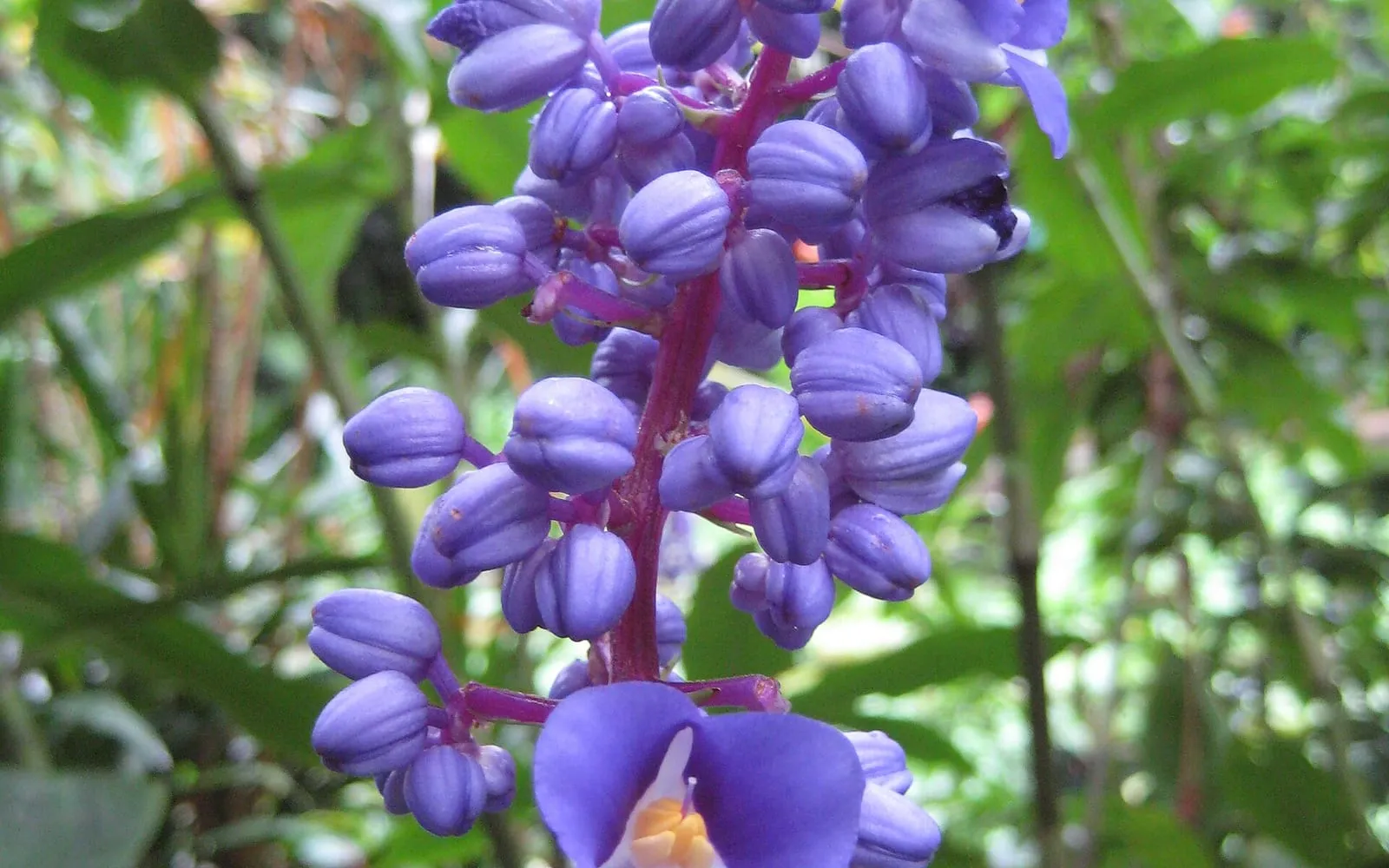
Dichorisandra thyrsiflora gets the name blue ginger from its upright, glossy-leaved canes, which stand like a young ginger clump, though it sits in the spiderwort family and has no tie to the culinary gingers. People keep it for the flower spikes. Dense cones of deep cobalt rise at the cane tips from late summer into autumn, a saturated blue that few cultivated plants match. Each bloom has three rounded petals around a cluster of bright anthers and fades within a day or so, while the spike above and below it keeps opening fresh flowers for weeks.
The plant grows on erect, bamboo-like stems that climb from a creeping underground rhizome, reaching waist to shoulder height in a warm conservatory or a large pot indoors. Leaves spiral up each cane in glossy dark green, frequently stained purple underneath. It comes from the humid Atlantic coastal forest of eastern Brazil, and it needs warmth, part shade and even moisture. Chilled roots and parched air are the two common problems.
Appearance and character
The canes give the plant its shape. They rise straight and jointed, green sometimes flushed purple, carrying whorls of oval leaves that come to a drawn point, glossy on top and often wine-coloured beneath. A mature clump produces several canes from the rhizome, so the plant looks like a small stand of bamboo instead of a single stem.
The flower heads make the display. Each is a tight, upright thyrse packed with violet-blue flowers and gold anthers, held clear of the foliage. Fruit follows as small capsules if a flower is pollinated, though indoors it seldom sets seed.
Where it is from
Dichorisandra thyrsiflora grows wild in the Mata Atlantica, the coastal rainforest running down eastern Brazil, where it roots in leaf mould on shaded slopes and stream banks. The air there stays warm and moist for most of the year, and the canopy filters the sun to a soft, moving light.
In a pot, give the plant heat that rarely drops near freezing, humidity above what a centrally heated room offers, and a screened position instead of a bare windowsill. A soil that stays damp yet lets water run through matches the forest floor it evolved on.
How it grows
Growth comes in flushes through the warm months, as new canes push from the rhizome and lengthen, then flowering closes the season in late summer and autumn. Over winter the plant holds its canes but adds little new growth.
Stand it in a roomy pot of open, humus-rich compost that drains after watering. Keep the rootball damp during active growth, feed while the canes are extending, and let the top of the compost dry a shade before each drink once the days shorten. When a cane grows leggy or a clump crowds its pot, cut old canes to the base in spring and divide the rhizome to make new plants. Cane sections and tip cuttings root in warm, humid conditions.
Through the seasons
Spring brings new growth from the rhizome. Repot or divide now, and start watering and feeding as growth resumes.
Summer is the strongest cane-growth season. Keep the plant warm and humid, water freely, and shade it from any midday beam.
Autumn brings the flower spikes. Keep feeding light while it blooms, and enjoy the cobalt heads before the light fades.
Winter is a quiet spell. Ease back on water, stop feeding, and hold the plant well clear of cold glass and draughts.
Care difficulty
Blue ginger is straightforward once its warmth and moisture are right. It grows well in a humid, part-shaded spot, a rich but open compost, and steady water in growth with a lighter hand in winter. Trouble almost always starts with a cold, sodden root run that rots the rhizome, or with dry indoor air that crisps the leaf margins and encourages mites.
Watering
Keep the compost evenly damp while the canes are growing, letting only the surface dry between waterings. The plant uses plenty of water in heat, so check it often in summer and never let the rootball dry hard.
As autumn turns to winter and growth stalls, water less and allow the top few centimetres to dry before you add more. Cold, wet compost round a dormant rhizome can rot the plant, so err towards dry in the resting months.
Warning signs, diseases and pests
Yellowing lower leaves and a soft, dark cane base point to a rhizome kept too wet and too cold. Lift the plant, cut away any rotten tissue, and repot into fresh, gritty compost with less water thereafter.
Crisp brown leaf edges follow dry, heated air. Raise the humidity around the plant and move it off a radiator shelf. In hot, dry rooms red spider mites can stipple the foliage and web the leaf joints, and mealybugs may hide in the leaf axils; wipe both off early and treat with a suitable control before they spread through the clump.
Growing environment
Site blue ginger where it gets steady, screened daylight and shelter from strong sun, such as an east-facing spot or a position set back from a bright window. Warm, humid air suits it, so a bathroom, a plant-filled corner or a conservatory grouping keeps the leaf tips clean.
Pot it in a deep container of humus-rich, free-draining compost, and stand it clear of cold draughts and heat sources. Given room for the rhizome to spread and a spell of good summer growth, it flowers reliably in autumn.
Feeding
Feed a weak, balanced liquid fertiliser every few weeks while the canes are extending through spring and summer. The plant makes a lot of leaf and stem in a season, so light, regular feeding works better than a single heavy dose.
Taper feeding off through autumn and stop over winter while the plant rests. A newly potted or freshly divided clump can go several weeks on the nutrients in fresh compost before it needs any feed.
Troubleshooting
Why has a cane gone soft and toppled? A soft, blackening base means rot from cold, waterlogged compost. Remove the affected cane, check the rhizome, and repot drier.
Why are the leaf edges browning? Dry air is the usual cause. Group the plant with others, stand it over a humidity tray, and keep it away from radiators.
Why will it not flower? Blue ginger needs a full season of warm, well-lit growth to build flowering canes. A plant kept too dark, too cold or starved of feed skips the autumn spikes.
How do I make more plants? Divide the rhizome in spring, or root cane sections and tip cuttings in warm, humid conditions.
Is it safe around pets? The toxicity note above records no serious hazard for its group, so the risk is a mild stomach upset if a pet chews the canes. Discourage chewing all the same.
Blue-Ginger problem guides
Not sure what is wrong? See the common houseplant pests guide.