
Houseplant
Boissier's Glory-Of-The-Snow
Scilla luciliae
Also known as Scilla luciliae
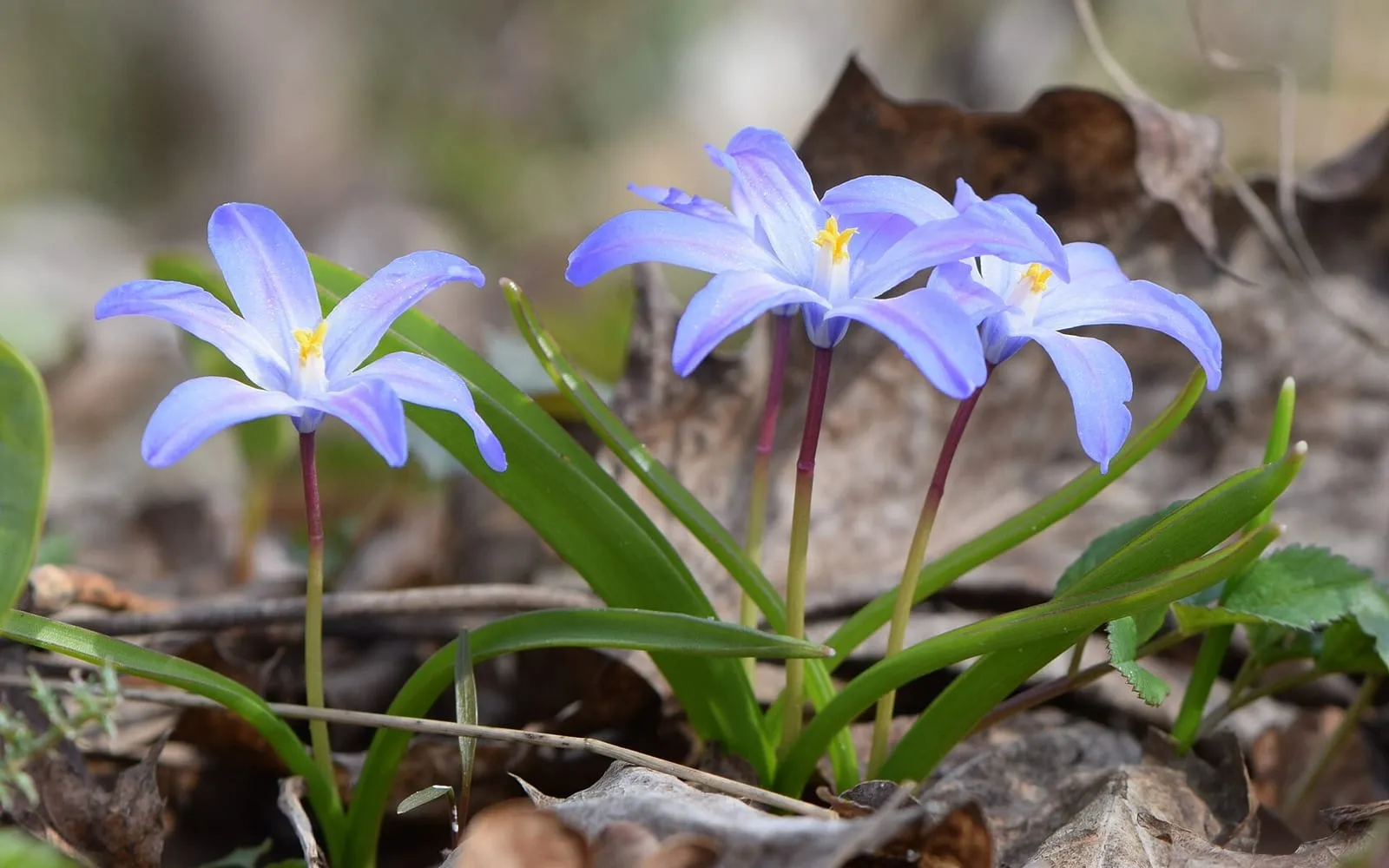
Grow Scilla luciliae, the large-flowered glory-of-the-snow, for a few broad sky-blue stars with bold white centres on each early stem.
At a glance
- Difficulty
- Easy
- Water
- While in leaf and flower; dry when dormant
- Light
- Full sun to bright light
- Temperature
- Fully hardy; needs a cold winter
- Humidity
- Average
- Hardiness
- USDA 4-8, RHS H7, hardy to -30 C
- Type
- Perennial
- Height
- 10-15 cm
- Native to
- western Turkey
A mountain bulb from western Turkey that flowers in early spring after a cold, snowy winter and rests through a dry summer. It needs the winter chill and sharp summer drainage, and it performs poorly in warm climates with no cold season and in wet summer soil.
Hardiness zones describe winter cold alone. Summer heat, humidity, rainfall and the length of the growing season decide as much, so treat the range as the outer limit rather than as a recommendation.
Harmful if eaten
- Harm from
- Eating it
- Affects
- People, cats and dogs
Scilla luciliae, the boissier's glory-of-the-snow, is treated as mildly toxic if eaten. The ASPCA lists the related Forbes' glory-of-the-snow as mildly toxic to dogs, and no severe toxin is confirmed for the group, but other squills carry cardiac glycosides, so the bulbs are best treated with caution. Swallowing them can cause drooling, vomiting and diarrhoea. The bulb contains the most. Keep bulbs and plants away from pets and children, and wash your hands after handling them.
Sources: ASPCA toxic and non-toxic plants, RHS potentially harmful garden plants
About
Scilla luciliae is the boldest-flowered of the little bulbs that gardeners still buy as Chionodoxa. Edmond Boissier, the Swiss botanist who described it from western Turkey, named the species for his wife Lucile, and the plant remains one of the most widely grown of its kind because its blooms are noticeably larger than those of its relatives. The trade move that merged Chionodoxa into Scilla has left it with two names on nursery lists, which makes it easy to confuse with the smaller-flowered forbesii.
In the garden, the difference is visible. Where its cousins carry many small stars, this one opens two or three broad ones per stem, each large enough to show clearly across a bed.
Appearance and character
Each stem carries only a few flowers, but they are wide and shapely, opening to around three centimetres of clear sky-blue. A broad, sharply defined white zone fills the centre and makes the blue look stronger, and the petals spread almost flat and turn to face the sun instead of nodding. Held low on short stems, the flowers sit just clear of the ground on all but the strongest plants.
The leaves are two strap-shaped blades that appear alongside the flower and stay short and unobtrusive. They soon flush yellow and wither once flowering ends, so the plant does not leave much untidy foliage behind.
Where it is from
The bulb comes from the mountains of western Turkey, growing in rocky ground and short alpine turf near the upper limit of the tree line. Snow lies over it for much of winter, meltwater floods the ground in early spring, and the slopes then dry hard as summer advances. The bulb makes leaves, flowers and seed in the brief moist window and rests underground through the drought.
Recreate that cycle and the care is simple. Cold and damp in winter do no harm, a moist spring is welcome, and a dry, warm, undisturbed summer ripens the bulb for the following year.
How it grows
Set the bulbs about eight centimetres deep in early to mid autumn, spacing them a hand’s width apart so a clump has room to build. Any freely draining soil suits them, and a gritty, loam-based mix works well in a trough or pan where the display can be seen close to.
Multiplication is slow. The bulb produces a few offsets each year and sets seed readily where more than one plant grows together, since cross-pollination improves seed set. Seedlings take three or four years to reach flowering size, so a colony builds slowly but reliably if the ripening seed is left to fall.
Through the seasons
Winter is the bulb’s resting season below the surface. It is fully hardy against frost within its range and needs no protection.
Spring brings the flowers, opening early and lasting two or three weeks in cool weather; warm spells shorten the show.
Summer is the dry dormancy the bulb depends on. Foliage dies away, seed ripens and scatters, and the ground should be left to bake.
Autumn is the season for planting new bulbs and for the roots of established ones to begin working again as the soil cools and moistens.
Care difficulty
It ranks among the most forgiving of early bulbs. There is no staking, no lifting in a suitable spot, and no feeding regime to keep to. It tolerates severe cold. The dormant bulb usually dies if it sits in cold, wet soil through summer.
Watering
Left in the open ground, the bulb usually needs no watering beyond spring rain. Watering matters only where it is grown in a container, and there the rule is to keep the compost just moist while leaves and flowers are present, then cut off water completely as the foliage yellows.
A potted bulb given a dry rest through summer flowers far better than one kept damp by routine. Stand the pot somewhere sheltered from summer rain and resume watering only when autumn returns.
Warning signs, diseases and pests
The commonest failure is a bulb that never reappears, and summer wet is nearly always the reason. Improve drainage before replanting, and in a pot give the resting bulb a dry, airy spell instead of a place on a watered bench.
Slugs and snails may eat the fresh young leaves and can strip an emerging shoot overnight in mild, damp weather, so protect the crowns as growth begins. Aphids sometimes gather on the flower stalks and wipe off easily before they multiply.
Growing environment
Full sun brings the strongest flower colour and the firmest stems, though the bulb tolerates the passing shade of shrubs and trees that leaf up after it has flowered. It looks best massed at the edge of a border, threaded through a rock garden, or naturalised in fine grass that is not cut until the foliage has died back.
Sharp drainage is the one essential condition. On heavy clay, plant into a raised, gritted pocket instead of using soil that holds water all summer.
Feeding
A colony in decent ground rarely needs feeding. Where the flowers look sparse, a weak liquid feed applied once while the leaves are still green helps the bulb store reserves, and a thin autumn mulch of leaf mould keeps a naturalised planting vigorous.
Skip strong, high-nitrogen fertilisers, which produce lush foliage and few flowers.
Troubleshooting
How is it different from ordinary glory-of-the-snow? Scilla luciliae carries fewer but distinctly larger flowers with a bigger white centre than the many-flowered Scilla forbesii, which is often sold under the same common name.
Why did it flower well the first year and poorly after? A crowded clump or a summer rest spent too wet both cut flowering. Lift and divide congested bulbs once the leaves have gone, and check the drainage.
Will it grow indoors? Only in a cool, bright spot with a cold winter rest; a heated room stops it setting buds.
Should I deadhead it? Not if you want it to spread, since the seed is how a colony expands. Remove spent stems only where self-seeding is unwelcome.
Is it a danger to pets? Mildly. The bulbs can upset the stomach if a dog digs them up and eats them, and related squills are more dangerous, so keep them away from animals that dig or chew.
Boissier's Glory-Of-The-Snow problem guides
Not sure what is wrong? See the common houseplant pests guide.