
Houseplant
Leatherleaf Fern
Rumohra adiantiformis
Also known as Leather fern, Seven week fern
How to grow leatherleaf fern, Rumohra adiantiformis. The tough, glossy foliage behind almost every florist arrangement, and why the fronds outlast most cut greenery.
At a glance
- Difficulty
- Easy
- Water
- Water when the top few centimetres of compost feel dry
- Light
- Bright indirect light. Tolerates low light unusually well for a fern
- Temperature
- 12-24 deg C. Tolerates brief light frost once established
- Humidity
- Average room humidity is fine. Not especially demanding
- Hardiness
- USDA 9-11, RHS H2, hardy to -5 C
- Type
- Evergreen perennial fern, terrestrial or growing over rock
- Height
- 30-90 cm
- Native to
- Southern Hemisphere temperate and subtropical regions, including southern Africa, South America, Australia and New Zealand
Frost tender instead of reliably hardy, though mature plants in sheltered gardens within its native range have survived brief dips well below freezing with foliage burn instead of death. Grown outdoors year round only in mild, near frost-free climates; everywhere else it is a houseplant or conservatory subject, valued as much for tolerating low indoor light as for its cut foliage.
Hardiness zones describe winter cold alone. Summer heat, humidity, rainfall and the length of the growing season decide as much, so treat the range as the outer limit rather than as a recommendation.
Not known to be toxic
Non-toxic. Leatherleaf fern is not listed by the RHS among potentially harmful garden plants, and it is not recorded by the ASPCA as toxic to cats, dogs or horses. No irritant sap or documented toxin is associated with the species. It is grown commercially in large quantities for the cut flower trade and handled daily by florists with no reported hazard beyond the ordinary risk of a cut stem edge.
Sources: RHS potentially harmful garden plants, ASPCA toxic and non-toxic plants
About
Almost everyone who has ever received a bouquet has held this fern without knowing its name. The dark, glossy, triangular fronds that fill out the back of a florist arrangement, wrap a corsage, or sit as plain green filler around a vase of roses are leatherleaf fern, harvested by the tens of millions of stems a year and cut fresh, dyed, dried or even preserved in glycerine for the trade.
It is used this way because of one property almost no other cut foliage matches. Once cut, a leatherleaf frond holds its colour and shape for weeks instead of days, a durability owed to the thick, leathery cuticle that gives the plant its common name. In South Africa, where the species also grows wild, it carries a local name that translates as the seven week fern, a reference to how long a stem can last once cut, though the commercial trade usually suggests a more conservative two weeks and still counts that as exceptional for cut greenery.
Commercial production took off in Florida from the 1930s, expanding sharply after severe frosts in the 1980s wiped out the citrus groves that had occupied the same sandy ground, and towns like Pierson still market themselves on the strength of the industry the fern created.
Appearance and character
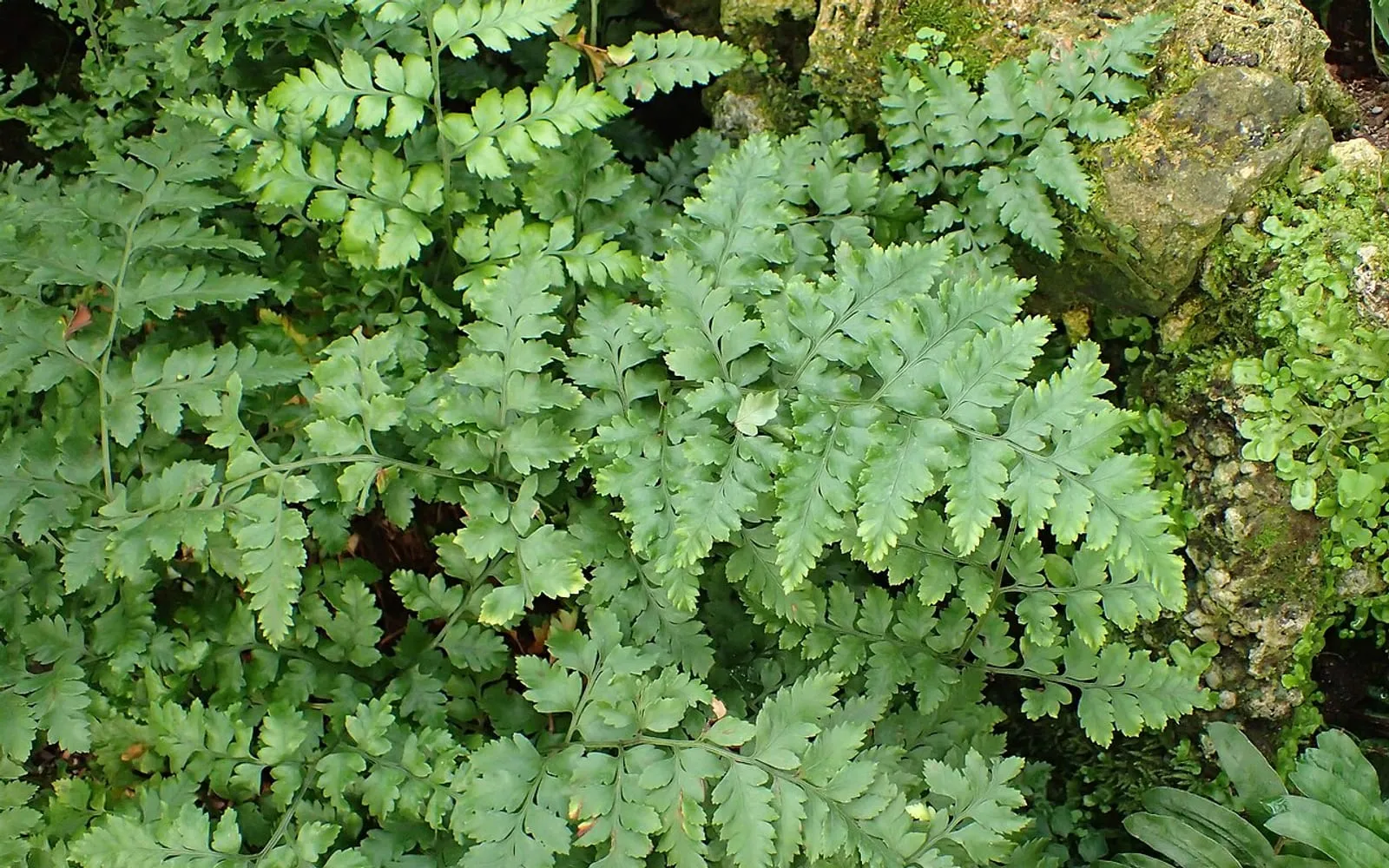
An evergreen fern with triangular, twice or three times divided fronds, dark glossy green and noticeably thick and leathery to the touch compared with almost any other fern grown as a houseplant.
Fronds emerge upright on wiry black stalks, then arch outward as they mature, reaching 30 to 90 cm depending on growing conditions, with garden and commercially cultivated specimens generally larger than houseplant grown ones.
New growth unfurls as a tight fiddlehead covered in fine brown scales, a detail easy to miss on a plant more often seen already cut and arranged than growing.
The rhizome creeps along or just below the soil surface, sometimes climbing low over rocks or tree bases in the wild, and a well-established plant spreads gradually to form a broad clump instead of staying in a single tight crown.
Several named selections exist in the cut foliage trade, distinguished by subtle differences in frond size, colour and durability instead of any dramatic difference in appearance, since consistency and vase life matter more commercially than novelty.
Where it is from
An unusually wide native range for a single fern species, spanning southern Africa, South America, Australia, New Zealand and various islands across the southern oceans, growing on forest floors, rocky outcrops and among scrub vegetation in subtropical and warm temperate climates.
That broad natural distribution across three continents is part of what makes the species so adaptable in cultivation, having already evolved to cope with a wide range of soils and light levels across its wild range before anyone began growing it commercially.
In South Africa it grows wild in coastal and montane forest, tolerant of both bright clearings and considerably shadier conditions beneath a canopy, which is the same flexibility that makes it forgiving as a houseplant indoors.
Commercial cultivation, overwhelmingly for cut foliage instead of as a potted plant, is concentrated in Florida and to a lesser extent Costa Rica, though the species is not native to either and was introduced there specifically for the trade.
How it grows
Pot it into a peat-free, moisture-retentive but free-draining compost, and grow it in bright indirect light, though it tolerates a noticeably dimmer spot better than most ferns sold as houseplants.
Water when the top few centimetres of compost have dried, then soak thoroughly and let any excess drain away. Avoid leaving the pot standing in water.
Repot every year or two in spring as the rhizome fills the pot, moving up one size and refreshing the compost.
Divide an overgrown clump at repotting time, cutting the rhizome into sections that each carry roots and at least one growing point, and pot the divisions separately.
Where the climate allows outdoor planting, choose a sheltered, partly shaded spot with good drainage, and mulch the crown before winter in any area where a hard frost is a real possibility.
If growing it partly for cut foliage at home, cut mature fronds with sharp scissors close to the base instead of snapping them, and place the stems in water immediately for the longest vase life.
Through the seasons
Spring brings the strongest flush of new fronds. Repot or divide now, and resume regular feeding.
Summer is steady active growth, needing regular watering and, where grown outdoors, some shade from the hottest part of the day.
Autumn slows growth gradually. Reduce feeding toward the end of the season and, for outdoor plants in a marginal climate, prepare a protective mulch before the first frosts.
Winter is a quieter period indoors, needing less frequent watering. Outdoor plants in mild climates hold their foliage through the winter, while those in colder gardens may lose top growth to frost and regrow from the crown in spring.
Care difficulty
Easy, and notably more tolerant of imperfect conditions than most ferns grown as houseplants.
Its unusual tolerance of lower light is the main advantage for indoor growing, coping with a spot that would leave a more demanding fern pale and thin.
The main risk is overwatering. The leathery fronds cope reasonably well with the compost drying out slightly between waterings, but the rhizome does badly if kept permanently wet.
Beyond reasonable light and sensible watering, it needs little else and does well with fairly casual care. Healthy plants produce strong, glossy, long-lasting growth.
Watering
Water when the top few centimetres of compost have dried, checking with a finger instead of following a fixed schedule.
Water thoroughly when you do water, allowing it to soak right through the pot, then let any excess drain away completely instead of leaving the pot standing in a saucer of water.
Reduce watering somewhat over winter, when growth slows and the compost stays damp for longer between waterings.
The thick fronds are more drought tolerant than they look, but a prolonged dry spell still shows as dulling colour and eventual frond loss, so do not treat this as a plant that can be ignored entirely.
Warning signs, diseases and pests
Yellowing fronds with soft, blackened patches at the rhizome suggest root rot from consistently overwet compost. Reduce watering, improve drainage, and remove any visibly rotten tissue.
Brown limpet-like bumps along the frond stalks, with sticky residue below, point to scale insects, one of the more common pests on this species. Wipe them off with a cloth or cotton bud dipped in dilute alcohol and check regularly, since they can be easily missed on dark green foliage.
White cottony clusters at the base of new fronds mean mealybugs, treated the same way as scale.
Pale, washed-out fronds usually mean too much direct sun instead of a feeding problem, since this species tolerates shade far better than glare.
Slow growth with no other symptoms in an otherwise healthy-looking plant often means it is under-fed or pot-bound, and repotting or resuming regular feeding usually resolves it.
Growing environment
Bright indirect light suits it well, and it copes with medium to fairly low light better than most ferns commonly sold as houseplants.
Moderate warmth, 12 to 24 deg C, with tolerance of brief cool spells that would trouble more tender tropical ferns.
Peat-free, moisture-retentive, free-draining compost, similar to what suits many other houseplant ferns.
Ordinary room humidity is generally sufficient, though it appreciates occasional misting or grouping with other plants in a very dry, centrally heated room.
It suits a shaded patio in a mild climate outdoors, a bright hallway or living room indoors, and combines well in a mixed planter with other foliage plants that also prefer indirect light.
Feeding
A balanced liquid houseplant feed at half strength, monthly from spring to early autumn, keeps growth strong without pushing soft, weak fronds.
Feed onto already damp compost instead of dry, since fertiliser applied to dry compost can scorch the fine roots.
Stop feeding through autumn and winter, when growth slows considerably.
Outdoor plants growing in reasonably fertile soil often need less supplementary feeding than a potted specimen, particularly once well established.
Troubleshooting
Is this the fern used in florist bouquets? Yes, almost certainly. It is the standard filler foliage in the cut flower trade worldwide, grown commercially at large scale in Florida in particular.
How is it different from other ferns for vase life? The thick, leathery cuticle on the fronds slows water loss dramatically once cut, giving it a vase life of weeks instead of the days most cut foliage manages.
The fronds have gone yellow with a soft blackened base. Root rot from overwatering. Cut away the affected tissue, let the compost dry out somewhat, and water less frequently going forward.
Can it cope with a dim room? Better than most ferns. It tolerates noticeably lower light than typical houseplant ferns, though very deep shade still eventually thins the growth.
There are brown bumps along the stalks. Scale insects, a common pest on this species. Wipe them off with a cloth dipped in dilute alcohol and check regularly for a few weeks afterward.
Can I grow it outdoors? Only in a mild, largely frost-free climate. Established plants tolerate brief light frost with some foliage damage, but a hard freeze kills top growth and can kill the whole plant in colder gardens.
How do I make more plants? Divide the creeping rhizome at repotting time, making sure each section has roots and at least one growing point, and pot the divisions separately into fresh compost.
Leatherleaf Fern problem guides
Not sure what is wrong? See the common houseplant pests guide.