
Houseplant
Buddha's Hand
Alocasia cucullata
Also known as Alocasia cucullata, Chinese Taro, Hooded Dwarf Elephant Ear
How to grow Alocasia cucullata, the buddha's hand or Chinese taro, a glossy hooded-leaved aroid long planted at temples. It irritates if chewed.
At a glance
- Difficulty
- Easy
- Water
- When the top few centimetres of mix have dried
- Light
- Bright indirect light to light shade
- Temperature
- Warm; keep above about 13 deg C
- Humidity
- Average to high
- Hardiness
- USDA 10-12, RHS H1b, hardy to 13 C
- Type
- Perennial
- Height
- 60-100 cm
- Native to
- Sri Lanka, the Himalaya, southern China, Indo-China
A tender tropical foliage plant from tropical and subtropical Asia, growing in warm, humid, shaded to filtered light. It needs warmth, humidity and bright indirect light, and it cannot take frost or chill. It is safest above about 13 deg C, and cold, wet compost or dry air spoils it.
Hardiness zones describe winter cold alone. Summer heat, humidity, rainfall and the length of the growing season decide as much, so treat the range as the outer limit rather than as a recommendation.
Toxic if eaten
- Do not eat
- All parts, which contain insoluble calcium oxalate crystals
- Harm from
- Eating it and handling it
- Affects
- People, cats and dogs
Like other members of the arum family, Alocasia cucullata contains tiny calcium oxalate needles in every part. Chewing a leaf or stem of the buddha's hand releases them into the soft tissue of the mouth, bringing burning, swelling and a rush of saliva, and vomiting in a pet that swallows any; the sap can irritate skin and eyes. The ASPCA lists Alocasia as toxic to cats, dogs and horses because of its insoluble oxalates, and the RHS lists arums among the plants that irritate. Serious harm is uncommon, because the pain stops most animals and children from eating more, but swelling of the mouth and throat can occur. Keep the buddha's hand away from anything that chews, and wash off any sap.
Sources: ASPCA toxic and non-toxic plants, RHS potentially harmful garden plants
About
This buddha’s hand is an aroid, Alocasia cucullata, instead of the fingered citron (Citrus medica var. sarcodactylis) of the fruit bowl. Both plants share the name, and this one is also called Chinese taro or the hooded dwarf elephant ear. The name here comes from the hooded leaves and from a long association with Buddhist temples across tropical Asia, where the plant is grown for luck and often kept in pots by the door.
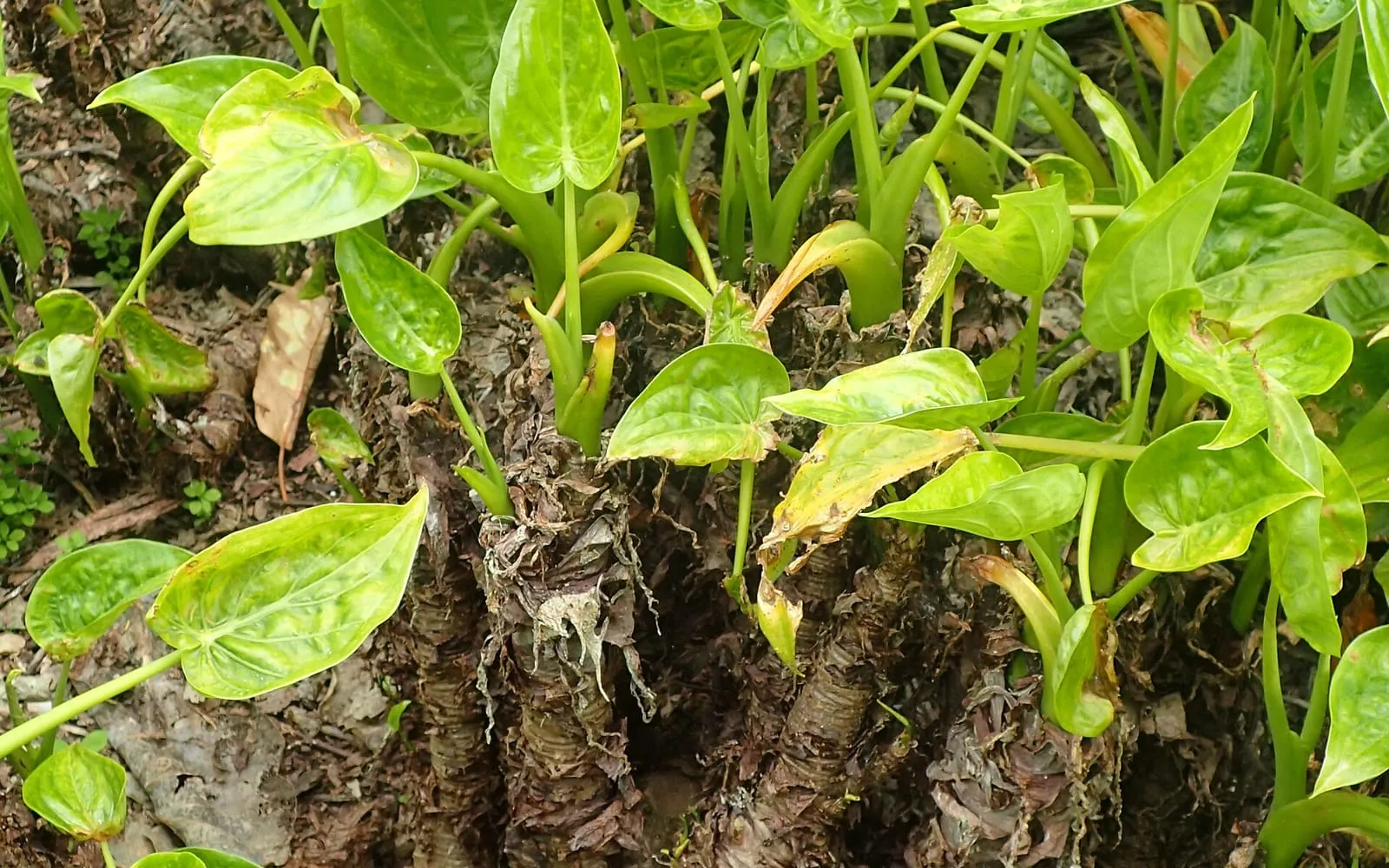
Its leaves separate it from the rest of the elephant-ear group. Each glossy, heart-shaped blade tapers to a fine point that curls forward into a small hood, which is what the species name cucullata, meaning hooded, records. The surface is a clean, bright, lacquered green instead of the matte velvet of the jewel alocasias, and the plant has an upright habit.
It is the toughest and most tolerant of the commonly grown alocasias, handling cooler, shadier and drier conditions than its fussier relatives. It still has the family’s irritant sap and needs keeping from chewing mouths.
Appearance and character
The leaves are broadly heart-shaped, thick and high-gloss, with wavy margins and that distinctive hooded, forward-curling tip. They sit upright on firm green stalks and space themselves neatly, so a healthy plant looks tidy and full instead of sprawling.
The plant clumps by producing new shoots from the base, building over time into a dense cluster of upright stems and leaves instead of a single crown. It suckers freely, which makes it easy to increase and gives it a fuller, bushier habit than most alocasias. Flowers are the usual arum spathe and rare in the home, unimportant beside the glossy foliage.
Where it is from
Alocasia cucullata is a plant of southern and south-eastern Asia, from Sri Lanka and the Himalayan foothills to southern China and Indo-China. It has been cultivated across the region for so long that its exact wild range is uncertain, and it is best known from temple and dooryard plantings. It grows in warm, humid conditions in filtered light, in moist but drained ground, like a monsoon-climate forest edge or garden.
Its long history as a cultivated plant has left it unusually adaptable. It copes with ordinary room conditions, including more shade and cooler, drier air than the wild-collected jewel alocasias, which is why it succeeds where they struggle. It still needs warmth and moisture to grow well, and cold slows it.
How it grows
The plant grows through the warm months and slows in winter, producing fresh hooded leaves from the centre and new shoots from the base to thicken the clump. It is quicker to establish and steadier through a winter in a heated room than most of its relatives, often keeping its leaves where they would drop theirs.
Grow it in a light, free-draining mix that keeps some moisture, opening a peat-free compost with bark and perlite. Keep it warm, in filtered light, and evenly moist in growth, and repot in spring when the clump crowds the pot, dividing it at the same time if you want more plants.
Increase is simple. Detach the rooted offsets that appear around the base and pot them on, or divide a congested clump. Handle cut surfaces with washed hands, since the sap stings.
Through the seasons
Spring restarts growth. Repot or divide a crowded clump, resume full watering, and begin feeding as new leaves unfurl.
Summer is the main growing season. Keep it warm and evenly moist in filtered light, feed regularly, and expect a steady succession of glossy hooded leaves.
Autumn slows the plant. Cut back on feeding and let the mix dry a little more between waterings.
Winter is a quiet rest, and this species holds its leaves better than most through it. Keep it warm, water lightly, and keep it clear of cold draughts and sodden compost.
Care difficulty
Of the elephant ears grown as houseplants, this is the easiest and most forgiving, tolerating shade, cooler corners and the odd lapse better than a jewel alocasia. It needs warmth, moisture in growth and drainage, and gives little trouble in return.
Its main problems are the family’s usual two. Brown, crisping leaf edges follow very dry air. A soft, rotting base follows cold, waterlogged compost. Both are avoidable, and a strong clump recovers quickly once the conditions are put right.
Watering
Water when the top few centimetres of the mix have dried, soaking the rootball through and letting the surplus drain. In growth it likes even moisture, and a full clump in a warm room drinks steadily, so check it regularly instead of watering to a fixed day.
Reduce watering in winter, letting the surface dry a little further between drinks, since cold roots in wet compost are what rot the base. It tolerates a drier spell better than the thirstier alocasias, so err on the side of slightly dry if you are unsure.
Warning signs, diseases and pests
Brown, dry leaf edges point to air that is too dry. Raise the humidity a little and keep the plant away from radiators, though this species tolerates ordinary room air better than its relatives.
A soft, discoloured, collapsing base is root rot from cold, waterlogged compost. Lift the clump, cut away the rotten tissue, and replant the firm shoots in fresh, free-draining mix, watering sparingly afterwards.
In warm, dry indoor air, spider mites stipple the glossy leaves and mealybugs hide as white tufts in the leaf axils. Wipe the leaves clean, raise the humidity, and treat a stubborn colony with an insecticidal soap.
Growing environment
Bright, filtered light gives the fullest, glossiest plant, but this species also copes with light shade where others thin out, so it suits a wider range of spots than most alocasias. Keep it out of harsh direct sun, which can scorch the leaves.
Warmth and some humidity keep it growing well, though it is more tolerant of ordinary, drier room air than its relatives. Stand it away from cold glass and hot draughts, and it stays neat and leafy.
Feeding
Feed through spring and summer with a dilute balanced liquid fertiliser at about half strength, every few weeks during active growth. Steady feeding keeps the clump dense and the leaves large and glossy without forcing weak growth.
Stop feeding in autumn and give none over winter. A newly potted or freshly divided plant needs no feed for the first weeks, using the new mix while it roots in.
Troubleshooting
Is this the same as the buddha’s hand citron? No. This is an aroid, Alocasia cucullata, grown for its hooded glossy leaves, not the fingered citrus fruit that shares the name.
Why are the leaf edges browning? The air is too dry. Raise the humidity, though this species copes with ordinary room air better than other alocasias.
The base has gone soft. What happened? Cold, waterlogged compost has caused rot. Cut out the rotten tissue, replant the firm shoots in free-draining mix, and water less.
How do I propagate it? Detach the rooted offsets around the base, or divide a crowded clump, handling cut surfaces with washed hands.
Is it safe around pets? No. Every part contains irritant crystals that burn the mouth if chewed, so keep it out of reach and read the toxicity note above.
Buddha's Hand problem guides
Not sure what is wrong? See the common houseplant pests guide.