
Houseplant
Hawaiian Begonia
Hillebrandia sandwicensis
Also known as Hillebrandia sandwicensis
How to grow Hillebrandia sandwicensis, the hawaiian begonia, the only species of its genus and a living relic found wild only in Hawaii.
At a glance
- Difficulty
- Easy
- Water
- When the top few centimetres of mix have dried
- Light
- Bright indirect light to light shade
- Temperature
- Warm; keep above about 13 deg C
- Humidity
- Average to high
- Hardiness
- USDA 10-12, RHS H1b, hardy to 13 C
- Type
- Perennial
- Height
- 60-120 cm
- Native to
- Hawaii
A tender tropical foliage plant from Hawaii, growing in warm, humid, shaded to filtered light. It needs warmth, humidity and bright indirect light, and it cannot take frost or chill. It is safest above about 13 deg C, and cold, wet compost or dry air spoils it.
Hardiness zones describe winter cold alone. Summer heat, humidity, rainfall and the length of the growing season decide as much, so treat the range as the outer limit rather than as a recommendation.
Harmful if eaten
- Harm from
- Eating it
- Affects
- People, cats and dogs
Nobody has tested Hillebrandia sandwicensis, the hawaiian begonia, for toxicity. The ASPCA lists true begonias as toxic to cats, dogs and horses because of their oxalates, and the RHS rates them as mildly harmful if eaten. Until this close relative is assessed, treat it the same way. Chewing it may burn the mouth and cause drooling and vomiting, so keep it away from pets and small children.
Sources: ASPCA toxic and non-toxic plants, RHS potentially harmful garden plants
A botanical rarity
Hillebrandia sandwicensis sits just outside the true begonias, as their only living cousin. It is the single species in its own genus, the one member of the begonia family that sits outside the vast genus Begonia, and it grows wild only in the Hawaiian islands. Botanists treat it as a living relic, the only surviving member of a lineage that split from the begonias many millions of years ago. For a grower, that means a plant with the familiar begonia look, lopsided leaves and winged seed capsules, but with its own habits. It is scarce in cultivation and valued by collectors of unusual plants.
How it looks
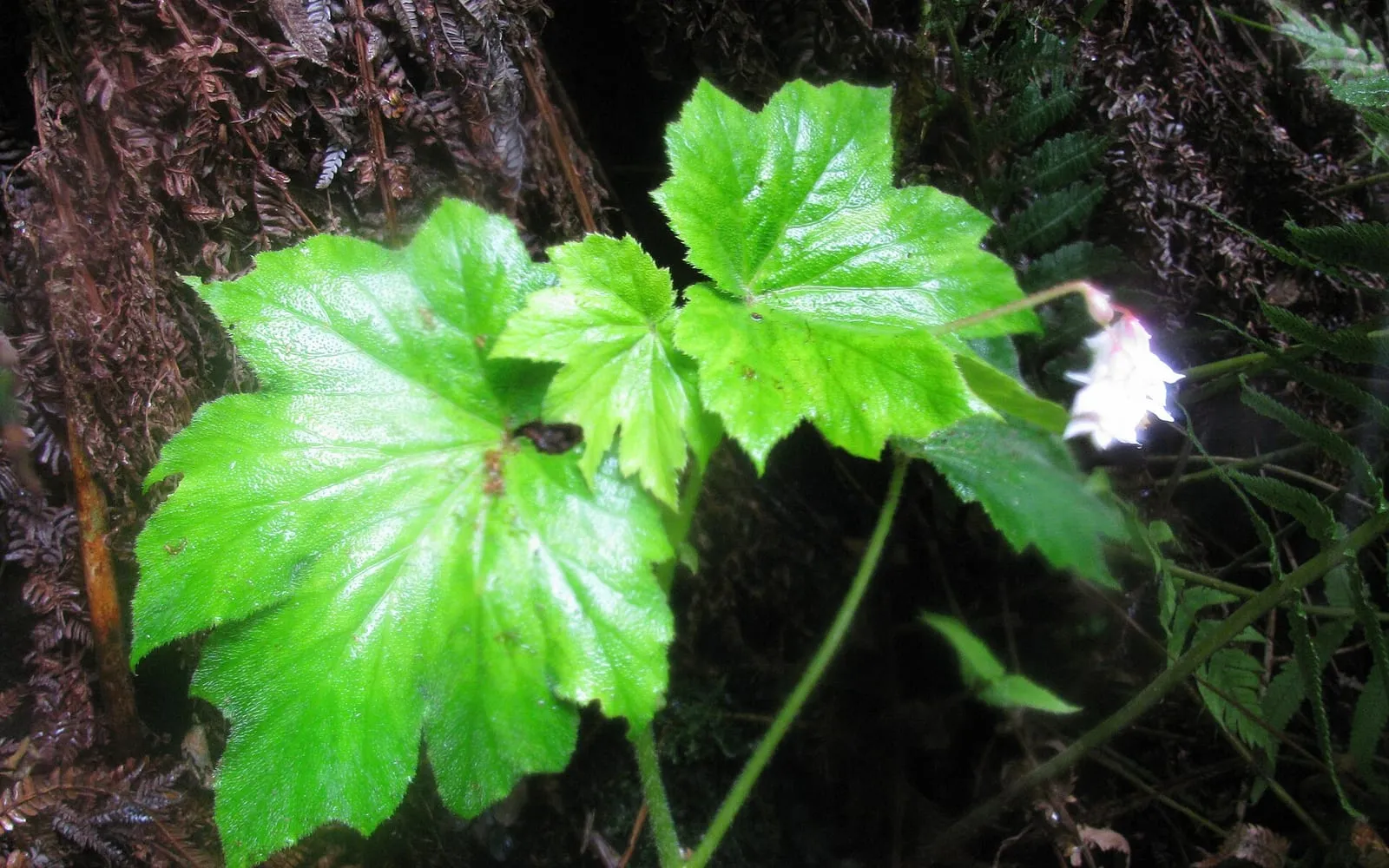
The leaves are large, rounded and shallowly lobed with toothed edges, pale green and softly hairy, held on long fleshy stalks that rise from a creeping underground stem. The whole plant is soft and herbaceous, lacking the woody canes of many begonias. In its season it produces airy sprays of pale pink to white flowers, delicate and five-petalled, over the mound of foliage. The flowers keep the family pattern of separate males and females on one plant, the female bloom sitting on a small winged seed capsule, though this genus differs from true begonias in the fine detail of the ovary that first set it apart.
Its island home
In the wild it grows on shaded, dripping cliffs, stream banks and the walls of steep ravines in the wet mountain forests of Hawaii, rooted in the film of soil over wet rock. It lives in cool, misty, constantly humid air and light softened by the forest canopy, and it follows the islands’ wet and dry rhythm by dying back to its rootstock through the drier months and returning with the rains. That habitat points to warmth without heat, high humidity and shade.
Getting the light right
Bright but indirect light matches the shaded ravines it comes from. An east or north window, or a well-lit spot out of direct sun, keeps the soft leaves in good order. Direct sun, even for an hour or two through summer glass, scorches and bleaches them, while heavy shade draws the stalks up thin and pale. It grows best in a terrarium or a bright, humid corner.
Watering and its resting phase
While in leaf, keep the compost consistently moist, watering as soon as the surface begins to dry, since this is a plant of wet places that does badly with drying out hard. As the leaves fade towards the end of its season, cut watering right back and let the rootstock rest cooler and much drier, or it will rot in cold, saturated compost. Bring the watering back gradually as new growth appears. Rainwater or filtered water suits it, as the plant is adapted to the soft water of mountain streams.
Warmth and humidity
Steady warmth without extremes suits it, and it should stay above about 13 deg C in growth and out of any draught. Humidity is where this plant is least forgiving, having evolved in permanently misty forest, so a dry heated room browns and crisps the leaves fast. A humid bathroom, a large pebble tray, a plant grouping, or a glass case keeps the moisture around it high. Keep some air movement, so the damp air does not become stagnant and rot the soft foliage.
Feeding
Feed sparingly through the growing season, using a balanced liquid fertiliser at a quarter to half strength every few weeks while the plant is in active leaf. Its soft tissues and modest root system are easily scorched by strong feed. Give nothing once it begins to die back, and none at all while it rests.
Propagation
Division of the rhizome in spring, as new growth begins, is the surest way to increase it, potting each piece into open, moisture-holding compost and keeping it shaded and humid until it takes hold. Fresh seed, sown on the surface of damp compost and kept humid and warm, will germinate, though seedlings grow slowly and need constant moisture. Because the plant is rare and slow, handle every division and seedling with care and grow the young plants on in a humid, shaded place. Wild populations are limited and localised, so cultivated plants are worth sharing among growers who can meet their needs.
Keeping it healthy
Given the moist, shaded, frost-free conditions it needs, the plant is easy enough, though it suffers in dry air and cold wet roots. Brown, papery leaf edges point to a room that is too dry. Grey mould can spread on soft leaves in still, damp conditions, so keep air gently moving. Spider mites arrive when the air dries out and stipple the foliage; higher humidity helps prevent them. A rootstock that fails to return has almost always rotted in cold, wet compost during its rest.
The year in outline
Spring starts growth from the rootstock; divide, sow seed and begin light feeding as the shoots rise.
Summer is full leaf and flower; keep the compost moist, the air humid and the light indirect.
Autumn brings the plant towards dormancy; reduce water and feed as the leaves fade.
Winter is a cool, dry rest for the rootstock; keep it barely moist and wait for the new season’s growth.
Common questions
Is it really a begonia? It is the begonia family’s only other genus, a close relative instead of a true begonia, and unique to the Hawaiian islands.
Why have the leaves gone brown and crisp at the edges? The air is too dry. Raise the humidity sharply and move it away from any heat source.
How much light does it want? Bright, indirect light; keep it out of direct sun, which scorches the soft leaves.
How do I propagate it? Divide the rhizome in spring as growth restarts, or sow fresh seed on damp compost kept humid.
Is it safe around pets? Treat it with caution. It has not been tested, and true begonias contain oxalates that burn the mouth, so keep it away from pets that chew.
Hawaiian Begonia problem guides
Not sure what is wrong? See the common houseplant pests guide.