
Houseplant
Golden-Flowered Agave
Agave chrysantha
Also known as Agave chrysantha
How to grow Agave chrysantha, the golden-flowered agave, a blue-grey rosette of the Arizona highlands that flowers once, with a spine and mild toxicity.
At a glance
- Difficulty
- Easy
- Water
- When the mix has dried right through
- Light
- Full sun to bright light
- Temperature
- Hardy to about -9 C when dry; hot summers suit it
- Humidity
- Low
- Hardiness
- USDA 8-10, RHS H4, hardy to -9 C
- Type
- Perennial
- Height
- Up to 1.5 m
- Native to
- Arizona
An agave of the central Arizona mountains, used to hot summers, cold nights and winters that dip below freezing. It takes roughly -9 C in dry, sharply drained ground, and some sources report more. Cold together with wet kills it well before cold alone, so a wet winter is the limit in damp climates.
Hardiness zones describe winter cold alone. Summer heat, humidity, rainfall and the length of the growing season decide as much, so treat the range as the outer limit rather than as a recommendation.
Harmful if eaten
- Do not eat
- The leaves and sap
- Harm from
- Eating it, handling it and sap in the eyes
- Affects
- People, cats and dogs
Agave chrysantha, the golden-flowered agave, has a sap that contains calcium oxalate crystals and saponins. The ASPCA lists the genus as toxic to cats and dogs. Sap on skin causes redness, itching and sometimes blisters. A chewed leaf can cause drooling, vomiting and diarrhoea, and sap in the eye stings. The effects are irritant and not life threatening. Wash off any sap, keep chewing pets away and handle the stout terminal spine with care.
Sources: ASPCA toxic and non-toxic plants, RHS potentially harmful garden plants
About
The flowering spike gives Agave chrysantha its name. At the end of a long life the plant produces a branched candelabra several metres tall, with tiers of golden-yellow blooms that draw insects and birds in the Arizona uplands. Before that it is a solid blue-grey rosette, valued for its symmetrical form long before it flowers.
The species grows in the central mountains of Arizona, on rocky slopes and among pinyon and juniper at higher elevation than most agaves. Summers there are hot but the ground drains quickly, and the plant is adapted to drought broken by seasonal storms.
As a pot plant it is steady and long-lived. Strong light, a mineral mix and warmth meet most of its needs, and it stores water in its thick leaves for dry weeks. A cold, waterlogged root zone is the main thing it will not survive, so careful watering does most of the work.
Appearance and character
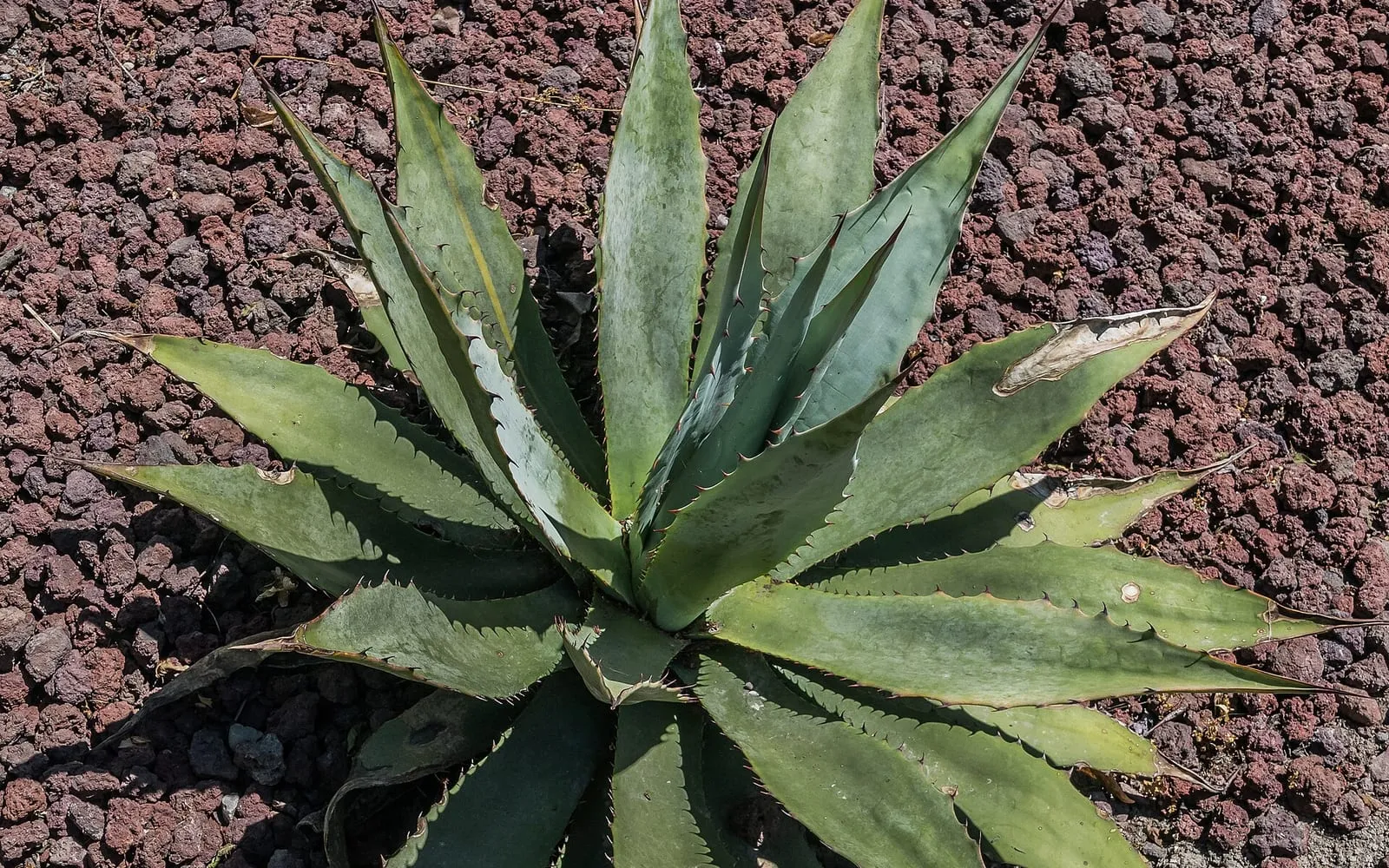
The leaves are broad at the base and taper to a point, stiff and a soft blue-grey with a chalky finish. Dark teeth line the margins, sometimes on low bumps, and each blade ends in a stout brown terminal spine that needs careful handling.
The rosette is dense and rounded, holding its shape well, and mature plants often stay solitary instead of suckering into clumps. That solitary habit keeps a potted specimen neat and shows the symmetry clearly.
Being monocarpic, the plant flowers only once. When the golden candelabra finally rises, the rosette uses its reserves to set seed and then dies. In a container it seldom reaches that stage, so the blue-grey rosette is the main feature.
Where it is from
Stony slopes and mesa rims among the pinyon and juniper of central Arizona are its habitat, high enough that the summer heat is broken by cold nights. Rain falls in seasonal storms, and the loose upland ground lets it drain away within minutes.
That upland desert explains the care. Strong light and compost that drains at once are essential, and a chilly, sodden pot is outside the conditions the plant is adapted to. Keep it warm, sunny and gritty.
How it grows
Leaves build up over the warm season, then the rosette slows through the cold. In full light the blades stay thick, blue and closely stacked. In poor light, the rosette opens up and the colour fades.
Its bed is a coarse, grit-rich compost. Fill the pot, then leave the watering until every part of the mix has dried, letting the plump leaves use their stored water through dry weeks. Lingering damp rots the roots.
It is hardy to about -9 C when kept dry, so a potted plant can stay outside through a frosty winter if the pot is sheltered from rain. It rarely throws pups, so raising it means sowing seed and waiting out a slow germination.
Through the seasons
Spring starts growth as daylight lengthens. Ease the watering back in and repot a tight plant into fresh grit.
Summer brings the year’s main growth. Water once the mix has dried, and stand it in strong light.
Autumn slows the plant. Widen the dry gaps and stop the feed as the season turns.
Winter is a cool, dry pause. Water seldom, and keep the rosette clear of cold, damp air and standing rain.
Care difficulty
Easy, and orderly in a pot for its single-rosette habit. It banks its own water and needs little feeding or grooming, only light and drainage. The pitfall is a cold, wet root zone rotting the base, so hold it dry in winter, and place the teeth and heavy spine clear of hands and faces.
Watering
Leave the grit to dry down completely, then soak it well and pour off what the pot will not keep. The leaves’ stored water carries the rosette through a dry spell, and standing moisture, not drought, rots it.
Pull the watering right back over winter, when a chilled, saturated pot does the harm. When a watering is doubtful, wait, since wet roots trouble this agave far more than a spell of thirst.
Warning signs, diseases and pests
The main hazard is rot from a cold, waterlogged root zone, shown by a soft, discoloured centre or a rosette that lifts from its compost. Improve the drainage, water much less, above all in winter, and keep it bright.
Mealybugs favour the packed leaf bases and spider mites arrive in dry air. Inspect the folds of the rosette and treat any early outbreak before it spreads.
Browned tips can come from harsh sun through glass or uneven watering. A little midday shade and steadier watering usually prevent new damage.
Growing environment
Offer bright, direct light. Under strong sun the rosette stays dense and blue; in shade it loosens and the grey fades.
It takes frost to about -9 C when dry, and it fails when cold and wet together. A sunny sill or bright room suits it indoors, and it handles a hot summer outdoors well.
Grow it in a lean, sharp, gritty compost in a fast-draining pot, and rotate it for an even rosette. Carry it by the pot to keep clear of the spine.
Feeding
One or two weak, balanced feeds over the growing season are enough. Overfeeding softens and stretches the leaves and blurs the compact rosette, so keep the strength low.
Give nothing while it rests in winter. A repot into fresh grit gives it plenty to draw on, so the feed can wait for warmth.
Troubleshooting
Why is my golden-flowered agave collapsing at the heart? Rot from a cold, wet pot. Open the drainage, water much less, and shelter it from rain.
How much light does it need? All the direct light you can give. Shade loosens the rosette and dulls the blue.
How often should I water it? Once the mix has dried through, and sparingly in winter. Let the compost guide the timing.
How do I propagate it? Sow seed, since it rarely produces pups.
Is it safe around pets? The sap irritates mildly and the ASPCA lists Agave as harmful to cats and dogs, so keep chewing pets away from it and mind the stout spine.
Golden-Flowered Agave problem guides
Not sure what is wrong? See the common houseplant pests guide.