
Houseplant
Chinese Banyan
Ficus microcarpa
Also known as Ficus microcarpa
How to grow the Chinese banyan, Ficus microcarpa, the fig behind most shop-bought bonsai, with strangler beginnings and swollen roots.
At a glance
- Difficulty
- Easy
- Water
- When the top few centimetres of mix have dried
- Light
- Bright indirect light to light shade
- Temperature
- Warm; keep above about 13 deg C
- Humidity
- Average to high
- Hardiness
- USDA 10-12, RHS H1b, hardy to 13 C
- Type
- Perennial
- Height
- Up to 25 m
- Native to
- India to southern China, Southeast Asia and Australia
A tender tropical foliage plant from Southeast Asia and Australia, growing in warm, humid, shaded to filtered light. It needs warmth, humidity and bright indirect light, and it cannot take frost or chill. It is safest above about 13 deg C, and cold, wet compost or dry air spoils it.
Hardiness zones describe winter cold alone. Summer heat, humidity, rainfall and the length of the growing season decide as much, so treat the range as the outer limit rather than as a recommendation.
Harmful if eaten
- Harm from
- Eating it and handling it
- Affects
- People, cats, dogs and horses
Ficus microcarpa, the chinese banyan, is listed by the ASPCA as toxic to cats, dogs and horses (as Indian laurel), and its latex irritates the skin of people. The milky sap carries ficin and furocoumarins, which can inflame the skin and, if leaves are eaten, cause drooling, vomiting and mouth irritation. Wear gloves when pruning, since the latex is a common skin irritant, and keep the plant away from pets.
Sources: ASPCA toxic and non-toxic plants, RHS potentially harmful garden plants
About
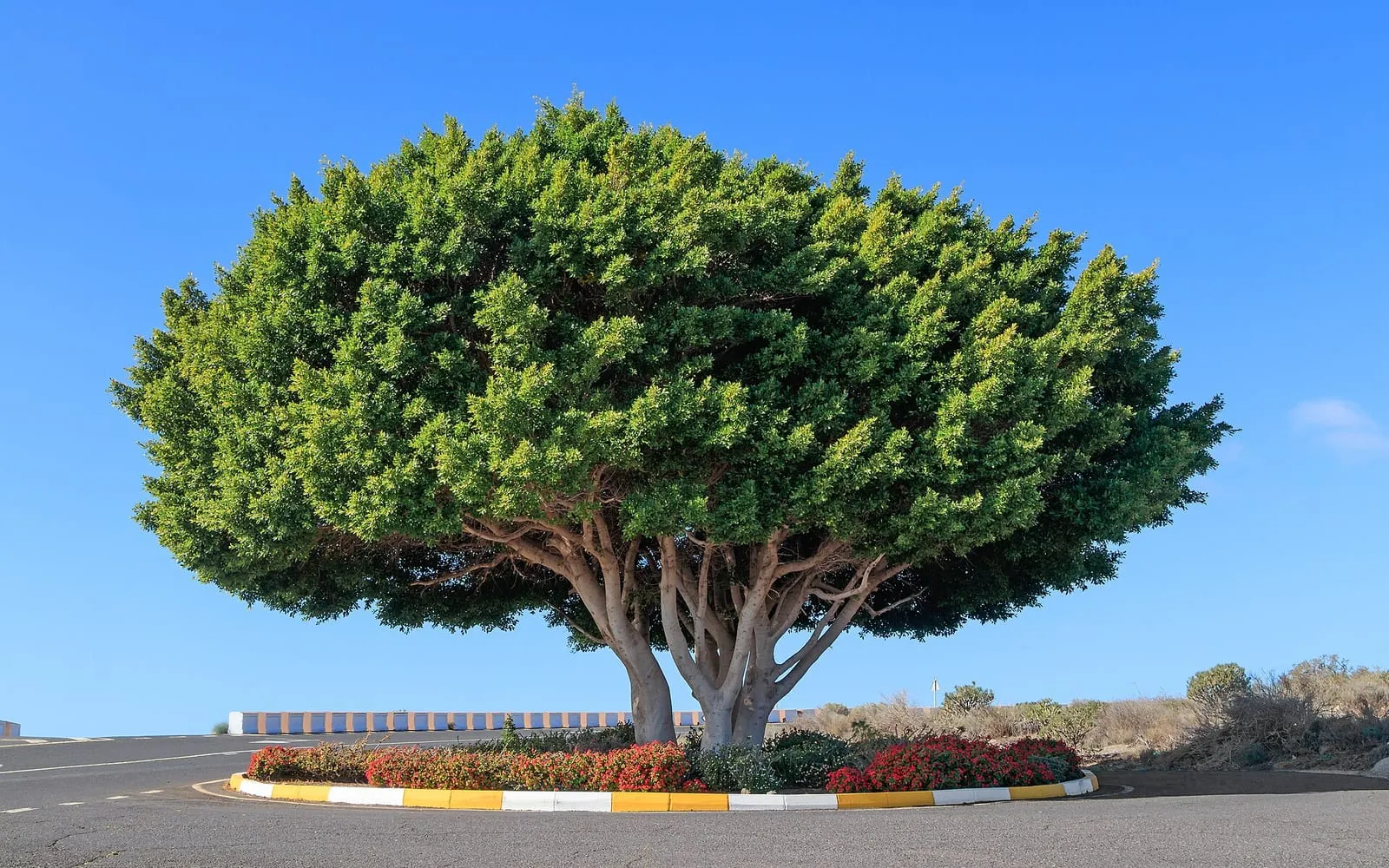
Ficus microcarpa is the fig most people meet as a bonsai, the little tree with a fat, marbled trunk and a tidy dome of glossy leaves sold in garden centres as a first bonsai or a desk plant. That swollen base is usually a root system raised in water and then potted with its roots exposed, so the trade often labels it a ginseng fig. Left to grow on, the same species can become a large strangler fig in the Asian tropics.
As a houseplant it is tougher and smaller-leaved than most figs, and it keeps a neat outline with occasional trimming. The one habit that catches out new owners is its readiness to shed a flush of leaves whenever it is moved, chilled or watered erratically, then grow them back once conditions steady.
Appearance and character
The leaves are small, oval and thick, a rich glossy green on a short stalk, held close enough together to make a dense head on a trained plant. Fresh growth comes in a paler, softer green and firms up over a few weeks. On an untrained plant the shoots are wiry and quick to extend, which makes the species useful for bonsai wiring and pruning.
The trunk is smooth and pale grey, often with darker mottling, and thickens fast for a fig. In warm, humid air the plant sends down slender aerial roots from its branches, and growers of larger specimens train these deliberately into extra trunks. Like every fig it bleeds a milky latex from any cut, sticky and best kept off skin and eyes.
Where it is from
The Chinese banyan ranges naturally from Sri Lanka and southern China through Southeast Asia to northern Australia and the Pacific islands, in warm lowland forest and along coasts. It begins life as an epiphyte, germinating from a bird-dropped seed lodged in the bark or fork of another tree, then dropping roots that wrap and eventually strangle the host as the fig takes over its place in the canopy.
Because it starts high in the branches, the young plant is used to good light, sharp drainage around its roots and humid air, and those are the conditions that keep a potted one growing well. Where its own fig wasp has been introduced, the species sets seed freely and has become an invasive weed of pavements and walls in warm cities, which shows how vigorously it can grow in a suitable climate.
How it grows
Stand it in bright light, including an hour or two of soft direct sun, and keep it in one place, since this fig often drops leaves after a move. Growth is fast in the warm half of the year and slows to a near halt in winter.
Use a free-draining, open mix; a bonsai grit blend or a peat-free compost lightened with bark and perlite both work, in a pot or tray that lets water run straight through. Pinch or trim the shoot tips through the growing season to keep a compact head and to force branching. Cuttings root easily in warmth, and thick low branches can be air-layered to make a new plant with an instant trunk.
Through the seasons
Spring brings the first strong flush; repot now if the roots have filled the pot, and begin trimming and feeding as the shoots extend.
Summer is the season of quickest growth and the best time for hard pruning or structural work, since wounds heal fast in the warmth.
Autumn slows growth. Reduce watering as growth eases, and check that the plant is clear of any spot that will turn cold or draughty once the heating comes on.
Winter is a quiet spell. Keep it warm, bright and on the dry side, and expect little new growth; a few leaves may drop as light levels fall, which is nothing to worry about.
Care difficulty
This is an easy plant if the conditions stay consistent. Keep the light and watering steady and it grows well; change either sharply and it sheds leaves. Root rot from cold, wet compost is the problem that kills it, while dry air browns the leaf tips and encourages mites. Leaf fall after a move looks worse than it is and usually reverses once the plant settles.
Watering
Let the top few centimetres of the mix dry, then water generously until it drains from the base. A bonsai in a shallow tray dries fast and may need water every day or two in summer heat, while a plant in a deeper pot goes longer between drinks. Feel the compost instead of following a fixed day.
Cut back sharply in winter, when growth stops and cold wet roots rot easily. Erratic watering, alternating drought and flood, is the most common cause of sudden leaf drop.
Warning signs, diseases and pests
Cold, wet compost brings root rot, seen as widespread yellowing and leaf fall with a soft, dark trunk base; unpot, trim away rotten roots and repot dry into fresh open mix. Brown, crisp leaf edges are the mark of dry air, eased by better humidity around the plant.
Spider mites thrive on a plant kept hot and dry, fine-speckling the leaves and webbing the growing points, while mealybugs tuck white waxy clusters into the leaf axils. Shower the foliage, wipe off what you can and treat with a suitable insecticide, coming back to it every week or so until the plant is clean.
Growing environment
Give it bright, stable warmth. A spot near a well-lit window that does not get cold at night suits it, away from draughts and from the direct blast of a radiator. Turn the plant occasionally so it grows evenly instead of leaning.
Humidity above the level of a dry living room keeps the small leaves in good order and helps reduce mites. Never let it sit below about 13 deg C for long, since chilling triggers leaf loss and, if it goes further, root damage.
Feeding
Through spring and summer, feed every couple of weeks with a dilute balanced liquid feed, or use a slow-release bonsai fertiliser according to its instructions. A vigorously trimmed bonsai needs steady feeding to refoliate after each cut.
Stop feeding over winter while growth is paused, and hold off for a month or two after repotting. Feed little and often instead of heavily, since strong fertiliser can produce coarse, oversized leaves that spoil the look of a small tree.
Troubleshooting
I just brought it home and it is dropping leaves. What happened? It is probably reacting to the move. This fig sheds leaves in response to a change of light or temperature and grows them back once it settles. Keep it in one bright, warm place and water steadily.
Can I grow it as a proper bonsai? Yes, this is one of the classic beginner species. Trim the shoots regularly, wire young branches to shape and keep it in a fast-draining bonsai mix.
Why are the leaves getting bigger and coarser? Too much shade or too much feed. Move it into brighter light and lighten the feeding to bring the leaf size back down.
What is the sticky white liquid from a cut? Fig latex. It is normal and harmless to the plant, but keep it off your skin and eyes and let the cut seal.
Is it safe around pets? It is not a dangerous poison, though the latex can irritate a chewing pet’s mouth or your skin. Keep animals away from cut stems and tidy up prunings.
Chinese Banyan problem guides
Not sure what is wrong? See the common houseplant pests guide.