
Houseplant
Hairy Shadow Witch
Ponthieva racemosa
Also known as Ponthieva racemosa
How to grow Ponthieva racemosa, the hairy shadow witch, a shade-loving woodland orchid with translucent greenish-white flowers on a glandular-hairy stem.
At a glance
- Difficulty
- Difficult
- Water
- Evenly moist in growth; ease off for any rest
- Light
- Bright indirect light
- Temperature
- Cool to intermediate; tolerates light frost
- Humidity
- High
- Hardiness
- USDA 9-11, RHS H3, hardy to -4 C
- Type
- Perennial
- Height
- 15-40 cm
- Native to
- the southeastern United States, tropical America
A terrestrial orchid of shaded, wet woodland, ranging from the warm-temperate southeastern United States to tropical America. It grows in deep shade in moist, humus-rich or calcareous soil, tolerates light frost, and is safest above about minus 4 deg C. Give it shade, an open moist root run and even moisture in growth.
Hardiness zones describe winter cold alone. Summer heat, humidity, rainfall and the length of the growing season decide as much, so treat the range as the outer limit rather than as a recommendation.
Not known to be toxic
Ponthieva racemosa, the hairy shadow witch, is not recorded among the seriously toxic plants, and related plants in its group are not listed as toxic by the ASPCA or the RHS. A pet or child that chewed a leaf would be unlikely to have more than a possible mild stomach upset.
Sources: ASPCA toxic and non-toxic plants, RHS potentially harmful garden plants
About
Ponthieva racemosa, the hairy shadow witch, is a terrestrial orchid of shaded, damp woodlands from the southeastern United States down through tropical America. Its common name comes from its liking for deep shade and its pale, translucent little flowers, while the hairy part refers to the glandular down that covers the flower stem. Unlike the dry-dormant tuberous orchids it is sometimes grouped with, this species forms a rosette of soft leaves and grows in consistently moist, humus-rich, shaded ground, remaining in leaf for much of the year. It is one of the more approachable terrestrials for a grower willing to provide woodland conditions, and its shaded, moisture-loving habit differs from the sun-loving geophytes. The genus Ponthieva honours Henry de Ponthieu, an English merchant of Huguenot descent who sent West Indian plant collections to Joseph Banks in 1778.
Appearance and character
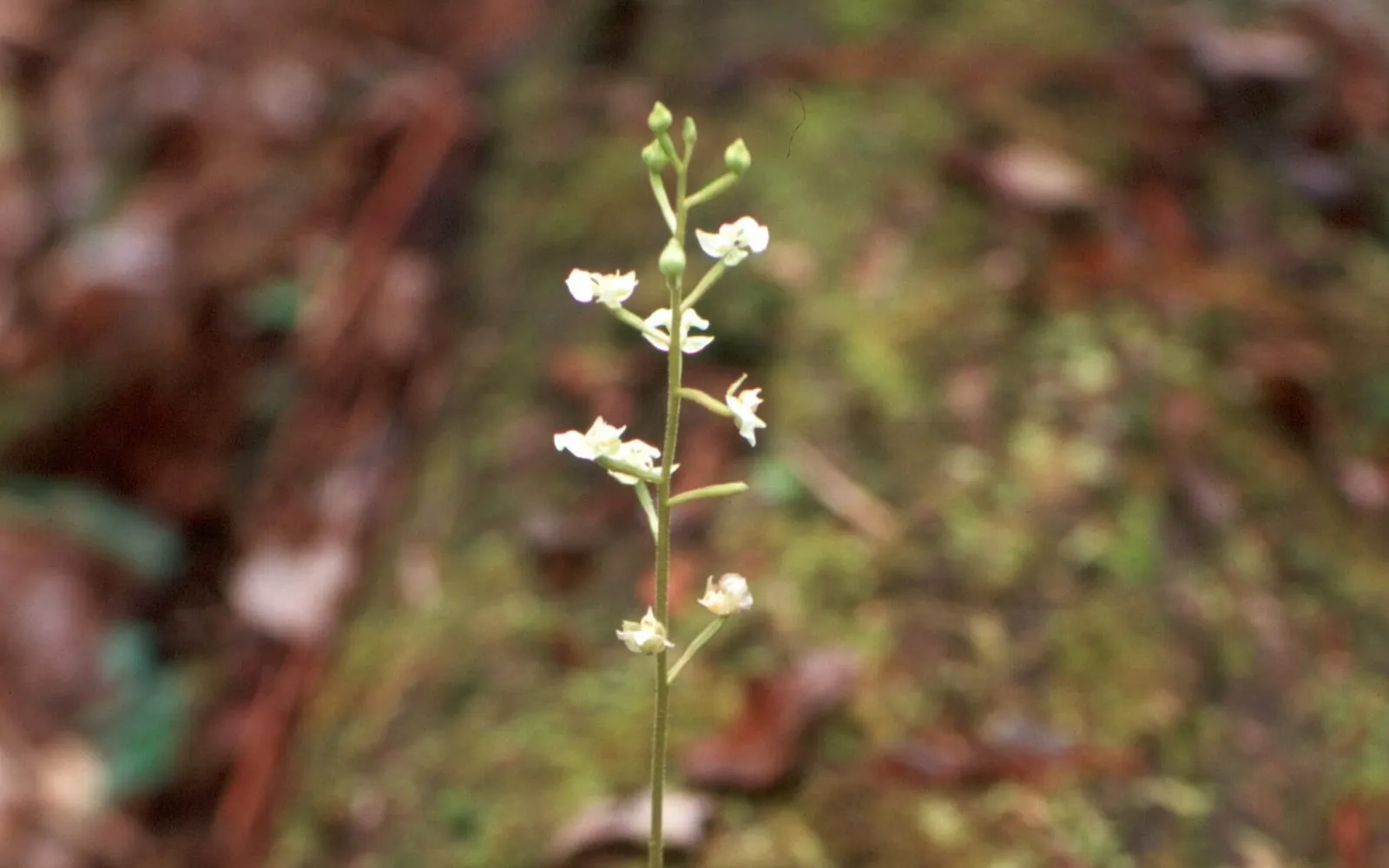
The plant forms a basal rosette of soft, thin, somewhat fleshy green leaves close to the ground. From the centre rises a slender flower stem, densely covered in fine glandular hairs, carrying a raceme of small flowers. The blooms are pale greenish-white, veined with green, and are non-resupinate, meaning the lip sits at the top of the flower instead of the bottom, giving them an upside-down look compared with most orchids. The inverted flower, hairy stem and woodland rosette identify the species.
Where it is from
The species is native to the southeastern United States and to tropical America, growing in moist, shaded hardwood forests, wooded seeps, hammocks and stream banks, often on rich or calcareous soils. Its range runs from Texas and Virginia in the United States south through Mexico, Central America and the West Indies to northern South America. Its climate is warm temperate to tropical with reliable moisture and shade, and it has no harsh dry dormancy like a Cape or Madagascan geophyte. Constant humidity, dappled shade and a moist, organic, well-drained soil are the conditions to copy: a shaded woodland floor rather than an open sunny bank.
How it grows
The plant grows from fleshy, fibrous roots and a short rootstock instead of a hard dormant tuber, maintaining its rosette through the growing season and pushing up hairy flower stems from it. It tends to be evergreen or nearly so where conditions stay mild and moist, though it may slow or die back in cooler or drier spells before regrowing. Fine seed germinates in the wild with the help of soil fungi, and established plants can gradually increase their clump. This continuous, rosette-based growth, without a sharp dry rest, separates it from the tuberous terrestrials.
Through the seasons
Warm growing months keep the rosette in active leaf, and hairy flower stems rise from established plants.
Flowering brings the raceme of small, green-veined, upside-down blooms on their glandular stems.
Cooler or drier spells may slow growth or cause partial die-back, though moisture and shade are normal.
Return of warmth and moisture brings fresh leaves and renewed growth from the rootstock.
Care difficulty
Among terrestrial orchids this is a relatively achievable species for a grower who can supply woodland conditions, though it is still not a beginner’s plant. It needs deep to dappled shade, constant moisture, high humidity and a rich, well-drained, organic soil, and it dislikes drying out, bright sun and stagnant waterlogging alike. The practical difficulty is providing steady shaded moisture without the medium turning sour, rather than timing a dry dormancy. In a shaded, humid, woodland-floor setting it can be maintained and may even increase.
Watering
Keep the plant evenly and continuously moist instead of swinging between wet and dry. Water so that the humus-rich medium stays damp throughout the growing season, using clean low-mineral water and ensuring the mix drains freely so the roots are moist but not waterlogged. Reduce watering only slightly during any cooler or drier resting spell, keeping the rootstock from drying out entirely. High ambient humidity suits it, and the roots should never dry hard as a tuberous species can tolerate.
Warning signs, diseases and pests
Leaves wilting or crisping usually mean the medium or air dried too far, since this is a moisture-loving woodland plant. Blackened roots and a rotting crown indicate stagnant waterlogging, so keep the organic mix moist but freely drained. Under cover, aphids may gather on the soft hairy flower stem, and slugs and snails eat the tender rosette in damp shaded conditions. Watch for and remove molluscs, treat aphids gently, and keep the growing area shaded, humid and airy.
Growing environment
Provide deep to dappled shade, high humidity and a rich, open, well-drained medium based on leaf mould, fine bark and grit, like a moist woodland floor. Warm temperate to tropical warmth suits it, with cool spells tolerated but no hot sun or dry air. A shaded, humid position such as a woodland border under cover or a shaded case is far more appropriate than the bright open position used for sun-loving geophytes. Keep the crown out of standing water to avoid rot.
Feeding
Feed lightly through the growing season. A very dilute balanced feed given occasionally while the plant is in active leaf suits it, reflecting the moderate fertility of a leaf-litter soil. Overfeeding leaves salts that harm the roots, so use a weak feed. During any resting spell feeding is reduced or stopped, resuming gently as fresh growth appears.
Troubleshooting
Why are the flowers upside down? They are non-resupinate, with the lip at the top instead of the bottom, which is normal for the species.
Does it need a dry rest? No. Unlike tuberous terrestrials it needs steady moisture and shade year round, with at most a slight slowing in cooler or drier spells.
Why is it called shadow witch? Because it grows in deep woodland shade and has pale flowers on hairy stems.
How do I propagate it? By careful division of an established clump; seed needs specific soil fungi and rarely germinates in ordinary conditions.
Is it toxic to pets? No serious toxicity is recorded for the genus, though it is sensible to keep pets from chewing the leaves.
Hairy Shadow Witch problem guides
Not sure what is wrong? See the common houseplant pests guide.