
Houseplant
Hairy Elasis Spiderwort
Elasis hirsuta
Also known as Elasis hirsuta
How to grow Elasis hirsuta, a stout hairy spiderwort from the Andean cloud forest that prefers cool, humid, shaded conditions instead of tropical heat.
At a glance
- Difficulty
- Easy
- Water
- When the top few centimetres of mix have dried
- Light
- Bright indirect light to light shade
- Temperature
- Warm; keep above about 13 deg C
- Humidity
- Average to high
- Hardiness
- USDA 10-12, RHS H1b, hardy to 13 C
- Type
- Perennial
- Height
- 15-30 cm
- Native to
- Ecuador
A cloud-forest plant from the Ecuadorian Andes, growing in cool, humid, shaded conditions. It has no frost tolerance and sulks in heat, so it needs moderate warmth, moist air and bright indirect light, and cold, wet compost or dry air spoils it.
Hardiness zones describe winter cold alone. Summer heat, humidity, rainfall and the length of the growing season decide as much, so treat the range as the outer limit rather than as a recommendation.
Harmful if eaten
- Do not eat
- The leaves and sap
- Harm from
- Handling it and eating it
- Affects
- People, cats and dogs
The ASPCA and other sources do not list Elasis hirsuta itself, but its relatives in the spiderwort family, the Tradescantia species, are listed as mildly toxic to cats and dogs. Their sap can cause contact dermatitis, and a chewed leaf can cause vomiting or diarrhoea. Treat the hairy elasis spiderwort the same way. It is a mild irritant, not a serious poison.
Sources: ASPCA toxic and non-toxic plants, RHS potentially harmful garden plants
About
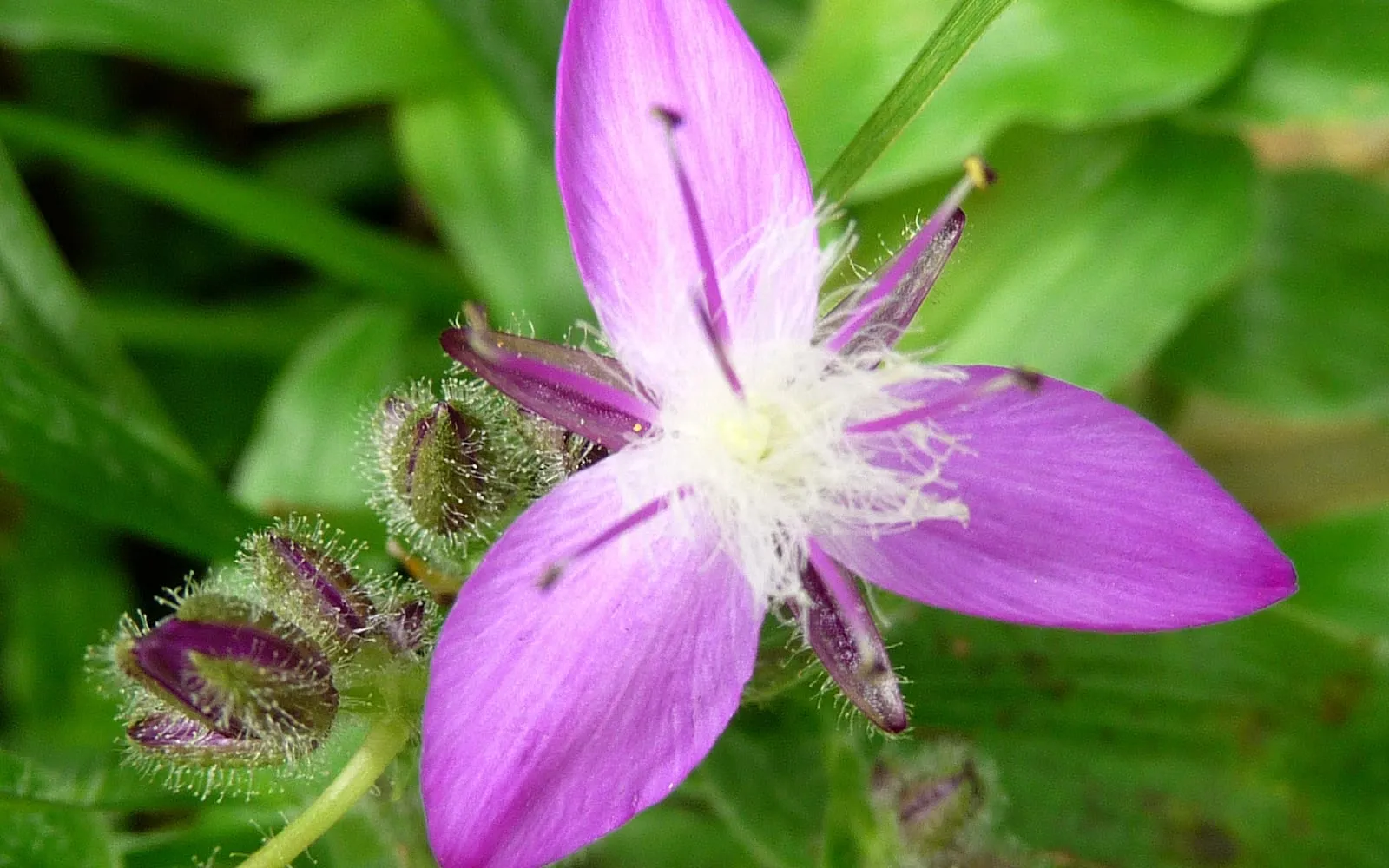
Elasis hirsuta is a stout, densely hairy member of the spiderwort family from the cool, humid slopes of the Ecuadorian Andes. It is a collector’s plant far more than a shop-shelf one, grown by enthusiasts of the family instead of sold as a mainstream houseplant. Its main interest is that it is a strong, coarse-textured cousin of the familiar trailing spiderworts. Where those creep and dangle, this one builds a solid, upright clump of broad, softly furred leaves.
Its mountain habitat separates it from the lowland tropicals it is often grouped with. The high Andean forest is humid and shaded, but cool rather than hot. Given those conditions, it settles into an undemanding routine. Its main problems are the same as any forest-floor plant of its kind: a cold and soggy root run and thin, dried-out air.
Appearance and character
Coarse, hairy foliage gives the plant its name and its character. The leaves are broad and lance-shaped, ribbed along their length and covered in soft hairs that hold droplets of mist, borne on thick, fleshy stems that stand more or less upright instead of trailing.
A well-grown plant forms a bold, leafy clump from a spreading rootstock, heftier and more substantial than the delicate wandering spiderworts. In good conditions it produces terminal heads of small pale flowers in the family’s usual three-petalled pattern, each short-lived, though the sturdy hairy foliage is the main reason to grow it.
Where it is from
Elasis hirsuta grows in the montane and cloud forests of the Ecuadorian Andes, rooting in the deep, moist leaf litter of shaded slopes where cloud rolls through for much of the year. The setting is constantly humid, dimly lit beneath the canopy, and mild instead of tropical, with no real heat and no frost.
Those conditions describe how to grow it well. It needs cool to moderate warmth, moist air, and a shaded position out of direct sun. A spongy, humus-rich compost that stays damp yet lets water run away suits the mountain forest floor it comes from.
How it grows
The clump grows steadily through the milder part of the year, adding leaves from the crown and thickening at the root, then rests when light and temperature drop. It is a plant of slow, solid increase rather than the fast growth of its trailing relatives.
Grow it in a wide pot of open, moisture-holding compost and keep the rootball damp without ever letting it stand in water. Shade it well, keep the surrounding air humid, and it needs little else. Increase it by lifting and dividing the crown in spring, or by rooting stem sections in a warm, humid propagator, which is slower than with the wandering spiderworts but reliable.
Through the seasons
Spring brings renewed growth from the crown. Divide a crowded plant now, refresh the compost, and resume regular watering and feeding.
Summer is the main growing spell. Keep the plant cool, shaded and humid, watering enough to hold the compost evenly damp through warm weather.
Autumn slows it as the days shorten. Cut back on feeding and let the surface of the compost dry a little more between waterings.
Winter is a quiet rest. Water lightly, keep the plant frost-free and away from cold draughts, and wait for spring to bring fresh leaves.
Care difficulty
For a plant that seldom reaches ordinary shops, it is undemanding once its cool, humid, shaded preference is understood. It needs moist air, a damp but open compost, and shelter from strong sun and heat. Most failures come from roots left cold and waterlogged until they rot, or from dry, warm air that scorches the hairy leaf margins. A hot, sunny windowsill is the wrong place for it.
Watering
Keep the compost evenly moist through the growing season, watering once the top layer starts to dry and letting the surplus escape freely. The plant comes from a place of near-constant moisture, so it dislikes a hard, prolonged dry-out more than most of its relatives.
Ease back in winter, when growth halts and rot becomes the main risk. Let more of the pot dry before watering, and be careful that the roots never sit cold and sodden, which is the quickest way to lose a clump.
Warning signs, diseases and pests
A collapsing, yellowing clump with a soft crown has usually been kept too wet and too cold. Reduce watering at once, and if rot has set in, salvage sound divisions or cuttings and start again in fresh, open compost.
Dry air browns and crisps the leaf edges and dulls the hairy surface, so raise the humidity and keep the plant off heat sources. In warm, dry rooms spider mites may mark the foliage and mealybugs lodge among the hairs and leaf bases; inspect regularly and treat early, since the woolly leaves can hide pests.
Growing environment
Site it in a shaded to lightly lit spot with no direct sun, such as a north-facing sill or a cool, bright room set back from the glass. It prefers moderate warmth to tropical heat, so a cool conservatory, a shaded porch or a plant room suits it better than a hot living room.
Keep the air around it moist, group it with other plants or stand it over a humidity tray, and shelter it from draughts. Pot it in a rich, moisture-retentive but free-draining compost, and give the clump room to broaden.
Feeding
Feed a dilute, balanced fertiliser every few weeks through the growing season to support the leafy clump. Weak, regular feeding is better than a strong occasional dose, as heavy feeding pushes soft growth that does not suit the hairy leaves.
Stop feeding through the winter rest. A newly divided or repotted plant can go for several weeks on the nutrients in its fresh compost before it needs any feed.
Troubleshooting
Why are the leaf edges browning and the hairs looking dull? Dry air, often near heating. Move the plant somewhere more humid and away from radiators.
Why has the clump gone soft and floppy? Cold, waterlogged compost rotting the crown. Cut back the watering, rescue healthy divisions, and repot into drier, open compost.
Why is growth so slow? This is a steady, solid grower instead of a fast one, and it slows further in cool, dark months. Check that it is not too hot, too dry or too dark if it stalls in the growing season.
How do I propagate it? Divide the crown in spring, or root stem sections in a warm, humid propagator.
Is it safe around pets? Only mildly. No data exists for this species, but spiderworts in general can irritate skin and upset a pet’s stomach, so keep chewing pets away and wash sap off skin.
Hairy Elasis Spiderwort problem guides
Not sure what is wrong? See the common houseplant pests guide.