
Outdoor plant
Guggul
Commiphora wightii
Also known as Indian Bdellium, Mukul Myrrh, Commiphora mukul
How to grow guggul, Commiphora wightii. The thorny desert shrub with peeling bark that yields Ayurvedic resin, why it is endangered, and how to grow it.
At a glance
- Difficulty
- Moderate
- Water
- Sparingly in growth; keep dry when leafless
- Light
- Full sun
- Temperature
- Frost-tender; keep above about 7 deg C
- Hardiness
- USDA 10-11, RHS H2, hardy to 7 C
- Type
- Slow-growing deciduous shrub or small tree
- Height
- Up to 4 m
- Native to
- Pakistan and north-western India, southern Oman
A shrub of hot, arid scrub and rocky desert, adapted to extreme drought and heat and with no frost tolerance at all. It drops its leaves in the dry season and stands leafless and dormant through drought, then leafs out when rain comes. Outside a hot, dry, frost-free climate it is a glasshouse or conservatory plant, kept warm and dry over winter, and it rots quickly in cold, damp conditions.
Hardiness zones describe winter cold alone. Summer heat, humidity, rainfall and the length of the growing season decide as much, so treat the range as the outer limit rather than as a recommendation.
Harmful if eaten
- Do not eat
- The gum-resin, taken as a supplement
- Harm from
- Eating it and handling it
- Affects
- People
The plant is grown for the aromatic gum-resin tapped from its bark, known as guggul, which is used in Ayurvedic medicine and sold as a supplement. Taken that way it can cause stomach upset, headache and skin rashes in some people and can interact with prescribed medicines, so any medicinal use is a matter for a qualified practitioner. The growing shrub is not a notable poison and is safe to handle apart from its spines. This guide covers growing the plant instead of using the resin.
Sources: RHS potentially harmful garden plants, North Carolina Extension plant toxicity database
About
Guggul is a thorny desert shrub of the frankincense and myrrh family, grown in arid India and Pakistan for the fragrant resin it yields. Tapped from cuts in the bark, that oleo-gum-resin, called guggul, has been used in Ayurvedic medicine for centuries and is still harvested and sold today. That resin is the main reason the plant is widely known.
It is a close relative of myrrh, and shares that group’s peeling, papery bark, aromatic wood and tolerance of harsh, dry country. Left to grow it forms a low, crooked, spiny shrub or small tree that stands leafless through the dry season and leafs out when rain arrives.
Heavy demand for its resin has damaged wild populations. Over-tapping and slow growth have made it endangered across much of its Indian range, so a cultivated plant is both a collector’s plant and a way to reduce pressure on wild stocks. The accepted botanical name is now Commiphora wightii, with C. mukul as a synonym.
Appearance and character
Bark is one of the shrub’s most distinctive parts, pale and silvery and peeling away in thin, papery flakes, like its myrrh relatives, over an aromatic wood.
Branches are crooked, spreading and armed with sharp spines, forming a low, angular, thorny framework instead of a neat crown.
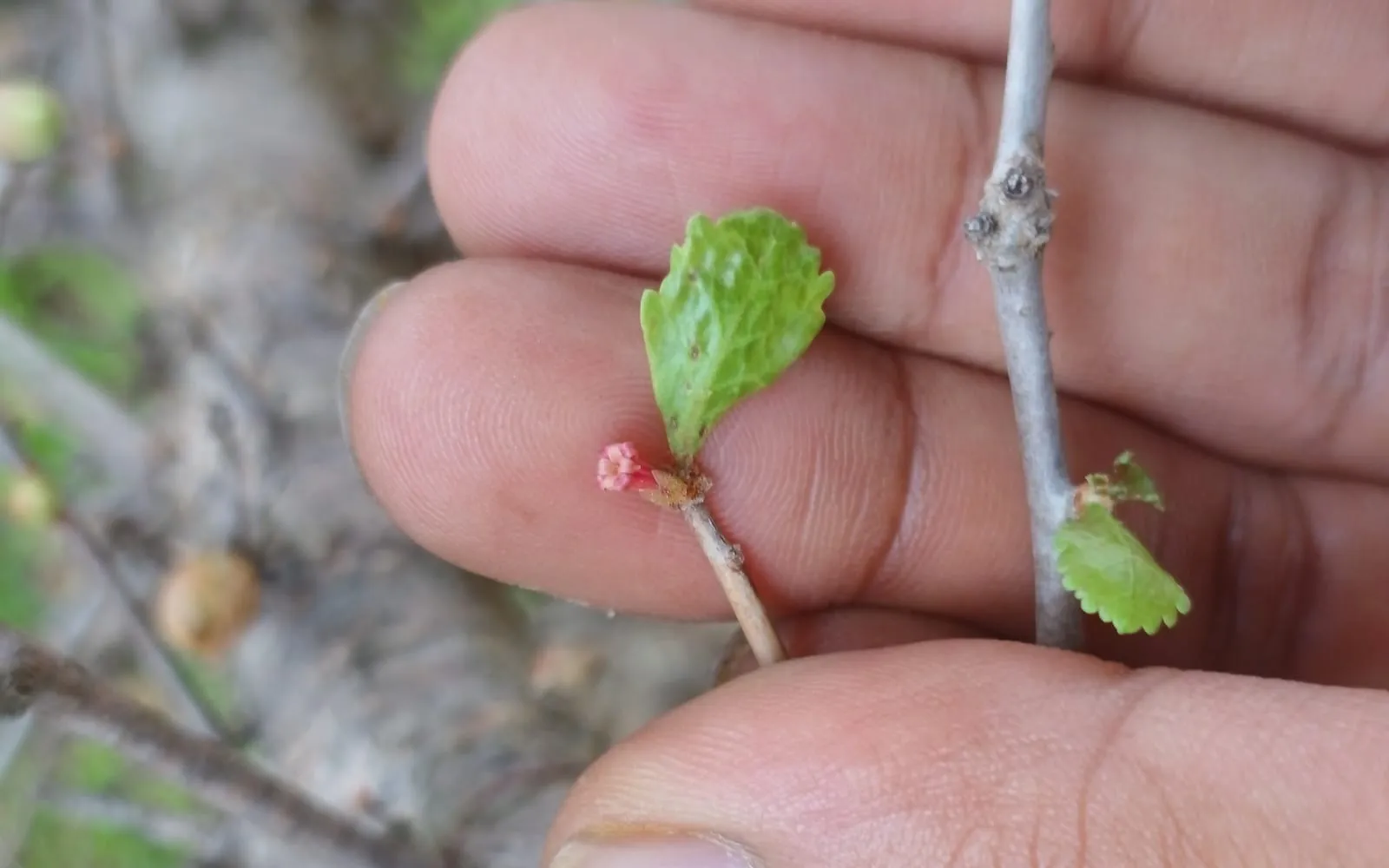
Leaves are small and simple or made of a few little leaflets, appearing only in the growing season and dropping as drought or cool weather sets in, so the plant is leafless and dormant for much of the year.
Flowers are small and reddish to pink, borne along the stems, modest and easily overlooked.
The resin forms in ducts in the bark and oozes as a fragrant gum when the bark is cut, hardening into lumps, and it is this that is collected as guggul.
Where it is from
Commiphora wightii grows in the hot, arid scrub and rocky desert of north-western India, Pakistan and southern Oman, including the Thar desert, on poor, stony, free-draining ground under fierce sun.
Those conditions set its needs and limits. It is adapted to extreme heat, drought and thin soil, surviving long rainless periods by dropping its leaves, and it has no tolerance of frost or of cold, damp ground, which confines it to hot, dry climates or to cultivation under glass.
How it grows
It grows slowly, leafing out with the rains and standing bare and dormant through drought and cool weather, building its thorny framework over years. In a hot, dry climate it needs little once established.
Grow it in full sun in a very free-draining, gritty, poor compost, watering only during active growth and keeping it dry when leafless. In most climates that means a pot in a glasshouse or a bright indoor spot kept above about 7 deg C.
Water sparingly and never let it sit cold and wet, since rot at the root or stem is the quickest way to lose it. Handle it with care for the spines, and prune only lightly to shape, in the growing season.
Treat it as a slow, long-term specimen instead of a quick plant. Some growers raise it for its curiosity and its resin, and a cultivated plant helps take pressure off the dwindling wild populations.
Through the seasons
The growing season, with warmth and moisture, is when it leafs out and makes its slow growth. Water sparingly during this period and give strong light.
The dry or cool season is when it drops its leaves and rests as a bare, dormant shrub. Keep it dry and warm, watering little or not at all.
Under glass the cycle follows the warmth and water you give it instead of a fixed calendar: water when it is in leaf and growing, and keep it dry when it is bare.
Winter, in any climate near its limit, means keeping it frost-free and dry, since cold and damp together will rot it.
Care difficulty
Moderate, and mostly a matter of restraint and warmth. The shrub itself is tough and drought-hardy, but it is killed easily by overwatering, cold and damp, so the skill lies in watering sparingly, keeping it warm and giving very sharp drainage. Its slow growth also tests patience. Kept dry, warm and bright, it is a durable if unhurried plant.
Watering
Water sparingly during active growth, letting the gritty compost dry out well between waterings, since the plant stores its own reserves and rots if kept wet. Overwatering is the commonest cause of failure.
When the shrub drops its leaves and rests, keep it nearly dry, giving at most an occasional light watering to stop it shrivelling hard. The dry dormant rest is part of its natural cycle.
Warning signs, diseases and pests
Rot at the root or stem is the main danger, brought on by overwatering or cold, damp conditions. Soft, discoloured tissue means rot, so cut back watering sharply, improve drainage and keep the plant warm. Prevention through a gritty mix and careful watering matters most.
The spines are a physical hazard when handling or pruning, so wear gloves and take care.
The larger issue is conservation. The wild plant is endangered through over-tapping for resin, so do not tap a cultivated plant heavily.
Growing environment
Full sun is essential, matching the fierce light of its desert home. In poor light it grows weak and stretched and is more prone to rot.
The compost must be very free-draining, gritty and poor, of the kind used for cacti and other desert succulents. Rich, moisture-holding compost stays too wet and kills the plant.
Keep it warm and frost-free. In most climates it is a glasshouse or bright indoor plant that must stay above about 7 deg C, kept dry through the cool season, and it can grow outdoors only in hot, arid, frost-free regions.
Feeding
Feed lightly and rarely. A weak, balanced feed once or twice during active growth is enough for a slow desert plant, and heavy feeding forces soft growth and does nothing useful. Through dormancy it needs no feeding at all.
Troubleshooting
It has lost all its leaves. Usually normal dormancy, as the plant sheds its leaves in drought or cool weather. Keep it dry and warm and it should leaf out again when growth resumes. If the stems and roots stay firm, the plant is fine.
The stems have gone soft. Rot, almost always from overwatering or cold, damp conditions. Stop watering, improve drainage, keep it warm and cut away any clearly rotten tissue. A firm, dry plant is a healthy one.
Can I harvest guggul resin from it? The resin is tapped from cuts in the bark, but a young or single plant is better left to grow, and over-tapping is exactly what has endangered the species in the wild. If tapped at all, it should be done lightly.
Is the resin safe to take? Guggul is used in Ayurvedic medicine and sold as a supplement, but it can cause stomach upset and rashes and can interact with medicines, so it is a matter for a qualified practitioner, not casual use.
Will it grow outdoors where I am? Only in a hot, arid, frost-free climate. Everywhere else it is a glasshouse or conservatory plant, kept warm, dry and bright, since it has no frost tolerance.