
Outdoor plant
Green Ephedra
Ephedra viridis
Also known as Mormon Tea, Green Mormon Tea
How to grow green ephedra, Ephedra viridis, a leafless broom-like desert shrub brewed as Mormon tea, and how to grow it in dry ground.
At a glance
- Difficulty
- Moderate
- Water
- Rarely once established; it is very drought-tolerant
- Light
- Full sun
- Temperature
- Hardy to cold; needs heat and drought in summer
- Hardiness
- USDA 5-9, RHS H4, hardy to -20 C
- Type
- Evergreen shrub with jointed green stems
- Height
- 60 to 120 cm
- Native to
- Southwestern North America
A high-desert shrub, hardier to winter cold than many desert plants and used to hot, dry summers on thin, free-draining ground. It grows on dry slopes and plateaus of the American south-west, so it needs full sun, sharp drainage and little water, and it dislikes rich, damp soil and humid air. It tolerates a cold winter well as long as the ground drains freely.
Hardiness zones describe winter cold alone. Summer heat, humidity, rainfall and the length of the growing season decide as much, so treat the range as the outer limit rather than as a recommendation.
Harmful if eaten
- Do not eat
- The stems, brewed as a drink
- Harm from
- Eating it
- Affects
- People
The stems have long been brewed as a drink called Mormon tea. The Asian ma huang, Ephedra sinica, is rich in the stimulant alkaloids ephedrine and pseudoephedrine, which raise heart rate and blood pressure and act on the nervous system. American ephedras such as this one contain little or none, but alkaloid content varies between plants, and a strong brew can still be unwise for anyone with heart disease, high blood pressure or a thyroid condition, or anyone taking stimulants or antidepressants. Sale of ephedrine-containing ephedra is banned or restricted in several countries, including the United States for dietary supplements. Leave medicinal use to a qualified practitioner.
Sources: RHS potentially harmful garden plants, North Carolina Extension plant toxicity database
About
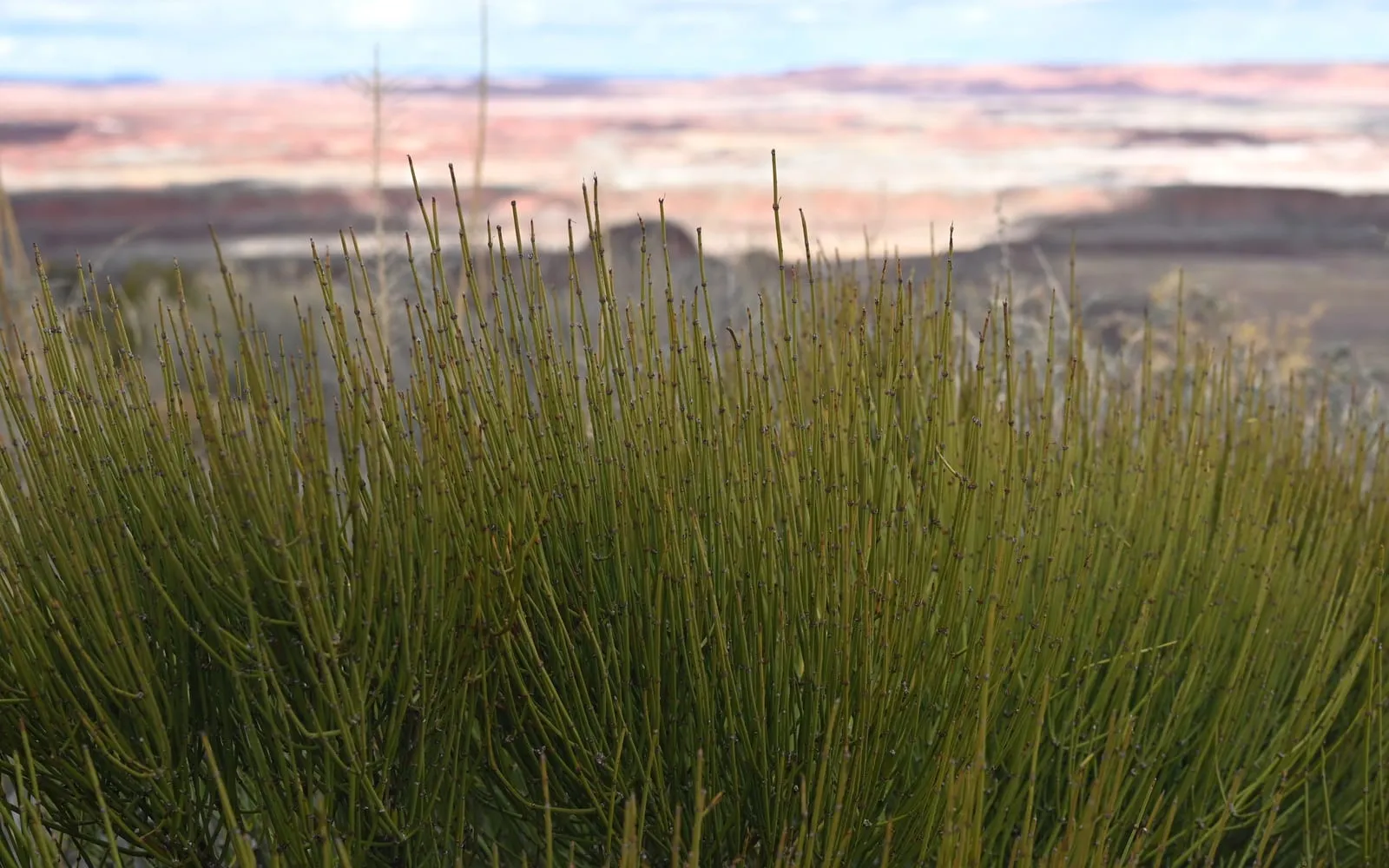
Green ephedra is a leafless desert shrub of the American south-west, grown for its unusual form and its history as the plant behind Mormon tea. It has almost no true leaves, and photosynthesises through a dense broom of slender, jointed green stems, so it looks more like a stiff green broom than a leafy bush.
It belongs to an ancient group of cone-bearing plants, closer to conifers than to flowering shrubs, and it carries small cones instead of flowers, with male and female cones on separate plants. That unusual structure appeals to collectors of desert and xeriscape plants.
Its name needs a clear word of caution. The Asian ephedra, ma huang, is the source of the stimulant ephedrine and is tightly regulated. The American species such as this one contain little or no ephedrine, so green ephedra is not that plant and should not be treated as a source of the stimulant. This guide covers growing it instead of any use of it.
Appearance and character
Stems are the whole visible plant, slim, jointed and green, standing stiffly upright and branching densely into a broom-like bush. They do the photosynthesis that leaves would elsewhere, so the plant looks bare.
Leaves are reduced to tiny brown scales at the joints of the stems, so small that the plant appears leafless, an adaptation to cut water loss in the desert.
Cones take the place of flowers, small and yellowish or brownish, borne at the stem joints, with male and female cones on separate plants, so only females set the small seeds.
The habit is erect and twiggy, a dense tuft of green stems some sixty centimetres to well over a metre tall, evergreen in effect because the stems stay green through the year.
Where it is from
Ephedra viridis grows in the dry uplands of the south-western United States, on rocky slopes, plateaus and desert scrub, often at some altitude. It is a plant of open, sunny, thin, free-draining ground.
Its habitat makes it both drought-hardy and, for a desert plant, fairly cold-hardy, used to hot dry summers and cold winters on ground that never stays wet. It needs sharp drainage and strong sun, and it dislikes rich soil, damp and humidity, which are the conditions most likely to kill it.
How it grows
It grows slowly into a dense broom of green stems in full sun on dry, sharply drained ground, needing very little once established. Its evergreen stems keep it looking much the same through the year.
Plant it in a sunny, open spot in sandy or gravelly, free-draining soil, and water it sparingly only while it settles in. After that it needs dry conditions, and the commonest way to kill it is rich, damp soil that rots the roots.
Give it room in a gravel garden, a xeriscape or a dry, sunny bank, where its stiff green form and drought tolerance are useful. Prune only to tidy it, since it needs little shaping.
Grow it for its form and interest, in the dry conditions it needs, instead of for any use of the stems. Treated as a tough ornamental for hot, dry ground it is an unusual plant.
Through the seasons
Spring brings the small cones at the stem joints, most noticeable on close inspection, and a little fresh green growth.
Summer is slow growth through the heat, with the plant tolerating drought and strong sun that would wilt leafier shrubs.
Autumn is when female plants ripen their small seeds, and growth slows as the season cools.
Winter leaves the green stems standing through the cold, with the plant hardy on free-draining ground and resting until spring.
Care difficulty
Moderate, and easy in the right dry, sunny spot. Given sharp drainage, full sun and little water it is tough, hardy and almost trouble-free. The way to fail with it is to plant it in rich, damp or poorly drained soil, which rots it, so match it to lean, dry conditions.
Watering
Water sparingly, and only while a young plant establishes. Once settled it is strongly drought-tolerant and needs dry conditions, using deep roots in the way of a desert shrub, so routine watering does more harm than good.
Overwatering, and damp or poorly drained soil, are the main dangers, rotting the roots. Err well on the side of too little water instead of too much.
Warning signs, diseases and pests
Root rot is the main risk, brought on by rich, damp or poorly drained soil. A plant that yellows and collapses is usually too wet. Use sharper drainage and less water instead of any treatment.
Pests are few on this tough and resinous desert shrub, which has few problems in suitable dry conditions.
The stems are the part brewed as a drink, and while the American species carry little or no ephedrine, ephedra as a group is restricted in some places, so treat the plant as an ornamental and leave any use to a qualified practitioner.
Growing environment
Full sun is essential, matching the open desert uplands it comes from. It has no tolerance for shade and grows thin and weak without strong light.
The soil must be dry, sandy or rocky and sharply drained. Rich, heavy or damp ground is wrong for it, and good drainage matters more than fertility, which it does not need.
A gravel garden, a xeriscape, a dry sunny bank or a raised bed of gritty soil all suit it, among other drought-loving plants. Dry air suits it better than a humid climate.
Feeding
Do not feed it. The plant is adapted to poor desert soils and gains nothing from fertiliser, which only encourages soft growth on a shrub built for lean, dry conditions. Leave the soil poor.
Troubleshooting
Where are its leaves? It has almost none. Green ephedra does its photosynthesis through its green stems, and its leaves are reduced to tiny scales at the joints, an adaptation to the desert. The bare look is normal.
Is this the ephedra that ephedrine comes from? No. Ephedrine comes from the Asian ma huang, Ephedra sinica. The American species such as this one contain little or no ephedrine, so green ephedra is not a source of the stimulant and should not be used as one.
It went yellow and collapsed. Almost certainly too wet. This is a desert shrub that rots in rich, damp or poorly drained soil. Grow it in dry, sharply drained ground and water it very little.
Can I make Mormon tea from it? The stems have been brewed traditionally, but ephedra is restricted in some countries and any use is a matter for a qualified practitioner. Grow the plant as an ornamental instead of for brewing.
Why has it no flowers? It bears small cones instead of flowers, being a relative of the conifers, and male and female cones grow on separate plants, so a lone plant of one sex shows only its own cones and sets no seed.