
Houseplant
Giant Taro
Alocasia macrorrhizos
Also known as Alocasia macrorrhiza
How to grow Alocasia macrorrhizos, the giant taro, a bold aroid with huge upward-pointing leaves and an irritant, calcium-oxalate sap in every part.
At a glance
- Difficulty
- Easy
- Water
- Steady in growth; ease off in rest
- Light
- Bright, indirect light to part shade
- Temperature
- Warm; keep above about 10 deg C
- Humidity
- Average to high
- Hardiness
- USDA 9-11, RHS H2, hardy to 5 C
- Type
- Evergreen perennial
- Height
- 2 to 4 m
- Native to
- Southeast Asia
A large tropical foliage aroid from the warm, humid forests of Southeast Asia. It needs steady warmth, high humidity, rich moist soil and bright light out of harsh midday sun. Frost cuts it down, though an established tuber can reshoot once warmth returns. It is safest above about 10 deg C.
Hardiness zones describe winter cold alone. Summer heat, humidity, rainfall and the length of the growing season decide as much, so treat the range as the outer limit rather than as a recommendation.
Toxic if eaten
- Do not eat
- All parts, which contain calcium oxalate crystals
- Harm from
- Eating it, handling it and sap in the eyes
- Affects
- People, cats and dogs
Like other members of the arum family, Alocasia macrorrhizos holds tiny calcium oxalate needles in every part. Chewing a leaf or stem of the giant taro pushes them into the soft tissue of the mouth, bringing burning, swelling and drooling, and vomiting in a pet that swallows any; the sap can irritate skin and eyes. The ASPCA lists Alocasia as toxic to cats and dogs. The raw corm is especially acrid and is not safe to eat. It is food in parts of Asia and the Pacific only after long cooking, and a houseplant is not a crop to try that on. Swelling of the mouth or throat needs a vet or doctor. Keep the giant taro away from anything that chews, and wash off any sap.
Sources: ASPCA toxic and non-toxic plants, RHS potentially harmful garden plants
About
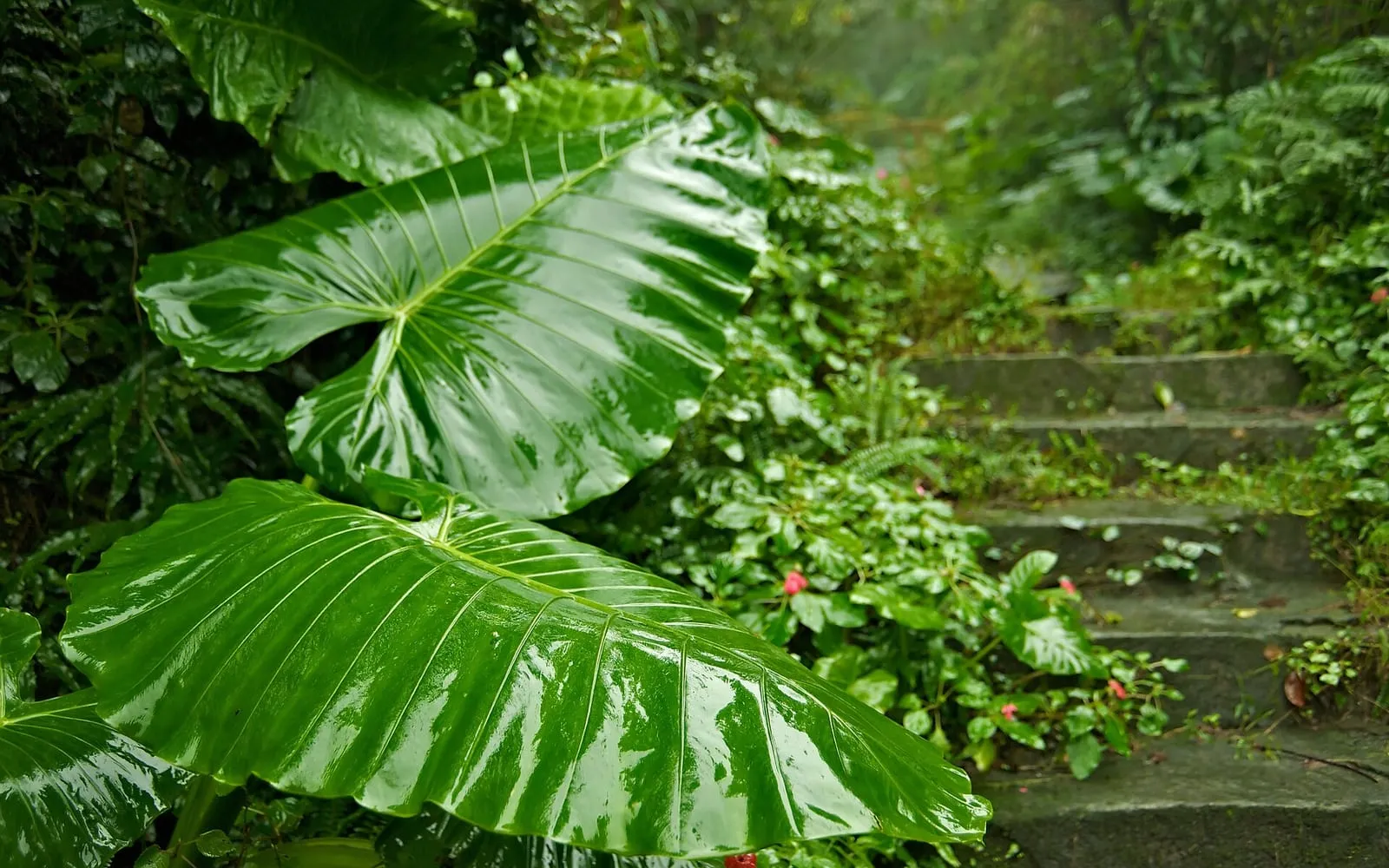
Giant taro is one of the largest elephant-ear aroids. Alocasia macrorrhizos can grow broad, glossy leaves the size of a serving tray on thick, upright stalks. The leaves point upward, which is the quick way to tell it from true taro, Colocasia, whose leaves hang down from where the stalk joins the blade.
The species name means large-rooted, and it refers to the swollen underground and part-emergent stem that stores the plant’s reserves. In its warm homelands that stem is cooked long and thoroughly as a starchy food, but the raw plant is not safe to eat because every part contains the arum family’s irritant crystals.
Indoors it is grown for large glossy leaves rather than for flowers. Give it room, warmth and light and it can become a large floor plant within a season or two.
Appearance and character
The leaves are the main feature. Each one is a large, arrow-to-heart-shaped blade, deep green and high-gloss, with bold veins pressed into the surface, and it is held upright on a stout, ribbed stalk instead of drooping. A vigorous plant produces them one after another, each larger than the last.
Over time the base thickens into a short, trunk-like stem as old leaf bases build up, lifting the crown of leaves clear of the pot. Flowering is a plain arum structure, a pale spathe wrapped around a spadix, and it is less noticeable than the foliage. The plant is grown for its bold, upright leaves.
Where it is from
Giant taro is a plant of the humid tropics, at home in warm, bright, seasonally wet lowlands and forest clearings where its huge leaves can catch strong light. It grows in rich, moisture-holding ground that still drains, along stream banks and in open, damp corners instead of in deep shade.
That habitat explains its indoor needs. It takes far more light than the shade-loving jewel alocasias, colours and grows best in a bright spot, and needs a root zone that stays moist during growth without turning waterlogged. It expects steady warmth and suffers badly in cold conditions.
How it grows
The plant grows fast in warmth and good light, pushing out a fresh leaf every few weeks in the growing season, then slowing or pausing in the cool, dark months. Each new leaf tends to be bigger, so growth is visible week to week when the plant is happy.
Grow it in a rich but free-draining mix, blending a peat-free compost with bark and grit so the heavy leaves have support and the roots never sit waterlogged. Keep it bright, warm and evenly moist in growth, and pot on in spring as the roots and stem fill the container, since a big plant needs plenty of root room.
Increase it by lifting and separating the offsets that form around the base, or by dividing the stem. Handle cut surfaces with washed hands, because the sap stings skin.
Through the seasons
Spring restarts strong growth. Repot a crowded plant, water more often again, and begin feeding as the light strengthens.
Summer gives the fastest growth and the biggest leaves. Keep the mix evenly moist, give it bright light with shelter from the harshest midday sun through glass, and feed regularly.
Autumn slows the plant as days shorten. Reduce feeding and watering together, and remove leaves as they yellow and fade.
Winter is a rest, and a cool, dim spell may make it lose most of its leaves. Keep it warm, water lightly so the stem stays firm but never cold and wet, and wait for spring.
Care difficulty
For an alocasia this is an easy, tough plant, forgiving of more light and more water than its fussier relatives, provided it is kept warm. Its size is the main challenge, since a thriving plant quickly needs floor space and a heavy pot to stay upright.
The warning signs are clear. A soft, collapsing base and yellowing leaves mean cold, waterlogged soil has rotted the roots. Sudden leaf loss usually follows a cold snap or a move. Aphids may cluster on soft new growth. Correct the setting and a strong plant can recover quickly.
Watering
Water steadily through the growing season, keeping the rich mix evenly moist so the large leaves never wilt, and letting the surplus drain freely each time. A big plant in full growth uses a lot of water in warm weather, so check it often.
Reduce watering in the cool months, letting the surface dry between drinks, because cold combined with waterlogged soil is what rots the storage stem. If the plant drops leaves and rests over winter, keep the mix barely damp until growth resumes.
Warning signs, diseases and pests
A soft, discoloured, foul base with collapsing leaves is root or stem rot from heavy, wet, waterlogged soil. Lift the plant, cut away the rotten tissue, and replant the firm part in fresh, free-draining mix.
Yellowing leaves that drop after a cold spell or a move are normal. Keep conditions steady, and expect fresh leaves once warmth and light return.
Aphids gather on soft new growth and flower buds, and in dry indoor air spider mites can stipple the leaves. Rinse the foliage, and treat a persistent colony with an insecticidal soap.
Growing environment
Bright light suits it, more than most alocasias tolerate, including some gentle direct sun, and a well-lit spot keeps the plant compact and the leaves large and glossy. In deep shade it grows lanky and pale.
Pair that light with steady warmth and a heavy, stable pot to support the tall leaves. Average humidity is enough, though brighter, drier air calls for more frequent watering to keep the big blades firm.
Feeding
Feed through spring and summer with a dilute balanced liquid fertiliser at about half strength, every couple of weeks while the plant is in strong growth. A fast grower this size needs regular feeding. It responds with large, deep-green leaves.
Stop feeding in autumn and give none over winter, especially if the plant rests. A newly repotted specimen can wait a few weeks before feeding, using the fresh mix first.
Troubleshooting
Why do the leaves point up instead of drooping like taro? That upright habit is how you tell giant taro, an Alocasia, from true taro, a Colocasia, whose leaves hang down.
The base has gone soft and the plant is collapsing. What is wrong? Cold, waterlogged soil has rotted the stem. Cut out the rot, replant the firm part in free-draining mix, and water much less.
It lost its leaves over winter. Is it dead? Probably not. A cold, dim rest can strip the leaves while the storage stem stays alive. Keep it warm and barely moist and it should reshoot.
How do I propagate it? Separate the offsets around the base, or divide the stem, handling cut surfaces with washed hands because the sap stings.
Is it safe around pets? No. Every part carries irritant crystals that burn the mouth if chewed, so keep it out of reach and read the toxicity note above.
Giant Taro problem guides
Not sure what is wrong? See the common houseplant pests guide.