
Houseplant
Grapeleaf Begonia
Begonia reniformis
Also known as Begonia reniformis
How to grow Begonia reniformis, the grapeleaf begonia, a bold Brazilian species with broad grapevine-like leaves on long, fleshy stalks.
At a glance
- Difficulty
- Easy
- Water
- When the top few centimetres of mix have dried
- Light
- Bright indirect light to light shade
- Temperature
- Warm; keep above about 13 deg C
- Humidity
- Average to high
- Hardiness
- USDA 10-12, RHS H1b, hardy to 13 C
- Type
- Perennial
- Height
- 60-120 cm
- Native to
- Brazil
A tender tropical foliage plant from Brazil, growing in warm, humid, shaded to filtered light. It needs warmth, humidity and bright indirect light, and it cannot take frost or chill. It is safest above about 13 deg C, and cold, wet compost or dry air spoils it.
Hardiness zones describe winter cold alone. Summer heat, humidity, rainfall and the length of the growing season decide as much, so treat the range as the outer limit rather than as a recommendation.
Harmful if eaten
- Harm from
- Eating it and handling it
- Affects
- People, cats, dogs and horses
Begonia reniformis, the grapeleaf begonia, is toxic to cats, dogs and horses. The whole plant holds soluble calcium oxalates, most concentrated in the underground parts, and chewing it can burn the mouth and cause drooling and vomiting. The RHS rates begonias as mildly harmful if eaten and a possible skin irritant. Keep it out of reach of pets and small children, and wash your hands after cutting stems.
Sources: ASPCA toxic and non-toxic plants, RHS potentially harmful garden plants
A quick introduction
Begonia reniformis is a big-leaved species from Brazil, grown for foliage that resembles the broad lobed leaf of a grapevine on long, fleshy stalks. Its botanical name means kidney-shaped, describing the rounded outline before the lobes cut into it. Where many begonias are dainty, this one is large, with thick succulent stems, leaves that can span a dinner plate on a mature plant, and airy clusters of small flowers held above the crown. Given room and warmth it grows into a shrubby specimen a metre or more tall, making it a good begonia for a large pot.
The look of it
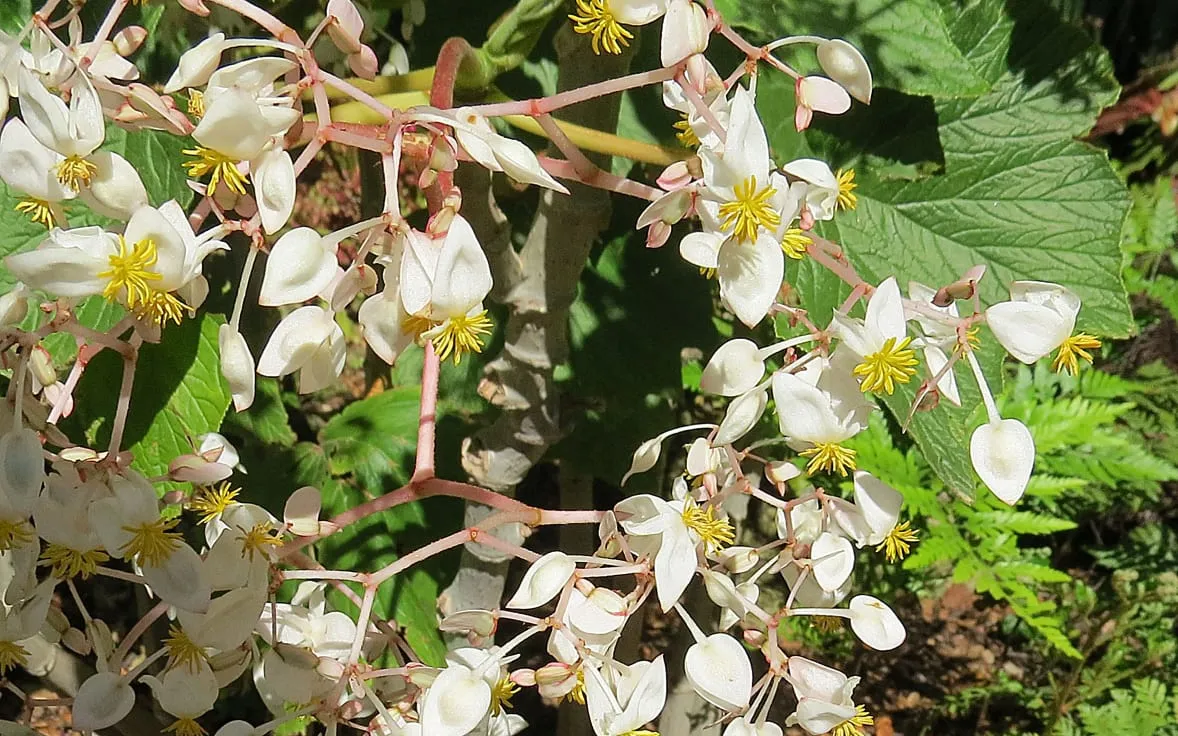
Each leaf is nearly circular in outline and cut into several broad, pointed lobes, its surface matt green and its veins radiating from the top of the stalk where it joins the blade. The long petioles are covered in fine reddish hairs and hold the leaves out and up, so the plant holds its foliage in a wide, open head. In late winter and spring, tall branched stalks carry hundreds of tiny white to pale pink flowers well clear of the leaves, a loose cluster of bloom above the bold greenery. Male and female flowers appear on the same spray, the females trailing the small winged seed capsule of the genus.
Where it belongs
This begonia grows wild in the warm forests and shaded rocky places of Brazil, where humidity is high and the light is broken by taller trees. It is used to steady heat, moist air and rich, leafy soil that drains after rain. Those conditions mean it needs warmth without cold snaps, air that does not dry out, and bright light without hot direct sun on the leaves.
Light and where to put it
Give it a bright room with the direct sun screened away. The large thin leaves scorch in strong rays through glass, browning in irregular patches, yet in a dim corner the stalks stretch and weaken and the plant loses its shape. A position a little back from a bright window, or beside a north or east one, suits it well. With such a wide head of leaves, allow plenty of space around the plant and turn it now and then so it grows evenly instead of leaning to the light.
How to water it
Water when the top few centimetres of the compost have dried, soaking the whole root ball and letting the excess drain freely away. A large plant in full leaf drinks a good deal through the warm months and should never be allowed to wilt hard, as the big leaves collapse quickly. In winter, when growth stops, water much less and let more of the pot dry between drinks. Cold, waterlogged compost quickly rots the thick stem bases, so the winter danger is overwatering.
Warmth and moisture
Keep it in steady warmth and never below about 13 deg C, out of draughts that chill the succulent stems. The broad leaves lose moisture fast, so dry heated air browns their edges and can bring on leaf drop. A grouping of plants or a large pebble tray raises the humidity around it more reliably than misting. Its size and open habit mean air moves through it naturally, which helps keep fungal trouble away.
Feeding a large plant
A vigorous, leafy begonia of this size uses regular feeding. Give a balanced liquid fertiliser at half strength every two weeks from spring to early autumn to support the big leaves and the tall flower stalks. As a plant matures and fills its pot, an occasional top-dressing with fresh compost keeps it fed between repottings. Stop feeding over winter and resume with the first new leaves of spring.
Propagation and potting
Take stem cuttings in spring or early summer, cutting a firm shoot below a node, removing the largest leaves to cut water loss, and rooting it in warm, damp, open compost under cover. The thick stems hold plenty of reserves and root readily. Divide a large multi-stemmed plant at repotting, and pot into a heavy container that will not topple under the wide head of leaves. Because it grows fast and large, move it up a pot size each spring while young, then refresh the top layer of compost once it reaches its final pot.
Keeping it healthy
In warm, humid and airy conditions, the grapeleaf begonia is sturdy. Dry air encourages spider mites, seen as fine speckling and slight webbing on the undersides of the leaves, and raised humidity plus a rinse under a tepid shower help control them. Mealybugs may settle where the large stalks meet the stem and are wiped away with dilute alcohol. Grey mould can spot leaves kept cold and wet. Sudden collapse of a stem points to rot at its waterlogged, chilled base. Move it to drier, warmer, better-drained conditions.
Around the year
Spring brings new leaves and the flower stalks; repot, take cuttings and start feeding.
Summer is the main growth period; water generously, feed and keep the humidity up as it grows.
Autumn slows the plant as light fades; reduce water and reduce feeding.
Winter is a warm rest; keep it above chilling cold, water sparingly and let the pot dry more between drinks.
Common questions
Why are the big leaves browning at the edges? The air is too dry. Group it with other plants or stand it on damp gravel, and move it away from any heat source.
Does it need direct sunlight? No. Bright, filtered light suits it; direct sun scorches the wide thin leaves.
How much water does it want? Water when the top few centimetres have dried, freely in summer and sparingly in winter, never leaving it standing wet and cold.
How do I propagate it? Root a firm stem cutting in warm, damp compost in spring, or divide a large clump when repotting.
Is it harmful to pets? Yes, mildly. The ASPCA lists begonias as toxic to cats, dogs and horses because of soluble oxalates, so keep it out of reach of pets that chew.
Grapeleaf Begonia problem guides
Not sure what is wrong? See the common houseplant pests guide.