
Houseplant
False Sisal
Agave decipiens
Also known as Agave decipiens
How to grow Agave decipiens, the false sisal, a trunk-building rosette of Florida coasts with hooked leaf teeth, a sharp tip and irritant sap.
At a glance
- Difficulty
- Easy
- Water
- When the top few centimetres of mix have dried
- Light
- Full sun to bright light
- Temperature
- Warm; keep above about 5 deg C
- Humidity
- Low to average
- Hardiness
- USDA 9b-11, RHS H2, hardy to -2 C
- Type
- Perennial
- Height
- Up to 2 m
- Native to
- Florida
A succulent agave of southern Florida shell mounds and coastal hammocks, taking salt spray and poor sandy ground. It needs full sun, sharp drainage and warmth, and it survives only a touch of frost, to about minus 2 deg C. Cold, wet compost rots it.
Hardiness zones describe winter cold alone. Summer heat, humidity, rainfall and the length of the growing season decide as much, so treat the range as the outer limit rather than as a recommendation.
Toxic if eaten
- Do not eat
- The leaves and sap
- Harm from
- Eating it, handling it and sap in the eyes
- Affects
- People, cats and dogs
The sap of agaves holds calcium oxalate crystals and saponins. The ASPCA lists Agave as toxic to cats, dogs and horses, and a pet or child that chews a leaf may drool, vomit or have a sore mouth. The sap can also redden and blister skin and sting the eyes, and the hooked teeth and sharp tip add a risk of puncture wounds. Wear gloves and eye protection when cutting the plant, wash sap off skin, and keep chewing pets and small children away from it.
Sources: ASPCA toxic and non-toxic plants, RHS potentially harmful garden plants
About
The name comes from a failed fibre crop. Early settlers in Florida hoped Agave decipiens might rival true sisal for rope and cordage, but its fibre was too coarse and short to compete. The Latin epithet means deceptive, which is also the reason for the common name.
It is a coastal plant of Florida’s shell mounds, hammocks and sandy shores, hardy to salt spray and poor ground. Unlike most agaves it builds a distinct woody trunk as it ages, raising its rosette of arching green leaves a metre or more off the sand, which gives an established specimen an unusual palm-like outline.
For a keeper it is tough and quick to clump. It suckers into clumps, stores water in its leaves, and needs only bright light, sharp drainage and warmth. A cold, waterlogged pot can kill it, so the watering habit is where most trouble starts.
Appearance and character
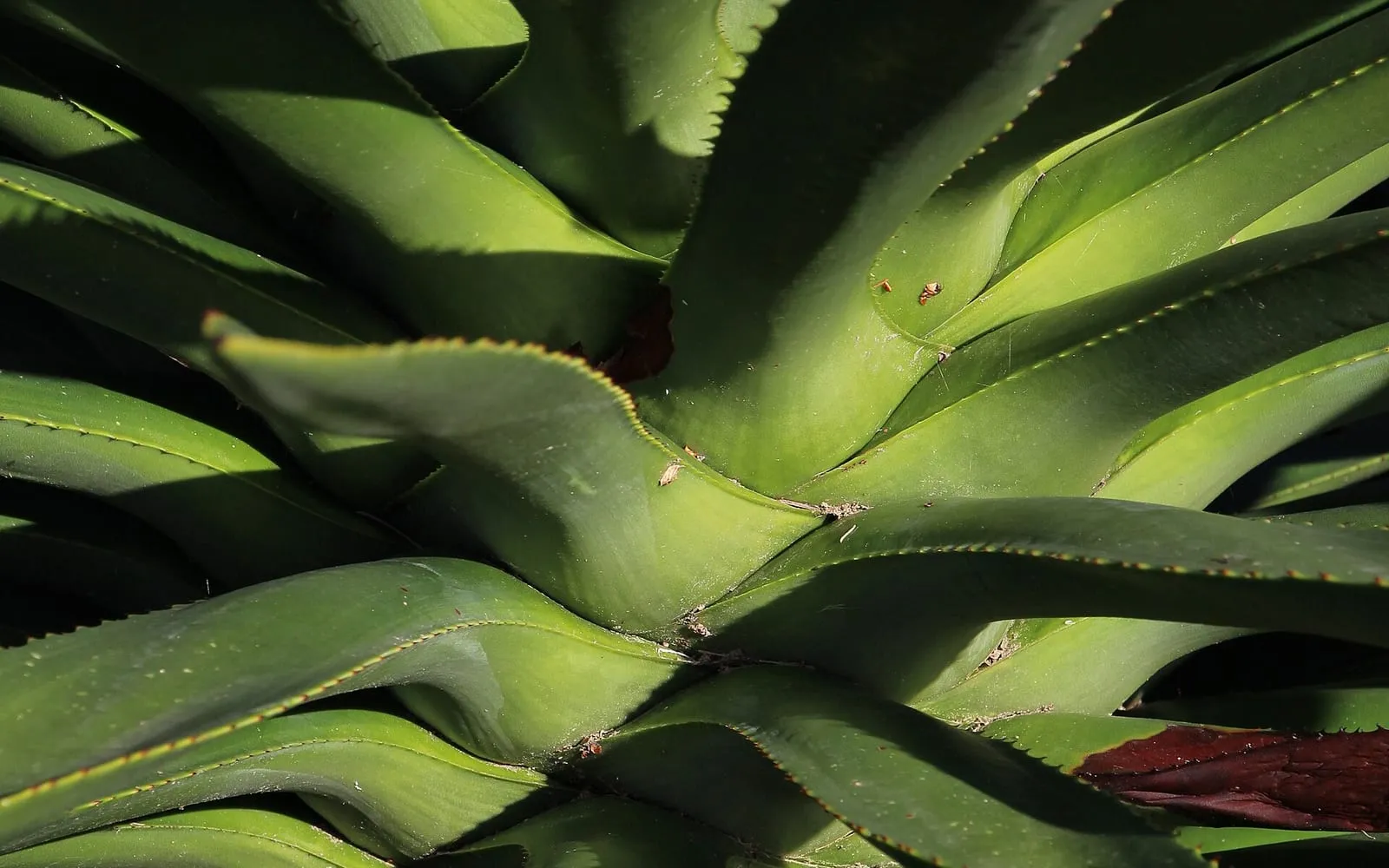
The leaves are long, gently arching and a glossy mid-green, broader than the grey desert agaves and less rigid. Their margins carry hooked, recurved teeth that catch on clothing and skin, and each blade ends in a short, sharp terminal spine.
As lower leaves die and drop, a true trunk develops beneath the rosette, so an old plant stands well clear of the ground on a woody stem. Offsets crowd the base and along the trunk, building the clump that lets the species colonise coastal sand.
It flowers once and then dies, sending up a tall branched stalk of greenish-yellow blooms after many years, with the offsets carrying on afterwards. A potted plant rarely flowers, and the arching green rosette on its lengthening trunk is the main attraction.
Where it is from
Shell middens, dune scrub and the fringes of tropical hammocks along the Florida coast are its native habitat, and its range continues into the Caribbean. The air is warm and moist, the porous, sandy soil lets water through at once, and frost is rare.
Its care is simple. Give it a bright spot and a compost that drains freely. It tolerates a little more air moisture than a true desert agave, but a chilled, waterlogged pot causes rot. Keep it warm and bright, in a mix that never clogs.
How it grows
Across the warm season the leaves lengthen and fresh pups appear low down, then growth slows as daylight retreats. Bright light keeps the blades broad and arching and helps the trunk lengthen; poor light thins them, slackens them and stalls the stem.
Because a trunked specimen grows top-heavy, pot it into a gritty, free-running compost in a solid, weighty container. Then water only when the surface has gone dry. The fleshy leaves carry a reserve, so a short dry spell is safer than lasting wet around the roots.
Kept above about 5 deg C it stays in growth. Since the runners root as they touch the compost, prising off a rooted pup is the easiest way to raise another plant.
Through the seasons
Spring starts new growth as light strengthens. Water more generously again and pot up any spare pups.
Summer is the strongest growth period. Once the surface dries, water, and keep the rosette in strong light.
Autumn slows growth. Cut back the feed and let the compost dry longer between drinks.
Winter is a slower period. Water only now and then, and keep it clear of cold and wet.
Care difficulty
Easy, and quick to build a clump where light and drainage suit it. It pups, stores water, and barely needs feeding. The main risk is a chilled, saturated pot rotting the roots, so keep it dry in winter, and the hooked teeth catch on clothes and skin, so keep it away from paths and chairs.
Watering
Let the top few centimetres dry, then pour water through until it drains from the base. The leaves hold their own supply, so a dry interval is safe, whereas roots left sitting wet begin to rot.
Reduce watering sharply for winter, when a cold, sodden root zone is most dangerous. Take the timing from the compost, since a soaking harms this plant far more than a dry spell.
Warning signs, diseases and pests
Rot from a chilled, waterlogged root run shows itself as a soft patch at the base of the trunk or a rosette that lifts loose in its pot. Improve the drainage, water far less, especially through the cold, and keep it warm and well lit.
Mealybugs hide in the leaf bases and among the pups, and spider mites appear in dry air. Search the crevices and along the stem, and treat any early colony by wiping it off.
Brown tips usually point to dry air or uneven watering. A little more humidity and steadier watering should improve the foliage.
Growing environment
Bright light is the first requirement. In it the leaves stay broad and arch well, and the trunk lengthens; without it they slump and the stem stalls.
Being a frost-tender coastal plant it needs warmth, above about 5 deg C, and shelter from cold draughts. A bright room or a sunny sill suits it, and it can spend a warm, sheltered summer outside.
Plant it in a light, gritty, quick-draining compost in a heavy pot that steadies the top-heavy trunk. Lift it by the container so the hooked teeth stay off your hands.
Feeding
One or two feeds of a weak, balanced mix over the growing months keep the clump vigorous. Overdo it and the leaves grow soft and over-long, so keep the strength low.
Give nothing in winter. Fresh gritty compost after a repot supports a new plant, so feeding can wait for warmer weather.
Troubleshooting
Why is my false sisal soft at the base? A chilled, wet root run. Improve the drainage, water much less, and keep it warm.
How much light does it need? All the bright light you can give. Shade slumps the leaves and stalls the trunk.
How often should I water it? Once the top has dried, and only sparingly in winter, going by the compost.
How do I propagate it? Prise a rooted pup off the base or trunk and grow it on.
Is it safe around pets? No. The sap irritates skin and mouth and the ASPCA lists Agave as toxic to cats and dogs, so keep it away from pets that chew and watch the hooked teeth and tip.
False Sisal problem guides
Not sure what is wrong? See the common houseplant pests guide.