
Houseplant
Golden Disa
Disa cornuta
Also known as Disa cornuta
How to grow Disa cornuta, the golden disa, a stout southern African orchid named for the hooded upper sepal with its backward spur.
At a glance
- Difficulty
- Difficult
- Water
- Evenly moist in growth; ease off for any rest
- Light
- Bright indirect light
- Temperature
- Cool; dislikes heat, keep frost-free
- Humidity
- High
- Hardiness
- USDA 9-11, RHS H2, hardy to 2 C
- Type
- Perennial
- Height
- 20-50 cm
- Native to
- southern Africa
A cool-growing southern African terrestrial orchid, found in both winter-rainfall Cape fynbos and summer-rainfall high grassland from the Drakensberg to Lesotho. It grows cool, dislikes heat and is kept frost-free, taking a dry rest when the top growth dies back. Give it bright filtered light, an open root run and even moisture in growth.
Hardiness zones describe winter cold alone. Summer heat, humidity, rainfall and the length of the growing season decide as much, so treat the range as the outer limit rather than as a recommendation.
Not known to be toxic
Disa cornuta, the golden disa, is not recorded among the seriously toxic plants, and related plants in its group are not listed as toxic by the ASPCA or the RHS. A pet or child that chewed a leaf would be unlikely to suffer more than a possible mild stomach upset.
Sources: ASPCA toxic and non-toxic plants, RHS potentially harmful garden plants
About
Disa cornuta is one of the stronger and more widespread members of its genus, ranging across the grasslands and mountain slopes of southern Africa rather than staying in a single Cape valley. The Latin name means horned and refers to the prominent hooded upper sepal with its backward spur. Gardeners know it as the golden disa for the greenish-gold and purple-brown colour of its densely packed spike. It is a stout tuberous terrestrial, taller and more substantial than many relatives, and it carries a heavy scent that pollinating insects find attractive and human noses often find rank. Because it is more adaptable than the streamside disas, a few specialists grow it in pots, but it remains a plant for experienced growers. The notes here focus on identifying it and following its seasonal rhythm.
Appearance and character
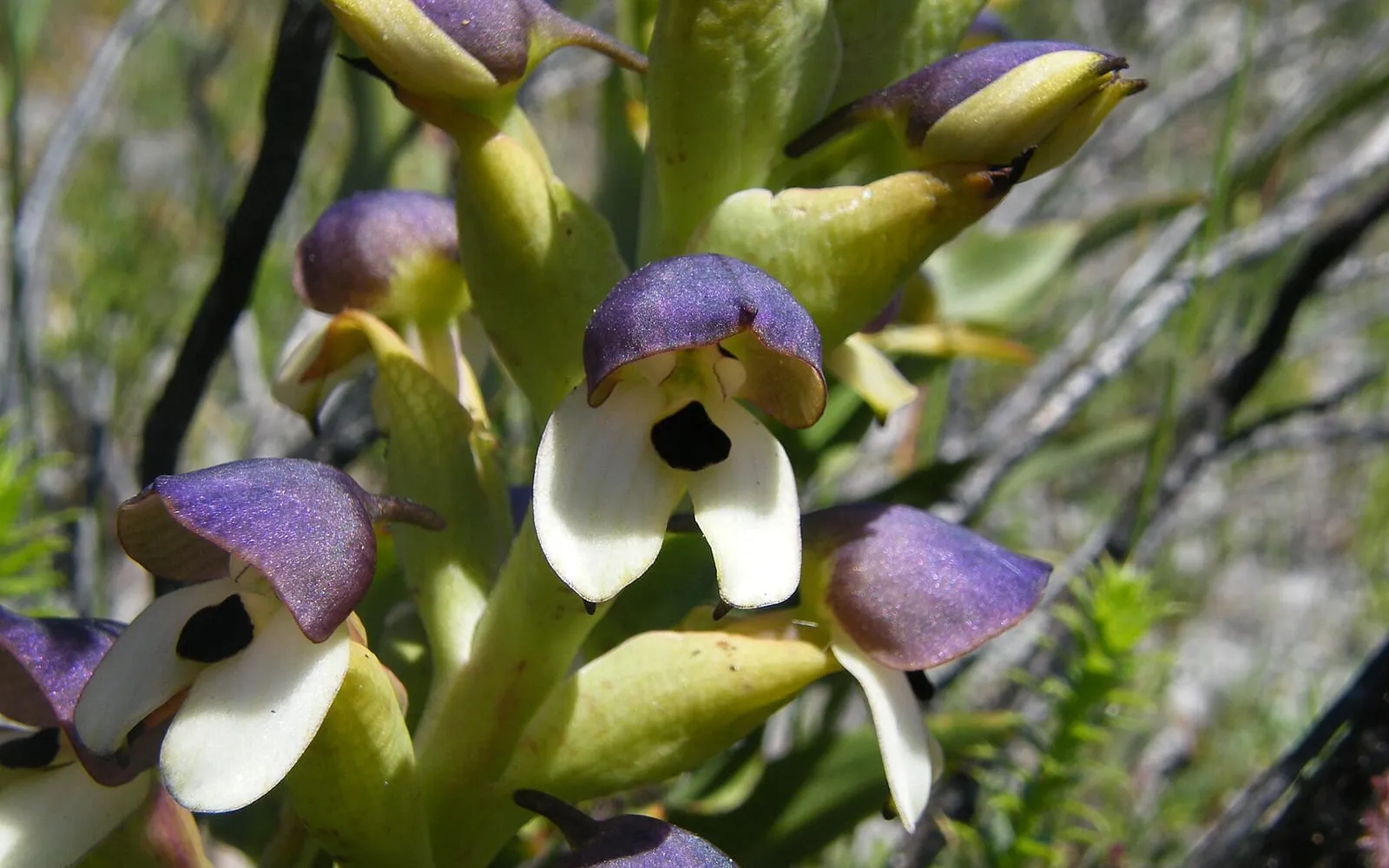
A mature plant sends up a thick leafy stem topped by a crowded conical to cylindrical head of hooded flowers. Each bloom is built around a large helmet-shaped sepal, greenish outside and often flushed with maroon or purple-brown, while the small lip is frequently paler or white-margined, giving the spike a two-tone look at close range. The inflorescence is solid for a disa. Broad channelled leaves cover the lower stem and form a basal group, greyish-green and rather fleshy, and the plant’s size makes it stand out among the finer grasses and restios of its habitat.
Where it is from
The species is native across southern Africa, from the Cape northward through the grassland regions, and it grows on slopes, in seasonally damp grassland and among fynbos, tolerating a wider spread of conditions than most disas. Across that range it grows in summer-rainfall grassland in some areas and winter-rainfall fynbos in others, and local plants time their growth to whichever pattern their region follows. This flexibility over such a large territory is part of what makes it more forgiving than its narrowly endemic cousins, though it still needs a clear alternation of a moist growing season and a drier resting one.
How it grows
Growth starts from an underground tuber that is renewed each year. In the growing season the plant builds a leafy stem and replenishes its tuber, then produces the tall dense spike, sets seed and dies down to rest. Established clumps can slowly increase by producing offset tubers, giving a grower more to work with than species that multiply less readily. Seed remains fine and dependent on soil fungi for germination in nature, so raising plants from it outside a laboratory is difficult, and division of the dormant tubers is the practical route to more plants.
Through the seasons
Start of the growing season, whether that falls with summer rains or winter ones for a given plant’s provenance, is when watering resumes and the plant needs strong light.
Full growth is the leafy phase; keep the free-draining medium evenly moist and let the stout stem and foliage develop.
Flowering follows as the season matures, the tall scented spike rising above the leaves and lasting some weeks.
Rest arrives as the foliage yellows; withhold water and let the tuber sit dry and cool until its growing season comes round again.
Care difficulty
Although tougher than the blue and red disas, this is still a difficult plant for anyone without experience of Cape and grassland terrestrials. It needs strong light, very sharp drainage, soft water and a distinct dry rest, and it responds poorly to constant warm wetness at the tuber. The practical difficulty is matching its seasonal cycle to a northern-hemisphere calendar and resisting the urge to keep it growing and watered year round, which slowly exhausts and rots it. Given its natural rhythm and a lean gritty pot, it is one of the more achievable disas, but the genus is difficult overall.
Watering
Water in step with the plant’s growing season and withhold water during its rest. The tuber’s provenance decides which months those are. During active growth, keep the gritty medium moist but always fast-draining, using rainwater or another low-salt source to avoid the minerals that hard water leaves behind. Reduce watering as the flowers fade and the leaves begin to yellow, then keep the pot nearly dry through dormancy, giving only enough occasional moisture to stop the tuber shrivelling completely.
Warning signs, diseases and pests
Soft rotten tubers and blackened roots usually mean the medium stayed wet through the rest period. Use a coarser mix and keep the tuber drier during dormancy. Thin, drawn growth and no flowers point to weak light or an interrupted rest. Aphids gather on the tall soft flower spike under glass, while mealybugs and scale hide in the leaf bases and spider mites appear when air is hot and dry. Pick off or wash away light infestations, treat heavier ones with a suitable control, and keep the air moving to suppress most pests before they build.
Growing environment
Keep it bright and airy. This sun-loving plant of open country needs the strongest light short of scorching, together with good ventilation and cool nights. A well-ventilated greenhouse or a bright cool room suits its growing season, and its roots should be kept cool rather than baked on a heated surface. Pot it in a lean, sharply drained mix of coarse sand, grit and a little fibre, packed loosely, so that surplus water drains away at once and the tuber never sits in standing wet.
Feeding
Keep feeding light. The grassland and fynbos soils it grows in are not rich, so a very dilute balanced feed applied once or twice during active growth is plenty. Overfeeding leaves harmful salt residues and pushes soft, rot-prone tissue. During dormancy the plant feeds on its stored reserves and takes nothing from the pot, so feeding stops until growth resumes.
Troubleshooting
Why does my golden disa smell unpleasant? The heavy scent is natural and draws its pollinators; a strong or slightly rank odour from the spike is normal for the species.
Is a summer-dormant plant dead? Not if the tuber is firm. Match the rest to its provenance, keep it dry and cool, and it will regrow at the right time.
Which water should I give? Rainwater or reverse-osmosis water, since hard tap water gradually damages the roots.
How can I get more plants? Divide firm offset tubers when dormant; seed needs specific fungi and rarely germinates in ordinary conditions.
Does it pose a toxicity risk? The genus carries no record of serious toxicity. Keep pets from chewing it as a sensible precaution.
Golden Disa problem guides
Not sure what is wrong? See the common houseplant pests guide.