
Edible
Ginger
Zingiber officinale
Also known as Common ginger, Root ginger
How to grow ginger, Zingiber officinale. Starting a supermarket rhizome, the warmth and humidity it needs indoors, and harvesting after eight months.
At a glance
- Difficulty
- Moderate
- Water
- Regular through the growing season, and almost none in dormancy
- Light
- Bright indirect light, out of direct midday sun
- Temperature
- 20 to 25 deg C in growth, and never below 10 deg C
- Hardiness
- USDA 9-12, RHS H1c, hardy to 10 C
- Type
- Rhizomatous perennial, dying back to the rhizome each winter
- Height
- 60-100 cm
- Native to
- Maritime south-east Asia, and known only in cultivation
- Best month
- March in the Northern Hemisphere, September in the Southern Hemisphere
Wet tropical Asia, on a monsoon cycle. The foliage dies back for a dry rest and the rhizome carries the plant through, which is why it can be grown as a lifted annual well outside the tropics wherever eight to ten warm months are available.
Hardiness zones describe winter cold alone. Summer heat, humidity, rainfall and the length of the growing season decide as much, so treat the range as the outer limit rather than as a recommendation.
Every month named in this guide is for the temperate Northern Hemisphere. If you garden in the Southern Hemisphere, shift each one by six months, so March becomes September. Closer to the equator the wet and dry seasons matter more than the calendar, and the shift stops being a useful guide.
Not known to be toxic
Ginger is a food and a spice and carries no toxicity concern in normal use. It is not listed by the RHS as a potentially harmful garden plant, and the ASPCA lists Zingiber officinale as non-toxic to cats, dogs and horses, which is unusual and useful to know for a houseplant. It has an extremely long record of safe culinary and medicinal use. Two points are worth recording for anyone using it medicinally in quantity rather than as a spice. Ginger has a mild antiplatelet effect and high supplement doses may add to the effect of anticoagulant medication, which is worth raising with a doctor. Large quantities cause heartburn in some people. Neither applies to cooking with it. The fresh sap causes mild skin irritation in a small number of people. Where a plant is positively assessed as non-toxic, as this one is, the position is straightforward.
Sources: RHS potentially harmful garden plants, ASPCA toxic and non-toxic plants
About
You can grow ginger from a piece bought in a supermarket, and it takes most of a year.
Choose a plump firm rhizome with visible growth buds, which look like small pale horns at the ends of the fingers. Some imported ginger is treated with a sprouting inhibitor, so if a piece does nothing after a month, try another source or buy organic, which is usually untreated.
From there it wants warmth and patience. Ginger is a tropical plant and it needs 20 to 25 deg C to grow at all, so a windowsill in April is too cold and a heated propagator or an airing cupboard is what gets it started.
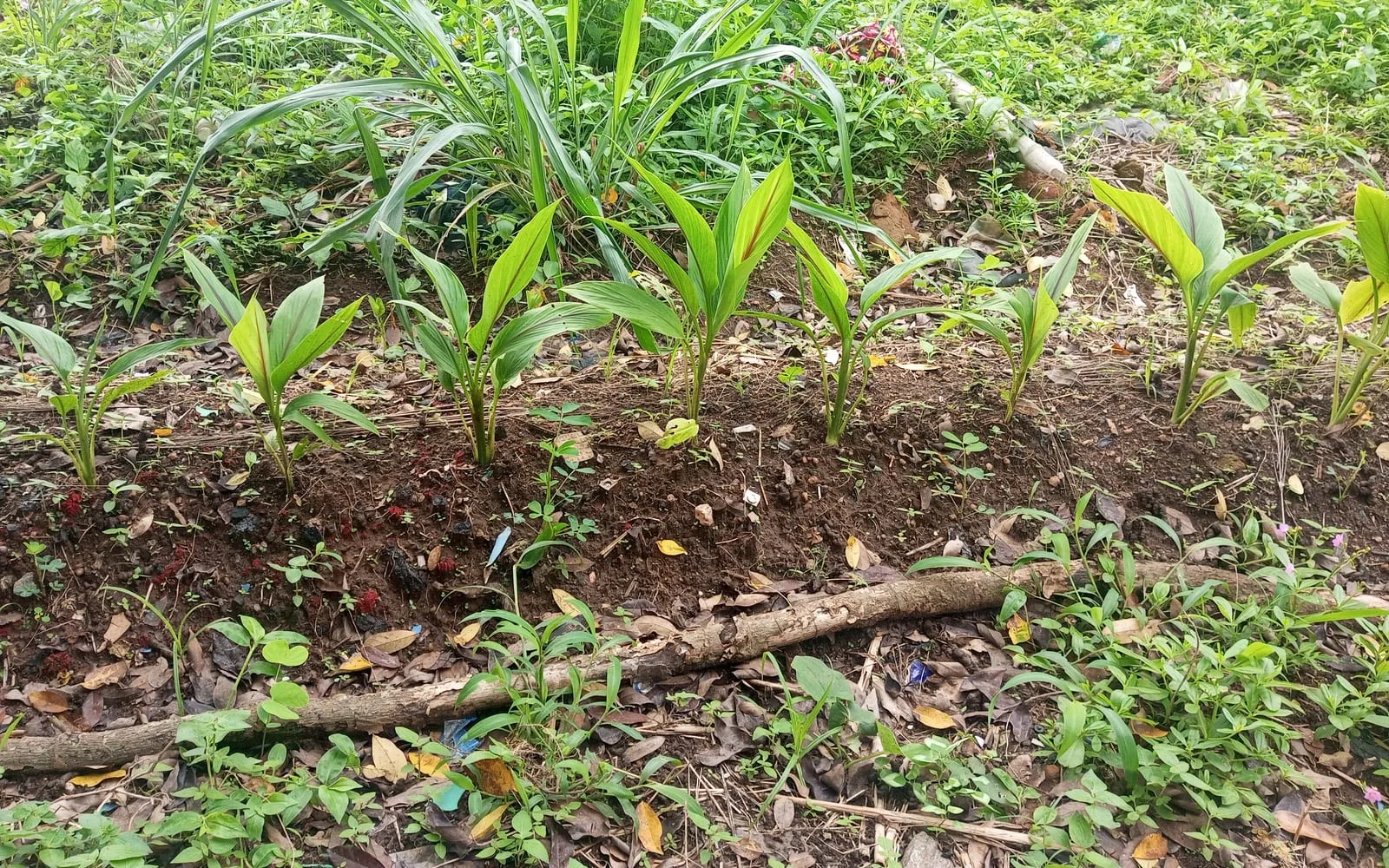
Grown in a large pot indoors or in a greenhouse it makes a handsome plant, with upright reed-like stems and glossy strap leaves reaching a metre, and it is worth having on that basis alone.
The harvest comes after eight to ten months, when the foliage yellows and dies down. Tip the pot out and you have a hand of fresh ginger, more aromatic and less fibrous than anything in a shop, and pieces to replant for next year.
Baby ginger, harvested at four or five months while the skin is still thin and pink-tinged, is a different thing again and does not need peeling.
Appearance and character
A rhizomatous perennial reaching 60 cm to 1 m indoors, dying back to the rhizome each winter.
The rhizome is the crop. Fleshy, branching into finger-like sections, buff-skinned with pale yellow aromatic flesh, and it expands outwards from the piece planted.
Stems are upright, slender and reed-like, and each is made of the rolled bases of the leaves rather than being a true stem.
Leaves are narrow and strap-shaped, 15 to 30 cm long, glossy mid-green, arranged in two ranks along the stem.
Flowers are rarely produced outside the tropics. In the tropics ginger throws a separate short stem carrying a cone of green bracts with small yellow and purple flowers.
New growth buds appear as pale pointed horns at the tips of the rhizome fingers.
The plant is dormant from autumn to spring, with no growth above ground.
Ornamental gingers such as Hedychium are related and grown for flowers, and they are different plants from the culinary species.
Where it is from
Maritime south-east Asia, and it is known only in cultivation with no confirmed wild population, which means it was domesticated long enough ago for the wild ancestor to be lost or unidentified.
It has been cultivated in India and China for several thousand years and was one of the earliest spices traded westwards.
Ginger reached the Roman world through the spice routes and was known in England by the Anglo-Saxon period, and by the middle ages it was among the most commonly used spices after pepper.
The Spanish took it to the Caribbean in the sixteenth century, and Jamaica became a major producer.
India now grows the largest quantity, and Nigeria, China and Indonesia are also major producers.
The heat comes from gingerol in the fresh rhizome, which converts to the sharper shogaol when dried and to milder zingerone when cooked, which is why dried, fresh and cooked ginger taste so different.
It is in Zingiberaceae alongside turmeric, cardamom and galangal, all of which are grown the same way and all of which can be started from a supermarket rhizome.
How it grows
Buy a plump firm rhizome with visible growth buds, from a supermarket, a greengrocer or a specialist supplier. Organic ginger is less likely to have been treated with a sprouting inhibitor.
Soak the rhizome overnight in tepid water before planting, which helps break dormancy and washes off any treatment.
Cut it into pieces 4 to 5 cm long, each with at least one growth bud, and leave the cut surfaces to dry for a day or two so they callus.
Start it in late winter or early spring, from February to April.
Plant each piece in a shallow tray or a pot of moist free-draining compost, laid horizontally with the buds pointing upwards and covered by 2 to 3 cm.
Keep it at 20 to 25 deg C until it sprouts, which takes two to eight weeks. A heated propagator is the reliable method, and an airing cupboard or the top of a boiler works.
Keep the compost just damp rather than wet during this stage, since a rhizome in cold wet compost rots.
Pot up once shoots appear, into a wide shallow container rather than a deep one, since the rhizome spreads sideways. A 30 cm pot suits one piece.
Use a rich free-draining compost with added grit or perlite.
Grow it in bright indirect light, out of direct midday sun which scorches the leaves.
Keep it warm and humid. A conservatory, a heated greenhouse or a bright warm room suits it, and standing the pot on a tray of damp pebbles helps with humidity.
Water regularly through the growing season, keeping the compost damp without waterlogging.
Mist the foliage in dry indoor air, which discourages red spider mite.
Feed fortnightly from May to September with a balanced liquid feed.
Top-dress with fresh compost through the season as the rhizome expands and pushes upwards.
Harvest baby ginger at four or five months by digging carefully at the edge of the pot and cutting off a piece, leaving the rest to grow on.
Harvest the main crop after eight to ten months, when the leaves yellow and die down. Reduce watering as they yellow, then tip the whole pot out.
Save several pieces with good buds and start them again in spring.
Store the harvested rhizome in the fridge for a few weeks, or freeze it whole and grate it from frozen.
Through the seasons
Winter is dormancy. Keep the rhizome dry and warm, above 10 deg C, and start new pieces from February.
Spring is when the pieces are started in warmth, and shoots appear over the following weeks.
Summer is the main growing period, needing warmth, humidity, regular water and fortnightly feeding.
Autumn the leaves yellow and die back, watering is reduced, and the crop is harvested from October onwards.
Care difficulty
Moderate. Ginger is not fussy about anything except temperature.
Below about 15 deg C it stops growing, and below 10 deg C it deteriorates. A cool room or an unheated greenhouse will not produce a crop.
Getting it started needs bottom heat, and everything after that is warmth, water, humidity and feeding.
Overwatering during dormancy or before the shoots appear is the commonest way a rhizome is lost.
The other difficulty is patience. Eight to ten months from planting to harvest is a long time to give a windowsill over to one pot.
Watering
Keep the compost just damp during sprouting, since a rhizome sitting in wet cold compost rots.
Water regularly through the growing season from late spring to early autumn, keeping the compost damp without waterlogging.
Never let it stand in a saucer of water.
Reduce watering sharply as the leaves yellow in autumn, and keep the rhizome almost dry through dormancy.
Mist the foliage in dry indoor air, or stand the pot on a tray of damp pebbles, since ginger wants humidity and central heating removes it.
Use tepid water rather than cold.
Warning signs, diseases and pests
A rhizome doing nothing for a month or more is either too cold or treated with a sprouting inhibitor. Provide 20 to 25 deg C of bottom heat, and try an organic rhizome from a different source if it still does nothing.
A rhizome going soft, brown and smelling unpleasant is rot, from overwatering or cold. There is no recovery.
Leaves browning at the tips and edges is dry air. Increase humidity by misting or standing the pot on damp pebbles.
Fine mottling on the leaves with faint webbing is red spider mite, which thrives in dry indoor air. Raise the humidity and use a biological control.
Leaves yellowing in autumn is normal die-back and the signal to reduce watering and harvest.
Leaves yellowing in midsummer is usually overwatering, cold, or a shortage of feed.
Scorched pale patches on the leaves is direct midday sun. Move it into bright indirect light.
Growth stopping entirely in summer is usually temperature. Ginger needs above 20 deg C to grow properly.
Growing environment
Bright indirect light, out of direct midday sun.
Rich, free-draining, moisture-retentive compost with added grit or perlite, in a wide shallow container rather than a deep one.
20 to 25 deg C during growth, and never below 10 deg C. This is the requirement that decides whether it works.
A conservatory, a heated greenhouse, a warm bright bathroom or a windowsill in a heated room all suit it.
Allow a 30 cm pot per piece of rhizome, and repot or top-dress as it spreads.
It is not a plant for a cool temperate garden outdoors, and a pot can go outside in a sheltered sunny spot through July and August in a warm summer.
Grow turmeric, cardamom or galangal alongside it, all of which are in the same family, start the same way from a supermarket rhizome and want identical conditions.
The ASPCA lists it as non-toxic to cats and dogs, which makes it one of the safer houseplants for a household with animals.
Feeding
Feed fortnightly from May to September with a balanced liquid feed.
Switch to a high-potash feed in late summer, which helps the rhizome bulk up.
Do not feed during dormancy or before the shoots appear.
Top-dress with fresh compost through the growing season as the rhizome expands upwards.
Rich compost at potting matters more than heavy feeding afterwards.
Troubleshooting
Can I grow it from a supermarket rhizome? Yes, and that is the usual way. Choose a plump firm piece with visible pale growth buds, and buy organic where you can, since some imported ginger is treated with a sprouting inhibitor.
Nothing happened after a month. Either it is too cold or the rhizome has been treated. Provide 20 to 25 deg C of bottom heat, and try a different source or an organic rhizome.
How long until I can harvest? Eight to ten months for a full crop, when the leaves yellow and die down. Baby ginger can be dug at four or five months.
What temperature does it need? Above 20 deg C to grow properly and never below 10 deg C. A cool room or an unheated greenhouse will not produce a crop.
The rhizome went soft and smelly. Rot from overwatering or cold. There is no recovery. Keep the compost just damp rather than wet, especially before the shoots appear.
What pot should I use? A wide shallow one rather than a deep one, since the rhizome spreads sideways. Around 30 cm across per piece.
The leaf tips are going brown. Dry indoor air. Mist the foliage or stand the pot on a tray of damp pebbles.
Can I grow it outside? Not in a cool temperate climate. A pot can go outside in a sheltered sunny spot through July and August in a warm summer, and it belongs indoors the rest of the time.
Is it safe around pets? Yes. The ASPCA lists ginger as non-toxic to cats, dogs and horses, which is unusual among houseplants.
Ginger problem guides
Not sure what is wrong? See the common vegetable pests guide.