
Houseplant
Fire Star Orchid
Epidendrum radicans
Also known as Reed orchid
How to grow fire star orchid as a houseplant or in a warm garden. Its reed-like canes, clusters of orange-red flowers, and why cuttings root so easily.
At a glance
- Difficulty
- Moderate
- Water
- Regular watering in the growing season, reduced in winter
- Light
- Bright light, several hours of direct sun
- Temperature
- 15-30 deg C, avoid below 10 deg C
- Humidity
- Moderate, 40 percent or more
- Hardiness
- USDA 9-11, RHS H2, hardy to 5 C
- Type
- Evergreen terrestrial perennial orchid
- Height
- 50-150 cm
- Native to
- Mexico, Central America
Tender to real frost but noticeably more tolerant of ordinary garden conditions than most orchids, since it can be grown in open, free- draining soil rather than needing specialist orchid compost. It is grown outdoors year round only in a frost-free or nearly frost-free climate, and as a container plant, brought under cover for winter, everywhere colder.
Hardiness zones describe winter cold alone. Summer heat, humidity, rainfall and the length of the growing season decide as much, so treat the range as the outer limit rather than as a recommendation.
Not known to be toxic
Fire star orchid has no toxicity listing from the RHS or the ASPCA and is considered safe around pets and children. There is no documented history of poisoning associated with this species.
Source: RHS
About
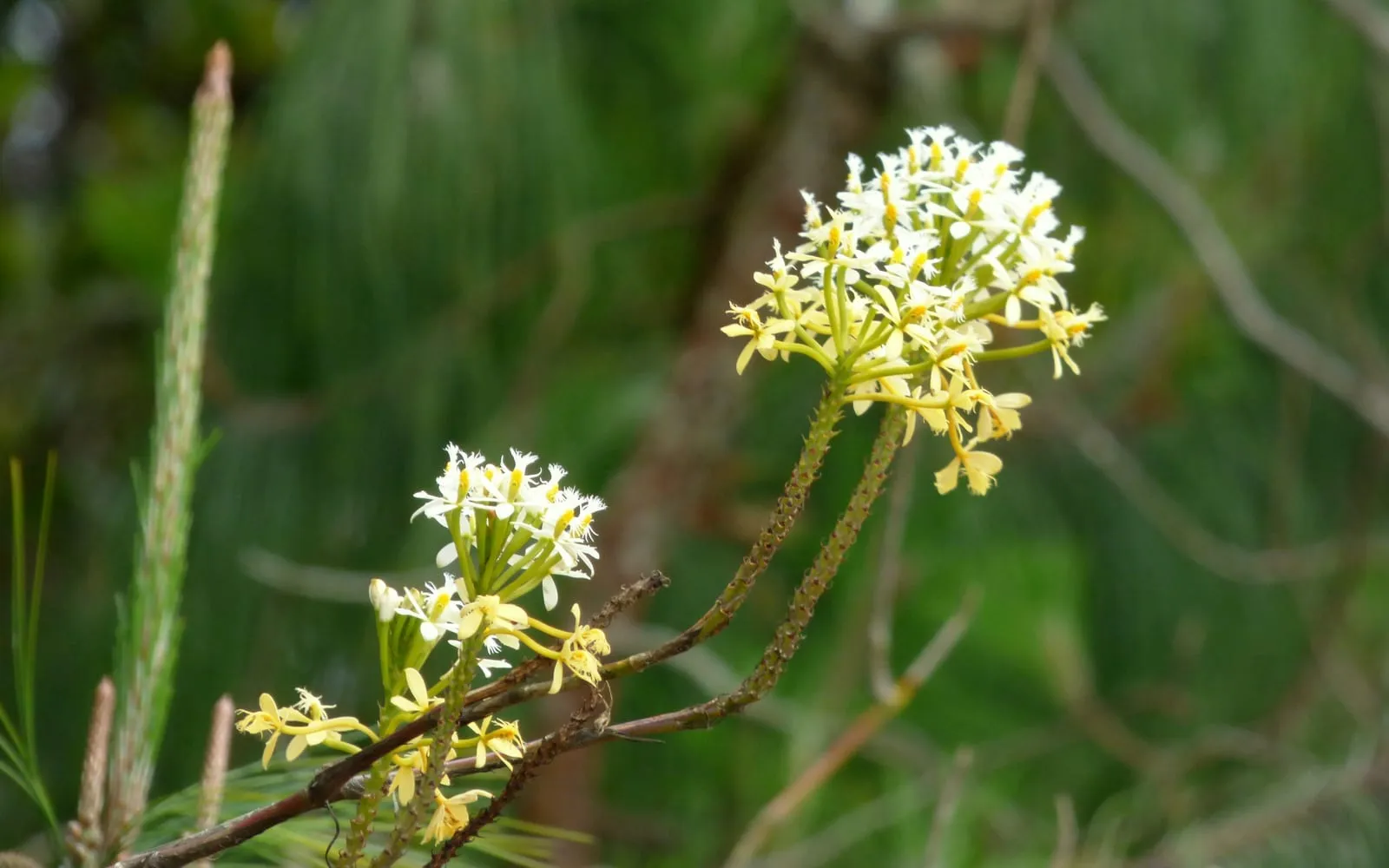
The fire star orchid is one of the more approachable and vigorous terrestrial orchids in cultivation, growing on tall, reed-like canes that root readily wherever they touch soil and topped with dense, rounded clusters of small, star-shaped flowers in vivid orange-red, sometimes yellow. It behaves less like the delicate, particular orchids many people picture and more like a tough, fast-growing perennial, which has made it a popular choice for a warm garden bed as much as a container.
Its species name radicans, meaning rooting, refers directly to its habit of producing roots along the length of its canes wherever they touch moist soil, a trait that makes propagation from cuttings unusually easy compared with most other orchids.
Appearance and character
Tall, slender, reed-like canes carry narrow, fleshy leaves along their length and produce roots at intervals wherever a cane bends down and touches the growing medium, gradually building a sprawling clump from a single starting cane. Each cane is topped with a dense, rounded cluster of small, star-shaped flowers, typically a vivid orange-red, occasionally yellow or other shades in selected forms.
Flowering is not confined to a single season on a well-established, mature plant; established clumps in a warm climate or a consistently warm indoor spot can produce flower clusters more or less continuously, with new canes reaching flowering size at different times.
Where it is from
Open, sunny ground and forest edges across Mexico and Central America, often in disturbed or roadside habitats rather than deep forest, reflecting an especially adaptable, opportunistic species rather than one tied to a narrow, specific microhabitat.
That adaptability to a range of open, sunny conditions explains why this species tolerates ordinary garden soil and general growing conditions far better than most other orchids, which typically demand a specialist bark mix and much more particular care.
How it grows
Canes extend from the tip while also rooting along their length wherever they touch the growing medium, a habit that lets a single planted cutting spread and cover considerable ground over a few growing seasons in a suitable warm climate. New canes also arise from the base, gradually building a dense clump of canes at various stages of growth and flowering.
Because rooting happens so readily along the canes, propagation is straightforward: a cane cutting with even a few nodes, placed on or lightly buried in moist growing medium, typically roots and establishes as a new plant within a matter of weeks.
Through the seasons
Spring growth resumes strongly as temperatures rise, with new canes extending and rooting readily.
Summer is the main growing and flowering season, with clusters of orange-red flowers appearing on canes that have reached maturity. Water regularly and feed every second watering.
Autumn growth slows as temperatures drop, though flowering may continue given sufficient warmth.
Winter in anything but a frost-free climate, bring container-grown plants under cover and reduce watering; outdoor plantings in a suitable climate continue with minimal change.
Care difficulty
Moderate, and much easier in practice than most other orchids thanks to its tolerance of ordinary growing conditions and general potting or garden soil. The main task is managing its vigorous, sprawling growth habit rather than meeting any particularly delicate requirement.
Watering
Keep the growing medium evenly moist through the growing season, avoiding both prolonged drought and waterlogged conditions. Reduce watering somewhat over winter, particularly for a container plant brought indoors, though this species does not need the more pronounced dry rest some other orchids require.
Warning signs, diseases and pests
Aphids occasionally colonise soft new growth and flower clusters, and are dislodged easily with a jet of water. Scale insects can appear on the canes and are treated with careful manual removal or a horticultural soap for heavier infestations. Spider mites occasionally appear in warm, dry conditions, showing as fine speckling on the leaves.
Leggy, sparse growth with fewer flowers than expected usually indicates insufficient light, since this species flowers best with several hours of direct sun each day, more than many other commonly grown orchids tolerate or need. Canes that flop over and root readily wherever they touch soil are exhibiting entirely normal behaviour rather than a problem, and can be left to spread or trimmed back to control the clump’s size.
Growing environment
Bright light with several hours of direct sun supports the best, most compact flowering growth; in shade the canes stretch and flower less freely. Free-draining soil, whether a general orchid mix in a container or open garden soil in a suitably warm climate, suits this adaptable species well.
Feeding
A balanced orchid or general-purpose fertiliser at half strength, applied every second watering during active growth, supports vigorous cane and flower production. This species tolerates a somewhat less specialised feeding regime than many other orchids, in keeping with its overall tolerance of ordinary growing conditions.
Troubleshooting
Growth is leggy with few flowers. Usually insufficient light. Move the plant to a sunnier spot, or plant it somewhere with several hours of direct sun if grown outdoors.
Canes have flopped over and rooted into the soil. This is normal behaviour for the species rather than a problem. Leave rooted sections to grow on as part of an expanding clump, or trim and remove them if the spread needs to be controlled.
You want to propagate new plants from an existing clump. Cut a section of cane with a few nodes, place it on or lightly bury it in moist growing medium, and expect roots to develop within a few weeks given warmth and consistent moisture.
A container-grown plant has struggled after being moved outdoors for summer. Acclimatise it gradually to stronger light and any temperature swing rather than moving it outdoors all at once, since a sudden change in conditions can check growth temporarily even in this generally tough species.
You want to grow this species as a garden bed edging plant. In a frost-free climate it works well planted directly into open, free- draining soil along a sunny border edge, where its sprawling, rooting canes knit together into a low, colourful mass over a couple of seasons with very little maintenance beyond an occasional trim.
Fire Star Orchid problem guides
Not sure what is wrong? See the common houseplant pests guide.