
Houseplant
Early Marsh Orchid
Dactylorhiza incarnata
Also known as Dactylorhiza incarnata
How to grow Dactylorhiza incarnata, the early marsh orchid, a flesh-pink orchid of fens and wet meadows that needs permanently wet, lime-rich ground.
At a glance
- Difficulty
- Difficult
- Water
- Evenly moist in growth; ease off for any rest
- Light
- Bright indirect light
- Temperature
- Very hardy; needs a cold winter rest
- Humidity
- High
- Hardiness
- USDA 3-7, RHS H7, hardy to -25 C
- Type
- Perennial
- Height
- 20-50 cm
- Native to
- Europe, western Asia
A very hardy fen and wet-meadow orchid of Europe and western Asia, which takes hard winter cold without harm. The zone numbers leave out its need for ground that stays wet through the growing season, its soil fungus partner and its dislike of acid soil. A fall in the water table or a hot, dry summer harms it far more than frost does.
Hardiness zones describe winter cold alone. Summer heat, humidity, rainfall and the length of the growing season decide as much, so treat the range as the outer limit rather than as a recommendation.
Not known to be toxic
Dactylorhiza incarnata, the early marsh orchid, is not recorded among the seriously toxic plants, and related plants in its group are not listed as toxic by the ASPCA or the RHS. A pet or child that chewed a leaf would be unlikely to have more than a possible mild stomach upset.
Sources: ASPCA toxic and non-toxic plants, RHS potentially harmful garden plants
An orchid of wet ground
Dactylorhiza incarnata belongs to the fens, marshes, wet meadows and damp dune hollows of Europe and western Asia, where its flesh-pink spikes grow in wet ground that many garden plants cannot tolerate. It is one of the marsh orchids, a group known for hybridising and varying, and it is among the first of them to flower, often in late spring before summer growth fills the marsh. The Latin incarnata, meaning flesh-coloured, describes the typical soft salmon-pink of its blooms, though the species appears in a range of shades.
What to look for
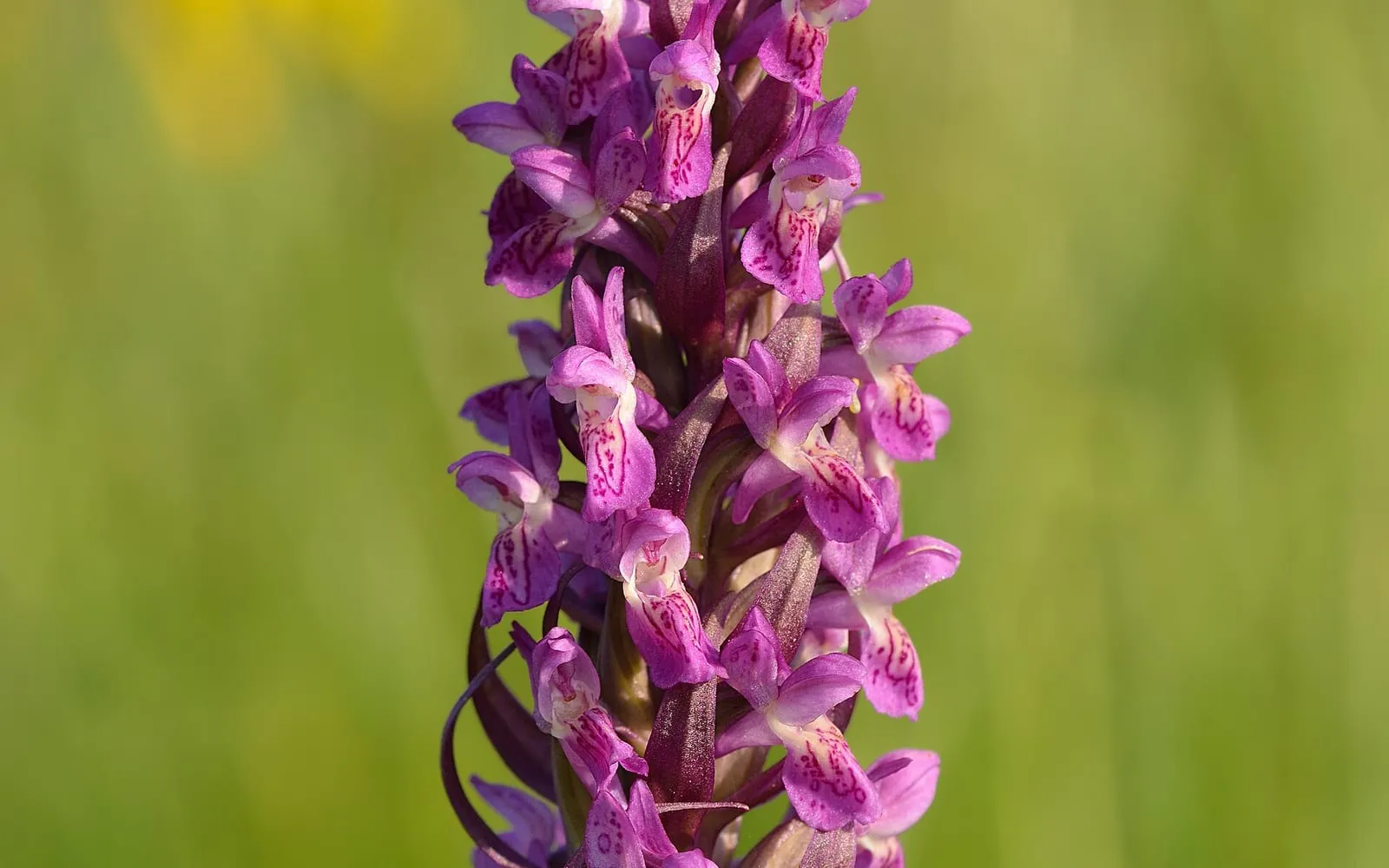
The plant is stout and upright, with a hollow stem, a feature that helps separate it from its relatives, and narrow, keeled, yellowish-green leaves that are usually plain and hooded at the tips. The flower spike is dense and cylindrical. Each small flower has an unlobed or shallowly lobed lip whose sides fold back, marked with a distinctive doubled loop of fine crimson lines around a central patch. Colour varies widely between subspecies, from the pale flesh-pink of the type through brick-red coastal forms to creamy yellow ones, which is one reason marsh orchids are hard to identify.
Where it lives
This orchid needs permanently wet, base-rich ground: alkaline fens fed by lime-rich water, calcareous flushes, wet meadows, marshy field corners and the damp slacks between coastal sand dunes. It will not grow on dry soil and dislikes acid peat, preferring neutral to alkaline conditions with a high water table through the growing season. Its range is broad across northern and central Europe and into Asia, but drainage of wetlands for farming and building has destroyed many colonies, so surviving fens and dune systems are important refuges.
How it reproduces
Bees and other insects visit the spikes, and although the lip pattern and the spur suggest a reward, the flowers give little or no nectar. They rely partly on insects visiting anyway. Fertilised flowers ripen capsules that split to shed enormous numbers of minute seeds. The tuber that gives the genus its name, Dactylorhiza meaning finger-root, is flattened and divided into finger-like lobes, and it is renewed each year as the plant stores food for the next season’s growth.
Growing it away from the marsh
The early marsh orchid is not a normal pot plant. Its seeds hold no food and germinate only when infected by a suitable soil fungus, and the seedling then feeds through that fungus underground before leafing above the surface. A plant lifted from a fen loses both its fungal partner and the constant wetness it needs, so transplants fail. Some marsh orchids are raised from seed by specialists and can be established in a permanently wet, lime-rich garden bog by an experienced grower, but wild-collected material must never be used, and casual pot culture ends in rot.
Conservation
Wetland drainage is the main threat to this orchid, and its survival depends on the condition of fens and wet meadows across its range. In Britain no wild plant may be dug up without the landowner’s consent under the Wildlife and Countryside Act 1981, and many of its sites are protected as nature reserves managed to hold the water table high. National laws cover it elsewhere in Europe, and CITES regulates trade in all orchids. Keeping fens wet and lightly grazed or mown does more to protect the species than any attempt to grow it in a pot.
A confusion of subspecies
The early marsh orchid is difficult to identify because it has several named subspecies linked to different wetlands. The typical form is soft flesh-pink; a brick-red form flowers on coastal dune slacks; a pale creamy-yellow form grows in some fens; and deeper purple and blotched forms occur elsewhere. All share the hollow stem, the hooded leaf tips and the looped lip markings, yet they differ enough in colour and habitat to have been treated at times as separate species. The early marsh orchid also crosses freely with other marsh and spotted orchids, producing intermediate hybrids that are hard to name quickly.
Bound to the water table
The early marsh orchid depends on a high water table. It needs its roots in soil that stays wet through the growing season, so a fall in the water table, whether from drainage ditches, abstraction or a run of dry years, can destroy a colony even where the surface still looks green. Fens fed by lime-rich springs suit it best, because they combine constant wetness with the alkaline chemistry it prefers, and its strongest populations survive on spring-fed fens and damp dune hollows.
The finger-root that names the genus
The tuber of Dactylorhiza is not the smooth egg-shaped body of the Orchis orchids but a flattened structure split into finger-like lobes, and the genus name, from the Greek for finger-root, records that shape. Each year the plant renews its tuber, drawing on the old one to build leaves and flowers while laying down a new one for the season ahead. Because the tuber sits in permanently wet ground, it must cope with low oxygen around its roots, and the hollow stem may help move air down to them. This is one of several adaptations to life in a marsh.
Questions that come up
Why are the flowers so variable in colour? The species has several subspecies adapted to different wetlands, ranging from pale pink to deep red and pale yellow, and they intergrade where they meet.
How do I tell it from other marsh orchids? The hollow stem, plain hooded leaves and the looped double line on the folded-back lip are the best clues, though hybrids make identification harder.
Could I grow it in a garden bog? Only from responsibly raised seed or plants, in permanently wet, lime-rich ground, and even then it is demanding; never move a wild plant.
What does incarnata mean? Flesh-coloured, after the soft salmon-pink of the typical form.
When does it flower? From late May into June, ahead of most other marsh orchids.
Early Marsh Orchid problem guides
Not sure what is wrong? See the common houseplant pests guide.