
Houseplant
Council Tree
Ficus altissima
Also known as Ficus altissima
How to grow the council tree, Ficus altissima, and its variegated 'Yellow Gem'. A strangler fig with boldly veined leaves, grown indoors for colour.
At a glance
- Difficulty
- Easy
- Water
- When the top few centimetres of mix have dried
- Light
- Bright indirect light to light shade
- Temperature
- Warm; keep above about 13 deg C
- Humidity
- Average to high
- Hardiness
- USDA 10-12, RHS H1b, hardy to 13 C
- Type
- Perennial
- Height
- Up to 30 m
- Native to
- South and Southeast Asia
A tender tropical foliage plant from South and Southeast Asia, growing in warm, humid, shaded to filtered light. It needs warmth, humidity and bright indirect light, and it cannot take frost or chill. It is safest above about 13 deg C, and cold, wet compost or dry air causes problems.
Hardiness zones describe winter cold alone. Summer heat, humidity, rainfall and the length of the growing season decide as much, so treat the range as the outer limit rather than as a recommendation.
Harmful if eaten
- Harm from
- Eating it and handling it
- Affects
- People, cats and dogs
Ficus altissima, the council tree, is toxic to cats and dogs and irritating to people. The milky sap carries ficin and furocoumarins, which can inflame the skin and, if leaves are eaten, cause drooling, vomiting and mouth irritation. Wear gloves when pruning, since the latex is a common skin irritant, and keep the plant away from pets. The ASPCA lists the weeping fig and other Ficus species instead of this one, and this page applies that genus-level entry to Ficus altissima.
Sources: ASPCA toxic and non-toxic plants, RHS potentially harmful garden plants
About
Ficus altissima is a big tropical fig grown indoors for its broad, boldly veined leaves and its upright, self-supporting shape. Where the true banyan sprawls into a grove, the council tree keeps a more tree-like shape with a clear stem and a full head, which is part of why it makes a good floor-standing houseplant. The variegated form sold as ‘Yellow Gem’ or ‘Golden Gem’, with leaves splashed and edged in cream and lime, is now more common in shops than the plain green species.
It behaves like a typical fig. It is vigorous, quick to fill a corner in good light, and prone to leaf drop when moved or kept cold and wet. Given a bright, steady spot it grows into a large specimen with far less fuss than its size suggests.
Appearance and character
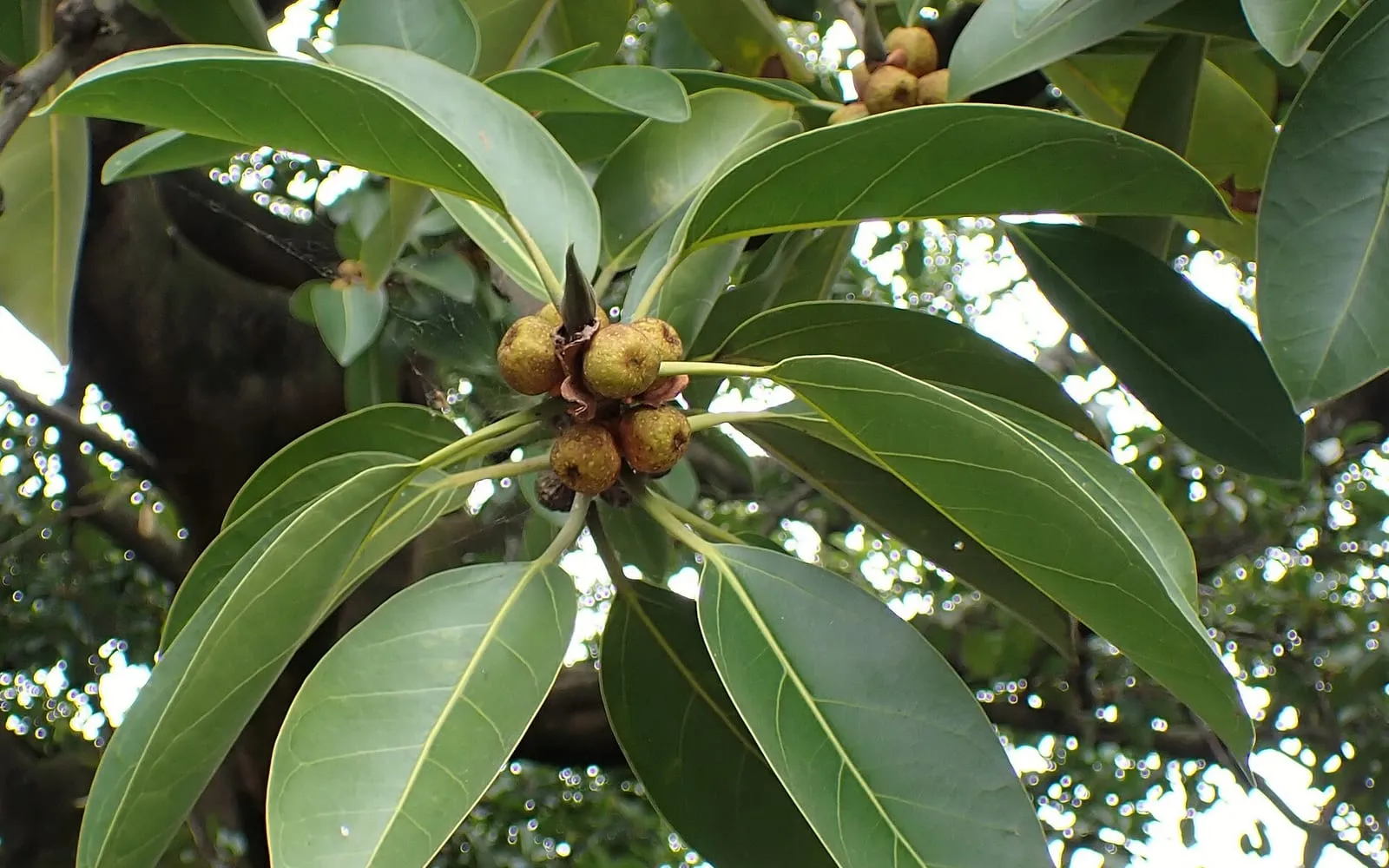
The leaves are large and leathery, broadly oval with a short drawn-out tip, held stiffly on thick stalks. The main veins stand out in a paler yellow-green against the darker blade, giving the foliage its bold, ribbed look even on the plain green plant; on ‘Yellow Gem’ the whole leaf breaks into irregular bands of cream, lime and mid-green. New leaves emerge from a pinkish sheath at the shoot tip, unfurling soft before they harden.
The plant branches into a rounded crown as it gains height and can produce aerial roots from the stem in humid conditions. Cut any part and it releases the milky latex common to figs, sticky and mildly irritant, so keep it off skin and out of eyes.
Where it is from
The council tree is native to Southeast Asia, ranging from southern China and the eastern Himalaya through Thailand, Malaysia and Indonesia in warm, wet lowland forest. Like its relatives it often begins as an epiphyte, sprouting from a seed dropped into the canopy and sending roots down towards the ground, gradually clasping and outgrowing its host as a strangler fig.
Growing in the bright, humid, well-drained crevices of a forest canopy shapes what it needs from a pot. It needs plenty of light, air movement, moisture at the roots without stagnation, and warmth that does not drop away at night. It grows through the warm months and rests when light and heat fall.
How it grows
Position it in bright light, with a little gentle direct sun welcome, and be aware that the variegated form needs more light than the green one to hold its colour and not revert to plain green shoots. Keep it in a settled spot, because a fig this size often drops leaves after being moved.
Grow it in an open, free-draining mix based on peat-free compost with added bark and perlite, in a pot only a little larger than the rootball. Repot a young, fast-growing plant every year or two in spring and top-dress a large specimen that has outgrown easy repotting. It roots from stem cuttings taken in warmth and can be air-layered to reduce the height of a leggy plant.
Through the seasons
Spring starts the main growth; repot if needed, prune to shape and resume feeding as the first new leaves emerge from their sheaths.
Summer is the fastest growth period. Water more freely, feed steadily, and give a variegated plant the brightest light you can to keep its markings crisp.
Autumn slows growth. Cut back on water and feed, and settle it into its winter position before the room turns cold.
Winter slows it right down. Growth almost stops, water needs fall, and the main risks are a cold, sodden rootball and the bone-dry air of a heated room drawing moisture from the leaves.
Care difficulty
Council tree is easy for anyone who can give it light and leave it in place. It tolerates the occasional lapse but not a constant one, and the two main problems are waterlogged compost in the cold and air so dry the leaf edges brown and mites take hold. Sudden leaf drop after a move is normal fig behaviour and usually improves once the plant settles into its new place.
Watering
Water well once the top few centimetres of compost feel dry, soaking the rootball and letting the excess drain clear of the saucer. The large leaves lose a fair amount of water in warm weather, so a summer plant in good light may want a weekly drink, tapering to every couple of weeks or less as winter growth stops.
Never let the pot stand in water. The council tree tolerates a short dry spell far better than permanently wet compost, and cold, saturated compost is the usual cause of root rot.
Warning signs, diseases and pests
Root rot from cold, wet compost causes yellowing, falling leaves and a soft base; lift the plant, cut off blackened roots and repot into fresh, gritty mix, watering lightly until it recovers. Brown, papery leaf margins usually mean dry air instead of thirst and improve with raised humidity.
Spider mites attack plants kept warm and dry, stippling the leaves and spinning fine webbing, while mealybugs lodge as white woolly tufts in the leaf joints and along the veins. Sponge the leaves, remove the insects by hand and follow up with an appropriate spray at weekly intervals until none return.
Growing environment
Give it a bright, warm, draught-free position with room for a plant that will grow tall. A variegated council tree in a dim corner loses its markings and grows lopsided towards the window, so bright light matters more here than for the green form. Turn the pot now and then for even growth.
Aim for humidity above that of a dry living room, and keep the temperature above about 13 deg C at all times, since chilling stalls growth and can damage the roots and leaves.
Feeding
Feed fortnightly to monthly through spring and summer with a balanced liquid houseplant feed at half strength, matching the amount to how fast the plant is growing. Stop feeding in winter while growth is paused, and skip feeding for a month or two after repotting into fresh compost.
Restrained feeding keeps growth firm and the leaves in proportion. Overdoing it forces soft shoots that pests favour and can scorch the roots, so feed lightly.
Troubleshooting
My variegated council tree is producing plain green leaves. Why? Too little light. Green shoots grow faster and can take over in shade, so move the plant somewhere brighter and prune out the reverted growth.
It dropped several leaves after I moved it. Is it dying? No. This is a fig reacting to a change in light and temperature. Leave it in a stable, bright, warm spot and new leaves will follow.
The leaf edges have gone brown and crisp. That points to dry air, not underwatering. Raise the humidity around the plant and keep it clear of radiators and hot draughts.
How do I stop it getting too tall? Prune the leading shoot in spring to bring it down and encourage branching, and air-layer the removed top if you want a second plant.
Is it safe around pets? The milky latex is not a dangerous poison, though it can irritate a mouth or skin. Keep pets away from cut stems and clear away any prunings.
Council Tree problem guides
Not sure what is wrong? See the common houseplant pests guide.