
Outdoor plant
Stream Orchid
Epipactis gigantea
Also known as Giant helleborine, Chatterbox orchid
How to grow stream orchid, Epipactis gigantea, beside a pond or in a bog garden. Its running rhizome, and why it tolerates wetter soil than most terrestrial orchids.
At a glance
- Difficulty
- Difficult
- Water
- Consistently moist to wet soil, never allowed to dry
- Light
- Partial shade to full sun near water
- Hardiness
- USDA 5-9, RHS H6, hardy to -20 C
- Type
- Hardy deciduous terrestrial orchid
- Height
- 30-90 cm
- Native to
- Western North America
Fully hardy through ordinary temperate winters, dying back to its rhizome each year. Unlike many terrestrial orchids, it tolerates and indeed prefers consistently wet ground, reflecting its native streamside habitat, and the more common cultivation mistake with this species is letting it dry out rather than overwatering it.
Hardiness zones describe winter cold alone. Summer heat, humidity, rainfall and the length of the growing season decide as much, so treat the range as the outer limit rather than as a recommendation.
Not known to be toxic
Stream orchid has no toxicity listing from the RHS or the ASPCA and is considered safe around pets and children. It has no documented history of poisoning.
Source: RHS
About
The stream orchid is unusual among hardy terrestrial orchids for positively thriving in wet ground, making it one of the more realistic terrestrial orchid choices for a pond margin or bog garden rather than the drier, more particular soil most of its relatives demand. Its nickname chatterbox orchid comes from the way its hinged, mobile lip rocks in the breeze, resembling a moving jaw, a movement thought to play a role in how the flower is pollinated. Its main pollinators are hoverflies, which the lip is thought to steady and guide into position as they feed.
Native to western North America, it grows naturally along streams, seepages and spring-fed wet ground, often in locations that would rot the roots of almost any other terrestrial orchid within a season.
Appearance and character
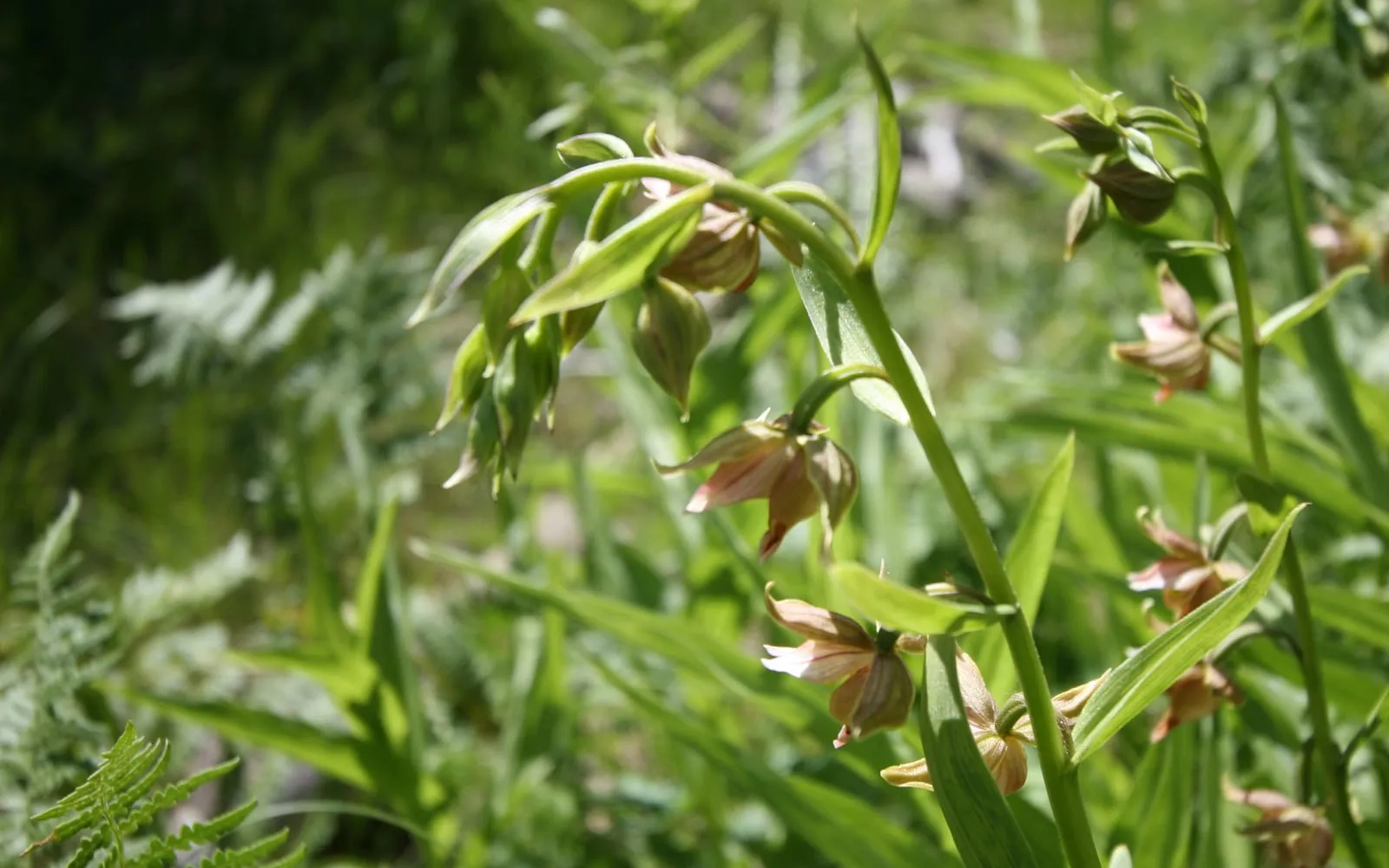
Upright, leafy stems arise in clusters from a running underground rhizome, each stem holding broad, pleated, strongly veined leaves arranged alternately up its length. Flowers open in a loose spike toward the top of each stem, typically in muted shades of green, purple-brown and dull pink, with the distinctive mobile lip that gives the plant its common chatterbox name.
Colour and size vary much across the species’ wide native range, and several regional forms are recognised by growers, some more compact and others much taller, though all share the same fundamental liking for wet feet.
Where it is from
Streamsides, seepage areas, spring-fed slopes and similar consistently wet ground across western North America, often in locations where water moves gently through the root zone rather than standing stagnant.
That specific preference for moving or at least freshened water, rather than static waterlogging, is worth noting in cultivation: a pond margin with some water movement or a bog garden that does not become completely stagnant tends to suit it better than a spot where water sits without any turnover at all.
How it grows
A running rhizome spreads gradually below the soil surface, sending up new stems at intervals and allowing an established colony to expand outward from its original planting point over several years, more readily than many other terrestrial orchids which tend to stay in a single, slowly enlarging clump.
Because it spreads by rhizome rather than relying purely on seed, a single well-sited planting can, given the right wet conditions, form a worthwhile colony within a handful of seasons, a faster and more visible result than most other hardy terrestrial orchids typically offer.
Through the seasons
Spring new stems emerge from the rhizome as growth resumes.
Summer is the main flowering period, with the mobile-lipped flowers opening progressively up each spike.
Autumn stems begin to yellow and die back as the growing season ends.
Winter the plant is dormant as an underground rhizome, hardy to significant cold, needing no protection beyond consistently damp (not frozen solid) ground.
Care difficulty
Difficult in the general sense that applies to most terrestrial orchids, which depend on a mycorrhizal soil partnership that is not always easy to provide reliably in a garden setting. Within that constraint, however, this is one of the more forgiving species to try, since its wet-ground preference is easier for many gardeners to provide than the lean, particular soil chemistry some other terrestrial orchids need.
Watering
Consistently moist to wet soil is essential and, unlike most terrestrial orchids, this species is markedly more likely to suffer from underwatering than overwatering. A pond margin, streamside or well-maintained bog garden that never dries out suits it far better than an ordinary border, however carefully watered.
Warning signs, diseases and pests
Slugs and snails can graze young shoots and leaves, particularly in the damp conditions this species favours, which unfortunately also suit slugs well; some protection for emerging spring growth is worthwhile. Aphids occasionally colonise flower stems and are usually dislodged easily with a jet of water.
A planting that fails to establish despite consistently wet conditions most often reflects, as with other terrestrial orchids, an absent or disrupted mycorrhizal partnership in the soil rather than any visible pest or disease, and sourcing nursery-propagated stock from a specialist grower gives the best chance of success.
Growing environment
Partial shade suits it well in most gardens, though it tolerates fuller sun where soil moisture is reliably high, such as directly beside moving water. Consistently wet, humus-rich soil is the defining requirement, and a spot with some gentle water movement or freshening, rather than completely static, stagnant wet ground, tends to give the best results.
Feeding
No supplemental feeding is recommended, in keeping with general guidance for terrestrial orchids, whose mycorrhizal partnerships can be disrupted by excess nutrients. Well-prepared, humus-rich wet soil should provide what the plant needs without additional fertiliser.
Troubleshooting
The plant has failed to establish despite being kept consistently wet. As with other terrestrial orchids, this often points to a missing mycorrhizal partnership in the soil rather than a watering problem. Source nursery-propagated stock from a specialist orchid nursery, and be patient through the first season or two.
Growth looks weak in a spot with standing, stagnant water. Consider whether the water has enough movement or turnover, since this species tends to prefer freshened wet ground over completely static conditions.
New shoots have been grazed or damaged in spring. Check for slugs and snails, which are drawn to the same damp conditions this orchid favours, and protect vulnerable young growth.
You want to establish a colony rather than a single plant. This species spreads by rhizome more readily than most terrestrial orchids, so a single well-sited, well-established planting in suitable wet ground has a reasonable chance of expanding into a small colony over several years without further intervention.
You are choosing between this species and a true water-margin plant for a pond edge. Unlike a fully aquatic marginal, this orchid needs consistently moist soil rather than standing water over its crown, so site it at the damp edge of a pond or bog garden rather than in the shallow water itself, where its roots would most likely rot before establishing.