
Outdoor plant
Common Haircap Moss
Polytrichum commune
Also known as Great golden maidenhair moss
How to establish common haircap moss, Polytrichum commune, in a moss garden. Its tall, wiry stems, and why patience matters more than any feeding routine.
At a glance
- Difficulty
- Moderate
- Water
- Consistently damp soil; tolerates brief drying better than sphagnum does
- Light
- Partial shade
- Hardiness
- USDA 2-7, RHS H7, hardy to -35 C
- Type
- Perennial moss
- Height
- 5-40 cm
- Native to
- Northern Hemisphere temperate and boreal regions, Southern Hemisphere temperate regions
Extremely hardy across the boreal and cool temperate world, tolerating winter conditions few cultivated garden plants could survive. Growth slows sharply in hot, dry summer weather, and this species performs best in a cool, damp climate rather than a warm one, regardless of how consistently the soil is watered.
Hardiness zones describe winter cold alone. Summer heat, humidity, rainfall and the length of the growing season decide as much, so treat the range as the outer limit rather than as a recommendation.
Not known to be toxic
Common haircap moss has no toxicity listing from the RHS or the ASPCA and poses no known hazard to pets, children or wildlife. It has no history of use or misuse that would suggest any toxicity concern.
Source: RHS
About
Common haircap moss is one of the tallest mosses widely found in temperate gardens, forming dense colonies of wiry, upright stems that can reach 40 cm in the right conditions, much taller than the low cushions most people picture when they think of moss. Gardeners establishing a dedicated moss garden or a Japanese-style planting often value it specifically for this upright, almost grass-like habit, which contrasts well against the flatter cushion mosses more commonly used as ground cover.
Its name comes from the fine, hair-like covering, called a calyptra, that caps the spore capsule of the female plant, a feature visible with a magnifying glass and distinctive enough among mosses to have given the whole Polytrichum genus its common family name.
Appearance and character
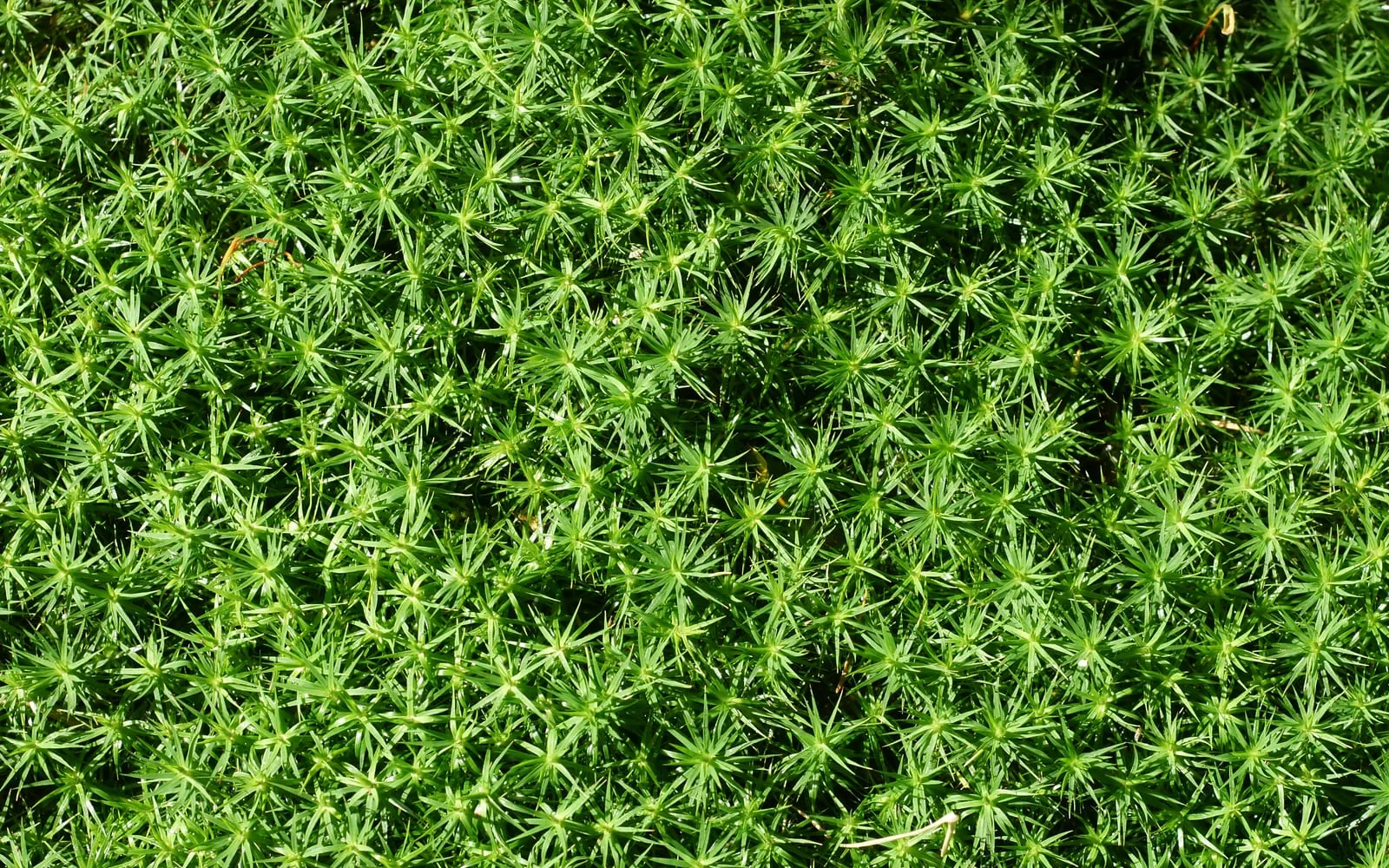
Wiry, upright stems bear narrow, pointed leaves in a spiral arrangement, giving mature growth a texture somewhere between a miniature conifer and a coarse grass rather than the soft, flat mat typical of many other common mosses. Colonies spread by branching stems and by spores, gradually forming a dense, even carpet of upright growth over several seasons.
Spore capsules, when present, rise on thin stalks well above the leafy stems, each one topped by the fine, golden-brown, hair-like calyptra that gives the species its common name, most visible in spring before the capsule matures and the calyptra is shed.
Where it is from
Damp, acidic soil in woodland, heathland and disturbed ground across a very wide range spanning the Northern Hemisphere’s boreal and cool temperate zones and parts of the Southern Hemisphere as well, one of the most widely distributed mosses in the world.
That range reflects a real preference for cool, consistently damp conditions over warm ones; it tolerates a wide range of light levels and soil textures but performs poorly in a hot climate regardless of how well watered the soil is kept.
How it grows
A perennial moss spreading both by lateral branching from existing stems and by wind-dispersed spores released from capsules produced on female plants. Growth is slow relative to some lower, mat-forming mosses, and establishing a dense, even colony from a small starting patch typically takes several growing seasons rather than a single one.
Because it lacks true roots, taking up water and nutrients across its whole surface rather than through a root system, its growth rate tracks ambient moisture and humidity closely, slowing markedly during any dry spell and resuming once damp conditions return.
Through the seasons
Spring is the most active growth period, with fresh green growth at the tips of stems and, on mature colonies, the appearance of spore capsules.
Summer growth can slow in hot or dry weather, and the moss may look duller or more compact until cooler, damper conditions return.
Autumn growth often resumes as temperatures cool and rainfall increases.
Winter the moss persists through frost and snow cover with little visible damage, protected in part by its own dense growth habit.
Care difficulty
Moderate, in that establishing a new colony from scratch takes patience rather than any complicated technique. Once a patch is established in suitable damp, acidic, shaded ground, it needs comparatively little ongoing attention beyond keeping the area consistently moist and free of competing leaf litter or larger plants that could shade or smother it.
Watering
Regular watering or misting keeps the moss consistently damp, which supports steady growth and a healthy green colour. It tolerates brief drying between waterings noticeably better than the sphagnum mosses of a bog garden, though prolonged drought will still cause it to brown and stall until moisture returns.
Avoid waterlogging the soil beneath it, since this species prefers damp rather than saturated ground, unlike the true bog-dwelling sphagnum mosses.
Warning signs, diseases and pests
This moss has few pests or diseases of note in a garden setting. The main challenges to establishing a colony are competitive rather than pathogenic: fallen leaves smothering young growth, faster-growing plants shading it out, or foot traffic disturbing a developing patch before it has knitted together.
Browning, dried-looking growth after a hot or dry spell usually recovers once cooler, damper conditions return, provided the underlying stems have not been killed outright by prolonged severe drought.
Growing environment
Partial shade suits it well, and consistently damp, acidic, humus-rich soil gives the best results. Clearing fallen leaves promptly from an establishing patch helps prevent the moss being smothered before it forms a dense enough colony to resist this kind of disturbance on its own.
Feeding
None is appropriate. This moss is adapted to acidic, relatively nutrient-poor soil, and feeding the area is unlikely to benefit it and may instead favour weeds or algae competing for the same space.
Troubleshooting
A newly established patch has browned and looks dead after a dry spell. Check for any green remaining at the base of the stems; established Polytrichum often recovers from apparent die-back once regular watering resumes, since only the exposed tips are usually affected by short dry periods.
Growth is slow to establish from a small starting patch. This is normal; the species spreads gradually rather than quickly, and a noticeable, dense colony can take several seasons to develop even in good conditions.
Fallen leaves are smothering a young colony. Clear leaf litter regularly from an establishing patch until the moss has grown dense enough to shed light debris on its own.
The moss looks patchy with bare soil between clumps. This usually reflects the moss’s slow, gradual spreading habit rather than a sign of poor health; established colonies typically fill in gaps steadily over successive growing seasons.
Tall neighbouring plants are shading the colony more than expected. Because this species grows taller than most other common mosses, it copes with somewhat more competition from low-growing neighbours than a flat cushion moss would, but dense shade from shrubs or tall perennials still slows it noticeably. Thinning nearby growth to restore the dappled light it prefers usually revives a struggling patch within a season.