
Outdoor plant
Brittle Bladder Fern
Cystopteris fragilis
Also known as Fragile fern, Brittle fern
How to grow brittle bladder fern, Cystopteris fragilis. A tiny, extremely cold-hardy species for rock crevices and old walls, and why it vanishes each summer.
At a glance
- Difficulty
- Easy
- Water
- Water regularly while in leaf. Reduce sharply once it goes dormant
- Light
- Partial to full shade. Tolerates gentle morning sun in cool climates
- Temperature
- Extremely cold hardy. Dislikes prolonged summer heat and drought
- Hardiness
- USDA 2-7, RHS H7, hardy to -35 C
- Type
- Hardy deciduous perennial fern, often summer dormant
- Height
- 10-20 cm
- Native to
- Nearly worldwide across temperate and montane regions of the Northern Hemisphere, and scattered in the Southern
One of the most cold-hardy ferns in general cultivation, tolerating winters around minus 35 deg C without any protection. That cold tolerance is not matched by a corresponding tolerance for heat: the fronds die back and the plant goes dormant through a hot dry summer even where the winters are mild, and reappear once cooler, damper weather returns.
Hardiness zones describe winter cold alone. Summer heat, humidity, rainfall and the length of the growing season decide as much, so treat the range as the outer limit rather than as a recommendation.
Not known to be toxic
Non-toxic. Brittle bladder fern does not appear on the RHS list of potentially harmful garden plants, and there is no record of Cystopteris species being toxic to cats, dogs or horses. It contains no known irritant or poison, and its small size and habit of growing out of reach in wall crevices and rock faces makes accidental ingestion by a pet or child unlikely in any case.
Sources: RHS potentially harmful garden plants, North Carolina State Extension, Cystopteris fragilis
About
Few ferns are as widely travelled as this one. It grows on every continent except Australia and Antarctica, from Arctic Scandinavia and the mountains of the American Rockies to the high peaks of tropical East Africa, tucked into rock crevices, scree and the mortar joints of old stone walls. Almost nothing else in cultivation has that kind of range, and it comes from being almost entirely indifferent to cold. The species survives temperatures that would kill most garden plants outright. It needs only a crack to root into and a little shade.
The common name comes from the way the frond stalk snaps cleanly at a joint near the base when handled roughly, a genuine structural weak point rather than mere floppiness. A careless finger running along an old wall can break off a frond that took a whole season to grow.
The other habit to know before planting it is that the fern often disappears completely for weeks or months in a hot, dry summer, only to reappear once cooler, damper conditions return. That is dormancy rather than death, and it catches out gardeners expecting a fern to stay in leaf all season the way most cultivated species do.
Appearance and character
A small deciduous fern forming loose tufted rosettes 10 to 20 cm tall, sometimes larger in consistently cool, moist conditions.
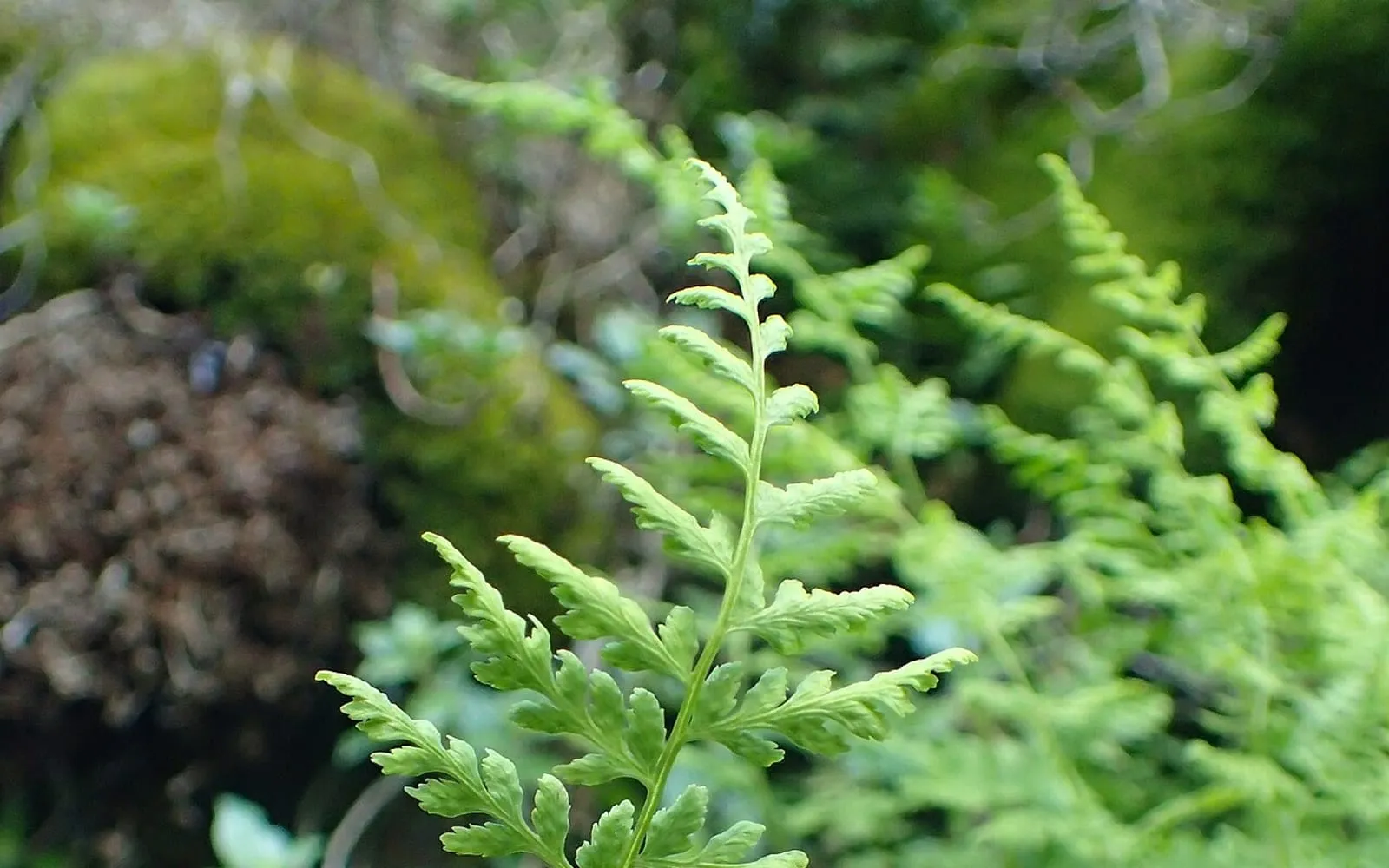
Fronds are narrowly triangular, finely divided into small, delicate, lace-like segments, pale to mid green and noticeably softer in texture than most hardy garden ferns.
The stipe, the stalk below the blade, is slender, brittle and often darker at the base, and it is here that a frond snaps cleanly when bent sharply, the structural feature behind both the common name and the Latin epithet fragilis.
Sori are round, borne on the underside of the fronds in summer, and the species reproduces readily from spores, which is part of why it colonises new crevices and wall joints so freely wherever conditions suit it.
It is a taxonomically slippery species, with botanists recognising several closely related segregate species that were once lumped together under this name, so plants sold under this label can vary somewhat in size and frond shape depending on origin.
Where it is from
An enormous native range spanning temperate and montane habitats across almost the entire Northern Hemisphere, plus scattered high-altitude populations further south, including parts of tropical East Africa and the Andes.
Within that range it grows overwhelmingly in rocky places: limestone crevices, scree slopes, cliff ledges, boulder fields and, wherever people have been building with stone for long enough, the mortar joints of old walls. It needs very little soil, provided there is a crack to anchor its roots and moisture reaching that crack for at least part of the year.
That habitat explains the dormancy. Rock crevices and thin mountain soils dry out fast in summer heat regardless of latitude, and a fern rooted there has evolved to shut down and wait rather than struggle on through drought. Cold, by contrast, is rarely the limiting factor at altitude or latitude across most of this range, which is why the plant tolerates so much of it.
Old walls, particularly ones built with lime mortar, are an important habitat for this fern in cultivated landscapes, and it has been recorded persisting on the same wall for well over a century in some cases.
How it grows
Plant it into a crevice, a rockery, a scree bed or the joint of an old stone or brick wall, wedging a small amount of gritty, humus-light compost around the roots.
Choose a shaded to partly shaded spot. Morning sun is tolerated well in cooler climates but the fern struggles anywhere that receives strong afternoon sun through summer.
Use sharply draining, gritty soil. A mix of ordinary garden soil, horticultural grit and a little leaf mould suits it far better than a rich, moisture-retentive compost, which tends to rot the roots rather than help them.
Water regularly while the fronds are visible and actively growing, and let the soil dry out naturally once the plant enters summer dormancy.
Do not disturb a dormant crown. There is nothing visible above ground to protect, but the roots and rhizome are still alive below the surface and resent digging or heavy watering during this rest period.
Propagate by spore for volume, or by moving a small self-sown seedling from where spores have already settled nearby, since the species often colonises new crevices on its own once an established plant is close by.
Through the seasons
Spring brings fresh fronds unrolling from the crown, and this is the best time to plant new specimens, giving them a full season to establish before the first summer dormancy.
Summer is unpredictable by design. In a cool, damp summer the fronds persist and stay attractive; in a hot, dry one they yellow and die back completely, sometimes within a couple of weeks, and the crown waits underground for better conditions.
Autumn often brings a second flush of fresh growth if rain returns after a dry summer, since the dormancy is a response to drought rather than a fixed seasonal clock.
Winter the crown is fully dormant and entirely indifferent to cold, surviving temperatures far beyond anything most gardens experience without any protection at all.
Care difficulty
Easy, once the two quirks of this species are understood rather than fought against.
The plant needs very little beyond a crevice with drainage, some shade and occasional water while it is in leaf. Left alone on a suitable wall or rockery, it persists and often self-sows for years with no attention.
The summer disappearance is the one thing that unsettles new growers, who sometimes assume a vanished fern has died and dig up or replant the spot, disturbing a crown that was resting. Patience through a dry summer is usually rewarded by fresh growth once conditions improve.
The brittle stipes mean the plant tolerates rough handling badly, though this rarely matters once it is settled into a crevice out of everyday reach.
Watering
Water regularly while fronds are visible, aiming for consistently damp rather than either waterlogged or bone dry soil.
Reduce watering sharply, or stop altogether, once the fronds have died back for the season. A dormant crown in sharply draining rocky ground needs very little moisture and rots more readily from overwatering during this period than it suffers from drought.
Rainfall alone is often sufficient in a temperate climate with reasonably regular rain, particularly for plants established in a crevice or wall joint that channels moisture naturally.
Container-grown plants dry out faster than ones rooted directly into a wall or rockery and need more careful attention while in leaf.
Warning signs, diseases and pests
Fronds yellowing and collapsing in summer heat is normal dormancy rather than a problem, provided it happens after a period of hot or dry weather. No action is needed beyond patience.
Fronds failing to reappear the following spring, after a normal winter, can mean the crown has died, most often from waterlogging in poorly drained soil over winter. Improve drainage before replanting.
Ragged holes in the delicate fronds point to slugs and snails, which find the soft new growth easy to eat. A gritty, dry surface around the crown discourages them better than most treatments.
Snapped fronds from careless handling are cosmetic damage rather than a threat to the plant, since the crown regrows fresh fronds the following season regardless.
The species has no significant disease in cultivation, in keeping with its tolerance for harsh, exposed growing conditions in the wild.
Growing environment
Partial to full shade suits it best, with some tolerance of morning sun in cooler climates and none at all for strong afternoon sun.
Gritty, sharply draining, neutral to alkaline soil, ideally in an actual crevice rather than an open bed. Lime mortar in an old wall suits it particularly well.
Extreme cold tolerance means winter protection is never needed across almost any temperate garden. Summer heat and drought are the real limiting factors, and the plant goes dormant to cope with both.
It suits a rockery, an alpine trough, the crevices of a dry-stone wall, or the base of an old brick or stone wall with lime mortar joints.
Avoid rich, moisture-retentive beds and heavy clay, both of which encourage rot in a plant adapted to thin, fast-draining rocky ground.
Feeding
Feeding is rarely necessary. The species is adapted to nutrient-poor rocky crevices and generally performs better on lean ground than on rich soil.
A very light feed in spring is reasonable if growth looks unusually weak on otherwise suitable ground, but err on the side of doing nothing rather than overfeeding.
No feeding is useful once the plant has entered summer dormancy, since there is no active growth to direct it toward.
Established plants in a wall crevice or rockery typically need no supplementary feeding at all across their whole life.
Troubleshooting
The fern has completely disappeared in summer. Normal dormancy in response to heat or drought. Leave the spot undisturbed and expect fresh growth once cooler, damper conditions return, often within a few weeks.
A frond snapped off when I touched it. The stipe is brittle, which is where both common names come from. It is cosmetic damage rather than serious harm, and the crown regrows fresh fronds the following season.
It has not come back after winter. Check the drainage. This species tolerates extreme cold well but rots in waterlogged soil over a wet winter. Replant into grittier, better-draining ground.
Can it survive a cold winter? Very comfortably. This is among the most cold-tolerant ferns grown, surviving well below minus 30 deg C with no protection required.
Where should I plant it? A crevice in a rockery, alpine trough or old wall, ideally with some lime content in the mortar or soil, in shade or morning sun only.
Something has eaten the new fronds. Slugs and snails, most likely. A dry, gritty surface around the crown deters them better than most other measures.
Does it need feeding like other garden ferns? Rarely. It is adapted to thin, poor, rocky ground and usually performs best with little or no supplementary feed.