
Outdoor plant
Chocolate Vine
Akebia quinata
Also known as Five-leaf akebia
How to grow chocolate vine outdoors. Its chocolate-scented spring flowers, semi-evergreen twining growth, and the odd sausage-shaped fruit it needs two plants to set.
At a glance
- Difficulty
- Easy
- Water
- Regular watering while establishing, drought-tolerant once mature
- Light
- Full sun to partial shade
- Hardiness
- USDA 4-9, RHS H6, hardy to -20 C
- Type
- Semi-evergreen to deciduous twining climber
- Height
- 6-12 m
- Native to
- East Asia
Fully hardy through cold temperate winters, staying evergreen in a mild climate and losing some or all of its leaves in a harder one without any lasting damage. It tolerates a wide range of soil and light conditions, and its main challenge in cultivation is restraining rather than protecting it, since it grows vigorously almost everywhere it is planted.
Hardiness zones describe winter cold alone. Summer heat, humidity, rainfall and the length of the growing season decide as much, so treat the range as the outer limit rather than as a recommendation.
Not known to be toxic
- Safe to eat
- The ripe, sausage-shaped fruit, eaten fresh in parts of East Asia, though fruit set outdoors in a cooler climate is unreliable without a second, genetically different plant nearby
Chocolate vine has no toxicity listing from the RHS or the ASPCA and is considered safe around pets and children. Its unusual fruit has a long history of being eaten in parts of Japan, Korea and China, a further indication that no part of the plant has meaningful toxicity.
Source: RHS
About
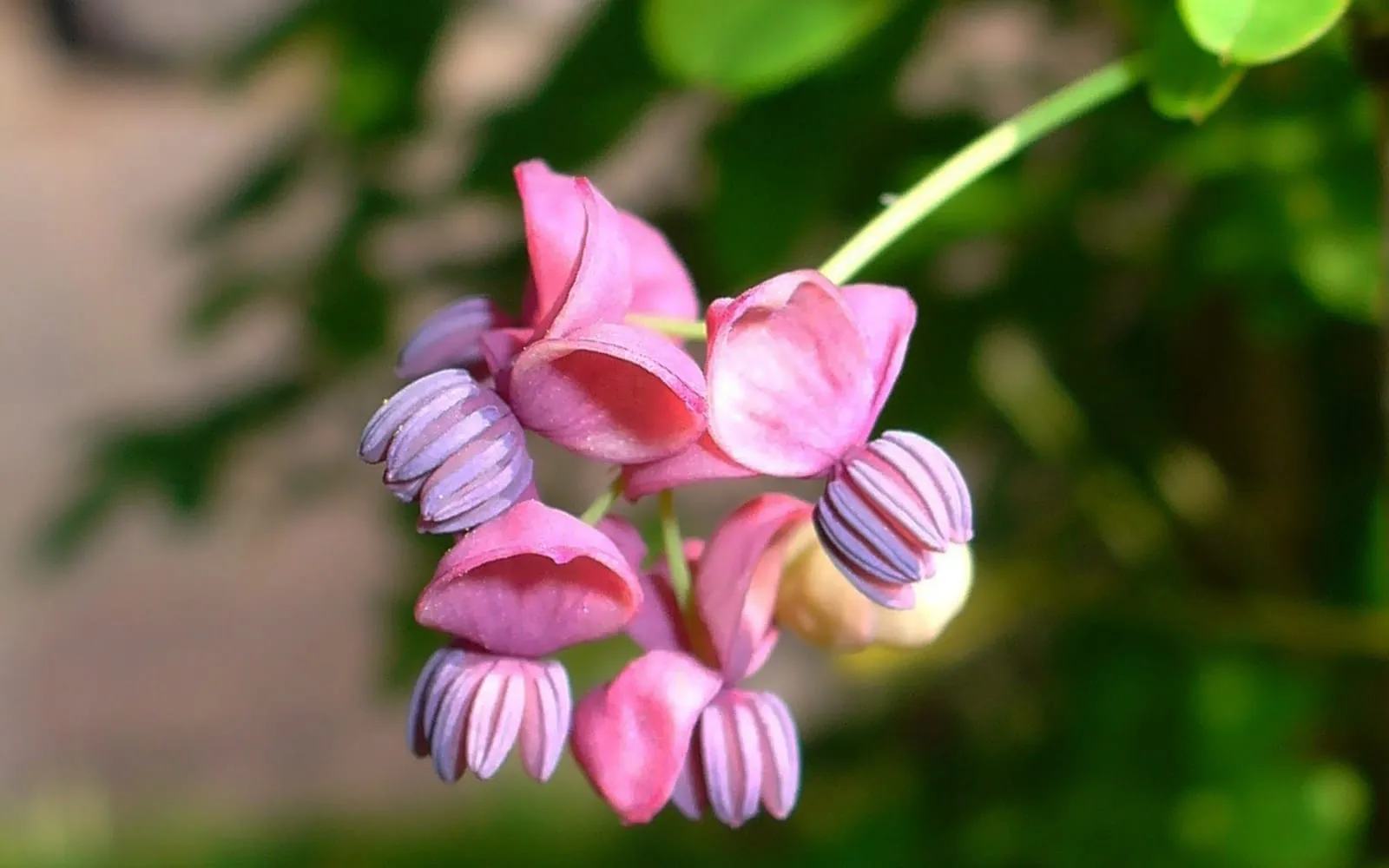
Chocolate vine takes its common name from the scent of its small, maroon-purple spring flowers, which many people describe as strongly reminiscent of chocolate or vanilla, produced in loose clusters along vigorous twining stems clothed in distinctive leaves divided into five leaflets. It is a fast, easy climber for covering a fence, arbour or pergola, tolerating a wide range of soil and light conditions with little fuss once established.
Its unusual fruit, a fat, sausage-shaped pod that ripens to a dusky purple, is eaten in parts of East Asia, though in a cooler climate garden fruit set is often poor or absent altogether, since most plants need cross-pollination from a genetically distinct specimen nearby rather than reliably self-pollinating alone.
Appearance and character
Twining stems carry leaves divided into five oval leaflets radiating from a central point, a distinctive shape that gives the plant its alternative name five-leaf akebia and makes it easy to identify even without flowers or fruit present. Small, maroon-purple flowers open in spring in loose, drooping clusters, male and female flowers both present on the same plant but differing slightly in size and structure.
Where fruit does set, it develops into a fat, curved, sausage-shaped pod, ripening from green to a dusky purple, that eventually splits open to reveal a sweet, translucent pulp studded with numerous small black seeds, a curiosity more often admired than reliably harvested in a typical garden setting.
Where it is from
Woodland margins and scrub across East Asia, including Japan, Korea and China, in a temperate climate with cold winters and warm, often humid summers, broadly similar to much of the temperate world where it is now grown.
That broad tolerance of temperate conditions, combined with especially vigorous growth, is why this species establishes and spreads so readily in cultivation, and why it has become mildly invasive in parts of North America after escaping garden plantings into nearby woodland.
How it grows
A vigorous twining climber that extends rapidly through the growing season, wrapping its stems tightly around any suitable support, including, given the chance, other nearby plants, which it can smother if left unchecked. Growth is fast from a young plant onward, and an established specimen can cover a considerable area within just a few years without regular pruning to control it.
Because a single plant is often only partially self-fertile, reliable fruit set generally needs a second, genetically distinct plant growing nearby, which is important if fruiting, rather than the flowers and foliage alone, is a specific goal.
Through the seasons
Spring is the main flowering period, with clusters of chocolate- scented maroon flowers opening as new leafy growth also gets underway.
Summer is the main growing season, with vigorous stem extension. Prune to control size and shape as needed through this period.
Autumn fruit, where set, ripens on a mature plant with a compatible second specimen nearby; foliage may begin to thin in a colder climate.
Winter the plant is fully hardy, staying evergreen in a mild climate or losing some leaves in a colder one without lasting harm either way.
Care difficulty
Easy, and if anything too easy: this is a vigorous grower that needs regular pruning to keep it within bounds rather than any particular care to keep it alive. Given a sturdy support and occasional control, it needs little else.
Watering
Regular watering supports strong establishment in the first year or two. Once settled, this species tolerates real drought reasonably well, needing supplemental watering mainly during an extended dry spell in summer.
Warning signs, diseases and pests
This is an unusually trouble-free climber, with few significant pests or diseases reported in typical garden cultivation; aphids occasionally colonise soft new growth but rarely cause lasting harm and are dislodged easily with a jet of water.
The main practical issue with this species is vigour rather than disease: left unpruned, it readily smothers neighbouring plants and structures, and the appropriate response is regular, fairly hard pruning rather than treating the growth itself as a problem to diagnose.
Growing environment
Full sun to partial shade both suit it, and this species tolerates a wide range of ordinary garden soil conditions without much complaint. A sturdy support capable of bearing the weight of vigorous, twining growth is essential, and enough space to accommodate its eventual spread avoids the plant becoming a maintenance burden later.
Feeding
A balanced granular feed applied once in spring is generally sufficient; this vigorous species rarely needs heavy feeding to perform well, and overfeeding mainly encourages growth that then needs more pruning to control.
Troubleshooting
The vine has grown far beyond its intended space. This is normal for the species. Prune hard, ideally straight after flowering, to control size and remove any growth that has begun smothering neighbouring plants.
No fruit has set despite good flowering. Most plants need a second, genetically distinct specimen nearby for reliable pollination and fruit set. A single isolated plant may flower well every year without ever fruiting, and adding a second, differently sourced specimen nearby is the usual fix for anyone keen to see the unusual pods develop.
The plant has smothered a smaller neighbouring shrub. Cut back the offending growth promptly and consider whether the akebia needs a more robust, dedicated support further from other plants in future, since this pattern tends to repeat each season without a change of position.
Leaves have dropped in a cold winter. This is normal cold-weather behaviour for the species outside a reliably mild climate, and fresh growth reliably returns the following spring once temperatures rise again.
You are considering this species for a boundary near woodland or a natural area. Check local guidance first, since it has escaped cultivation and become mildly invasive in parts of North America, and choose a more contained climber instead if the site borders sensitive natural habitat, and monitor any existing planting for unwanted seedlings turning up further afield than intended, pulling them promptly while they are still small and easy to remove.