
Houseplant
Cape Primrose
Streptocarpus saxorum
Also known as Streptocarpus saxorum
How to grow Streptocarpus saxorum, the trailing cape primrose, with its whorled fleshy leaves and long-stalked lilac-blue flowers borne almost year-round.
At a glance
- Difficulty
- Easy
- Water
- When the top few centimetres of mix have dried
- Light
- Bright indirect light to light shade
- Temperature
- Warm to average; keep above about 7 deg C
- Humidity
- Average to high
- Hardiness
- USDA 10-11, RHS H1c, hardy to 5 C
- Type
- Perennial
- Height
- 15-25 cm
- Native to
- Kenya, Tanzania
A trailing gesneriad from shaded rock crevices in the highlands of Kenya and Tanzania, where the air is cool and moist. It has no frost tolerance and needs a minimum of about 5 deg C under glass, with normal room temperatures of 7 to 10 deg C or above. It needs bright indirect light and humid air, and cold, wet compost or water lodged on the hairy crown rots it.
Hardiness zones describe winter cold alone. Summer heat, humidity, rainfall and the length of the growing season decide as much, so treat the range as the outer limit rather than as a recommendation.
Not known to be toxic
Streptocarpus saxorum, the cape primrose, is not recorded as toxic, and neither the ASPCA nor the RHS lists it as harmful. Its close relative the African violet (Saintpaulia) is listed by the ASPCA as non-toxic to cats and dogs. A pet or child that chewed a leaf is unlikely to be badly harmed, though mild stomach upset is possible.
Sources: ASPCA toxic and non-toxic plants, RHS potentially harmful garden plants
About
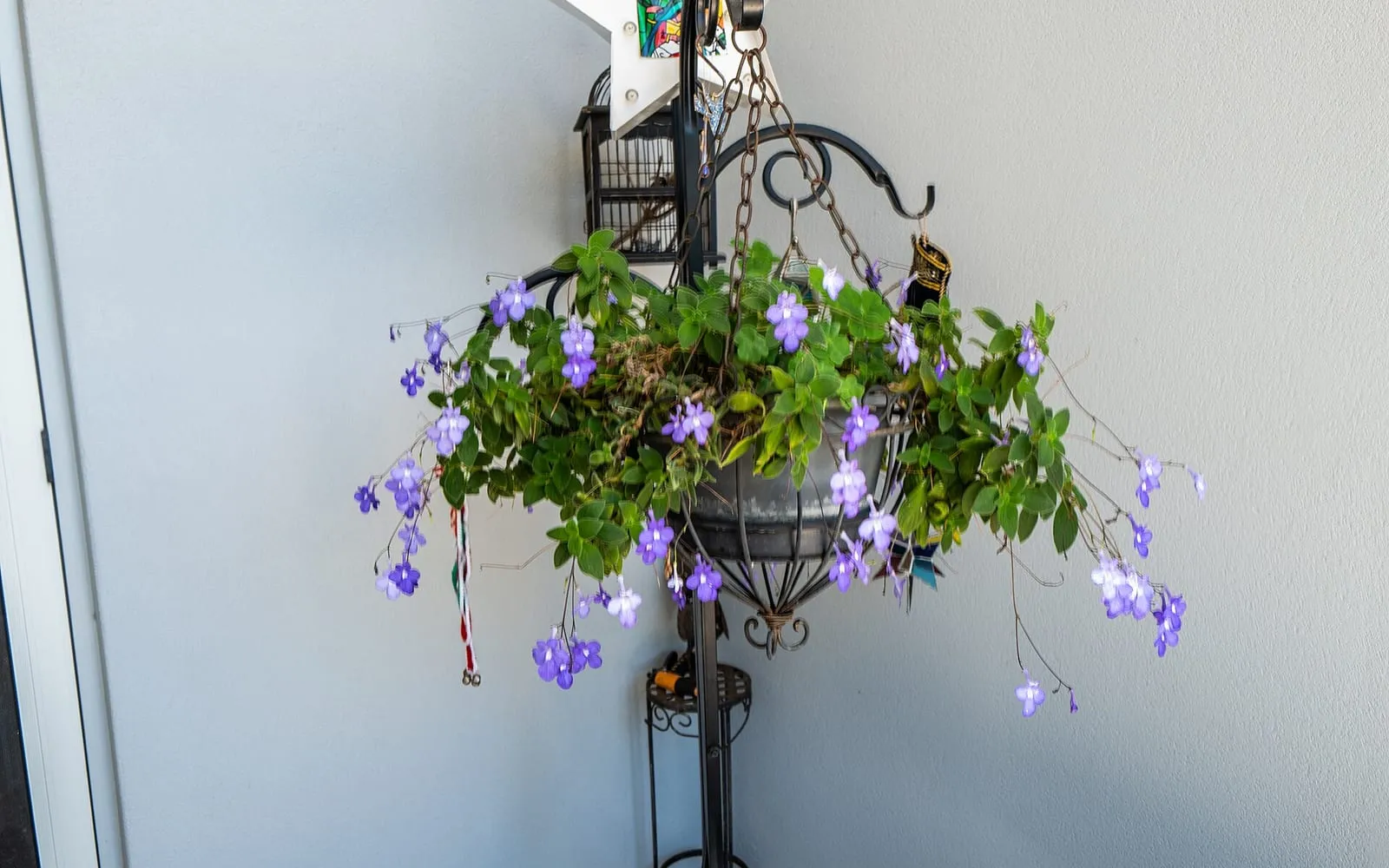
Streptocarpus saxorum is the trailing, small-leaved cape primrose, a looser and bushier plant than the big crinkle-leaved kinds most people picture. Its slender stems carry whorls of little oval leaves, soft and slightly fleshy under a coat of fine hairs, and it spills over the rim of a pot or basket instead of sitting in a tidy rosette. On long, wiry stalks it holds pale lilac-blue flowers with white throats, and it can produce them over a long stretch of the year.
The species grows on shaded rock faces in the highlands of eastern Africa, which its epithet saxorum, “of the rocks”, records. There it roots into pockets of humus in cool, humid, dappled conditions, and its fleshy leaves help it through the dry spells between rains. That background points to gentle warmth, screened light and a light, open compost indoors.
Unlike many houseplants it takes no true winter rest, so given warmth and light it can flower almost continuously. The genus name itself points to a curiosity worth watching for. Streptocarpus means “twisted fruit”, and the ripe seed capsule coils into a neat spiral as it dries.
Appearance and character
The leaves are small, oval and thick-textured, arranged in whorls along trailing stems and clothed in soft hairs that give them a matt, greyish-green look. The habit is loose and cascading, so the plant suits a hanging pot or a shelf edge where the stems can fall.
The flowers are the main display, held singly or in pairs on long, thread-fine stalks that stand clear of the foliage. Each is a pale lilac to sky-blue tube flaring into five lobes, marked with a white eye and fine pencilling in the throat. Where light and warmth hold up, a plant is seldom out of bloom for long, and spent flowers are followed by the spiralling seed pods that name the genus.
Where it is from
Streptocarpus saxorum comes from the mountains of Tanzania and neighbouring parts of eastern Africa, growing on shaded, humus-filled crevices in rock instead of in open ground. The upland air is cool and moist, the light is broken, and the fleshy leaves store water against the drier months.
At home, that means a bright spot out of direct sun, comfortable warmth without extremes, and a free-draining, humus-rich compost that never stays sodden. The plant likes moist air, dislikes a cold wet root run, and above all does badly with water sitting on its hairy crown, where it encourages rot.
How it grows
It grows and trails through the warmer, brighter months, lengthening its whorled stems and flowering as it goes, and it slows without ever fully stopping when light is short. Because it keeps no dormant period, it responds to year-round warmth and light with a long succession of blooms instead of a single flush.
Propagation is easy and a little unusual. A single leaf, or a short length of stem with leaves, laid or inserted into damp, gritty compost will root and throw new plantlets from the base. Division of an older clump works too. Keep cuttings warm, humid and lightly shaded until they take.
Through the seasons
Spring starts strong growth and flowering. Step up watering as the light returns and resume a regular dilute feed.
Summer is the fullest flowering season. Keep the compost lightly moist, shield the plant from harsh sun, and give it the humidity it enjoys.
Autumn slows growth as light shortens. Reduce water and feed, though flowers often linger.
Winter is normal. Keep the plant warm and bright, water just enough to stop the compost drying out, and it may flower on through a mild indoor winter.
Care difficulty
Cape primrose of this kind is easy given a few simple habits. It needs steady warmth, screened light and a compost that drains, and it flowers freely without much prompting. The main mistakes are a cold, waterlogged root run and water splashed onto the hairy leaves and crown, both of which cause rot. Keep the crown dry and the drainage sharp and it is usually straightforward.
Watering
Water when the top of the compost has begun to dry, wetting it thoroughly and letting the surplus drain away. Aim the water at the compost, not the plant, since the fine hairs on the leaves hold moisture against the crown and rot follows. Standing the pot briefly in water and letting it soak up from below avoids the problem.
Tepid water suits it better than cold straight from the tap. Through the darker months, water more sparingly, keeping the compost barely moist instead of wet, and never let the plant stand in a full saucer.
Warning signs, diseases and pests
A mushy, browning crown or collapsing stems is rot, almost always from water lodging on the leaves or from a cold, sodden compost; water from below and improve the drainage. Yellowing lower leaves often mean overwatering.
Under glass it can attract aphids on the soft new growth and the flower stalks, and mealybugs may tuck into the leaf whorls as white fluff. Both are dealt with by hand or with an insecticidal soap. Few flowers usually points to too little light, so move the plant somewhere brighter but still out of scorching sun.
Growing environment
Bright, indirect light suits it best; an east or north window, or a little back from a brighter one, keeps the plant flowering without scorching its soft leaves. Deep shade reduces the flowers, while harsh direct sun bleaches and burns them.
It prefers moderate warmth and moist air, and dislikes both baking heat and cold draughts. A tray of damp gravel or a group of plants raises the humidity in a dry, heated room, which suits the leaves and prolongs flowering.
Feeding
Feed regularly but weakly through the growing season with a balanced or high-potash feed at half the label strength, which keeps the flowers coming. A potash-leaning feed favours flowers over leaves once the plant is established.
Reduce feeding in the low-light months, giving little or none while growth is slow. A newly potted plant or fresh cutting needs no feed until it is rooted and growing.
Troubleshooting
Why has the crown gone soft and brown? Water has sat on the hairy leaves, or the compost has stayed cold and wet. Water from below, keep the crown dry, and sharpen the drainage.
Why so few flowers? Most often too little light. Move it to a brighter position out of direct sun, and a high-potash feed helps.
Can I grow a new plant from a leaf? Yes. Lay or insert a leaf, or a short leafy stem, in damp gritty compost and keep it warm and humid until plantlets appear.
Does it need a winter rest? No. It has no true dormancy and will often flower on through winter if kept warm and bright.
Is it safe around pets? No toxin is recorded for cape primrose, so a nibbled leaf should cause nothing worse than a mild stomach upset.
Cape Primrose problem guides
Not sure what is wrong? See the common houseplant pests guide.