
Outdoor plant
Little Bluestem
Schizachyrium scoparium
Also known as Prairie beardgrass
How to grow little bluestem, Schizachyrium scoparium, a North American prairie native and host plant for numerous skipper butterfly caterpillars.
At a glance
- Difficulty
- Easy
- Water
- Regular watering while establishing, drought-tolerant once mature
- Light
- Full sun
- Temperature
- Fully hardy in winter; needs summer heat to colour well and stand upright
- Hardiness
- USDA 3-9, RHS H7, hardy to -35 C
- Type
- Warm-season deciduous perennial grass
- Height
- 60-120 cm
- Native to
- Central and eastern North America
Extremely hardy to cold, with a native range stretching from subarctic Canada down into Mexico, so winter temperature is rarely the deciding factor in whether this species thrives. Summer matters more: it is a warm-season grass that needs real heat to grow to full height and develop its strongest autumn colour, and a cool, short-summer garden well within its hardiness range can still produce a shorter, less vividly coloured plant than the same species grown somewhere with a longer, hotter growing season.
Hardiness zones describe winter cold alone. Summer heat, humidity, rainfall and the length of the growing season decide as much, so treat the range as the outer limit rather than as a recommendation.
Not known to be toxic
Little bluestem carries no toxic compounds and has no listing from the RHS or the ASPCA as harmful to people or animals. It has a long history as a valuable native forage and prairie grass across central North America, grazed by bison historically and by cattle today, which is strong practical evidence of its safety, and there is no reason to keep pets or children away from it on toxicity grounds.
Sources: ASPCA toxic and non-toxic plants, RHS potentially harmful garden plants
About
Little bluestem is a foundation grass of the North American tallgrass and mixed-grass prairie, grown today both for its own colour and structure and for the wildlife it supports directly. Few ornamental grasses do as much practical ecological work: its foliage and stem bases serve as the larval host plant for a striking number of skipper butterfly species, including the Dakota skipper, Leonard’s skipper, the Ottoe skipper, the Indian skipper, the crossline skipper, the dusted skipper and the Dixie skipper, several of which have no other suitable host in a prairie or native garden setting.
The grass earns its garden place on looks alone too, with fine, blue-green summer foliage that turns a warm coppery orange through autumn and holds that colour, faded to a lighter tan, well into winter. Its name comes from that blue-green summer colouring, distinguishing it from its taller, more upright relative big bluestem, though the two are closely related prairie grasses grown for similar reasons.
Appearance and character
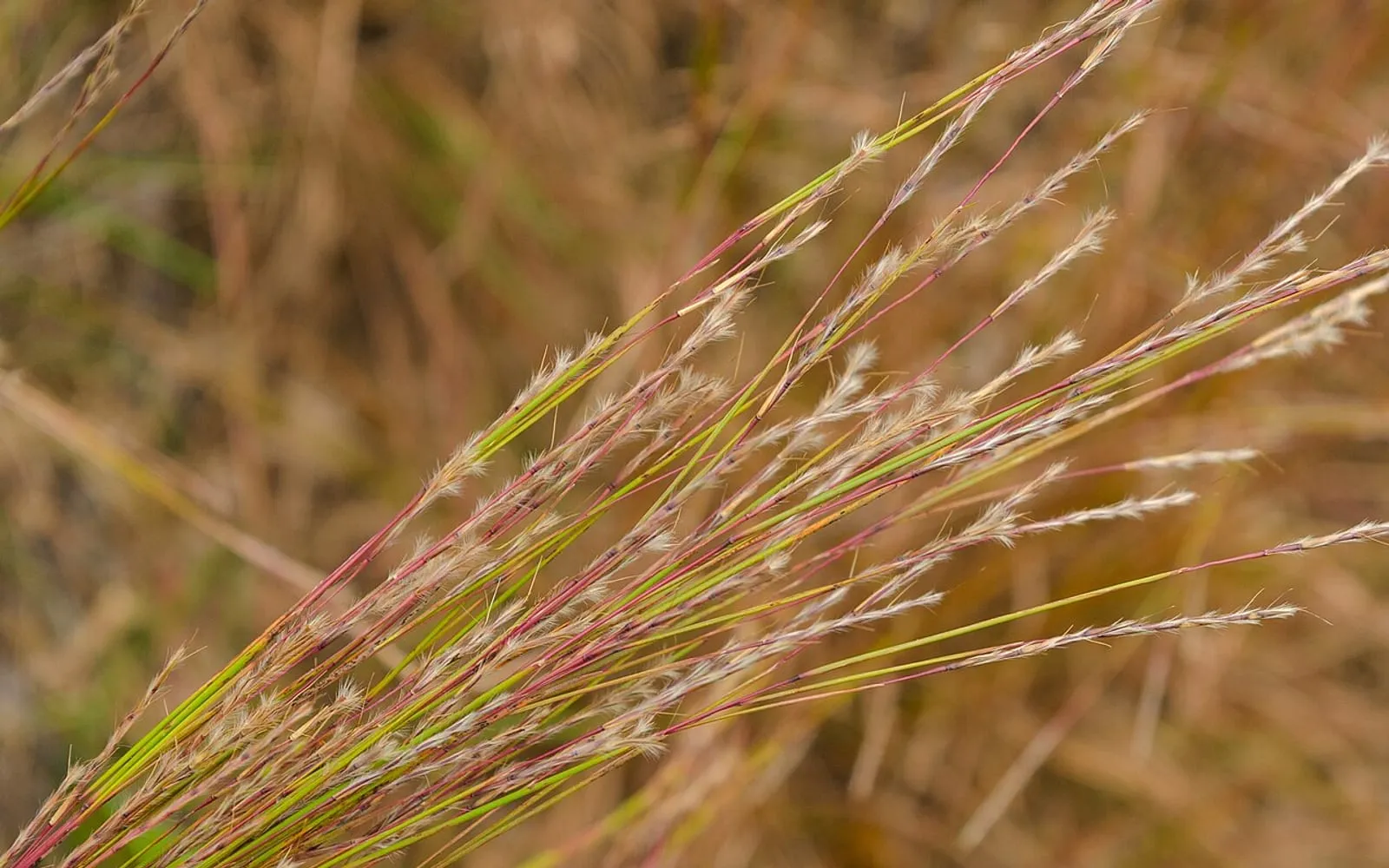
Fine, narrow leaves form an upright, slightly flared clump, blue-green through spring and summer and turning shades of copper, bronze and russet-orange from autumn onward, one of the more reliable and vivid autumn colour displays among prairie grasses. The base of a mature clump often takes on a distinct reddish or purplish tint even in summer, visible up close where the newest growth emerges.
Slender flower stems rise above the foliage in late summer, carrying small, fluffy white seed tufts that catch backlight attractively, especially in a mass planting where a whole drift can seem to glow at dawn or dusk. The whole plant sways readily in wind, and its fine texture makes it a natural companion for coarser-leaved perennials in a prairie-style planting.
Breeders have selected a number of cultivars specifically to correct the wild species’ one common complaint in a border setting, a tendency to flop or lean once flower stems fill out in a rich or sheltered garden position. ‘Standing Ovation’ and ‘The Blues’ were both bred for a noticeably stiffer, more upright habit than the straight species, and either is worth seeking out in preference to unnamed seed-grown stock where a tidy, self-supporting clump matters more than strict fidelity to the wild plant.
Where it is from
Schizachyrium scoparium is native across an enormous range of central and eastern North America, from subarctic Canada south through the United States and into Mexico, growing on prairie, open woodland edges and rocky, poor ground in conditions that swing from severe winter cold to hot, often dry summers. It was historically one of the dominant grasses of the tallgrass and mixed-grass prairie before large-scale agricultural conversion, and it remains a central species in prairie restoration work across its native range.
That prairie origin, adapted to grazing, fire and drought as recurring natural events, is the source of the plant’s toughness in cultivation, and it performs best in conditions that echo that open, sunny, lean ground rather than a rich, shaded or damp garden position.
How it grows
Plant divisions or container-grown plants in spring, once the soil has warmed, into full sun. Growth is measured rather than rapid in the first year while the root system establishes, then fills out more visibly from the second season onward.
Choose lean to average soil rather than a rich, heavily improved border, since excess fertility produces looser, floppier growth that loses the tight, upright habit the species is valued for. This is a plant that performs better on poor or rocky ground than on the best soil in the garden.
Leave the foliage and seed heads standing through winter for colour and structure, and to provide habitat, since overwintering skipper caterpillars shelter in tube-like tents built at the base of the clump through the coldest months. Cut the whole plant back hard to a few centimetres above ground in late winter, timed, where wildlife value matters, to allow overwintering insects to complete their life cycle before the old growth is removed.
Through the seasons
Spring growth is slow to start, since this is a warm-season grass waiting for real soil warmth, often well behind cool-season plants nearby; this is the season for the cutback if it was not done earlier.
Summer brings the strongest growth and a shift into the plant’s characteristic blue-green colouring, especially in hot weather.
Autumn brings the main seasonal display, as foliage turns copper, bronze and russet-orange and the fluffy white seed heads catch low light.
Winter leaves the faded, tan-coloured foliage and seed heads standing if left uncut, both for structure and because overwintering skipper caterpillars shelter at the base of the clump through the season.
Care difficulty
Easy, and well suited to a low-maintenance or wildlife-focused planting. It needs no staking, little to no feeding, and minimal watering beyond its first year or two, and its main sensitivity, cooler summers producing shorter, less colourful growth, is a matter of climate rather than care.
Watering
Water regularly through the first growing season while the plant establishes. Once settled, it draws on a deep root system and tolerates significant drought, generally performing worse rather than better in consistently damp soil, since overly moist or rich conditions push weaker, less upright growth than the tight, drought-adapted habit this species shows on lean prairie ground.
Warning signs, diseases and pests
Rust is the only pest or disease of any real note on this species, appearing occasionally as small orange pustules on the leaf blades in a humid summer and rarely threatening the plant’s overall health.
Floppy, loose growth generally points to soil that is too rich or too consistently moist rather than to any pest or disease, and the fix is reducing feeding and, where practical, improving drainage rather than treating the plant for an illness it does not have.
A clump that fails to colour up in autumn, staying green rather than turning copper or russet, is not showing a disease either. It usually means the site is more shaded or the summer has run cooler than this warm-season species prefers, and neither problem responds to feeding or watering more.
Growing environment
Full sun is essential for strong, upright growth and good autumn colour; in shade, plants grow thin and pale and rarely develop their full colour or flower well. Lean, free-draining soil suits it best, and it tolerates poor, rocky or sandy ground with ease, making it a strong choice for a difficult, exposed site where richer-soil perennials struggle.
Feeding
Little to none is appropriate. This species is adapted to naturally low-nutrient prairie and rocky ground, and fertiliser tends to produce softer, floppier growth that loses the tight, upright form and vivid autumn colour the plant is valued for, so leaving it unfed generally produces the better result.
Troubleshooting
My clump has flopped and looks loose rather than upright. Soil that is too rich or too consistently moist is the likely cause. Reduce watering and avoid fertiliser, both of which work against this prairie species’ natural tight, upright habit.
The autumn colour has been disappointing compared with photos I have seen. Check how much summer heat and sun the site gets. This species develops its strongest copper and russet tones with real summer warmth and full sun, and a cool or shaded position produces a duller, less vivid display.
Should I cut the plant back in autumn once it starts to fade? No. Leave the foliage and seed heads standing through winter, both for structure and because skipper butterfly caterpillars overwinter at the base of the clump, then cut back hard in late winter before new growth starts.
Is this plant good for supporting wildlife, or is that overstated? It is. It hosts numerous skipper butterfly species as larval food, more than most garden plants, and leaving old growth standing through winter protects the overwintering caterpillars that depend on it.
Can I use it as a lower-maintenance lawn alternative? Not readily. Unlike some shorter prairie grasses, this species forms an upright bunchgrass clump rather than a mowable turf, and it is better suited to a border or meadow-style planting than to foot traffic.
Is it safe for a garden with pets and children? Yes. It carries no toxic compounds and has a long history as grazed forage for livestock and wild grazing animals across its native range, so there is no toxicity concern with this species.