
Outdoor plant
Prairie Dropseed
Sporobolus heterolepis
How to grow prairie dropseed, Sporobolus heterolepis, a fine, fountain-like North American prairie grass whose flowers smell of coriander and popcorn.
At a glance
- Difficulty
- Moderate
- Water
- Regular watering while establishing, drought-tolerant once mature
- Light
- Full sun
- Temperature
- Fully hardy in winter; grows and flowers best in a warm summer
- Hardiness
- USDA 3-9, RHS H7, hardy to -30 C
- Type
- Warm-season deciduous perennial grass, slow-growing
- Height
- 30-45 cm in foliage, to 90 cm in flower
- Native to
- Central and eastern North America
Extremely hardy to cold, with a native range extending into the northern Great Plains and southern Canada, so winter is rarely what limits this species in a garden setting. It needs a warm growing season to flower well and to develop the tight, rounded habit it is prized for, and a cool-summer garden well within its hardiness range can still produce a looser, later-flowering plant than the same species grown somewhere with hot, reliable summer weather.
Hardiness zones describe winter cold alone. Summer heat, humidity, rainfall and the length of the growing season decide as much, so treat the range as the outer limit rather than as a recommendation.
Not known to be toxic
Prairie dropseed has no toxicity listing from the RHS or the ASPCA and is considered safe around pets and children. It has a long history as a component of native prairie forage grazed by bison historically and by cattle today, which is strong practical evidence that it carries no toxic compounds of concern.
Sources: ASPCA toxic and non-toxic plants, RHS potentially harmful garden plants
About
Prairie dropseed is widely regarded among prairie-planting designers as one of the finest-textured and most refined of the North American native grasses, forming a neat, rounded, fountain-like mound of hair- fine leaves that keeps its shape without staking or shearing through the whole growing season. Where many prairie grasses read as coarse or shaggy, this one reads as tailored, which has made it a favourite for formal or semi-formal plantings that still want a native, low-water species.
Its late-summer flowering brings a trait almost no other ornamental grass offers: a genuine fragrance. The airy flower panicles that rise above the foliage from late July through September carry a scent widely described as resembling ground coriander, buttered popcorn or toasted sunflower seeds, distinct enough that visitors to a garden planted with a mature drift often notice the smell before they notice the plant producing it.
Appearance and character
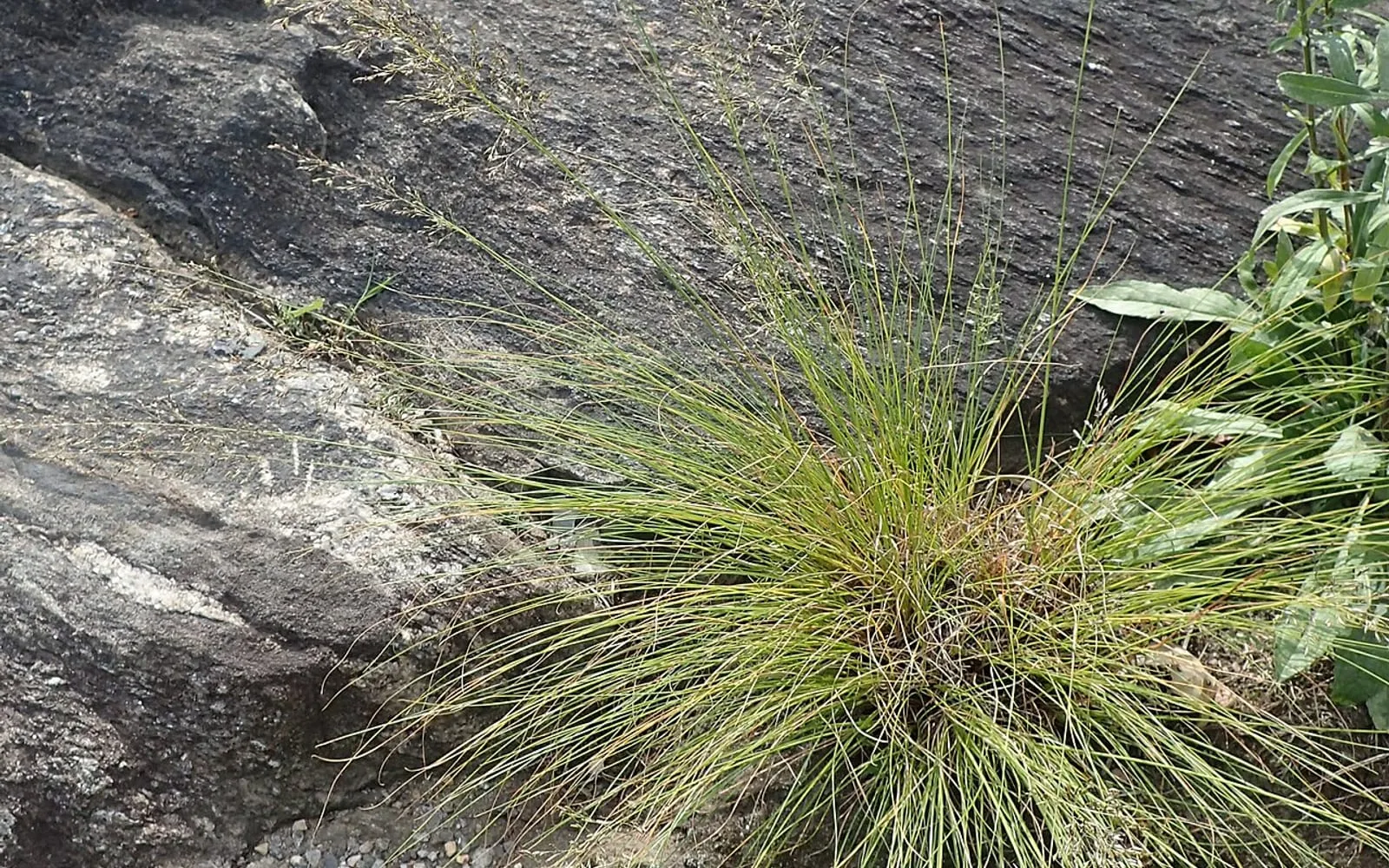
Extremely fine, thread-like leaves arch outward from a tight central base, building a dense, symmetrical, rounded mound roughly the shape of a low fountain. Foliage stays a rich green through summer before turning shades of gold, orange and copper in autumn, fading further to a pale bronze that holds well into winter.
Flower panicles rise well above the foliage on slender stems from late summer, fine and airy rather than showy, forming a delicate haze over the mound rather than a bold spike. The scent they carry, most often compared to coriander or popcorn, is strongest on a warm day and fades as the flowers mature into seed, by which point the display shifts from fragrance back to the plant’s fine autumn texture and colour.
Where it is from
Sporobolus heterolepis is native across a wide range of central and eastern North America, from the northern Great Plains and southern Canada south into Texas and east to the Appalachians, growing on undisturbed prairie, often on the same deep, fertile prairie soil that has since been converted almost entirely to farmland. It is considered an indicator of high-quality, long-undisturbed prairie remnant, since it establishes slowly and does not recover quickly once a site has been heavily disturbed.
That slow establishment in the wild carries directly into cultivation: this is not a fast-colonising species, and a newly planted garden clump behaves the same patient way its wild counterparts do, rewarding a gardener’s patience over several seasons rather than filling in quickly.
How it grows
Plant divisions or container-grown plants in spring, once the soil has warmed, into full sun and lean to average soil. Growth is slow in the first one to two years while the deep root system develops, often testing the patience of a gardener used to faster-establishing grasses, before the plant fills out into its characteristic dense, rounded mound from around its third season onward.
Once established, it needs very little intervention. It does not spread by rhizome and self-seeds only modestly compared with many other prairie grasses, staying a well-behaved, predictable clump in a border setting over many years.
Cut the whole clump back to a few centimetres above ground in late winter, before new growth resumes, removing the faded foliage and seed heads and making way for fresh spring growth.
Through the seasons
Spring growth starts slowly, as this warm-season grass waits for real soil warmth, and this is the season for the annual cutback if it was not done earlier in winter.
Summer brings steady foliage growth, building toward the fine, rounded mound the species is known for as the season progresses.
Autumn brings the fragrant flower panicles into their fullest display from late summer into September, alongside the foliage’s turn to gold, orange and copper.
Winter leaves the faded, pale bronze foliage and seed heads standing if left uncut, offering quiet structure through the coldest months before the late-winter cutback.
Care difficulty
Moderate, mostly because of the patience needed while the plant establishes over its first two or three seasons rather than because of any complicated ongoing care. Once settled, it is low maintenance, needing minimal watering, little to no feeding and only an annual cutback, and its main demand is a sunny, well-drained site matched with realistic expectations about how slowly it gets there.
Watering
Water regularly through the first one to two growing seasons while the deep root system that underlies this species’ eventual drought tolerance is still developing. Once established, it rarely needs supplemental watering beyond ordinary rainfall, and consistently damp or rich soil tends to produce looser, less characteristic growth than the tight, fine-textured habit the plant shows on leaner ground.
Warning signs, diseases and pests
No significant pests or diseases are commonly reported on this species in cultivation, and a gardener who has sited it correctly should expect to spend little time diagnosing problems on it at all.
Slow growth in the first couple of seasons is normal for this species rather than a sign of a problem, and a gardener who lifts and checks a struggling-looking young plant usually finds a perfectly healthy but still-developing root system rather than any disease or pest issue. Patience, not intervention, is the appropriate response.
A clump that flowers only lightly or late in a given year is more often reporting on that year’s summer than on anything wrong with the plant itself. Flowering, and the fragrance that comes with it, is noticeably stronger after a hot, sunny summer than after a cool or overcast one, and the difference is a matter of weather rather than of care.
Growing environment
Full sun is essential for the tightest, most characteristic mounded habit and the best flowering; in shade, growth is thinner and looser and flowering is reduced. Lean, free-draining soil suits it well, and it tolerates poor or clay-heavy ground once its deep root system is established, though drainage that allows the soil to dry between rainfalls matters more to this species than soil fertility does.
Feeding
Little to none is appropriate. This species is adapted to naturally low-nutrient, long-undisturbed prairie soil, and fertiliser tends to produce softer, looser growth that loses the tight, fountain-like form the plant is valued for, so leaving it unfed on all but the very poorest soil generally produces the better result.
Troubleshooting
My plant has grown very little in its first two seasons. This is normal rather than a sign of trouble. This species is slow to establish while its deep root system develops, and growth typically becomes much more visible from the third season onward.
I cannot detect the coriander or popcorn scent people describe. The fragrance is strongest from a mature, flowering clump on a warm day in late summer, and a young plant that has not yet flowered, or a cool, overcast day, will show little to none of it.
Growth looks loose and untidy rather than forming a tight mound. Check soil fertility and moisture. Rich or consistently damp soil produces looser, less characteristic growth than the lean, well-drained conditions this species needs to form its trademark tight, rounded shape.
When should I cut the plant back? Late winter, before new growth resumes, cutting the whole clump back to a few centimetres above ground to remove the previous year’s faded foliage and seed heads.
Is it a good choice for a smaller, more formal garden rather than a wild prairie planting? Yes, more so than many prairie grasses. Its fine texture and tight, rounded habit read as tailored rather than shaggy, which is part of why designers use it in structured as well as naturalistic plantings.
Does it spread aggressively the way some prairie grasses do? No. It stays a well-behaved, slowly expanding clump rather than spreading by rhizome, and self-seeding is modest compared with many other ornamental grasses, making it predictable in a border setting over many years.
Is it worth the wait compared with a faster-establishing prairie grass? For a gardener planting a small border, often yes, since the neat, fine-textured mound and the fragrance are difficult to reproduce with a faster species. For covering a large area quickly, a faster-establishing grass such as switchgrass or little bluestem is the more practical choice, with prairie dropseed added later as an accent once the planting is otherwise established.