
Outdoor plant
Belleric Myrobalan
Terminalia bellirica
Also known as Bibhitaki, Bahera
How to grow belleric myrobalan, Terminalia bellirica, the large Asian forest tree behind the triphala fruit bibhitaki, valued for timber and tannins.
At a glance
- Difficulty
- Moderate
- Water
- While young and in dry spells
- Light
- Full sun
- Temperature
- Tropical and frost-tender; keep above about 5 deg C
- Hardiness
- USDA 10-12, RHS H2, hardy to 5 C
- Type
- Large deciduous tree
- Height
- Up to 30 m
- Native to
- South Asia, Southeast Asia
A large deciduous tree of the monsoon forests of South and Southeast Asia, with no frost tolerance. It drops its leaves in the dry season and flushes again with the rains, so it is adapted to a warm climate with wet and dry seasons, and it grows outdoors only in the tropics and subtropics. In a cool climate its size and tenderness make it impractical to grow.
Hardiness zones describe winter cold alone. Summer heat, humidity, rainfall and the length of the growing season decide as much, so treat the range as the outer limit rather than as a recommendation.
Harmful if eaten
- Do not eat
- The seed kernel inside the fruit, in quantity
- Harm from
- Eating it
- Affects
- People
The fruit is one of the three used in the Ayurvedic blend triphala, under the name bibhitaki, and it is prepared and used deliberately as a remedy. The seed kernel inside the fruit is reported to be intoxicating and to cause nausea if eaten in quantity, so the fruit is not a casual food and the kernel should not be eaten. The tree itself is grown for shade, timber and its fruit crop and is safe to grow and handle. Any medicinal use is a matter for a qualified practitioner, and this guide covers growing the tree.
Sources: RHS potentially harmful garden plants, North Carolina Extension plant toxicity database
About
Belleric myrobalan is a large deciduous tree of the monsoon forests of South and Southeast Asia, grown for its fruit, its timber and its shade. The fruit is best known as bibhitaki, one of the three fruits in the Ayurvedic blend triphala, and that use is much of why the tree is valued and planted.
It is a large forest tree, reaching thirty metres with a tall trunk, a spreading crown and buttressed roots, and it is grown as a timber tree and a shade tree as well as a fruit crop across its range. It is a close relative of arjuna, sharing the same genus and the same liking for warm, monsoon country.
For a grower it is a tree for the tropics and subtropics, far too large and too tender for a small or cold garden. This guide covers growing the tree instead of using its fruit, which has a medicinal role and a caution attached to its seed.
Appearance and character
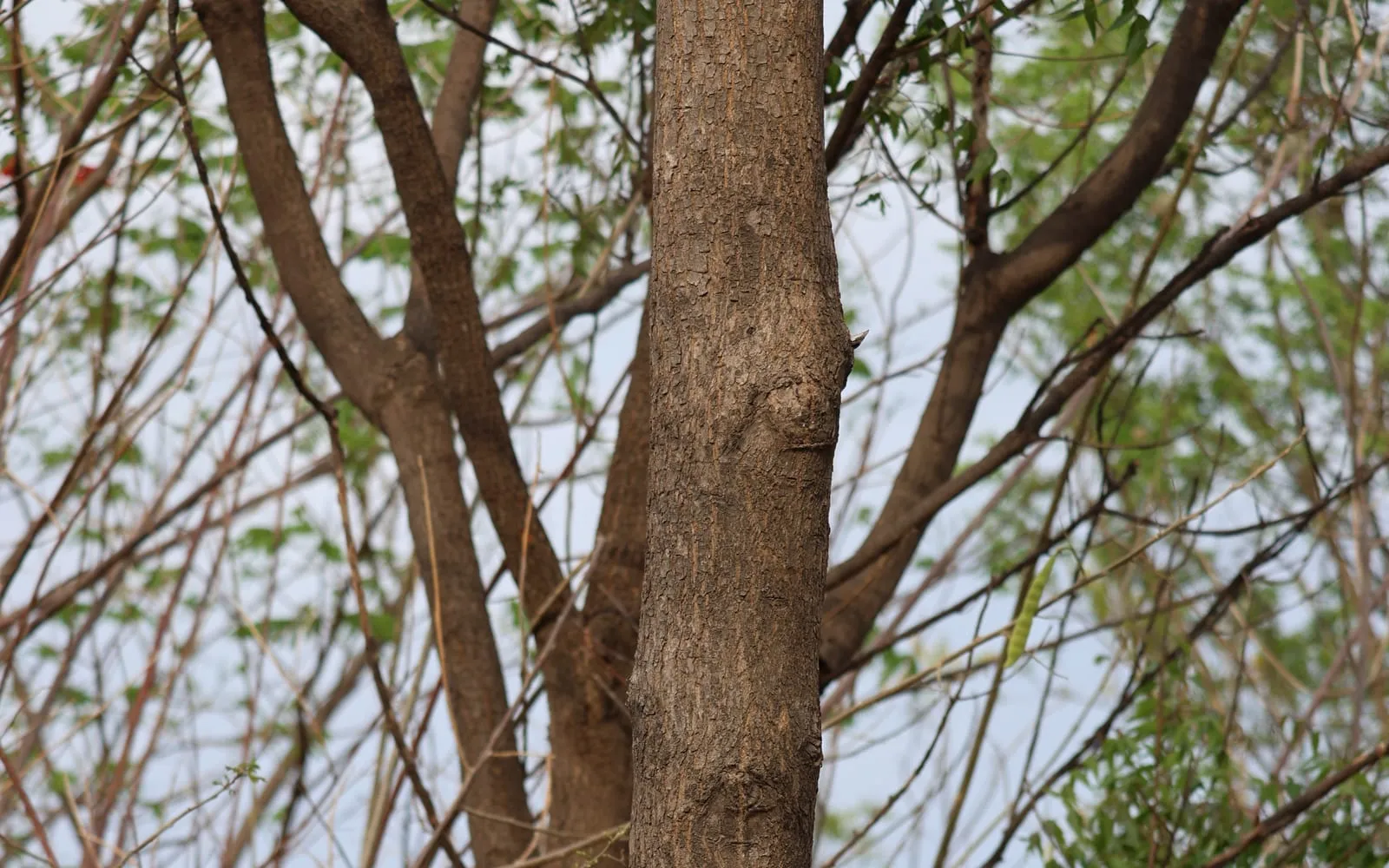
The trunk is tall and straight, often buttressed at the base, carrying a high, spreading crown, and it yields a useful timber, which is one of the tree’s several uses.
Leaves are broad, oval and clustered towards the ends of the branches, dropping in the dry season, since the tree is deciduous and flushes fresh leaves with the rains.
Flowers are small, pale greenish-yellow, borne in slender spikes, with a strong, not always pleasant scent, appearing as the new leaves come.
Fruit is a hard, rounded, grey-brown drupe, slightly ridged, containing a single stone. Dried, this fruit is the bibhitaki of triphala, and it also yields tannins used in tanning and dyeing.
Overall, it is a big, spreading, seasonally bare forest tree, grown for its crop, timber and shade rather than as a garden ornamental.
Where it is from
Terminalia bellirica grows through the monsoon forests of India, Sri Lanka and Southeast Asia, on plains and lower hills, in a warm climate with distinct wet and dry seasons. It grows in tropical deciduous forest.
Its habitat explains its habits and limits. It is adapted to monsoon rains and a dry season, dropping its leaves through the drought, and it has no frost tolerance, so it grows only in warm, frost-free climates and reaches a size that suits open country instead of a garden.
How it grows
It grows into a large tree in a warm climate, given sun and a deep soil, flushing leaves with the rains and dropping them in the dry season. It is a vigorous, long-lived forest tree where conditions suit.
Plant it in full sun in a deep, well-drained soil with room for a big tree, and water young trees to establish them. Once settled it is drought-hardy through the dry season, in the way of a monsoon-forest tree.
Give it plenty of space, since it becomes very large. It suits a farm, a plantation, a large park or open ground instead of a garden, and it is grown across its range for a mix of fruit, timber, tannin and shade.
In a cool climate it is impractical, being both frost-tender and enormous, so it is best suited to warm regions.
Through the seasons
The dry season is when the tree stands leafless, having dropped its foliage to save water, which is normal for this deciduous species.
The rains bring a flush of new leaves and the flowering, when the tree makes its main growth with the monsoon.
After the rains the fruits develop and ripen to hard grey-brown drupes, which are gathered dried for triphala and for tannin.
Through the year in cultivation the tree follows the local wet and dry rhythm, growing in the warm, wet season and resting in the dry, and it must be kept frost-free throughout.
Care difficulty
Moderate, with size and climate the deciding factors. Given warmth, sun and a deep soil it grows readily and is drought-hardy once established, needing little care. The obstacles are that it will not take frost and that it grows into a thirty-metre tree, so it suits warm climates and open ground, not small or cold gardens.
Watering
Water young trees regularly through their early years to establish them, and in dry spells. Steady moisture in the growing season supports fast, healthy growth while the tree is building its root system.
An established tree is drought-hardy, coping with the dry season by dropping its leaves and drawing on deep roots, so it needs little watering once settled in a suitable climate.
Warning signs, diseases and pests
Its very large size is the main issue. Planted anywhere too small it quickly outgrows the space, so it needs open ground from the start.
Pests are few on an established forest tree in good conditions. Scale insects may trouble young or stressed trees and can be treated with horticultural oil.
The tree is safe to grow and handle. The one caution is the seed kernel inside the fruit, which is intoxicating in quantity and should not be eaten, while the fruit itself has a medicinal role best left to a qualified practitioner.
Growing environment
Full sun suits it, matching the open forest and plains it grows in. It needs strong light and warmth and does not thrive in shade or cold.
The soil should be deep and well-drained, and the tree tolerates a fair range of soils in its native range. Above all it needs a warm, frost-free climate with a wet and dry rhythm.
Give it a large, open, warm site with room for a big tree, such as a farm, a park or open plantation ground. It is not a plant for a small or a cold garden.
Feeding
Feed young trees a balanced fertiliser once or twice in the growing season to support strong establishment. Mature trees in reasonable soil need little, so heavy feeding is unnecessary for an established tree.
Troubleshooting
How big does it get? Very large, up to around thirty metres, so it is a tree for open ground, a farm or a park instead of a garden. Plan for that size before planting.
Can I grow it in a cool climate? No, not practically. It is frost-tender and becomes enormous, so outside the tropics and subtropics it is not a realistic tree to grow.
Why has it dropped all its leaves? It is deciduous and drops its leaves in the dry season, flushing again with the rains. A bare tree in the dry season is behaving normally.
Is the fruit safe to eat? The dried fruit is used medicinally as bibhitaki in triphala, but the seed kernel inside is intoxicating in quantity and should not be eaten, so the fruit is not a casual food and any use belongs with a qualified practitioner.
What is it grown for? For its fruit, used in Ayurvedic medicine, for its timber, for the tannins in its fruit, and as a shade tree. It is a multipurpose tree across its native range instead of an ornamental.